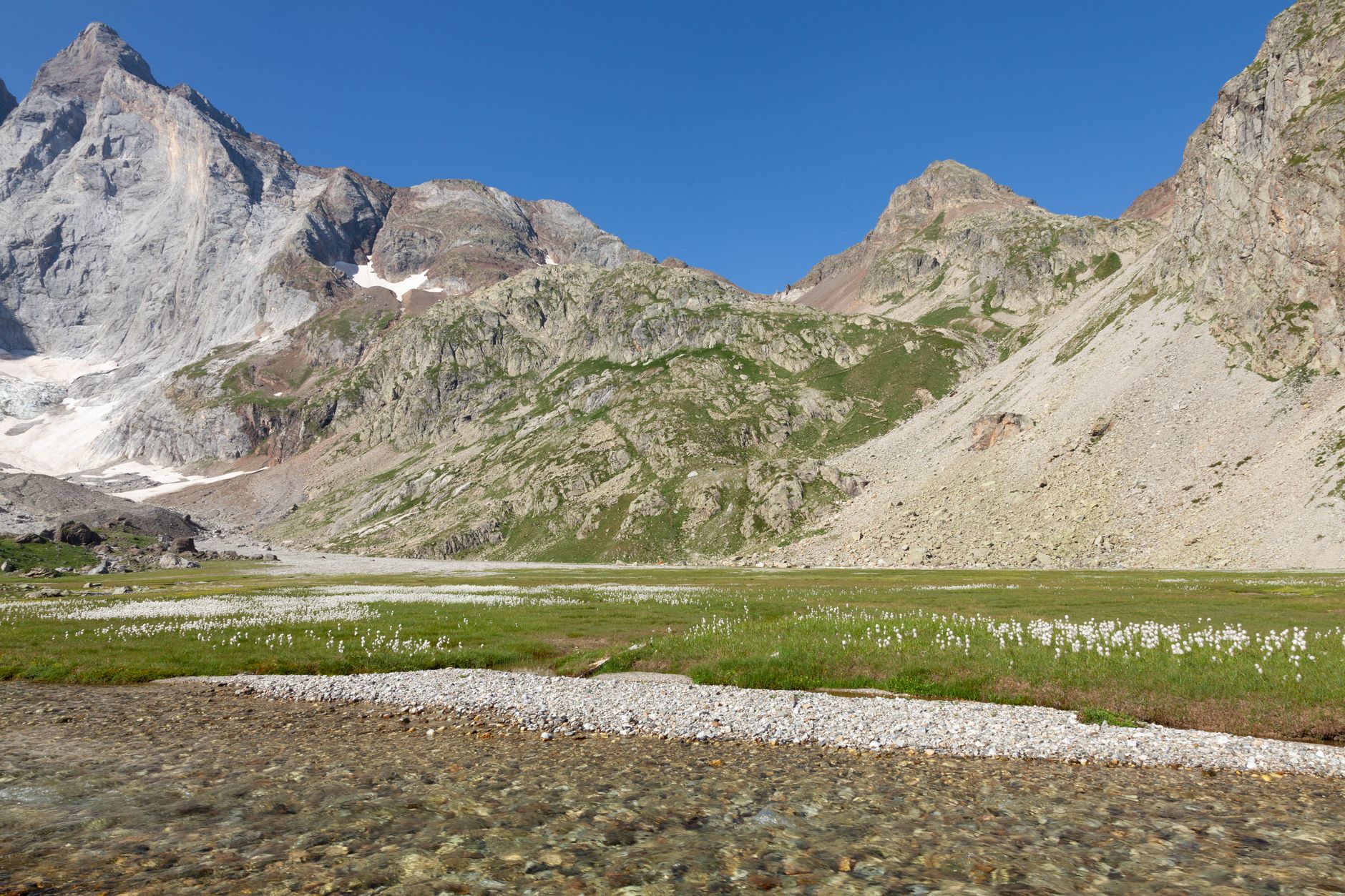
Cirque de Gavarnie
Rising nearly 1,700 metres above the valley floor, the Cirque de Gavarnie is a UNESCO World Heritage horseshoe of sheer limestone walls draped in waterfalls and glaciers. Standing at its base feels like being swallowed by a cathedral carved by ice.

The Walk In
The classic approach follows a flat, well-signed 4 km trail from the village of Gavarnie itself, passing through meadows grazed by Pyrenean horses and dotted with wild narcissus in early summer. The path is wide enough for families and even mules — local guides still offer horse rides along it.
Allow around 90 minutes each way at a leisurely pace, stopping to watch the Grande Cascade de Gavarnie, Europe's highest waterfall at 422 metres, grow taller with every step you take toward it.

Inside the Cirque
Once you reach the Hôtellerie du Cirque, a stone refuge café at the cirque's foot, order a hot chocolate and sit on the terrace while the waterfall roars in front of you — on sunny afternoons a rainbow forms in the mist almost on cue.
In winter the cirque transforms into a dramatic ice theatre; the annual Festival des Pyrénées stages open-air opera performances here in late June and early July, with the rock walls acting as a natural acoustic shell.
Snow lingers on the upper ledges well into July, and the Brèche de Roland — a 40-metre gap in the ridge said to have been cleaved by the paladin Roland's sword — is visible to experienced hikers who continue beyond the cirque floor.

Practical Essentials
Arrive before 9 a.m. in July and August to beat tour groups and get the best light on the waterfall. The car park in Gavarnie village fills quickly; an overflow shuttle operates from lower down the D921 road.
Entrance to the cirque itself is free; the horse-ride option costs roughly €15 per person one way and is booked directly with handlers at the trailhead.
More of Gavarnie
Discover where to stay, what to do and the best deals for your trip.
Explore Gavarnie →