
Country

Slovenia

Slovenia
Photo by Recep Tayyip Çelik on Pexels
Slovenia
Photo by Alexander Nadrilyanski on Pexels
Slovenia
Photo by Alexander Nadrilyanski on Pexels
Slovenia
Photo by Alexander Nadrilyanski on Pexels
Slovenia
Photo by José Barbosa on Pexels
Slovenia
Photo by Alexander Nadrilyanski on Pexels
City break Culture & history Nature & outdoors

Slovenia is a small country with an outsized interior life. Its capital Ljubljana carries the fingerprints of one architect — Jože Plečnik — across its bridges, markets and library in a way few European cities do, giving the whole place an unusual coherence. Beyond the city, the country folds quickly into Alpine valleys, limestone plateaus and a short strip of Adriatic coast, all within a few hours of each other.

What makes it work as a destination is the scale. You can move between genuinely different landscapes and characters without losing days to transit, and the infrastructure for doing so is calm and functional.

Good to know
Ljubljana's Jože Pučnik Airport handles most international arrivals. Spring and early autumn give the best conditions for moving between city and countryside. July and August are warm but crowded along the coast. The country is compact enough that a week covers considerable ground without feeling rushed.

Deals in Slovenia

Book directly at the provider
The story

How Slovenia came to be

For most of the twentieth century, Slovenia existed as one of six constituent republics inside Yugoslavia — a federation that formed in 1918 as the Kingdom of Serbs, Croats and Slovenes, renamed Yugoslavia in 1929, and reconstituted after 1945 as a socialist federation. The push for independence gathered pace in the late 1980s, and on 23 December 1990 an overwhelming 88 percent of the electorate voted for it.

Slovenia declared independence on 25 June 1991. Two days later the Yugoslav People's Army moved in, but the conflict — known as the Ten-Day War — ended quickly with the Brijuni Agreement signed on 7 July. By the end of that July, Yugoslav forces had withdrawn entirely. A new constitution followed in December 1991, the EU extended recognition on 15 January 1992, and the UN admitted Slovenia as a member state that May.

People & landmarks

Who and what shaped it

People who shaped it

Jože Plečnik
Architect (1872–) who transformed Ljubljana between the wars with the Triple Bridge, National and University Library, and Central Market.
Edvard Ravnikar
Architect who shaped Slovenia's urban landscape; designed Republic Square in Ljubljana.
Gustav Mahler
Conductor and composer (1860–1911) who took a conducting post at the Slovenian Philharmonic in Ljubljana in 1881 at age 21.

Landmark buildings

Ljubljana Castle
11th-century medieval fortress with views over the city; later served as arsenal and military hospital in the 17th–18th centuries.
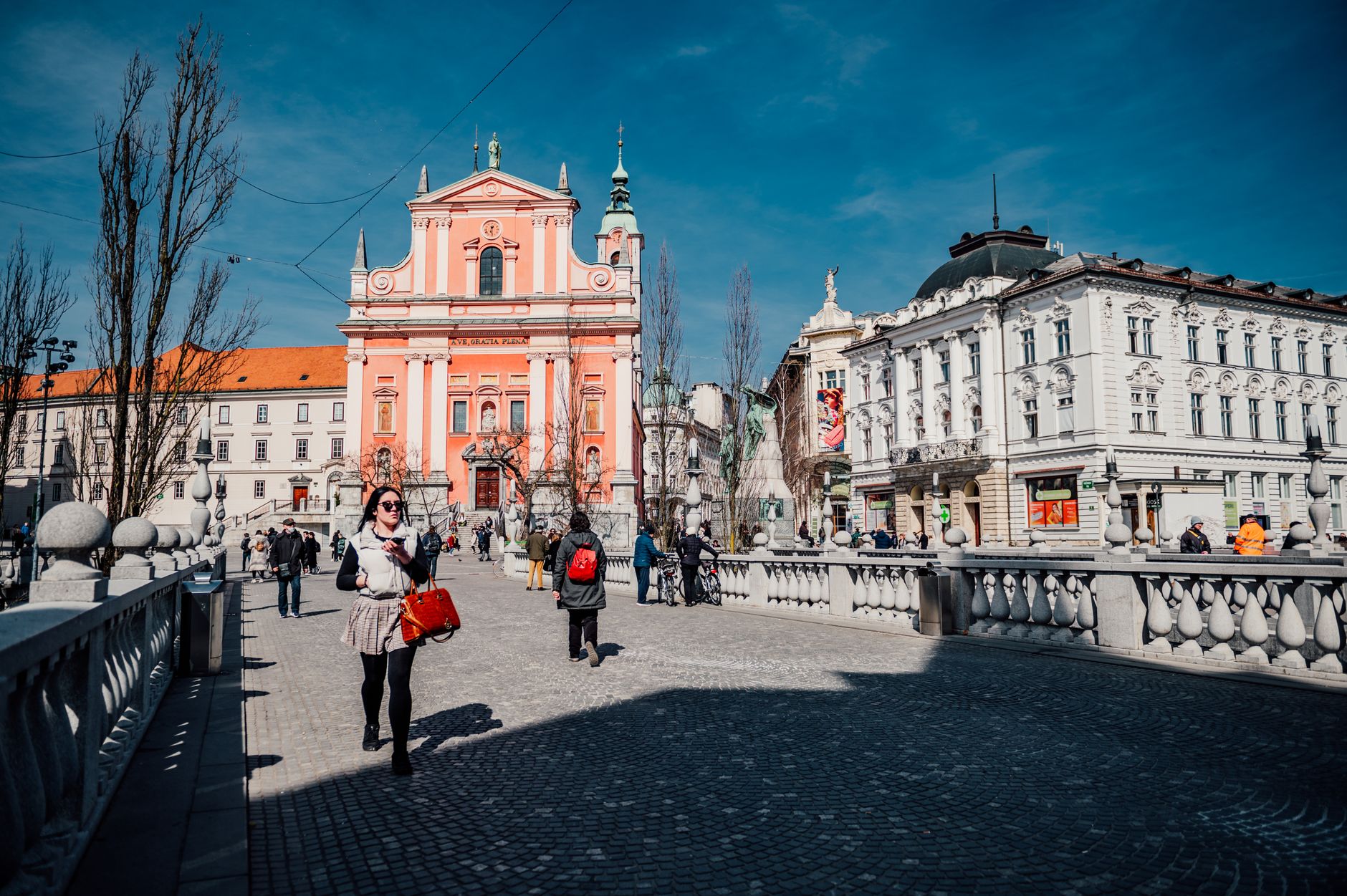
Triple Bridge (Tromostovje)
Designed by Jože Plečnik; built to replace an older bridge with bottleneck issues.
Dragon Bridge (Zmajski Most)
Art Nouveau bridge designed by Jurij Zaninovic, dedicated to the 40th anniversary of Emperor Franz Josef's reign (1848–1888).
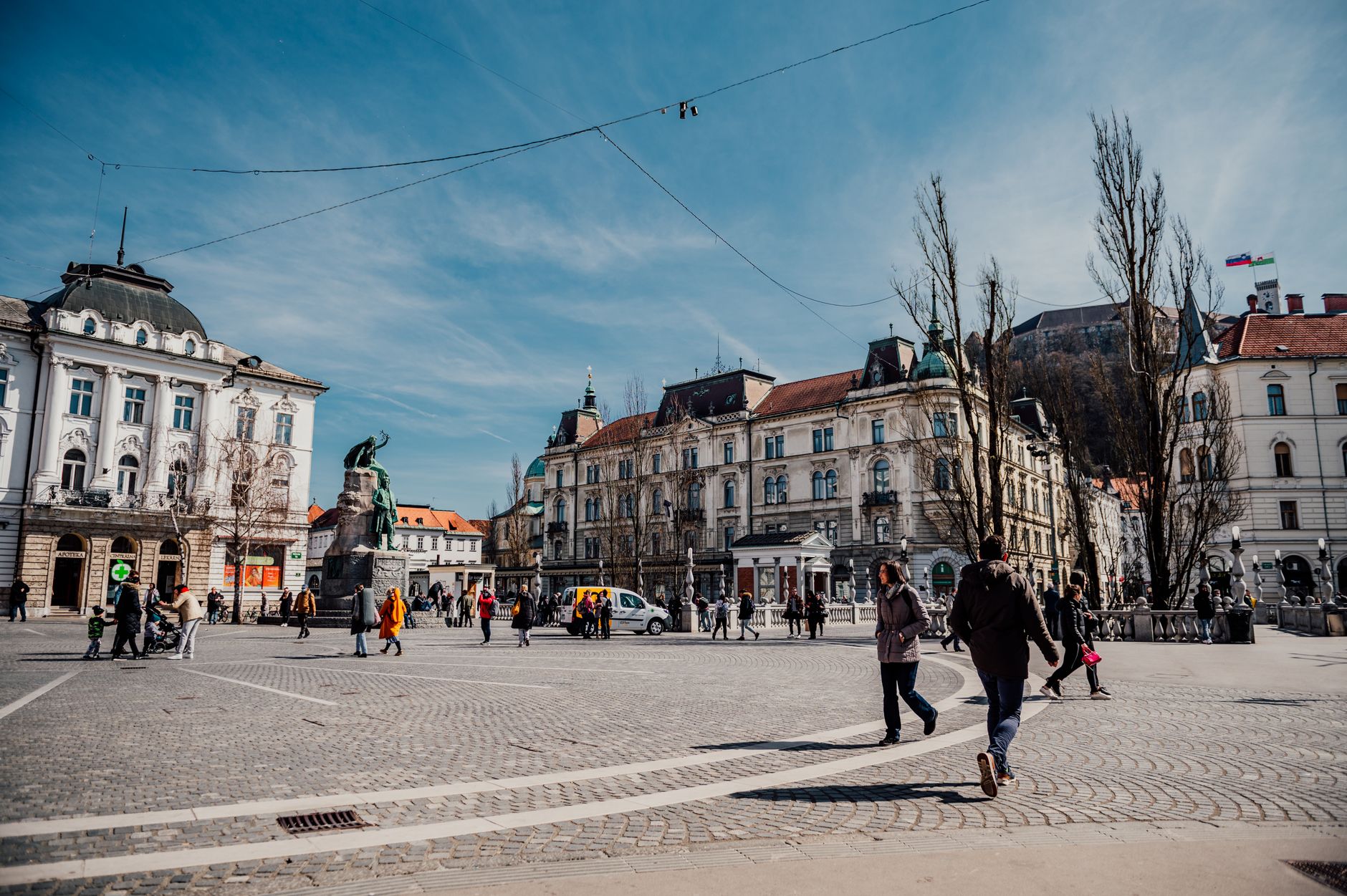
Franciscan Church of the Annunciation
Built 1646–1660 with salmon-pink facade and ornate interior on Prešeren Square; listed as Cultural Monument of National Significance in 2008.
National and University Library (NUK)
Jože Plečnik's 1930–1941 masterwork blending Modernism, Classicism, and Slovenian folk motifs; houses over 2.6 million books.
Nebotičnik (Skyscraper)
Completed 1933; was Europe's seventh-tallest building when built in 1931; café terrace offers Alpine views on clear days.
Križanke
13th-century Teutonic monastery transformed by Jože Plečnik into a cultural venue with 1,400-seat open-air theater and early 18th-century church.
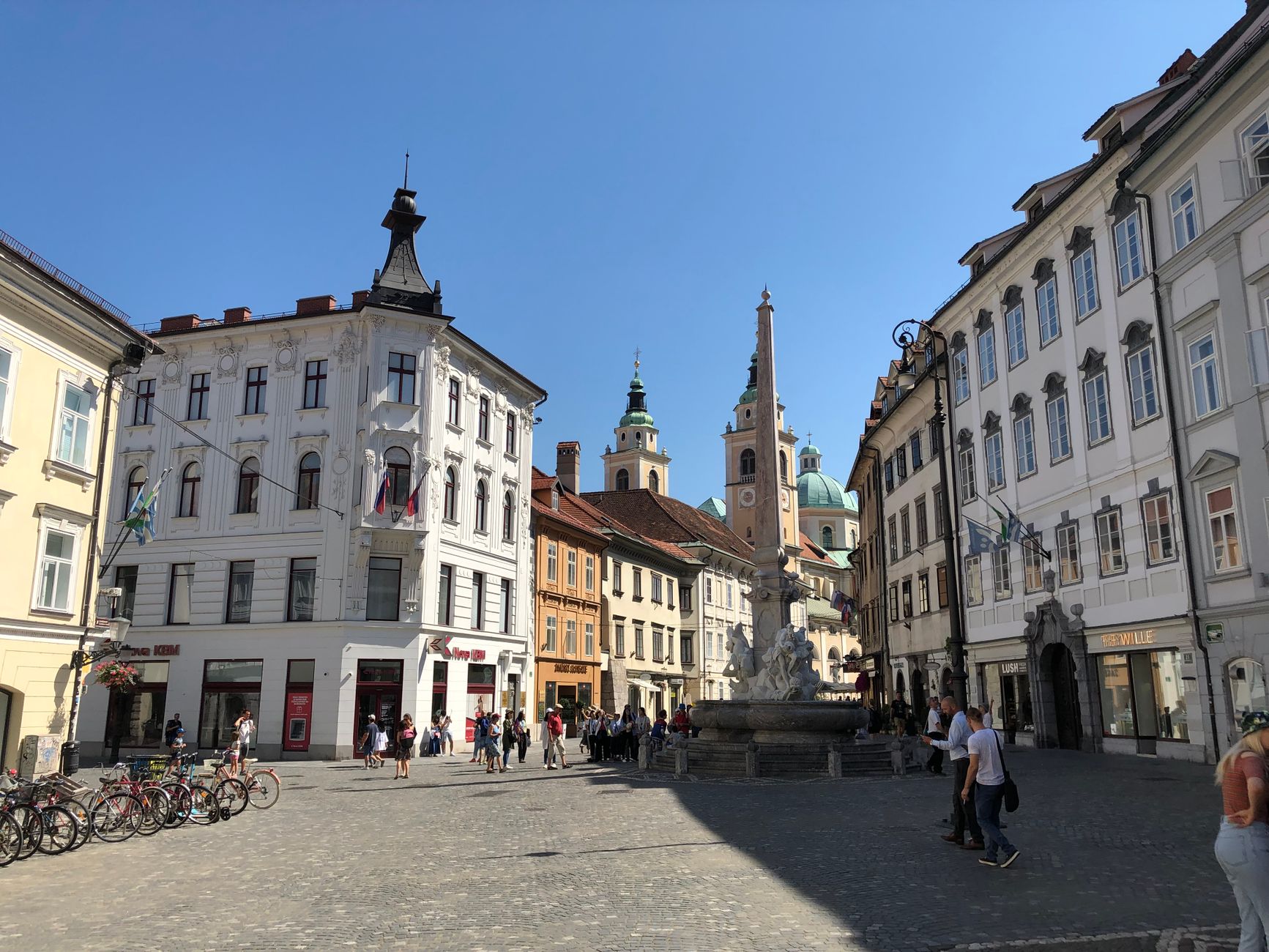
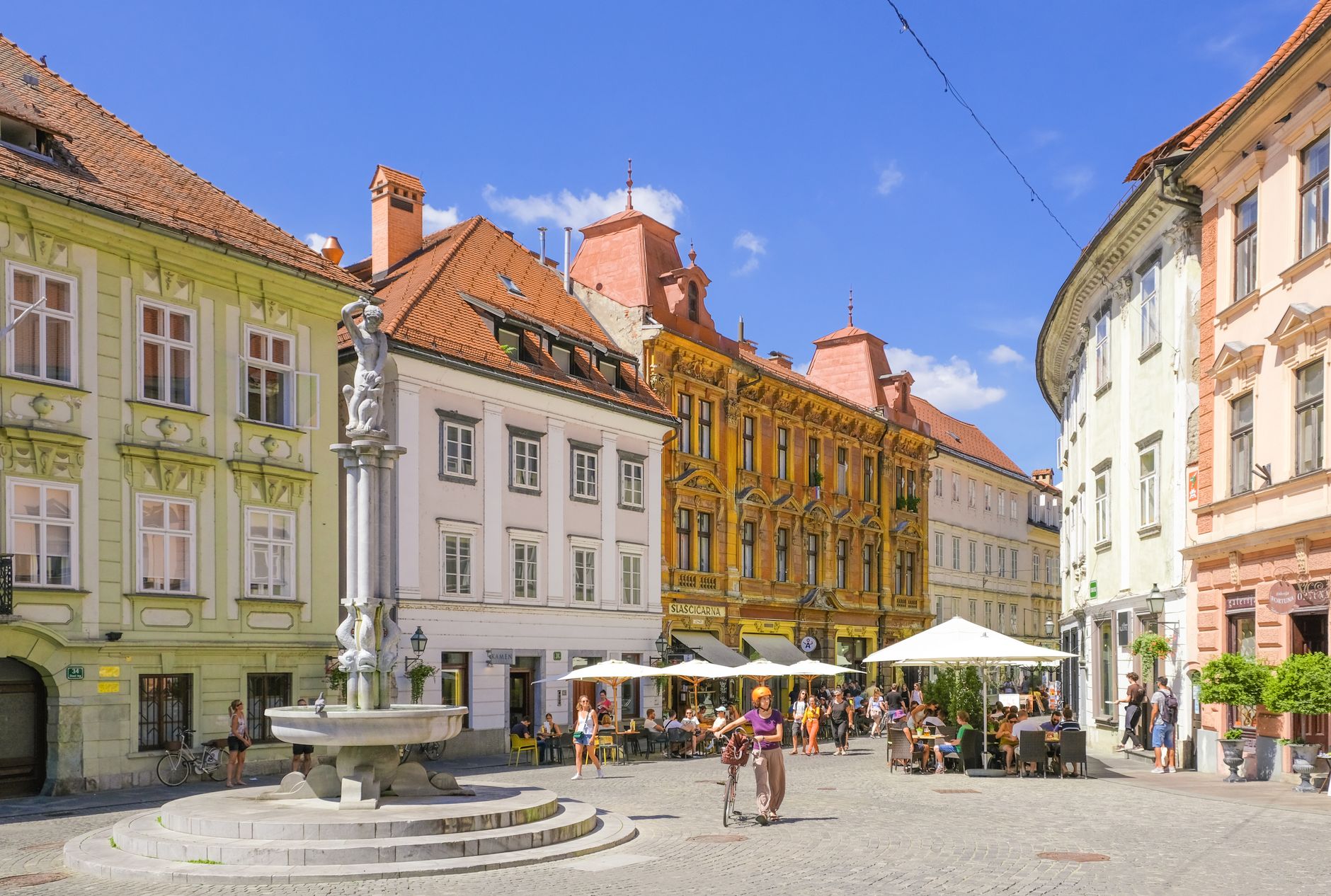
Robba Fountain
Baroque monument sculpted by Italian Francesco Robba in the mid-1700s; original in National Gallery, replica at City Hall.
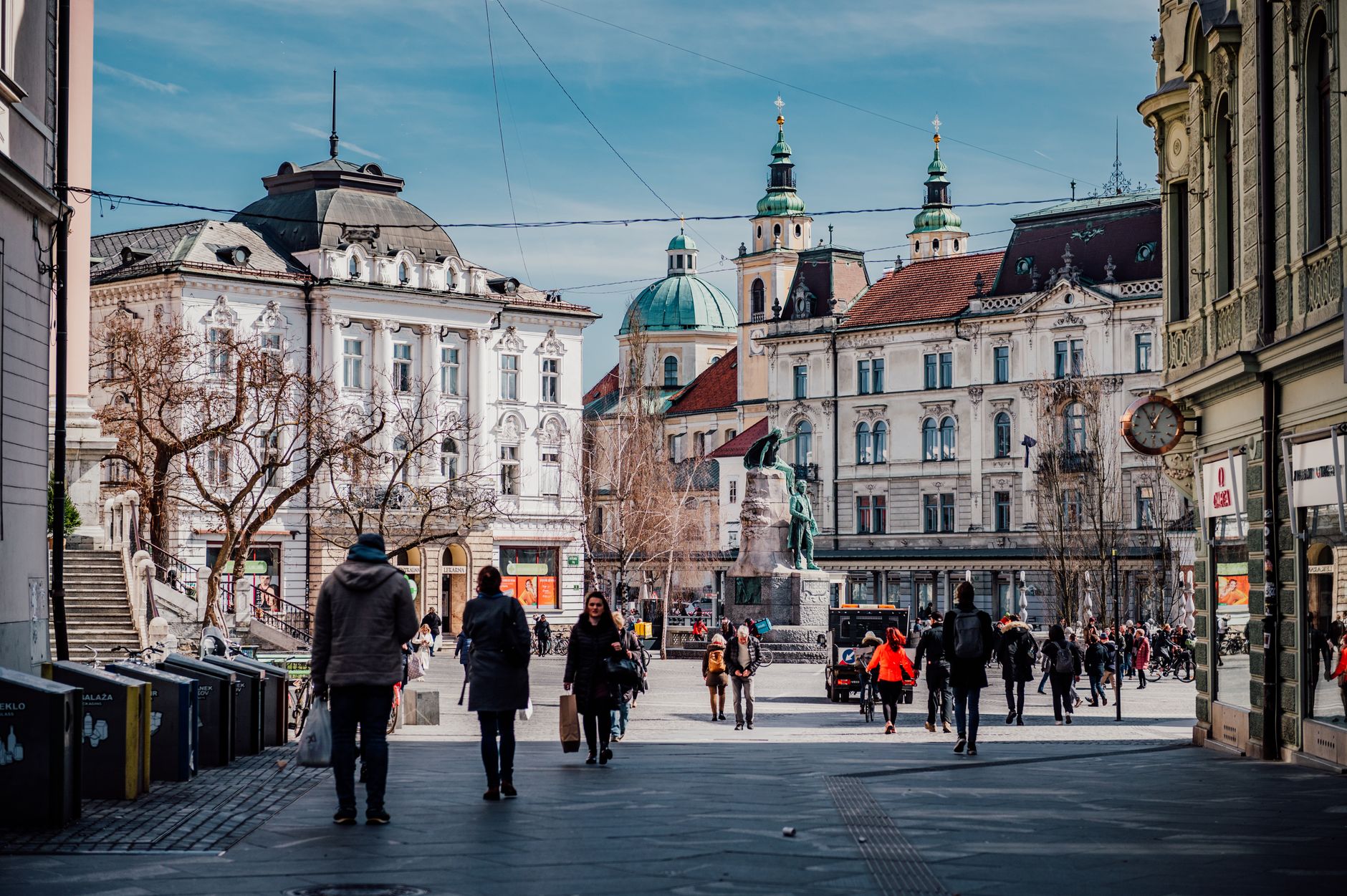
Ljubljana Cathedral (Stolnica Svetega Nikolaja)
Prominent Baroque religious landmark in the city center.
Vurnik House (Cooperative Business Bank building)
Ljubljana's most colorful building and Slovenian Art Nouveau masterpiece; designed by Ivan Vurnik with exterior paintings by his wife Helena.
Grand Hotel Union
Ljubljana's first modern hotel (1903–1905) in full Art Nouveau style; had the largest hall in the Balkans at the time.
Watch

See Slovenia in motion

Practical

Plan your visit

On the map

When to go

Summers are warm and sunny, with Ljubljana averaging comfortable temperatures for walking the city; the Alpine north stays cooler. Winters bring snow to higher ground and a cold, sometimes grey capital — not unpleasant, but layered. Spring and September tend to offer the clearest light and the thinnest crowds.

Right now

☀️
29°C
Clear
Fri
⛈️
29°
19°
Sat
⛈️
30°
18°
Sun
🌦️
24°
15°
Mon
23°
16°
Weather data: Open-Meteo

Background & history adapted from Wikipedia (CC BY-SA) · specs from Wikidata (CC0) · weather from Open-Meteo · map data © OpenStreetMap contributors · photos from Wikimedia Commons / Unsplash with per-image credit. No third-party reviews or social posts reproduced.

Top