
Cook Islands


Fifteen islands and a few dozen atolls scattered across an ocean the size of Western Europe, the Cook Islands share a name with the British navigator who sailed through in the 1770s but belong, in every cultural sense, to the Polynesian people who have lived here since around 450 CE. Rarotonga is where you land — a single 32-kilometre coastal road loops the whole island — but the country reveals itself slowly, island by island, from the lagoon at Aitutaki to the ceremonial adzes of Mangaia.
The pace is genuine rather than performed. Women wear rito hats to church on Sunday — woven from uncurled coconut-palm fibre and stitched with tiny painted pupu shells — and the drumming traditions on Aitutaki have been kept alive long enough that fire dancers train for years before performing publicly. This is a place where craft and ritual are still part of ordinary life.
💛 What travellers fall for
People who come back tend to split their time: a few days on Rarotonga, then a flight north to Aitutaki. The village of Vaipae — locals call it Hollywood — is worth an evening. And if you're on Aitutaki between July and October, ask Air Rarotonga about timing; humpback whales from Antarctica move through these waters to mate and rest.
Experiences you don't want to miss


Deals in Cook Islands
Book directly at the provider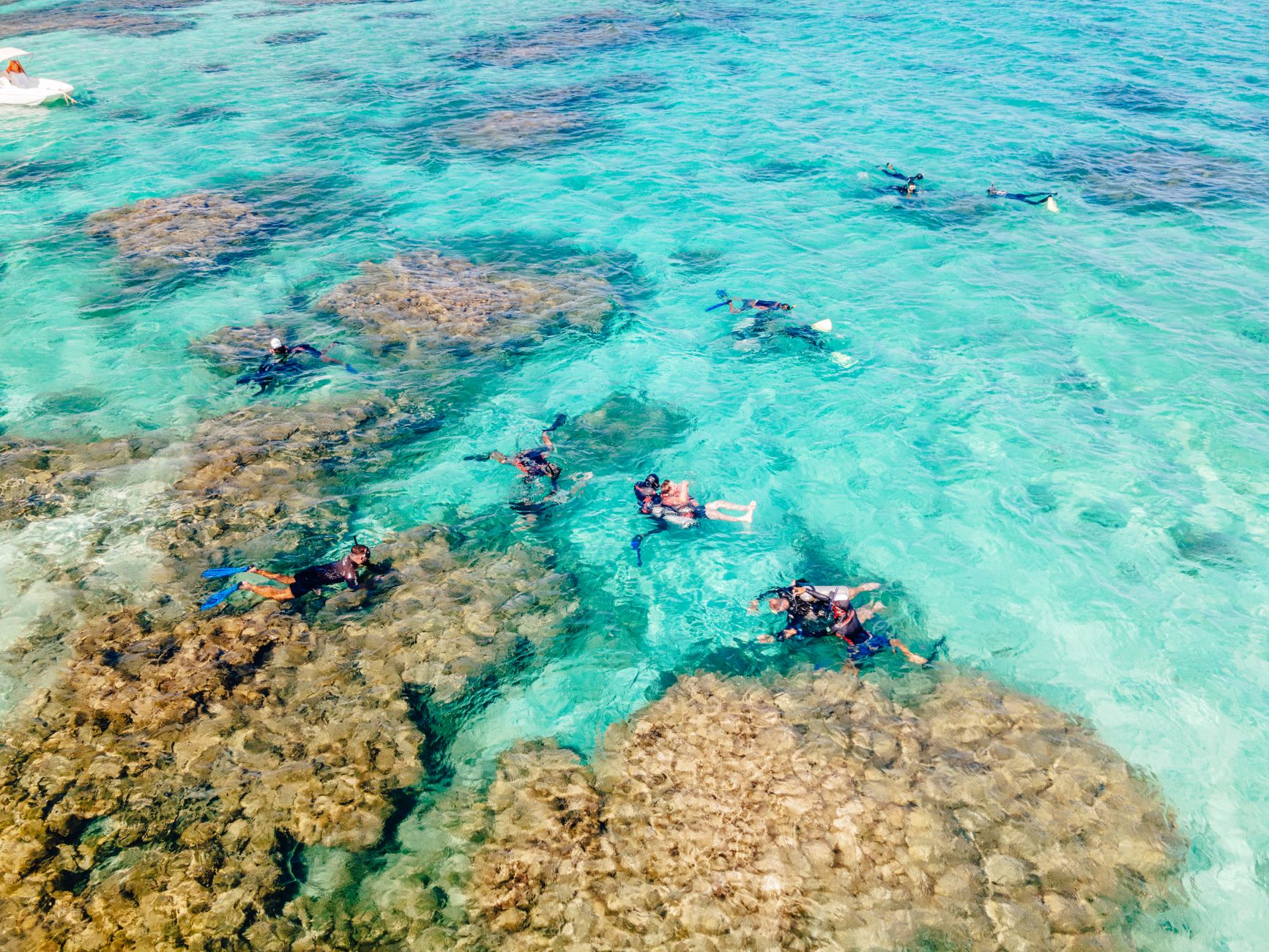


How Cook Islands came to be
Settlers from the Marquesas reached these islands around 450 CE, building the chiefly and spiritual traditions — the fisherman's gods, the carved wooden seats, the ceremonial adzes — that still define each island's identity. Captain James Cook passed through the southern group in 1773, 1774 and 1777, lending the archipelago his name without ever setting foot on Rarotonga. That island was found in July 1823 by Reverend John Williams of the London Missionary Society, who sent two Polynesian teachers, Papeiha and Vahapata, ashore first. The church they built in Arutanga on Aitutaki remains the oldest in the country.
Britain declared a protectorate in 1888 and New Zealand annexed the islands in 1901. Self-governance came in 1965, when Albert Henry became the first prime minister — a moment that settled the Cook Islands into the arrangement it holds today: self-governing, in free association with New Zealand, and increasingly conducting its own foreign policy.
Who and what shaped it
People who shaped it
Landmark buildings
See Cook Islands in motion
Plan your visit
On the map
When to go
The dry season runs roughly June to September, with average temperatures around 26°C and little rain — the clearest window for travel, and the heart of humpback whale season. December through March brings heat, humidity and the real possibility of a tropical cyclone, so most visitors avoid those months.
Right now
Background & history adapted from Wikipedia (CC BY-SA) · specs from Wikidata (CC0) · weather from Open-Meteo · map data © OpenStreetMap contributors · photos from Wikimedia Commons / Unsplash with per-image credit. No third-party reviews or social posts reproduced.