
Teatro Romano di Verona
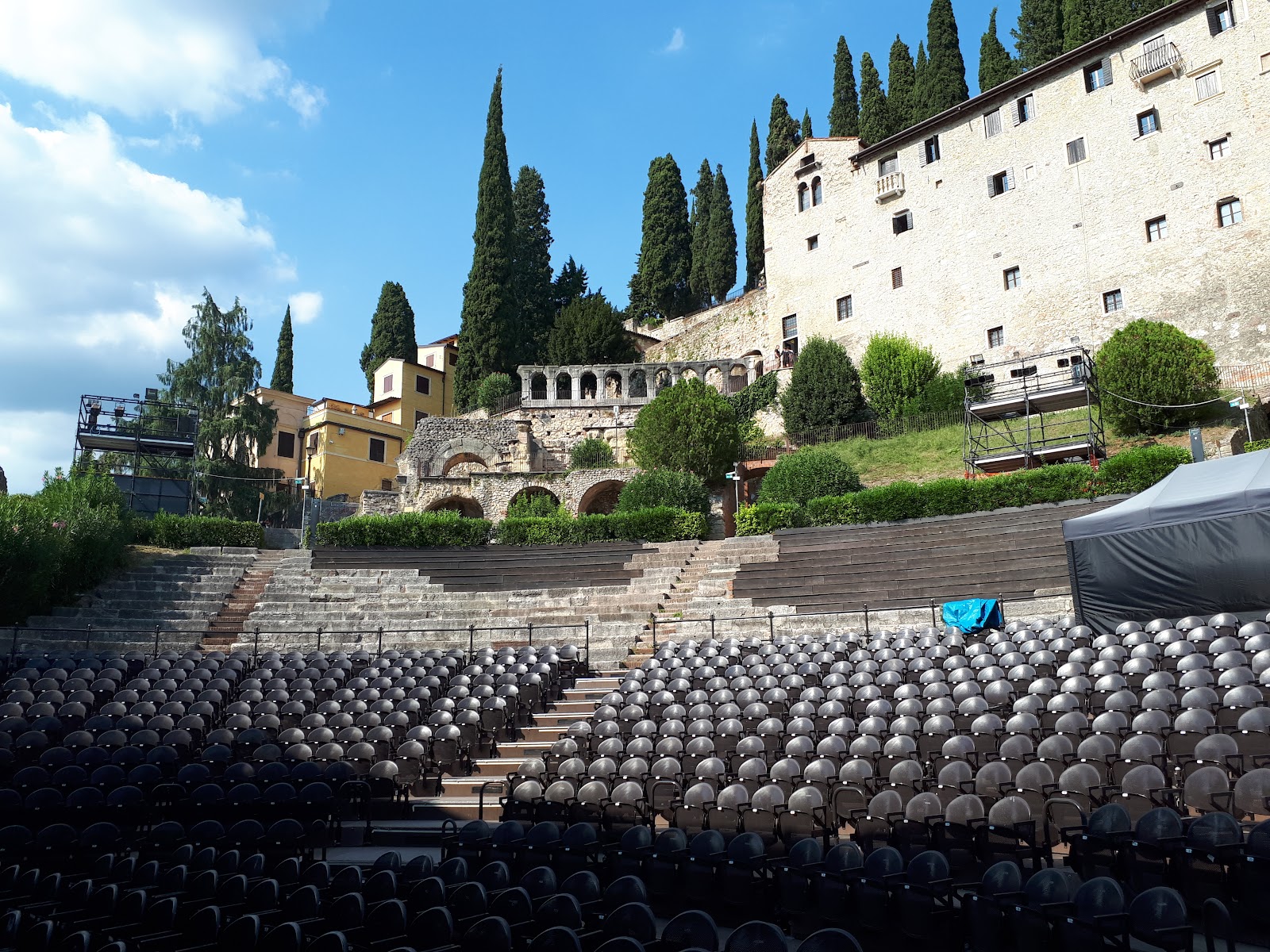
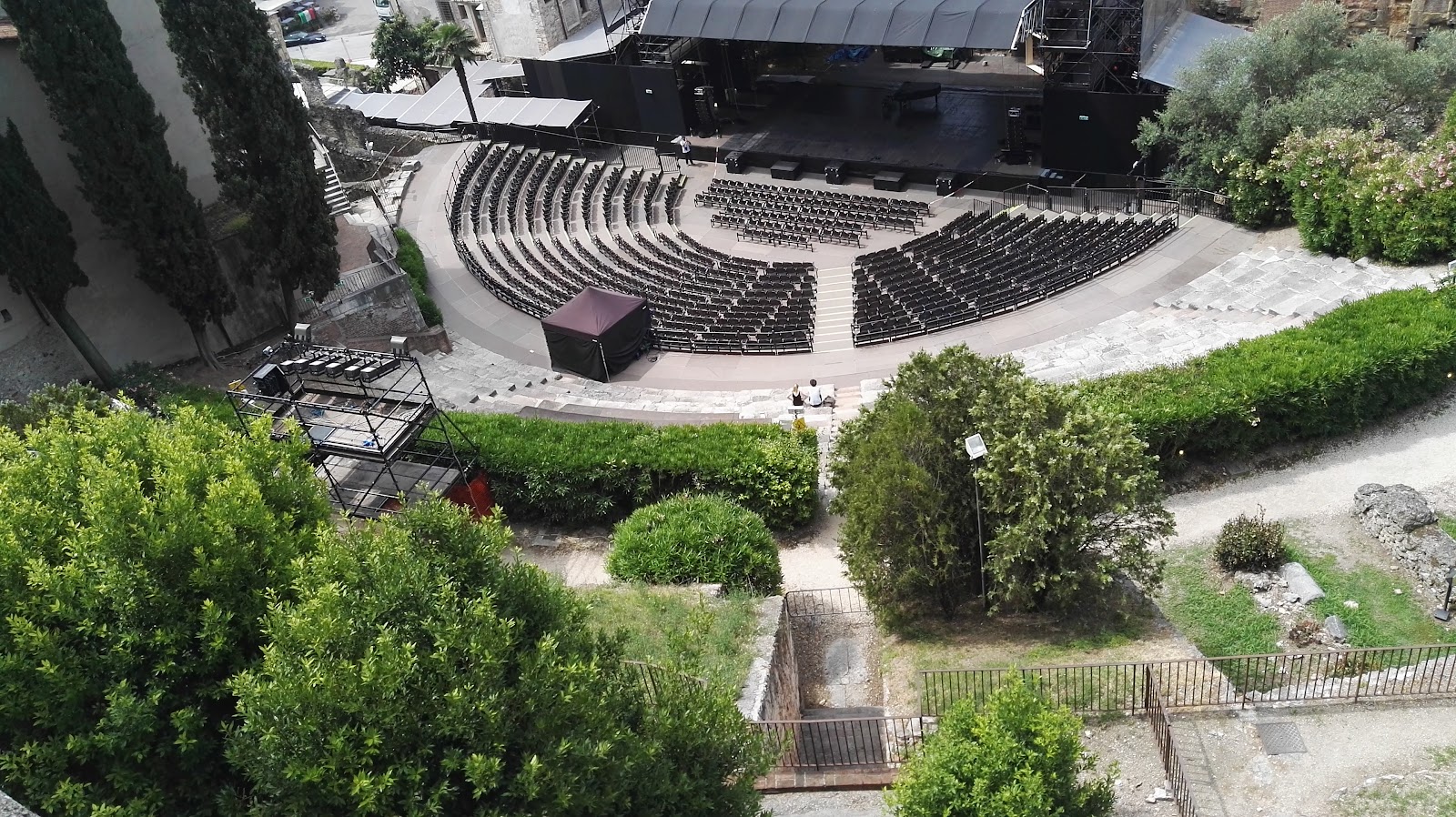
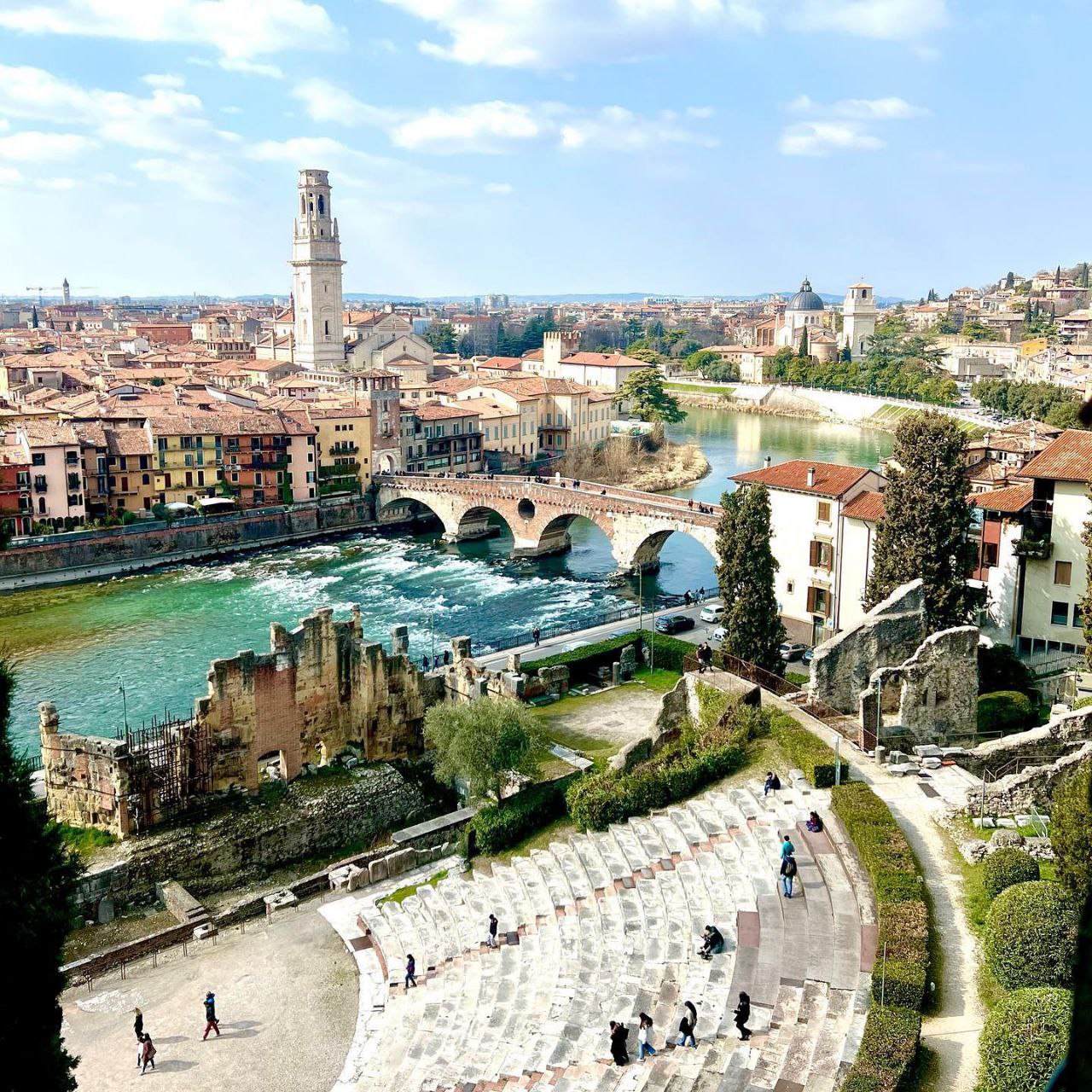
On the north bank of the Adige, where the hill of San Pietro rises behind Ponte Pietra, a Roman theatre cuts into the slope in a way that still makes sense of the hillside. Built in the late first century BC and capable of holding 6,000 spectators, it was gradually buried under centuries of houses and a tenth-century church — which still stands, with considerable strangeness, right in the middle of the stone seating.
This is not the Arena. It is quieter, more layered, and the view from the upper terrace — across the river bend to Verona's rooftops — is one of the better ones in the city.
💛 What travellers fall for
People who come back tend to linger at the stage building rather than the seats: the tuff-block walls, the three actors' doorways, and the pit mechanism for raising and lowering the curtain are all still legible. The Archaeological Museum upstairs, in a deconsecrated Gesuati monastery literally built on top of the theatre, takes less time than you'd expect and rewards it.
The story behind Teatro Romano di Verona
The theatre was constructed in the late first century BC on a series of terraces rising roughly 60 metres from the Adige bank to the hilltop. Two flanking walls were raised along the river as flood protection. A temple occupied the summit. By the medieval period the structure had been absorbed entirely into the urban fabric — a church dedicated to S. Siro e Libera was built into the cavea in the tenth century and restored in the fourteenth.
Abbot Fontana began the first excavations in 1757, but the systematic uncovering came after 1834, when a Veronese merchant named Andrea Monga purchased and dug out the entire site. The municipality acquired it in 1904 and continued restoration work. Andrea Palladio had tried to reconstruct the theatre's form on paper as early as the sixteenth century, working only from foundations buried beneath houses.
Good to know
Open daily from 08:30 (Mondays from 13:30). Admission is €4.50, or free with the Verona Card, and includes the Archaeological Museum. Reach it on foot across Ponte Pietra in a few minutes from the city centre. Note significant architectural barriers for visitors with mobility needs.
Summer evenings, when the Estate Teatrale Veronese runs performances on the ancient stage, are warm and dry — a good time to visit, though opening hours shift around show schedules. Spring and autumn are cooler and quieter; winters are mild but the terraces are exposed.
Where is Teatro Romano di Verona?
Location
- In Verona
- 45.4468, 11.0022
- Open in Google Maps
More tickets & tours for Teatro Romano di Verona
Book directly at the provider
More of Verona
Discover where to stay, what to do and the best deals for your trip.
Explore Verona →More attractions in Verona
All of Verona →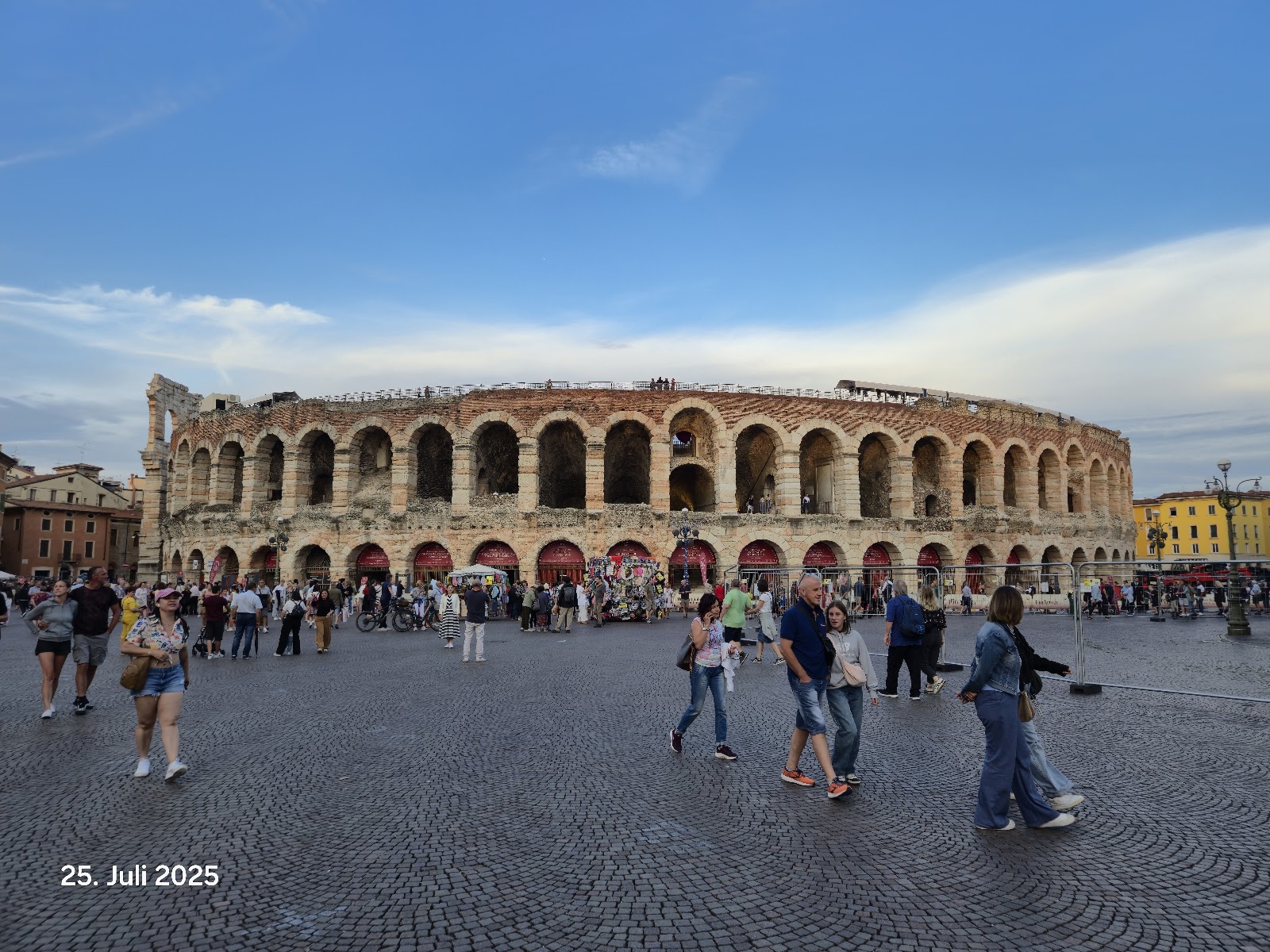

Background adapted from Wikipedia (CC BY-SA) · map data © OpenStreetMap contributors · ratings & place photos via Google · other photos with per-image credit. Ticket links may earn us a commission at no extra cost to you.