
Arena di Verona
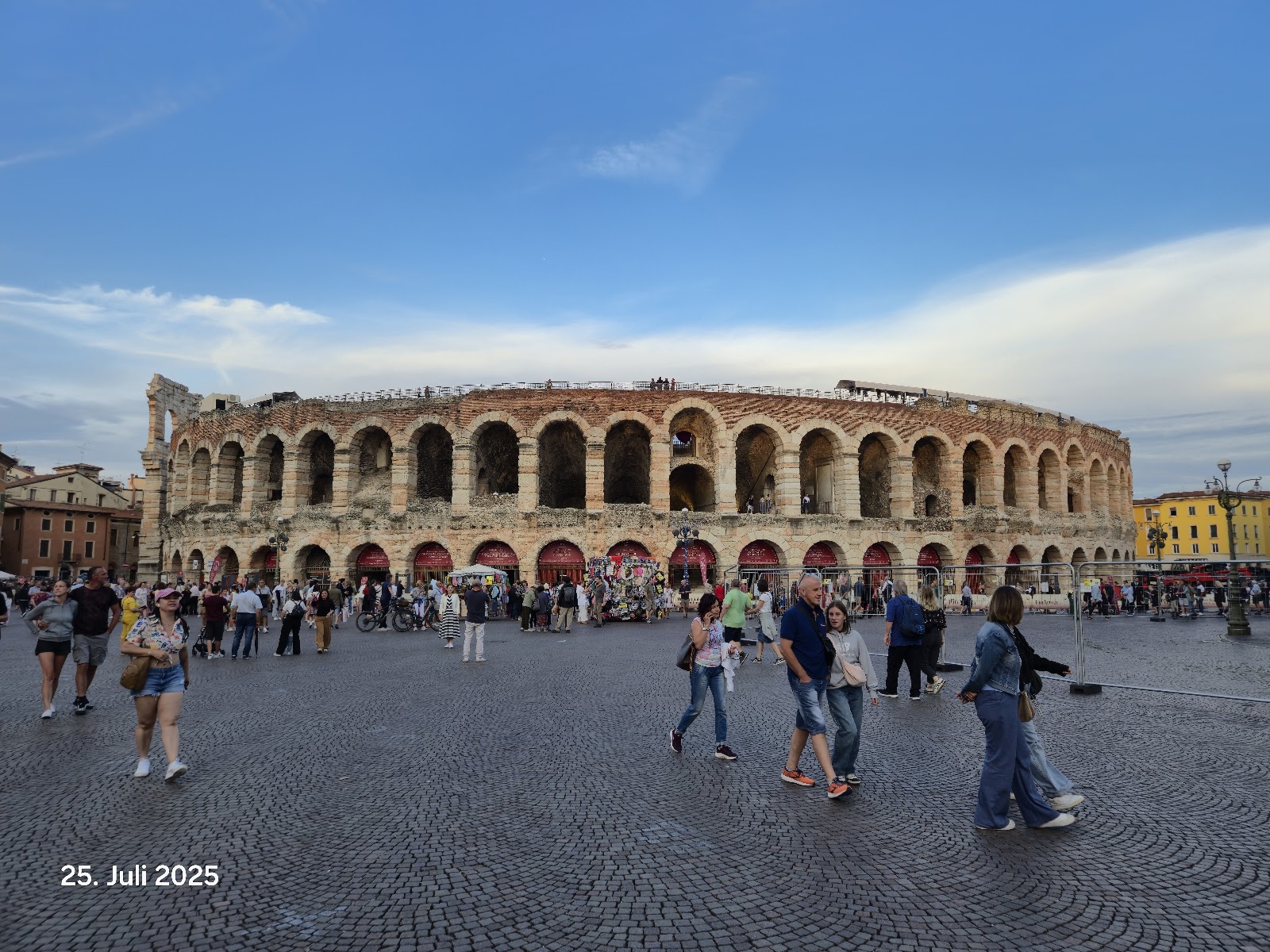
The Arena di Verona sits in Piazza Bra like a fact that refuses to be ignored — two thousand years of pink and white Valpolicella stone, still doing the job it was built for. At 152 metres along its long axis and originally holding 30,000 people, it ranks among the largest Roman amphitheatres ever built, and yet the detail that stays with you is acoustic: from the highest tier, some 80 metres from the stage, you can hear a cough, a page turn, a conductor's breath.
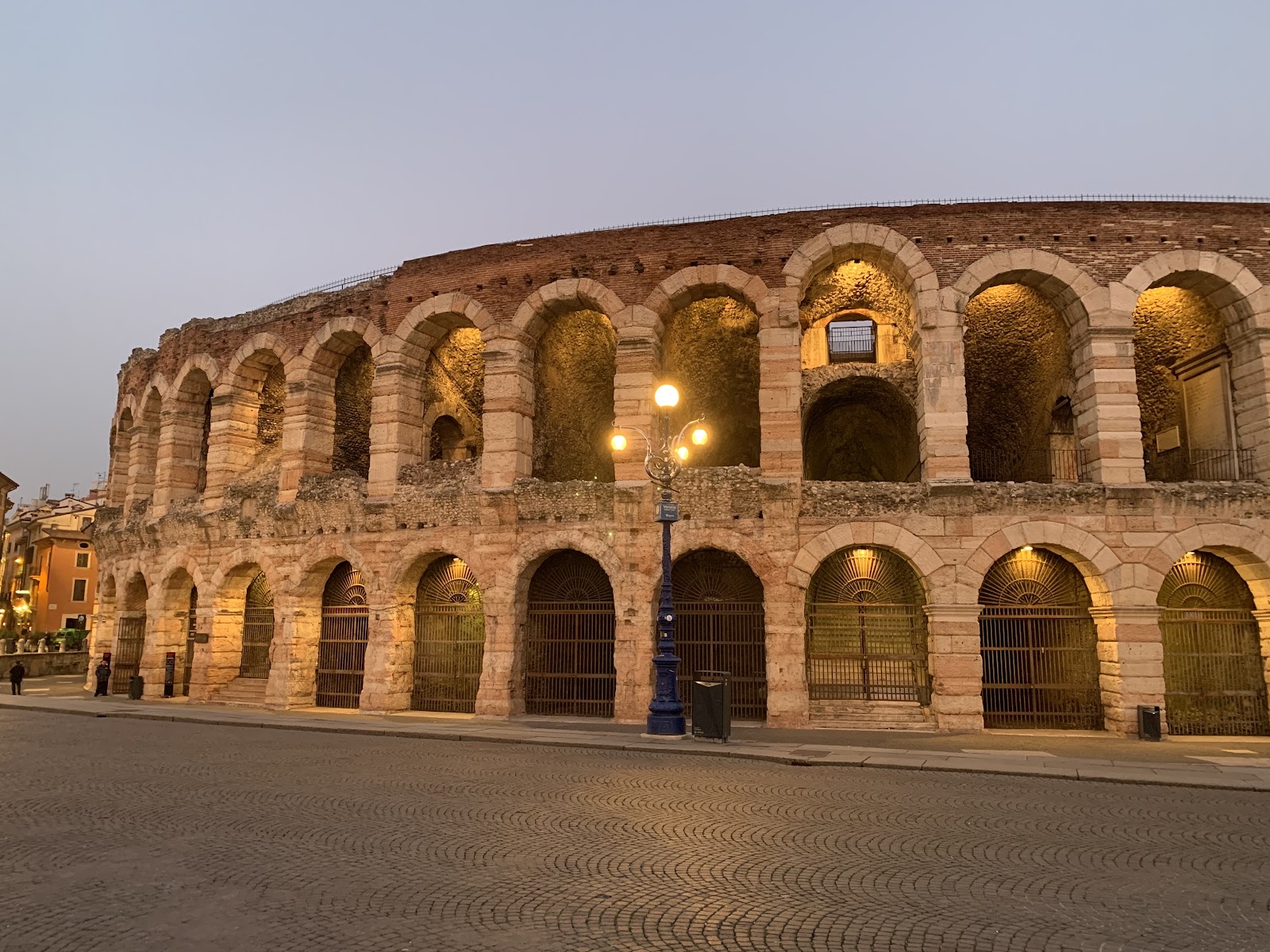
Most of what you see is the inner structure — three concentric vaulted galleries, 44 rows of stepped seating — because the outer ring was largely lost to a 12th-century earthquake. One fragment survives: the 'Ala,' a three-storey arc of arches that stands alone at the northern end, a reminder of how the whole thing once looked from the street.
💛 What travellers fall for
People who come back tend to do both versions: the daytime visit for the stone and the silence, and then a summer evening for the opera. Rent a cushion at the gate — the steps are exactly as unforgiving as they look. Get up to the higher tiers early; the view over Verona's rooftops from up there is the one most photographs miss.
The story behind Arena di Verona
Construction began around 30 AD, during the early imperial period, though scholars including historian Pirro Marconi place it more precisely in the second or third decade of the 1st century. By 69 AD it was already standing. In 265, Emperor Gallienus extended Verona's city walls by 550 metres specifically to bring the Arena inside the fortified perimeter — a measure of how central the structure had become.
Systematic restoration began in the 16th century, and the building found a new purpose in 1913 when tenor Giuseppe Zenatello staged Verdi's Aida here, with stage designer Ettore Fagiuoli introducing three-dimensional scenery that used the stone cavea as a backdrop. That first season launched what became an annual opera festival, interrupted only by the two world wars, that now draws more than 500,000 people each summer.
Good to know
Buses 11, 12, 13 and 51 stop in Piazza Bra, one minute from the entrance. Open Tuesday–Sunday from 9am; Mondays from 1:30pm. Daytime tickets (€12 full, €9 reduced) cover the amphitheatre interior — opera tickets are booked separately and sell out fast in summer.
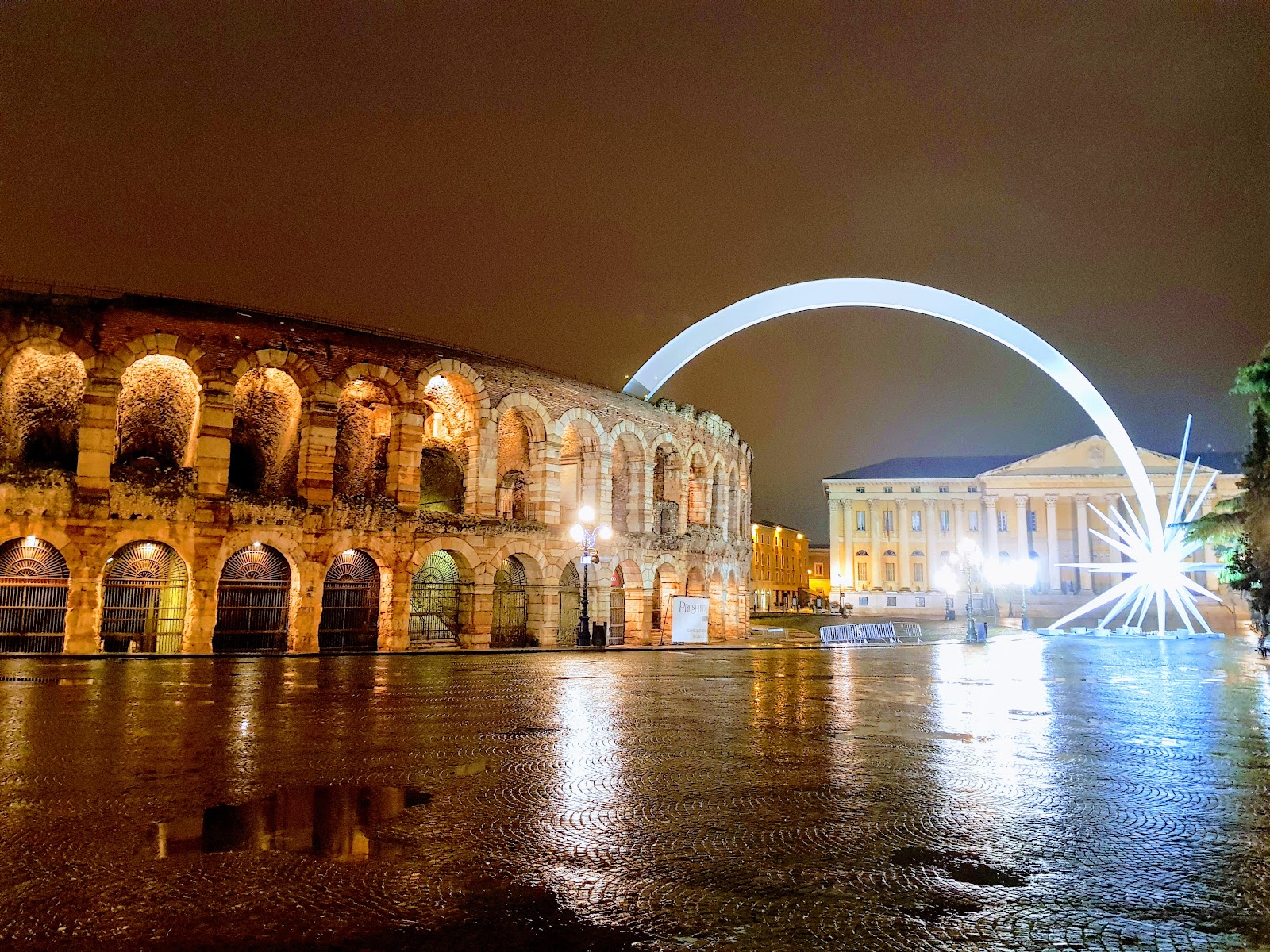
Summer evenings during the opera season (June–August) are warm and usually dry, but the open stone holds the day's heat well into the night — a light layer is enough. September and October offer cooler air and smaller crowds for a daytime visit; February through May is quieter still, though spring weather in northern Italy can be unpredictable.
Where is Arena di Verona?
More tickets & tours for Arena di Verona
Book directly at the provider
What travellers say about Arena di Verona
What an experience! Not an opera buff, I wasn't sure we'd like it (Aida), but it was captivating. The arena was pretty well organised, we joined the queue about 25 mins before start time, they recommend longer and that would have been better but we got in just in time. Water, beer, wine and rental cushions were available, we took our own (if you are not in proper seats you definitely need them!). The production was stunning, with captions in Italian and English on large boards. Strongly recommend just for the experience even if you don't know the opera.
Went to a concert here (duran duran), fantastic arena, great sound and view. Take cash to buy drinks. Buy a cushion earlier in the day outside, we didn't and it was very uncomfortable after a while (we were on the stone steps) but the shop was not open when we arrived. You can get them from the arena for €5 or on a little market stall from €1.50. Would have been worth every penny. Its very hot so take a fan too (we were here mid july)
Visiting the Arena di Verona is stepping into a live time capsule. Built around 30 AD, this Roman amphitheater once held 30,000 spectators for gladiator games. Remarkably, it’s the best-preserved arena from antiquity because in the Middle Ages, instead of being dismantled for stone like the Colosseum, it was repurposed for public events. Today, it still hosts world-class operas and concerts — an unbroken 2,000-year legacy of entertainment. Most tourists snap a photo of the vast open piazza, but don’t stop there. Head to the surviving outer ring section and study the clever stone staircases that channeled tens of thousands from ground level to the first, second, and third levels in minutes. And the water drainage system beneath the cavea? Absolutely genius. Rainwater vanished instantly, keeping the crowd dry. This is a masterclass in Roman engineering. A must-see for anyone who loves architecture, history, or opera. Get a Verona card for cutting the line.
Highly recommend buying tickets in advance as the queue to enter otherwise is stagnant and doesn't move. You can only visit a portion of the Colosseum but this is enough. There's two sets of toilets inside including a disabled. You can go to the top step and take it all in for it's history and beauty. This is doable in less than an hour but it's nice to sit on the steps in the sun and take it all in. You can also see from outside and have an unrestricted view of the opposing square.
It is a great plac to take kids and show them the touchabke history of old Italy. They may climb the steps, they may have some fun in the huge area. The tickets line was not that long, the price is worth it to visit it. Enjoy!
More of Verona
Discover where to stay, what to do and the best deals for your trip.
Explore Verona →More attractions in Verona
All of Verona →

Background adapted from Wikipedia (CC BY-SA) · map data © OpenStreetMap contributors · ratings & place photos via Google · other photos with per-image credit. Ticket links may earn us a commission at no extra cost to you.