
Basilica di San Zeno Maggiore
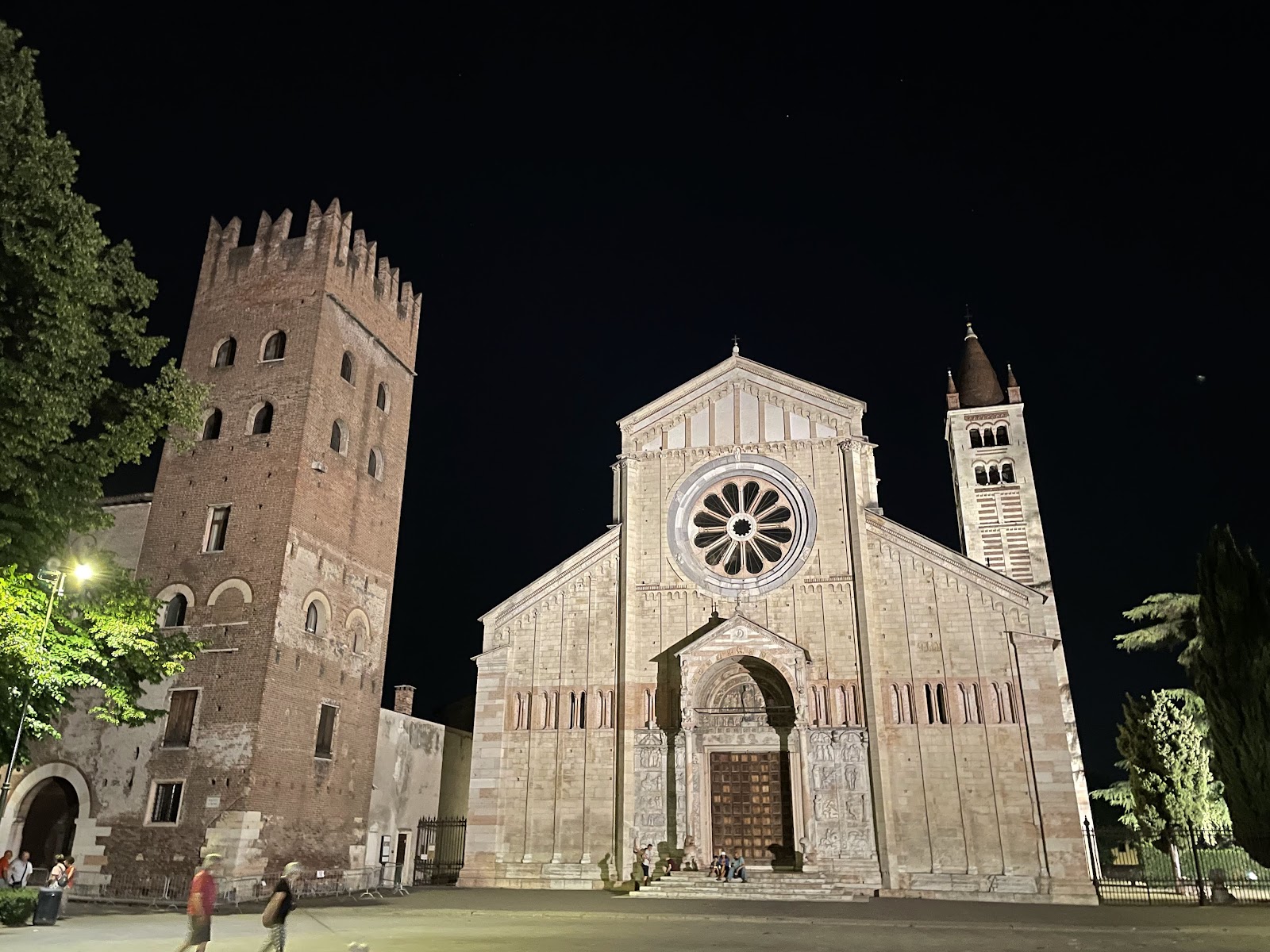
The bronze doors stop you before you even step inside. Forty-eight panels cast by three unknown masters across the 12th and 13th centuries cover the portal of San Zeno Maggiore — Old and New Testament scenes, miracles of the saint, figures that look almost folk-art rough until you lean in and realise how precisely they were made. Verona's patron saint, Zeno, died around 372–380 AD, and the first church rose over his tomb not long after.
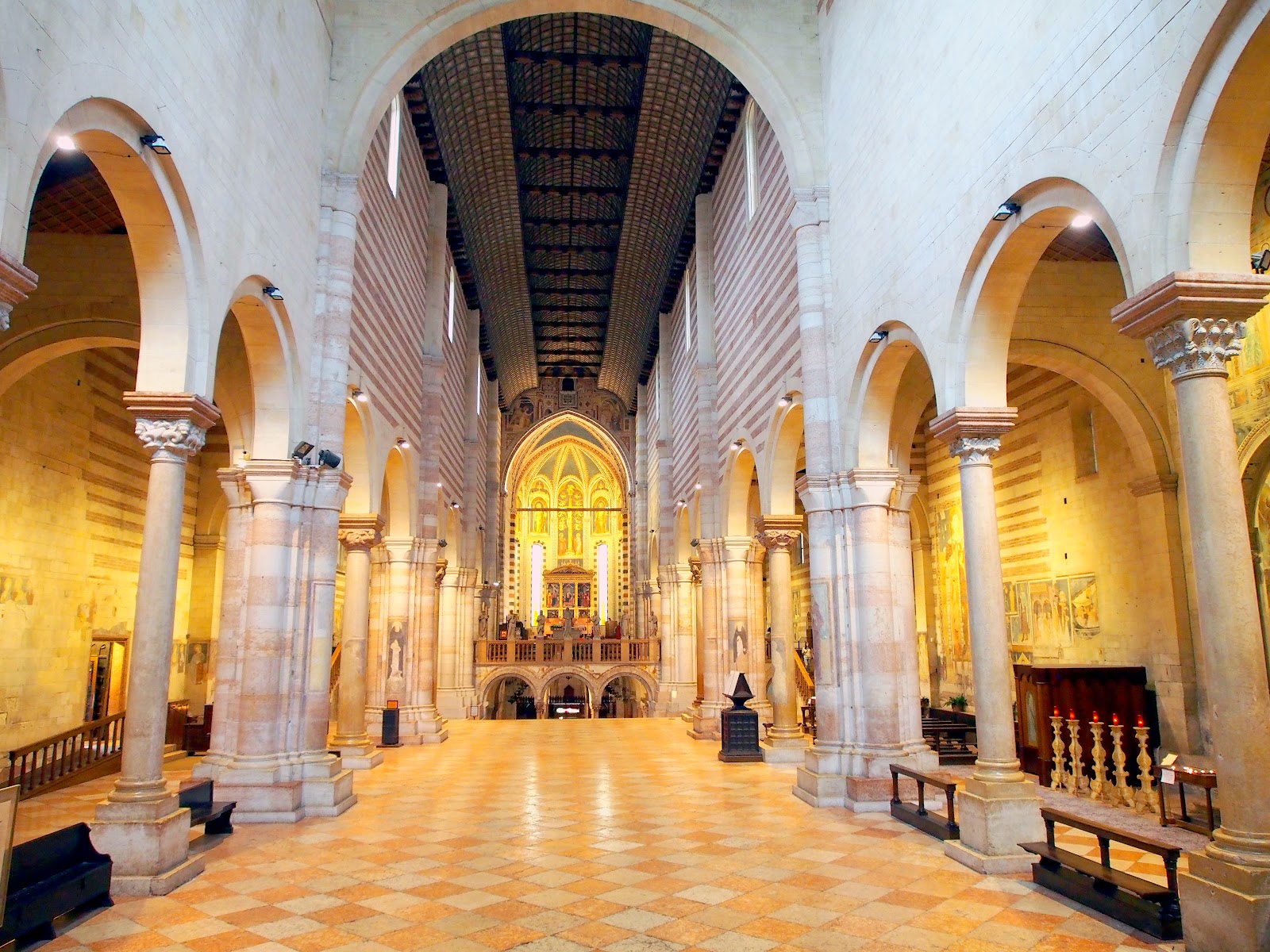
What stands today is largely the result of a Romanesque rebuild completed around 1138, with a wooden ceiling shaped like an upturned ship's hull added in 1385–1389, and a crypt of 49 columns beneath the raised presbytery that is, in its quiet way, the oldest thing in the building.
💛 What travellers fall for
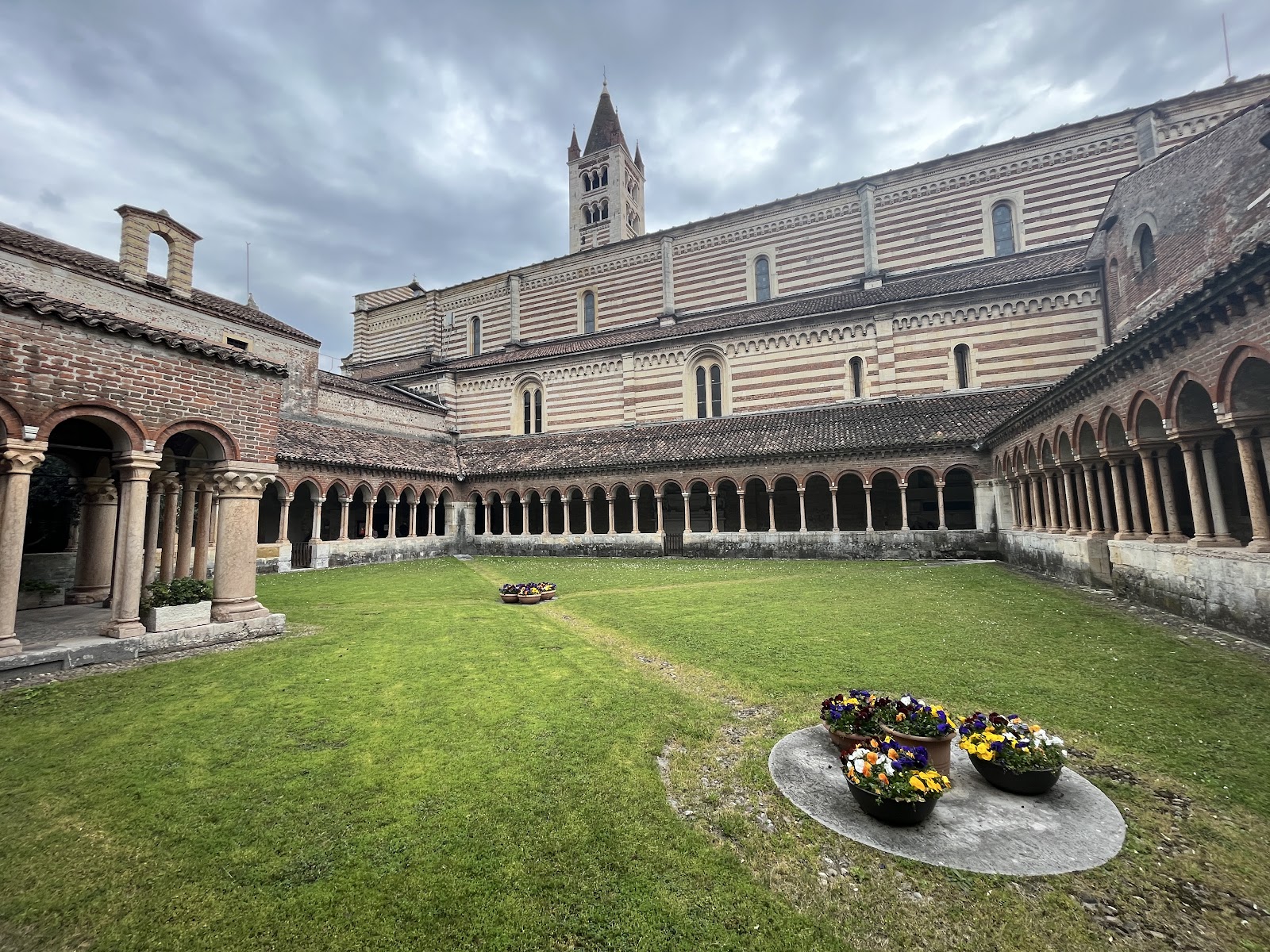
People who come back tend to go straight to the Mantegna altarpiece — the Madonna Enthroned commissioned between 1456 and 1457, where the painted architecture continues the real stone of the apse in a way that takes a moment to unpick. Then down to the crypt, where the column capitals are all different, each one its own small invention.
The story behind Basilica di San Zeno Maggiore
A church has stood on this site since shortly after the death of Saint Zeno, eighth bishop of Verona, sometime between 372 and 380. The building you see was commissioned in the 9th century by Bishop Ratold and King Pepin of Italy, consecrated on 8 December 806, with Zeno's body translated to the crypt the following May. The 1117 earthquake that shook much of northern Italy brought the structure down; reconstruction in the Romanesque manner was largely complete by 1138, when the sculptor Niccolò decorated the façade with reliefs, assisted by a master named Guglielmo.
The bell tower, 72 metres tall, had been started in 1045 and was restored after earthquake damage. Architect Giovanni da Ferrara began a further enlargement in 1386, finishing in 1398 with his son Nicolò. The Benedictine abbey attached to the basilica was suppressed in 1770; its library became the first nucleus of Verona's public library.
Good to know
Bus lines 31, 33, 61, 91 and 138 stop two minutes away at Porta San Zeno. Sunday mornings are reserved for religious services until 1 p.m., so plan accordingly. Winter hours are shorter — the basilica closes by 5 p.m. Adult entry is €4.
Where is Basilica di San Zeno Maggiore?
More tickets & tours for Basilica di San Zeno Maggiore
Book directly at the provider
What travellers say about Basilica di San Zeno Maggiore
Lovely Italian architecture and beautiful marble on floors and columns in the basilica. The Basilica of San Zeno Maggiore in Verona is one of Italy's most significant Romanesque masterpieces. Dedicated to the city's patron saint, the current structure was primarily built between 967 and 1398 AD. The Facade: Famous for its warm tones created by alternating layers of tuff stone and brick. It features the "Wheel of Fortune" rose window, designed by Brioloto de Balneo, which symbolises the changing nature of fate.
Beautiful medievam church with gorgeous frescoes. Crypt is open to visit and the frescoes on the walls are quite well-preserved. There are ammonite fossils in the stones covering the floor and the stairs.
One of the best romanic churches in Italy. The bronze portal and the Mantegna pala are the highlight but the entire complex is a true masterpiece !
What a stunning place! The light, the atmosphere, the sheer beauty of the architecture and the history! This was my wow moment in Verona.
Unique and special architecture, very impressive, both externally and internally. The choir area, divided into a lower and upper part, is extremely impressive. The size of the building is amazing, especially when you consider the period in which it was built. In addition, on the left side of the site plaza (facing the entrance) are several local restaurants with amazing local cuisine! Don't miss the mushroom pasta dish!
More of Verona
Discover where to stay, what to do and the best deals for your trip.
Explore Verona →More attractions in Verona
All of Verona →

Background adapted from Wikipedia (CC BY-SA) · map data © OpenStreetMap contributors · ratings & place photos via Google · other photos with per-image credit. Ticket links may earn us a commission at no extra cost to you.