
Ponte Scaligero
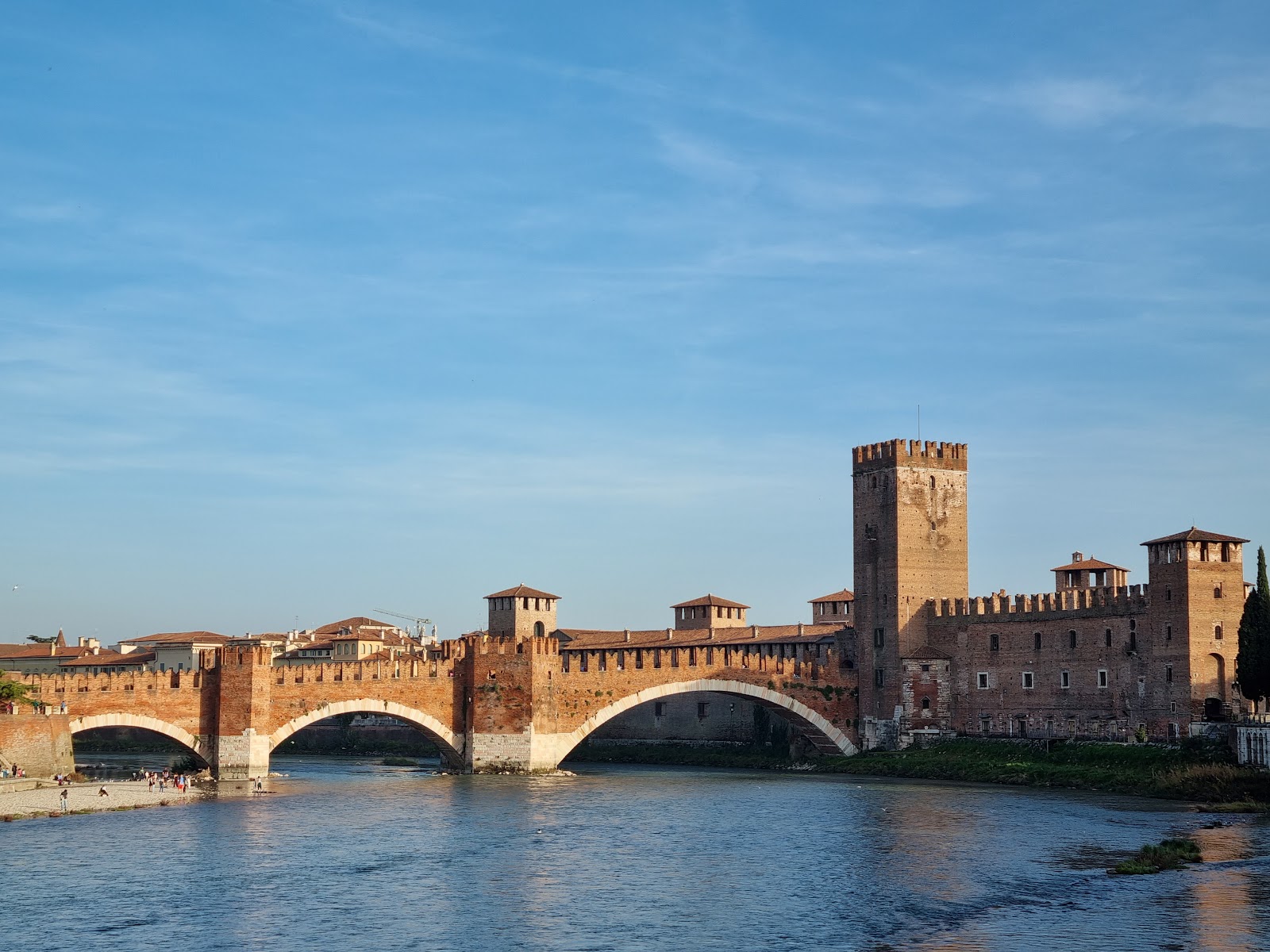
When you walk out onto Ponte Scaligero, the Adige moves below you in long, quiet pulls, and the red brick of the towers catches whatever light the hour offers. The bridge slopes — deliberately, you'll learn — down toward the far bank, a design decision made not for aesthetics but for speed: Cangrande II della Scala wanted a quick exit toward the Tyrol countryside if Verona's citizens ever turned against him.
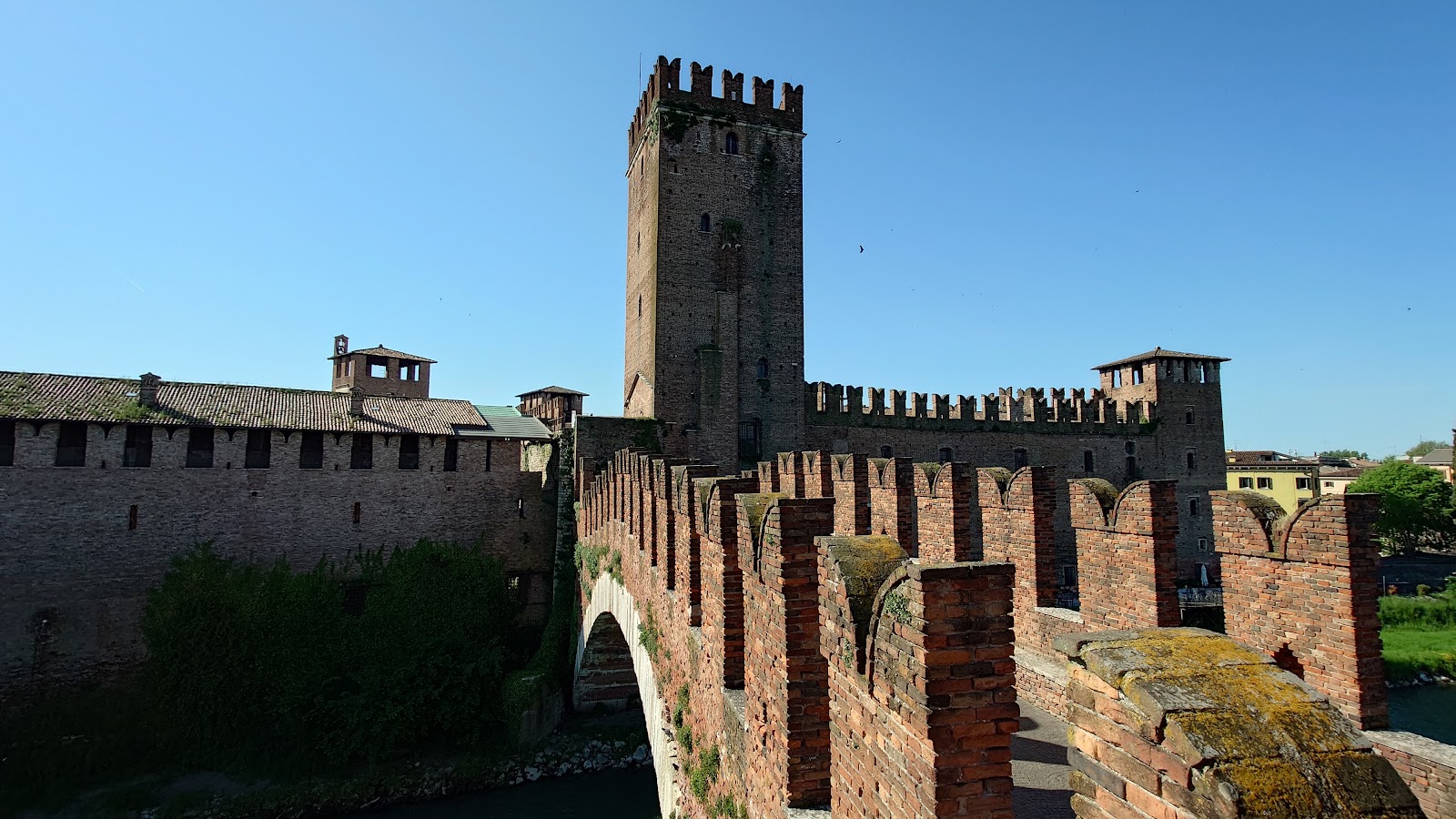
At 120 metres long and built between 1354 and 1356, it is a fortified bridge in the truest sense — three spans of decreasing width, pentagonal towers, battlements, the whole thing in red Scaliger brick above and white marble below.
💛 What travellers fall for
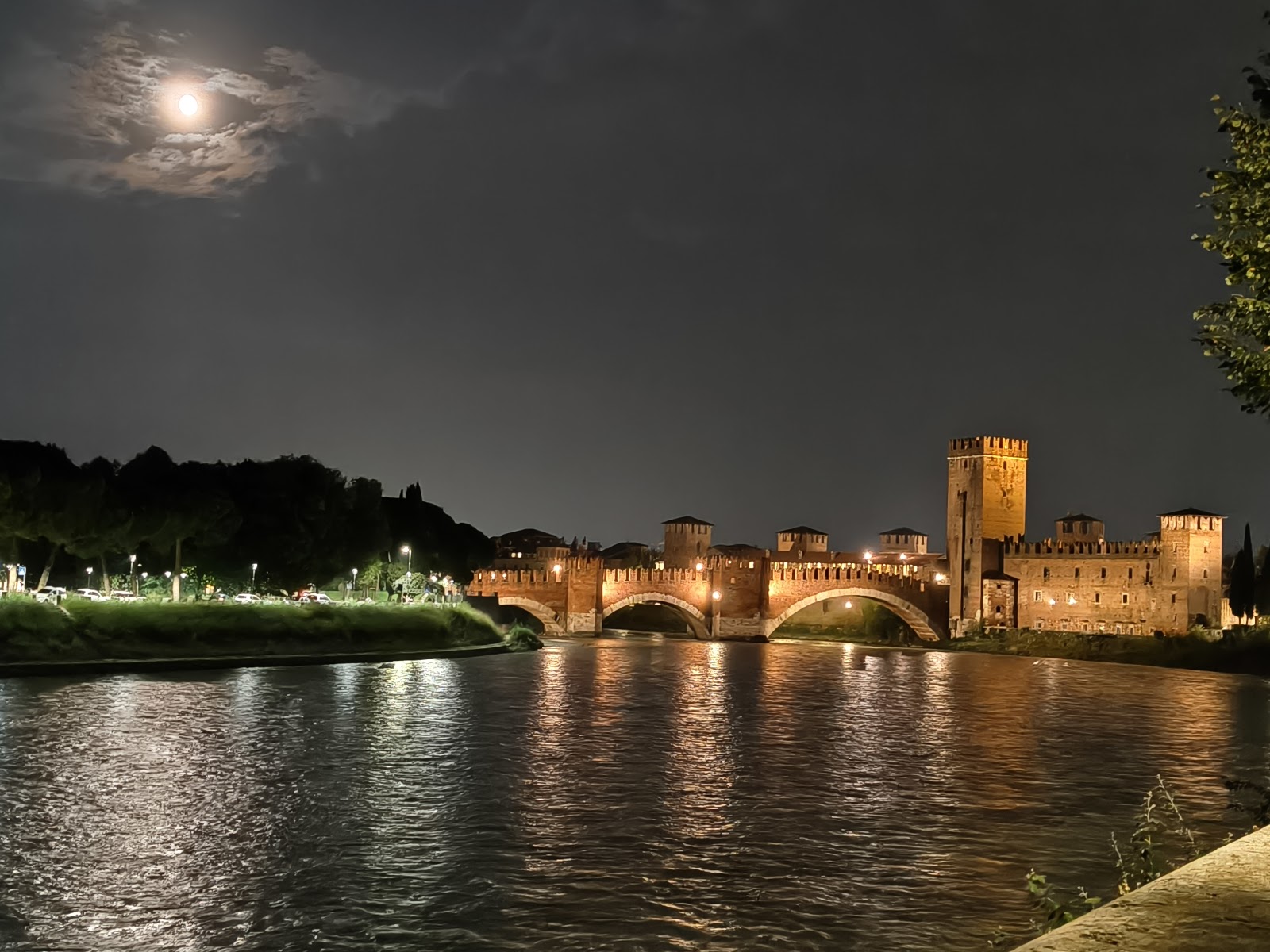
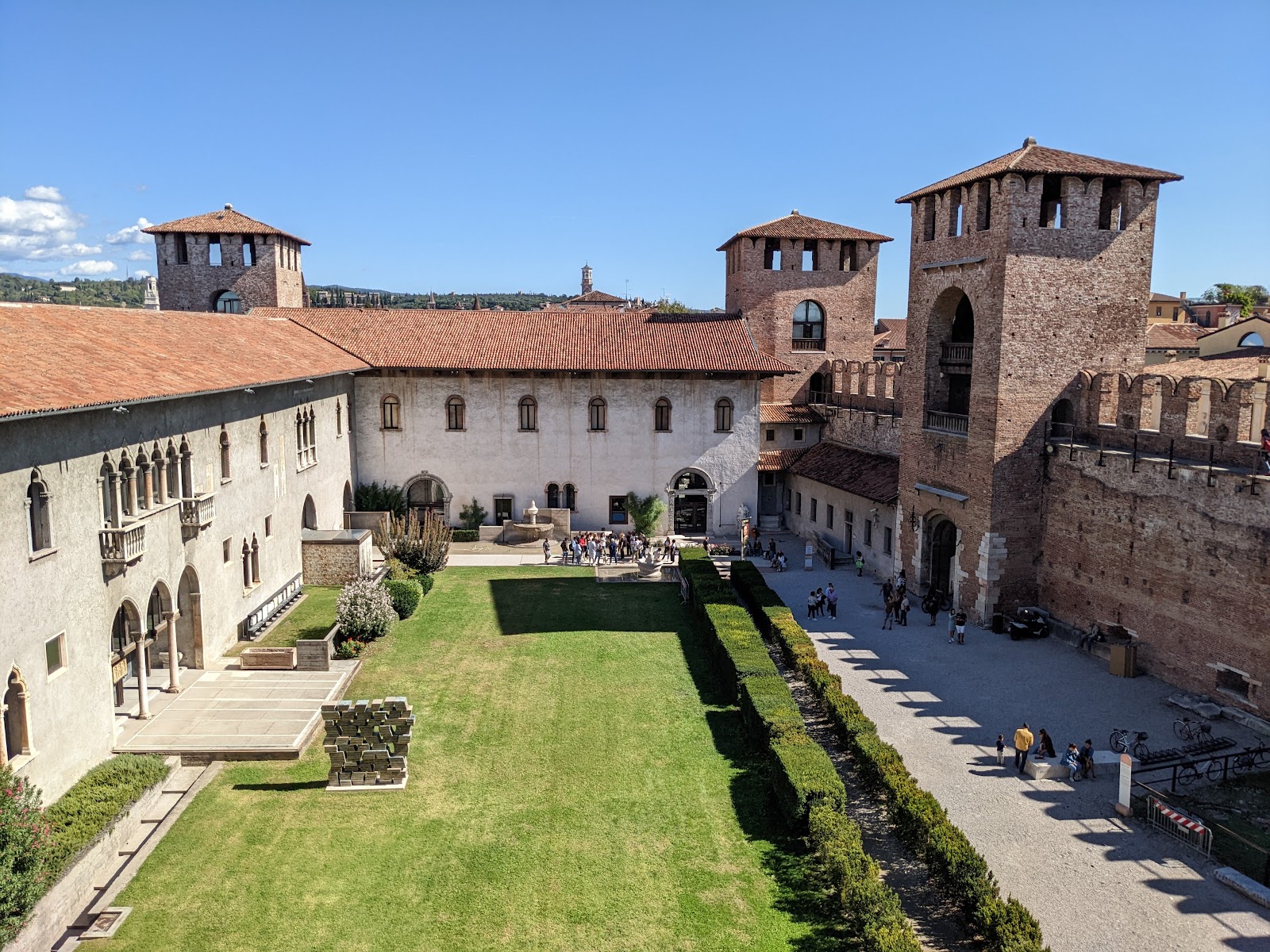
People who come back tend to come back at different hours. The sunset view from the battlements of the adjacent Castelvecchio is the classic move, but early morning earns you softer light on the brick, an almost-empty walkway, and the river to yourself. Climb into one of the pentagonal towers and look east along the roofline of the Città Antica.
The story behind Ponte Scaligero
Cangrande II della Scala commissioned the bridge in 1354 as an escape route from Castelvecchio — a private corridor between his fortress and the open road north, designed for a ruler who understood that tyrants need contingency plans. Its central span of 48.70 metres was the largest bridge arch in the world at the time of construction, an engineering fact attributed to a designer named Guglielmo Bevilacqua, though his identity rests on a single document from 1495.
The French removed the southern tower and battlements in 1802; the Austrians rebuilt them in 1820 on the orders of Emperor Francis I. On April 24, 1945, retreating German forces destroyed the bridge along with every other crossing in Verona. Reconstruction under architect Libero Cecchini ran from 1949 to 1951, returning the bridge almost entirely to its medieval form.
Good to know
Free and open around the clock, pedestrians only. From Verona Porta Nuova station it's a 15-20 minute walk or a short ride on bus lines 91 or 30 (stop: Largo Don Bosco, roughly 180 metres away). Midday in summer draws the heaviest crowds — early morning or after dinner is worth the adjustment.
Spring and early summer bring mild temperatures and the heaviest visitor numbers. Summers are warm and occasionally humid; the brick holds the afternoon heat. Winter mornings can be cold and mist sits on the Adige, which makes for atmospheric light if you don't mind the chill.
Where is Ponte Scaligero?
More tickets & tours for Ponte Scaligero
Book directly at the provider
What travellers say about Ponte Scaligero
Absolutely beautiful and magical. Castelvecchio Bridge is one of those places that truly takes your breath away. The historic architecture, the river views, and the peaceful atmosphere make it perfect for a walk, photos, or simply stopping to admire Verona’s beauty. It feels timeless and romantic, especially at sunset. A must-see spot when visiting Verona. I loved every moment here 🧡
Ponte Scaligero in Verona is a stunning medieval structure that combines history, architecture, and scenic beauty. Built in the 14th century by Cangrande II della Scala, the bridge was designed as a fortified escape route from the Castelvecchio fortress. Today, the pedestrian-only bridge offers breathtaking views of the Adige River and is one of Verona’s most impressive sights. Spanning the Adige river, its bold red brickwork, dramatic towers, and powerful medieval presence is a must see. Even on the most foggy and cold nights this bridge brings nothing but joy and happiness.
The bridge is a fourteenth century creation, built as an escape route for the paranoid Scaligeri family that lived in the castle. The bridge was blown up by the Germans in 1945 - a hideous cultural crime - but lovingly restored using the original materials over the next 10 years or so. It is free to enter, lit up at night and a beautiful experience.
Ponte di Castelvecchio is one of Verona’s most impressive and atmospheric sights. Spanning the Adige River, this fortified bridge immediately stands out with its bold red brickwork, dramatic towers, and powerful medieval presence. It feels less like a simple crossing and more like a living piece of history. Built in the 14th century as part of the Castelvecchio complex, the bridge was designed both for defense and as an escape route for the ruling Scaliger family. Walking across it, you can still sense its strategic purpose—the high walls, narrow passageways, and commanding views over the river all tell a story of a turbulent past.
Pretty cool. Fun spot to climb in middle and usually some musicians around. Museum around the corner and only 9€ for adults and free for kids.
More of Verona
Discover where to stay, what to do and the best deals for your trip.
Explore Verona →More attractions in Verona
All of Verona →

Background adapted from Wikipedia (CC BY-SA) · map data © OpenStreetMap contributors · ratings & place photos via Google · other photos with per-image credit. Ticket links may earn us a commission at no extra cost to you.