
Herculaneum
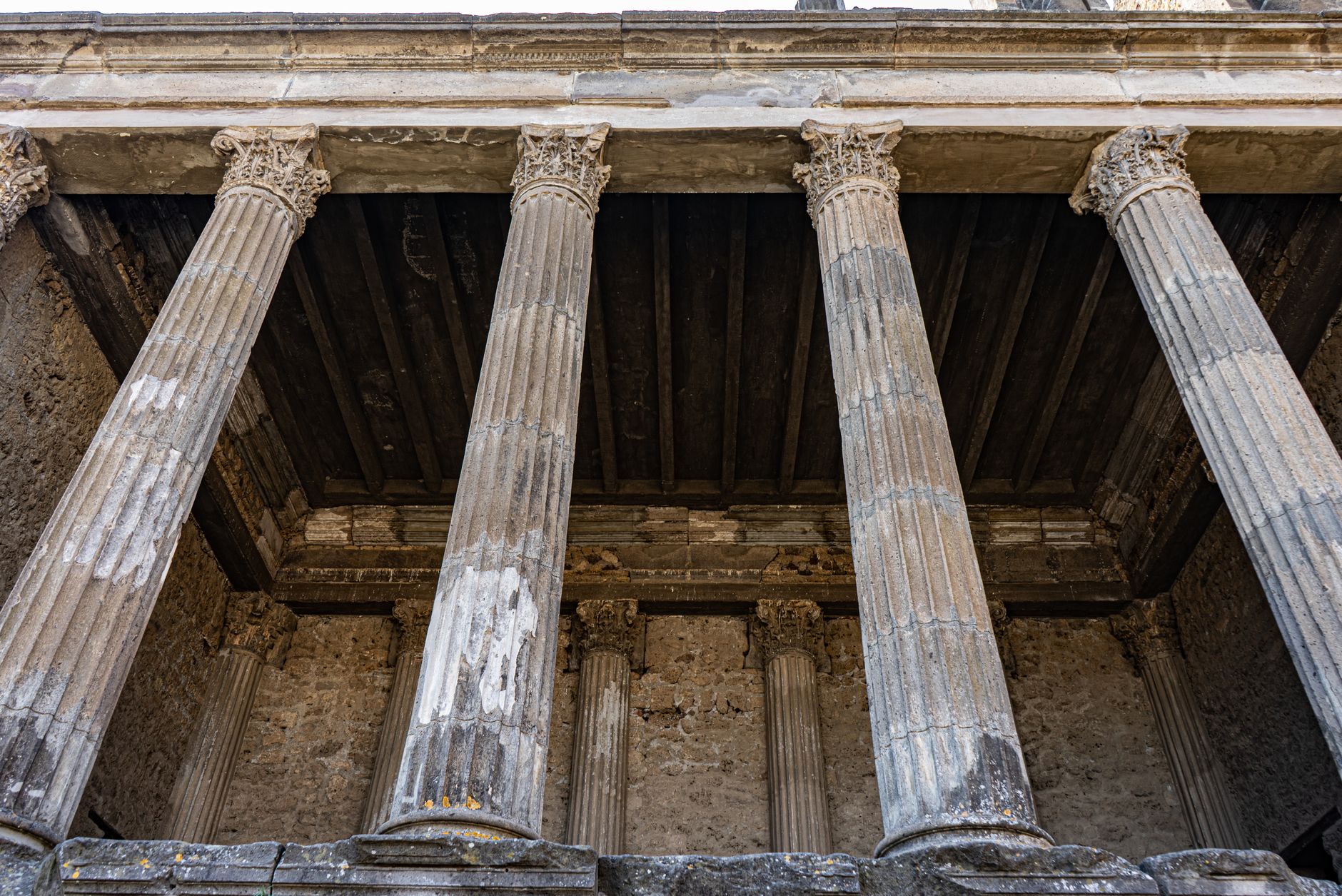
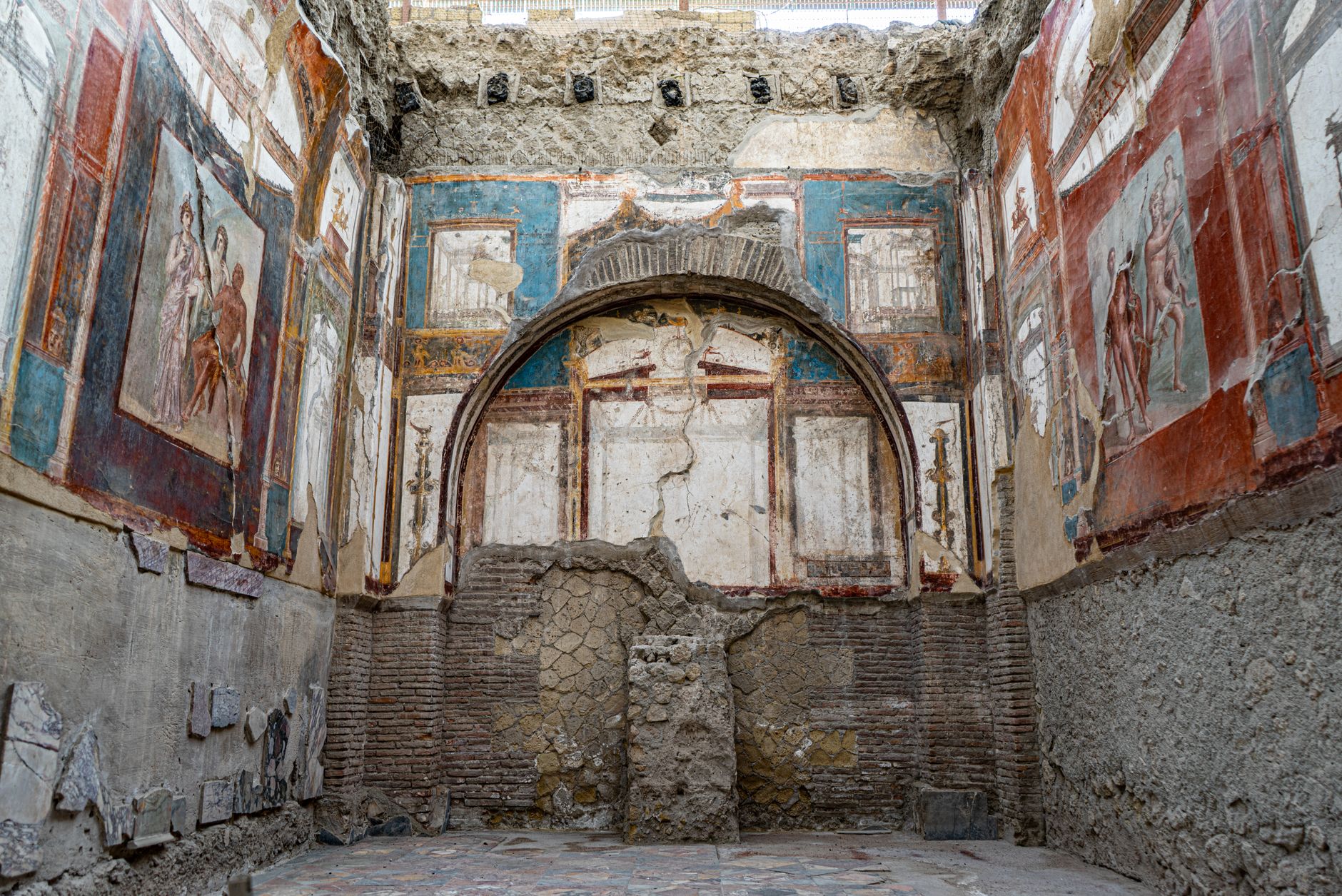
The first thing that stops you is a wooden door. Not a reconstruction, not a cast — an actual Roman door, carbonized black by the pyroclastic surge of 79 AD, still hanging in its frame. Herculaneum does this repeatedly: it hands you the ordinary life of a town that ceased in an afternoon, preserved in a way Pompeii, for all its fame, cannot quite match.
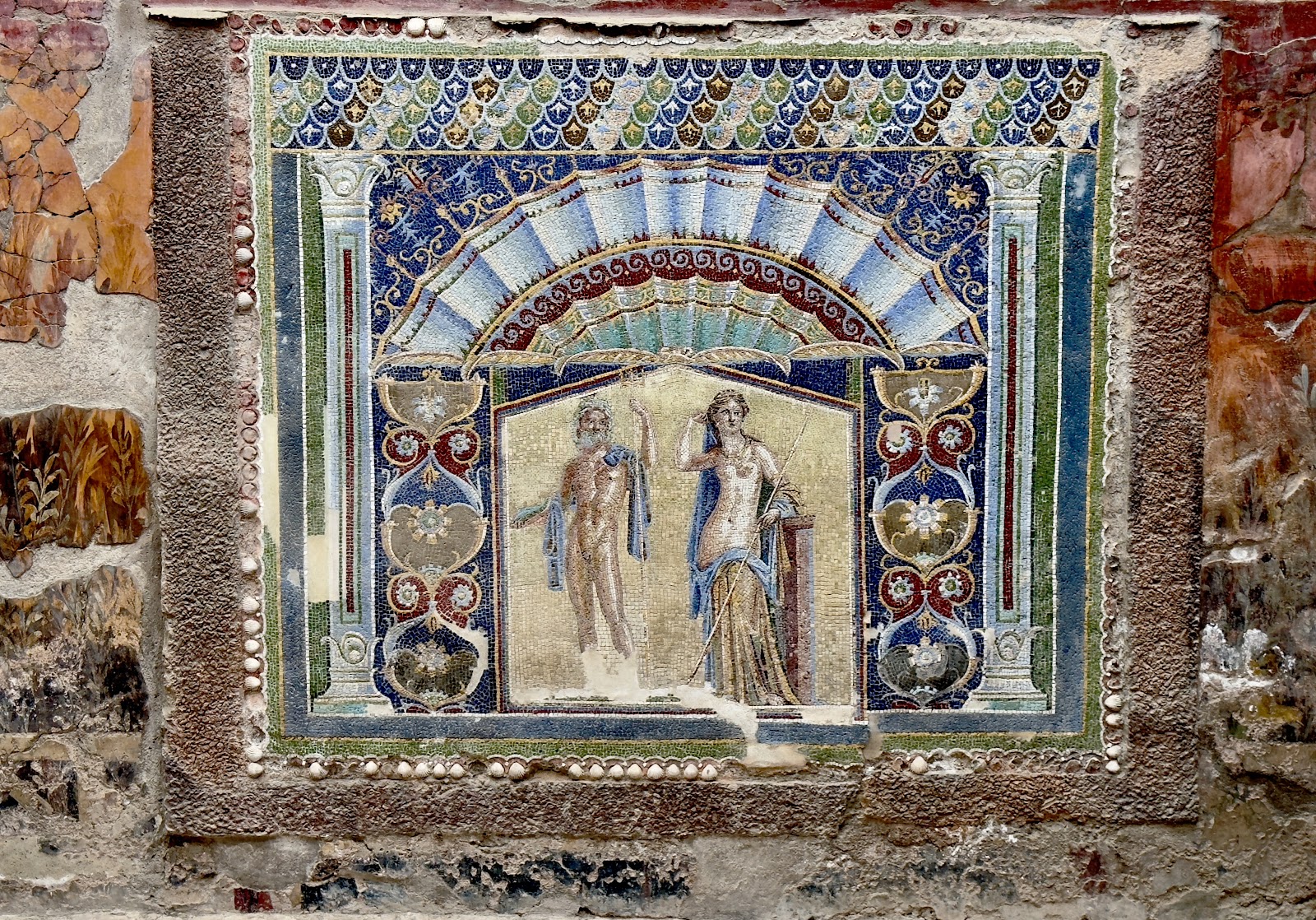
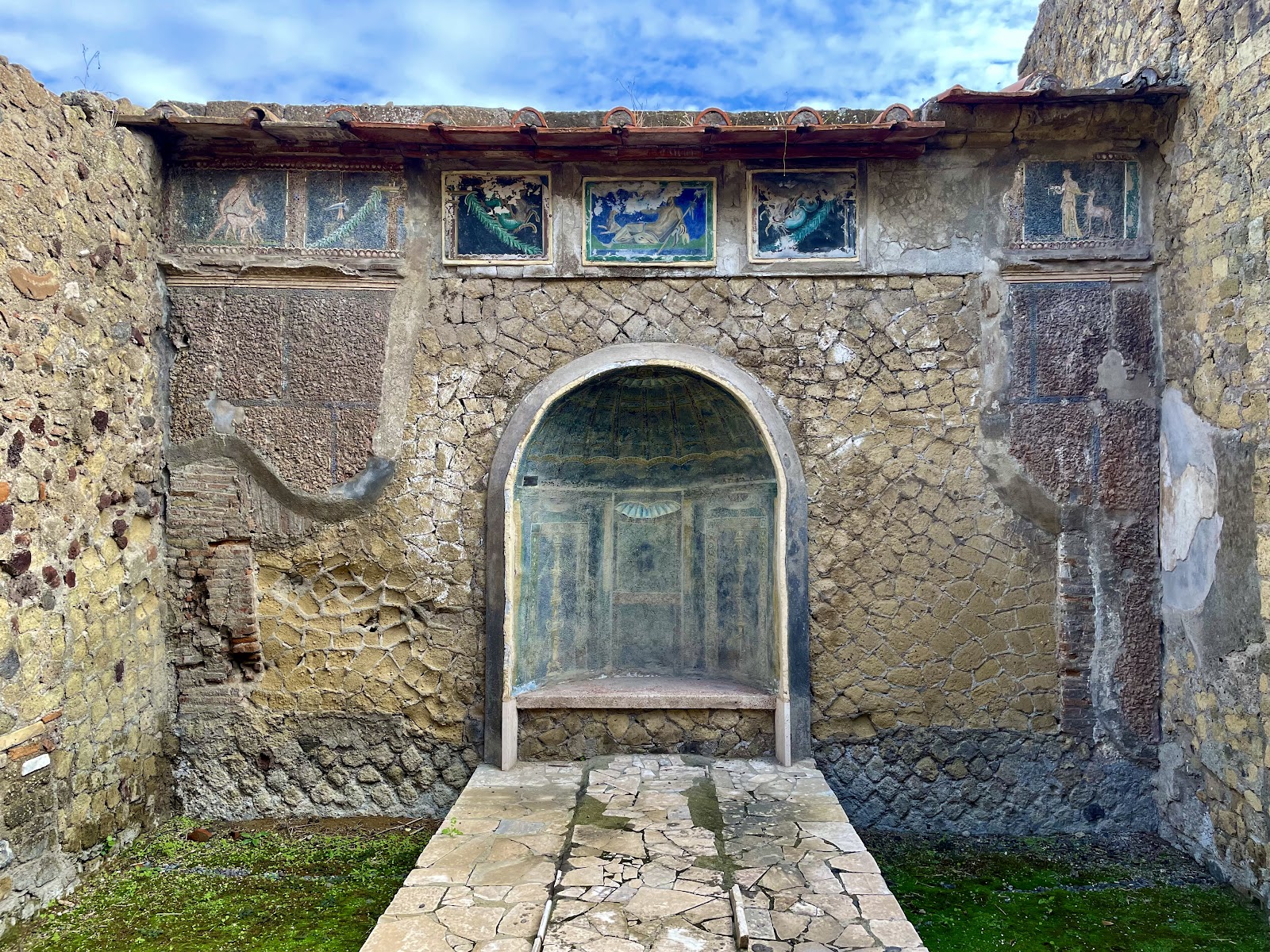
Where Pompeii was buried under ash and pumice, Herculaneum was sealed by superheated volcanic material that carbonized wood, food, fabric and papyrus rather than destroying them. Beds, shutters, a loaf of bread, the scrolls of a philosopher's library — they survived. More than 75% of the town remains underground, which means what you walk through is a fraction of what is still there.
💛 What travellers fall for
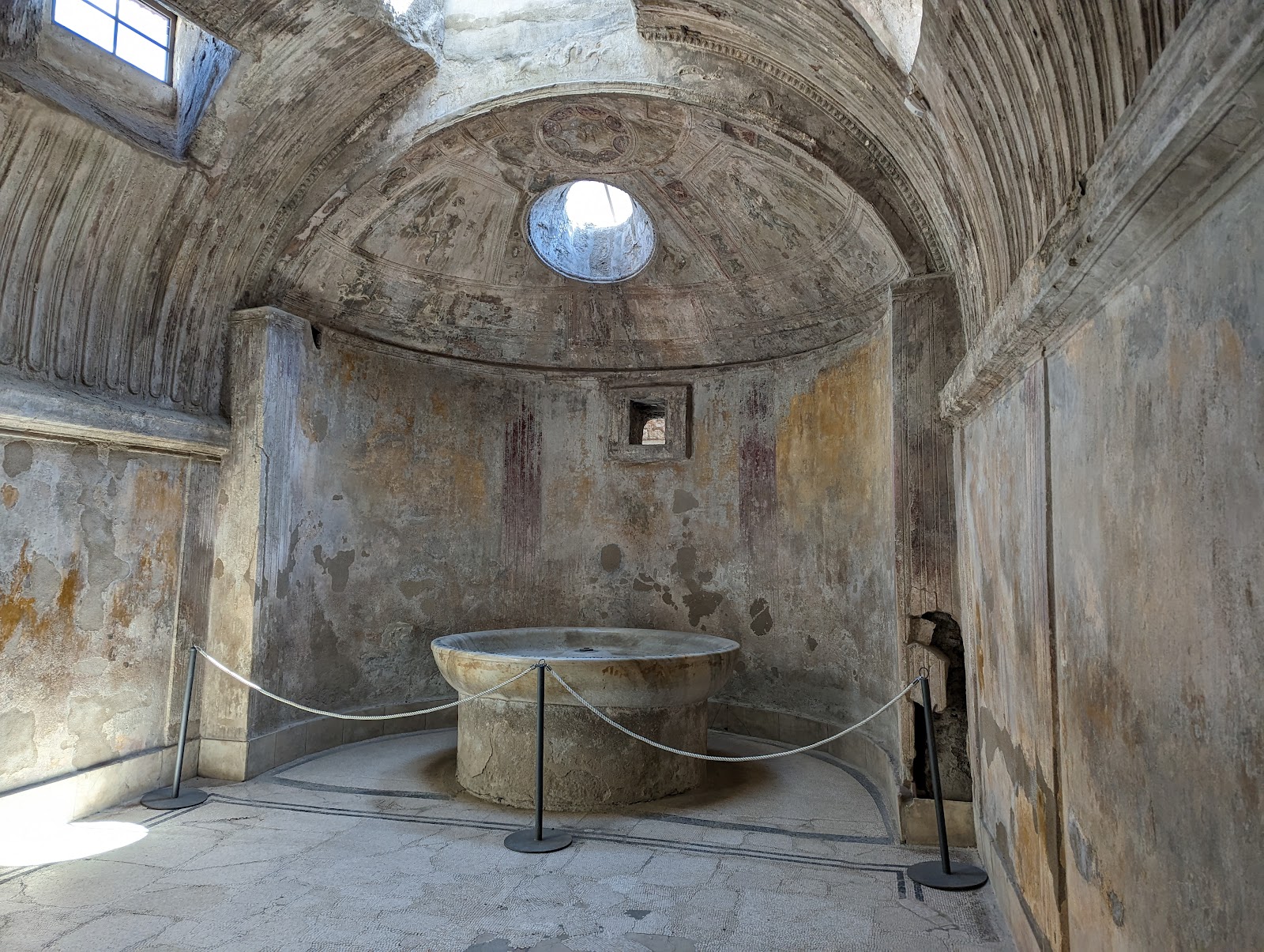
People who come back tend to slow down on the second visit. They find the House of the Wooden Screen, where the latticed partition still divides the atrium. They linger at the Large Palaestra — 105 by 70 metres, two pools, a bronze fountain — and try to picture a Tuesday afternoon here before the mountain moved.
Deals in Herculaneum
Book directly at the provider

How Herculaneum came to be
Herculaneum's origins go back to the Oscans in the sixth or seventh century BC, with Etruscan trade and later Greek influence from nearby Neapolis shaping its early character. The Samnites held it through the fourth century BC before it became a Roman municipium in 89 BC. By the first century AD it was a prosperous coastal town — the Suburban Baths likely a gift from the proconsul Marcus Nonius Balbus, the Villa of the Papyri probably belonging to Lucius Calpurnius Piso Caesoninus, Julius Caesar's father-in-law, whose library held 1,785 papyrus scrolls including works by the philosopher Philodemus of Gadara.
The earthquake of 62 AD damaged the town; the eruption of Vesuvius in 79 AD ended it. Serious excavation didn't begin until a farmer sank a well in 1709 and struck marble from the buried theatre. Systematic work followed under Amedeo Maiuri from 1924 to 1961. In 1982, skeletal remains of around 300 people were found in the boathouses near the ancient shoreline — people who had waited for rescue that never came. UNESCO recognised the site in 1997.
Who and what shaped it
People who shaped it
Landmark buildings
See Herculaneum in motion
Plan your visit
On the map
When to go
April through May and late September through October give you comfortable temperatures and manageable crowds — the best conditions for spending time outdoors on the site. Summer is genuinely hot inside the excavation, which has little shade; winter visits are quieter and cooler, with shorter opening hours.
Right now
↡ Attractions






Background & history adapted from Wikipedia (CC BY-SA) · specs from Wikidata (CC0) · weather from Open-Meteo · map data © OpenStreetMap contributors · photos from Wikimedia Commons / Unsplash with per-image credit. No third-party reviews or social posts reproduced.