
Central Baths (Terme del Foro)
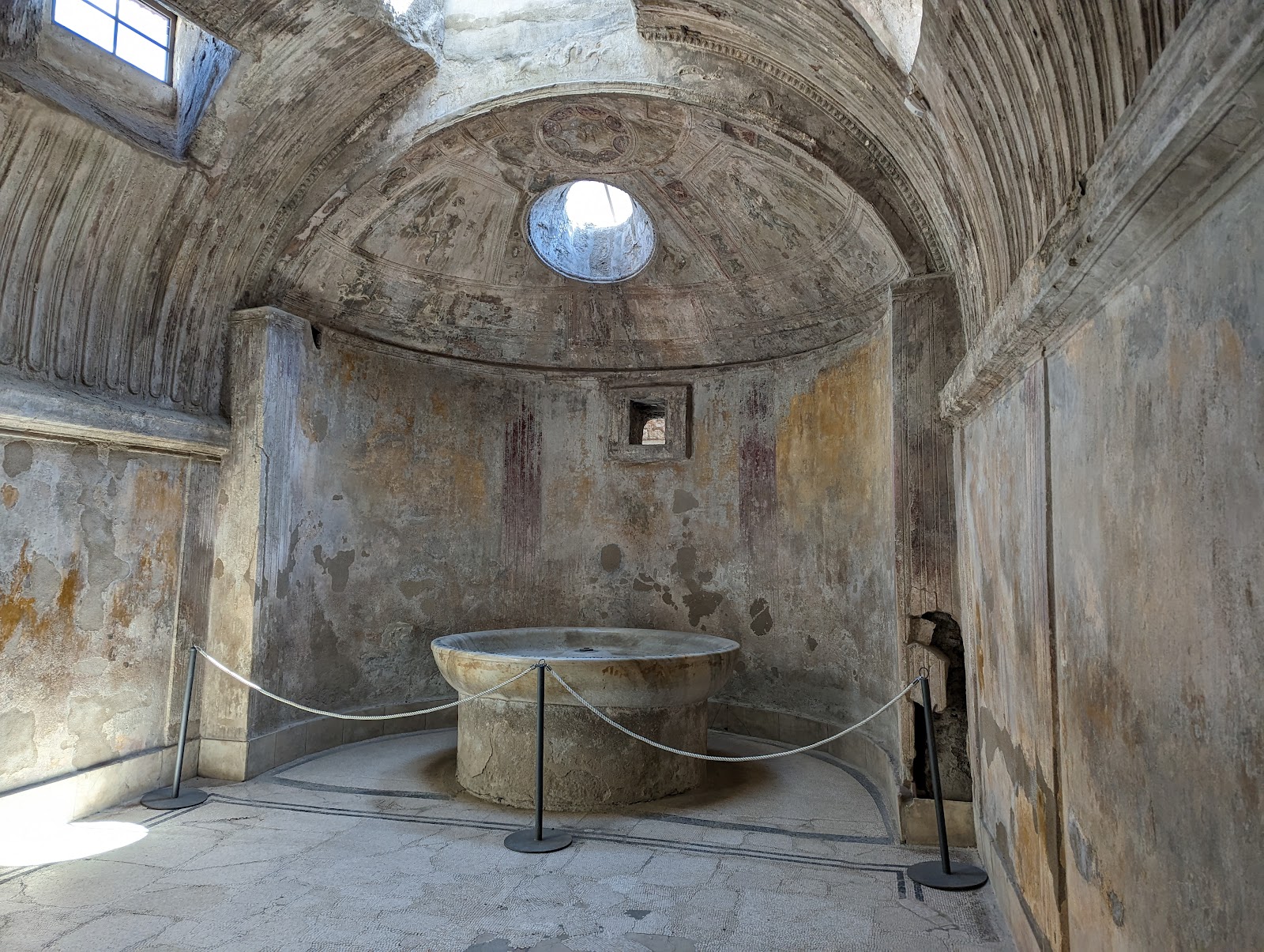
The stucco ceiling in the men's changing room is shaped like a strigil — the curved scraper Roman bathers used to clean oil from their skin. It's a design choice, not decoration: the ridged profile channels condensation away from the people below. That kind of embedded intelligence is what stops you in your tracks at the Central Baths.
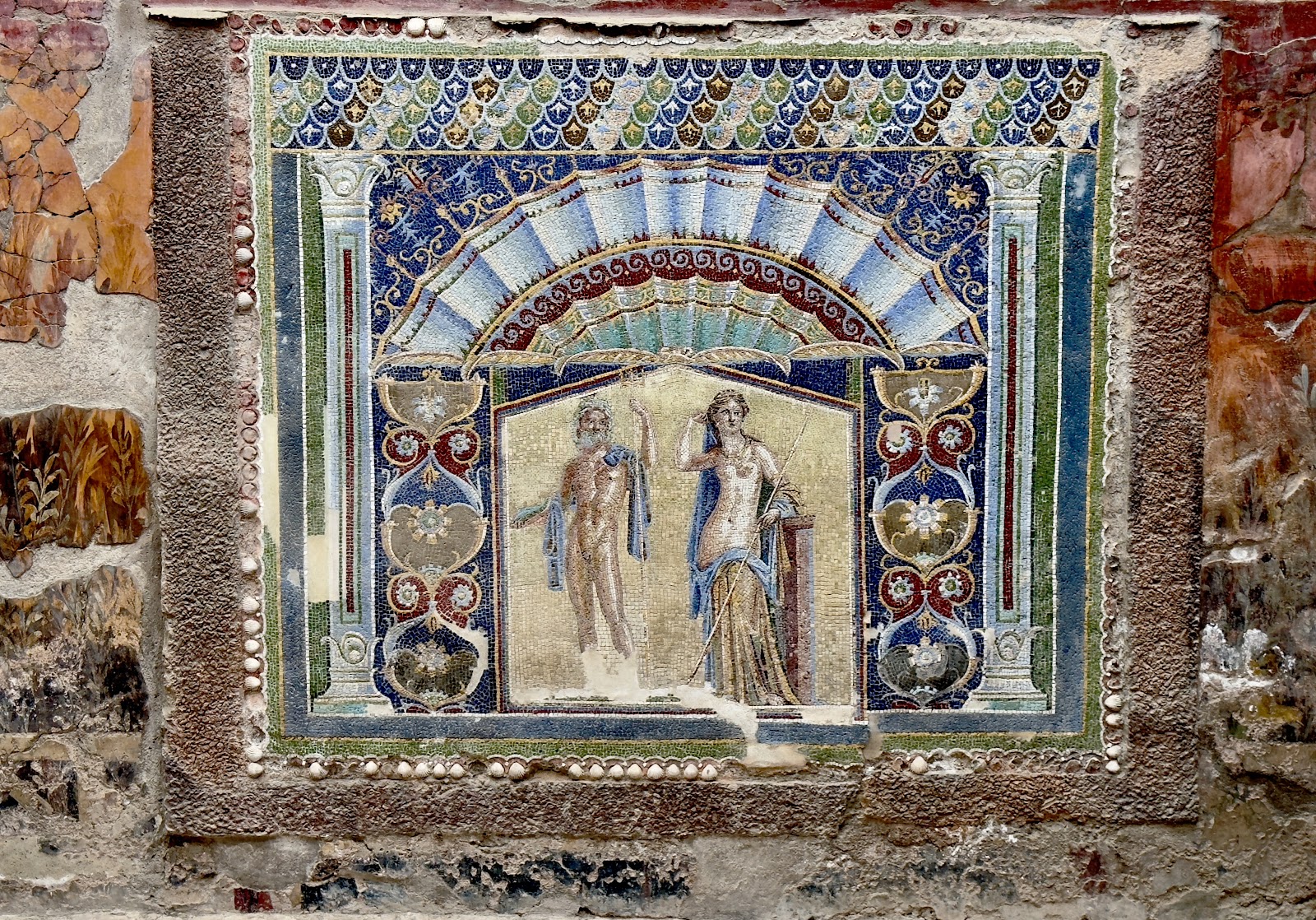
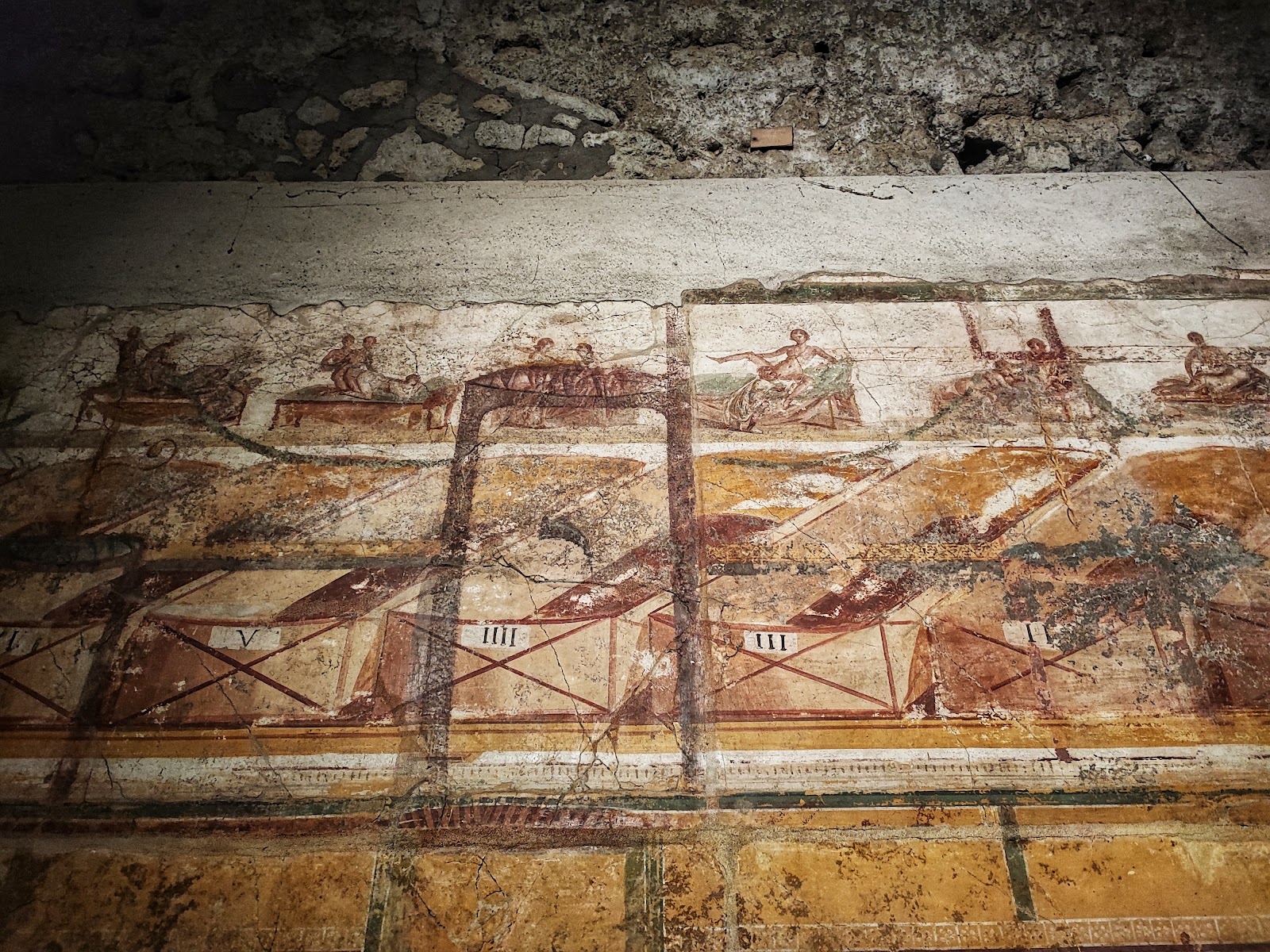
Built around the beginning of the 1st century AD and sealed by Vesuvius in 79 AD, the Terme del Foro is among the best-preserved Roman bath complexes anywhere. The shelves where bathers stacked their clothes are still there. So are the drainage channels, the hypocaust pillars lifting the heated floors, and the black-and-white mosaic of Triton in the women's section, his trident raised above a ring of Mediterranean sea creatures.
💛 What travellers fall for
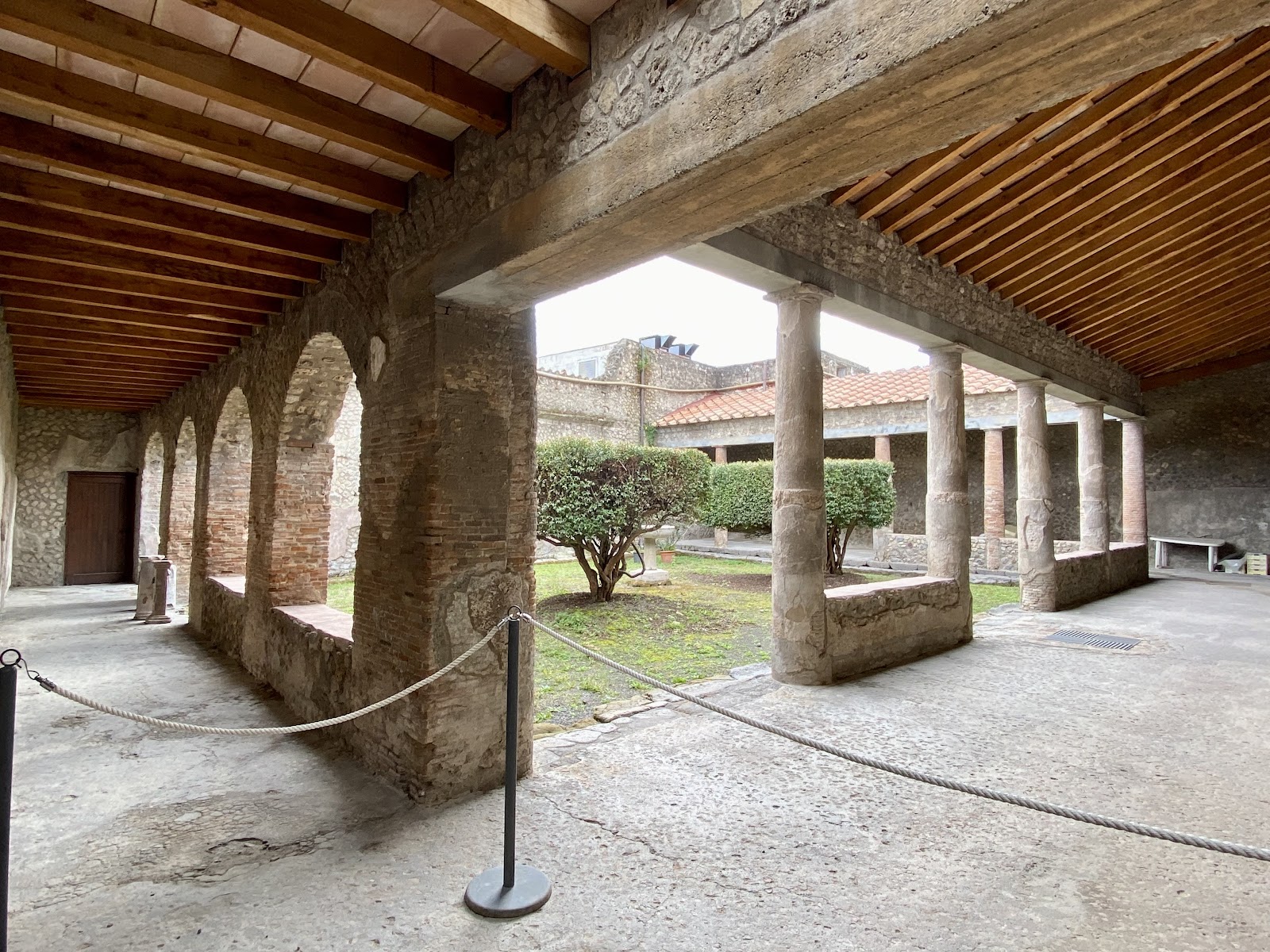
People who've been more than once tend to slow down in the women's section — the mosaics are sharper and the rooms more intact than the men's side. Bring a torch or use your phone light in the lower chambers; the hypocaust spaces reward a closer look, and the signage doesn't always reach the interesting corners.
The story behind Central Baths (Terme del Foro)
The baths were constructed around the turn of the 1st century AD, serving Herculaneum's population with separate wings for men and women — each with its own entrance, changing room, and sequence of heated chambers. The system was sophisticated: aqueduct water, wood-fired ovens, and a network of ducts pushing hot air through hypocausts beneath the floors.
When Vesuvius erupted in 79 AD, the volcanic material that buried Herculaneum also preserved it at a level Pompeii rarely matches. Serious excavation of the baths began in 1860 and continued to 1875, with further campaigns in 1931 and 1932. What emerged was a structure intact enough that its engineering logic — and its mosaic programme — remains legible nearly two thousand years on.
Good to know
Reach Herculaneum via the Circumvesuviana train to Ercolano Scavi, then a short walk to Corso Resina 187. Tickets are €16, free on the first Sunday of the month. Eat before you arrive — options inside the site are poor and there are no water points once you're in the ruins. Wear proper shoes; the ancient paving is uneven.
Where is Central Baths (Terme del Foro)?
More tickets & tours for Central Baths (Terme del Foro)
Book directly at the provider
What travellers say about Central Baths (Terme del Foro)
The Forum Baths were among the most important public baths in Pompeii, serving as a place for relaxation, socialising, and daily hygiene. Built in the 1st century BC and located near the Forum, they featured separate sections for men and women, along with hot, warm, and cold bathing rooms. The remarkably preserved architecture and bathing facilities offer a fascinating insight into Roman engineering and everyday life before the eruption of Mount Vesuvius in AD 79
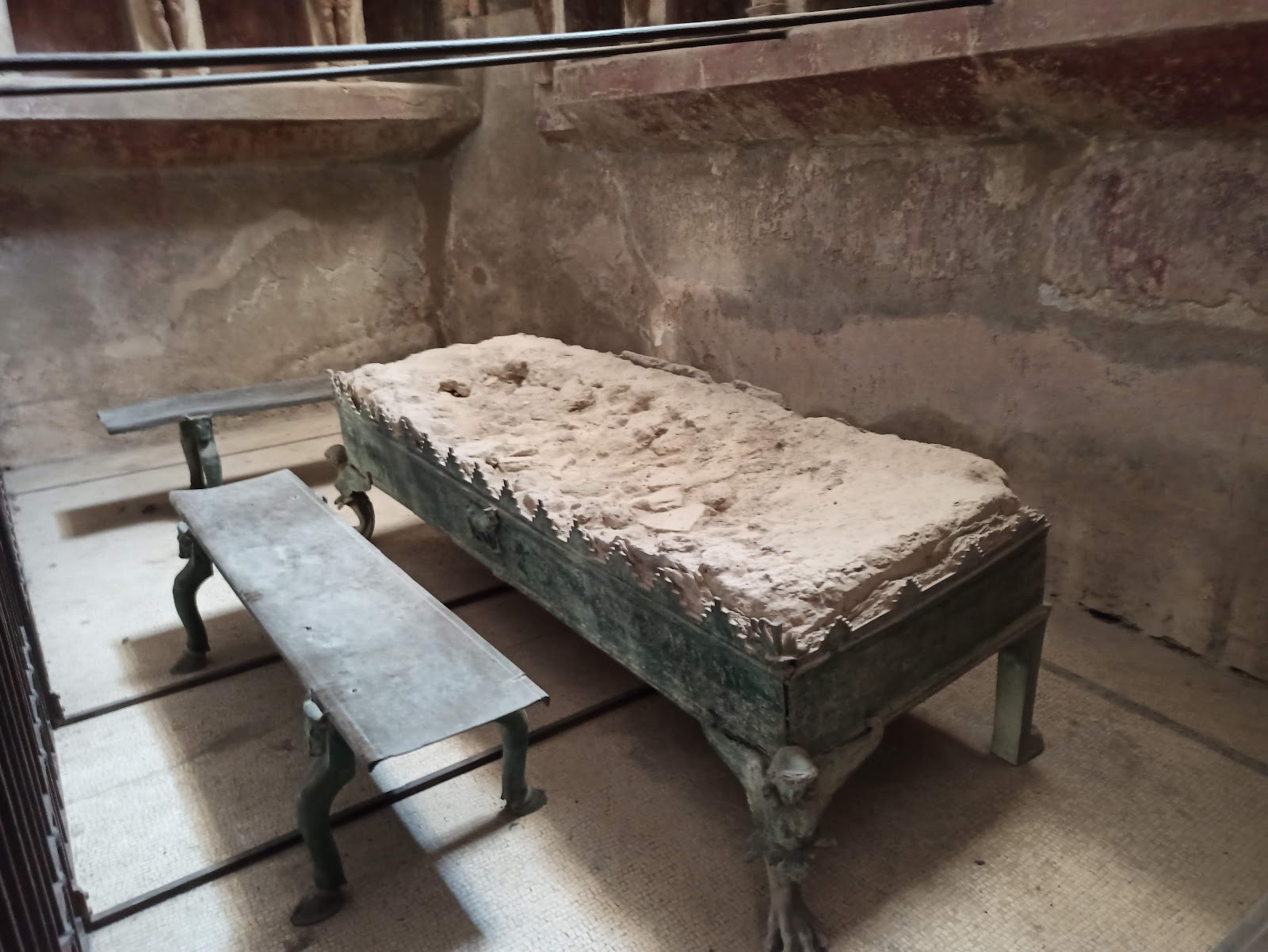
These baths were situated in Via delle Terme at the very centre of Pompeii in the building opposite the Temple of Fortuna Augusta. They were built in the first year of the founding of the colony with public funds and were always assiduously frequented by the town authorities. The damage suffered during the earthquake was immediately repaired, and they were in fact the only baths in use at the moment of the eruption in 79 A.D..Although by no means a large establishment, the Forum baths were nevertheless equipped with all the bathing facilities that Roman citizens could desire. The baths were subdivided into men's and women's sections, each with their own independent entrance. There were three doors leading to the men's baths on the streets around the building, but we cannot be sure which were entrances and which were exits. The narrow corridor opening onto Via delle Terme led straight into the changing room and the entrances on Via del Foro and Vicolo delle Terme passed through a porticoed courtyard before reaching the changing room.The changing room (Apodyterium) was provided with wooden wardrobes in which customers could leave their clothes and stone benches along the walls. It had a barrel vault roof with a skylight in one of the lunettes, and both the walls and the vaults were embellished with stucco decorations on a yellow background, of which only a few traces now remain. The first chamber was the Frigidarium where customers could take a cold bath. It is a square shaped room lit by an opening in the vault, with apsidal niches in the corners and a round bath with steps in the centre of the room.The changing room had another door leading into the Tepidarium where customers could take a warm bath with water heated by a bronze brazier. This bathing chamber had a barrel vault ceiling while its walls were elegantly embellished with stucco work placed on either side of giants holding up a shelf.Lastly came the Calidarium with its hot water bath and, on the far wall, a marble labrum, a bath with cold water for guests who needed to cool off. The temperature in the room was maintained by the circulation of warm air (heated in an adjacent room which also housed the boilers for the hot water) in a cavity between the walls and a lining of breast-shaped tiles (tegulae mammatae).The women's baths were laid out in a similar way on the other side of the boiler room, which was used by both sections, and could be reached from the entrance on Via delle Terme.
The Terme del Foro, or Forum Baths, is a captivating glimpse into the social and cultural life of ancient Pompeii, where wellness and relaxation were prioritized. This remarkable complex features beautifully preserved mosaics and intricate frescoes, showcasing the artistry of Roman bathhouse design. The layout, with its hot, warm, and cold areas, reflects a sophisticated understanding of hygiene and leisure, inviting visitors to imagine the vibrant social interactions that took place within its walls. As you wander through the serene corridors and opulent bathing rooms, the echoes of laughter and conversation seem to linger in the air, making the Terme del Foro a romantic retreat into the everyday lives of Pompeians. A visit here is a delightful journey into the heart of ancient leisure and communal spirit.
The elegant and best-preserved public baths in Pompeii. They show daily life was in the ancient city
The Forum Baths in Pompeii were luxurious public bathing facilities in the ancient Roman city. They had different rooms for hot and cold baths, saunas, and exercise areas. The baths were adorned with beautiful frescoes and mosaics, and they served as social gathering spots in addition to being places for personal hygiene. Unfortunately, it is currently closed as the Archaeologists are conducting excavations to uncover artifacts.
More of Herculaneum
Discover where to stay, what to do and the best deals for your trip.
Explore Herculaneum →More attractions in Herculaneum
All of Herculaneum →

Background adapted from Wikipedia (CC BY-SA) · map data © OpenStreetMap contributors · ratings & place photos via Google · other photos with per-image credit. Ticket links may earn us a commission at no extra cost to you.