
Auckland, New Zealand




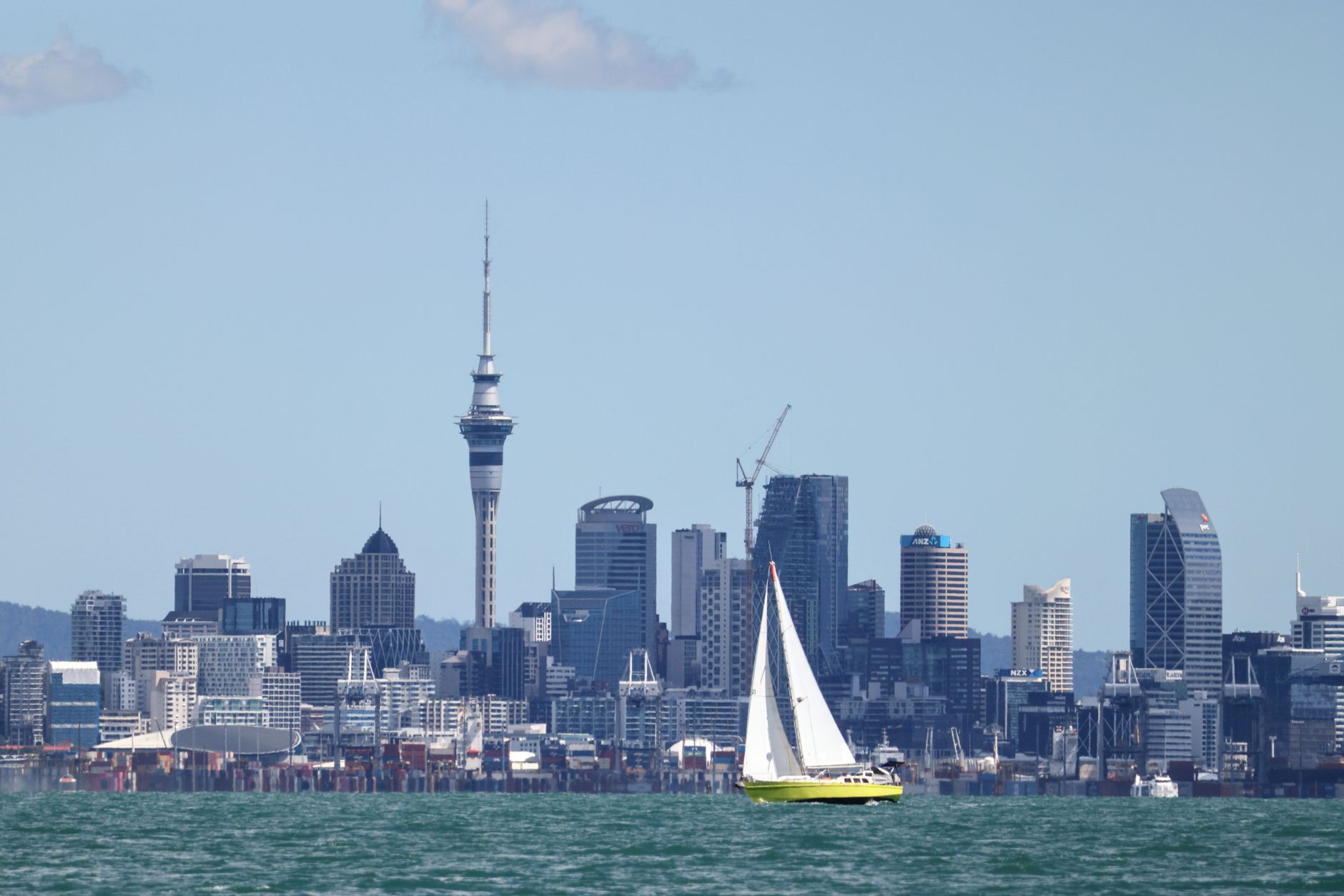
Auckland sits on a narrow isthmus between two harbours, the Waitematā to the east and the Manukau to the west, and the water is rarely out of sight. The Sky Tower — 328 metres of concrete and glass, completed in 1997 — gives you the clearest read on the city's shape: volcanic cones rising from suburban rooftops, container ships queuing at the port, the Harbour Bridge arcing north toward the Waitākere Ranges.
This is New Zealand's largest city and its commercial engine, home to the country's oldest park, its first permanent art gallery, and the world's largest collection of Māori and Polynesian artefacts. The Pacific is not a backdrop here — it is the whole context.
Popular cities in Auckland, New Zealand
💛 What travellers fall for
People who come back tend to anchor themselves at Waitematā station, the CBD's only rail hub, and work outward from there. The AT HOP card covers buses, trains and inner-harbour ferries for a weekly cap of $50, which makes it easy to range across the isthmus without thinking too hard about logistics. The Innerlink bus, running every seven or eight minutes on weekdays, handles the gaps.
How Auckland, New Zealand came to be
On 18 September 1840, New Zealand's first governor, William Hobson, founded the settlement that would become Auckland, naming it for George Eden, Earl of Auckland, then serving as Viceroy of India. Ngāti Whātua Ōrākei had occupied this isthmus for generations before European arrival; it was on land connected to their territory that Hobson established his capital. Auckland was formally declared the capital in 1841, with administration transferring from Russell in 1842.
The city held capital status for less than 25 years — Wellington took the role in 1865, partly for its more central position. Auckland kept growing regardless, driven by its port, by logging and gold-mining in the surrounding region, and later by manufacturing. The Harbour Bridge opened in 1959, the University of Auckland dates to 1883, and the rail network that had lain largely dormant since World War II received its first major upgrade when Britomart Station opened in 2003.
Who and what shaped it
People who shaped it
Landmark buildings
See Auckland, New Zealand in motion
Plan your visit
On the map
When to go
Summers run warm and sunny — January and February average around 20–27°C, with sea temperatures reaching 21°C — while winters are mild but wet, with June typically the rainiest month and daytime highs sitting around 14°C. Rain is spread fairly evenly across the year, so a light waterproof is useful in any season.
Right now
↡ Cities









Background & history adapted from Wikipedia (CC BY-SA) · specs from Wikidata (CC0) · weather from Open-Meteo · map data © OpenStreetMap contributors · photos from Wikimedia Commons / Unsplash with per-image credit. No third-party reviews or social posts reproduced.