
Villa Rufolo & Its Norman Cloisters
Built in the 13th century by the wealthy Rufolo merchant family, Villa Rufolo is a layered Moorish-Norman complex of towers, arcaded cloisters and terraced gardens that so enchanted Richard Wagner in 1880 that he declared it the setting for the Klingsor's Magic Garden scene in Parsifal. That connection is still celebrated every summer with the Ravello Festival's Wagner concert.
The Architecture
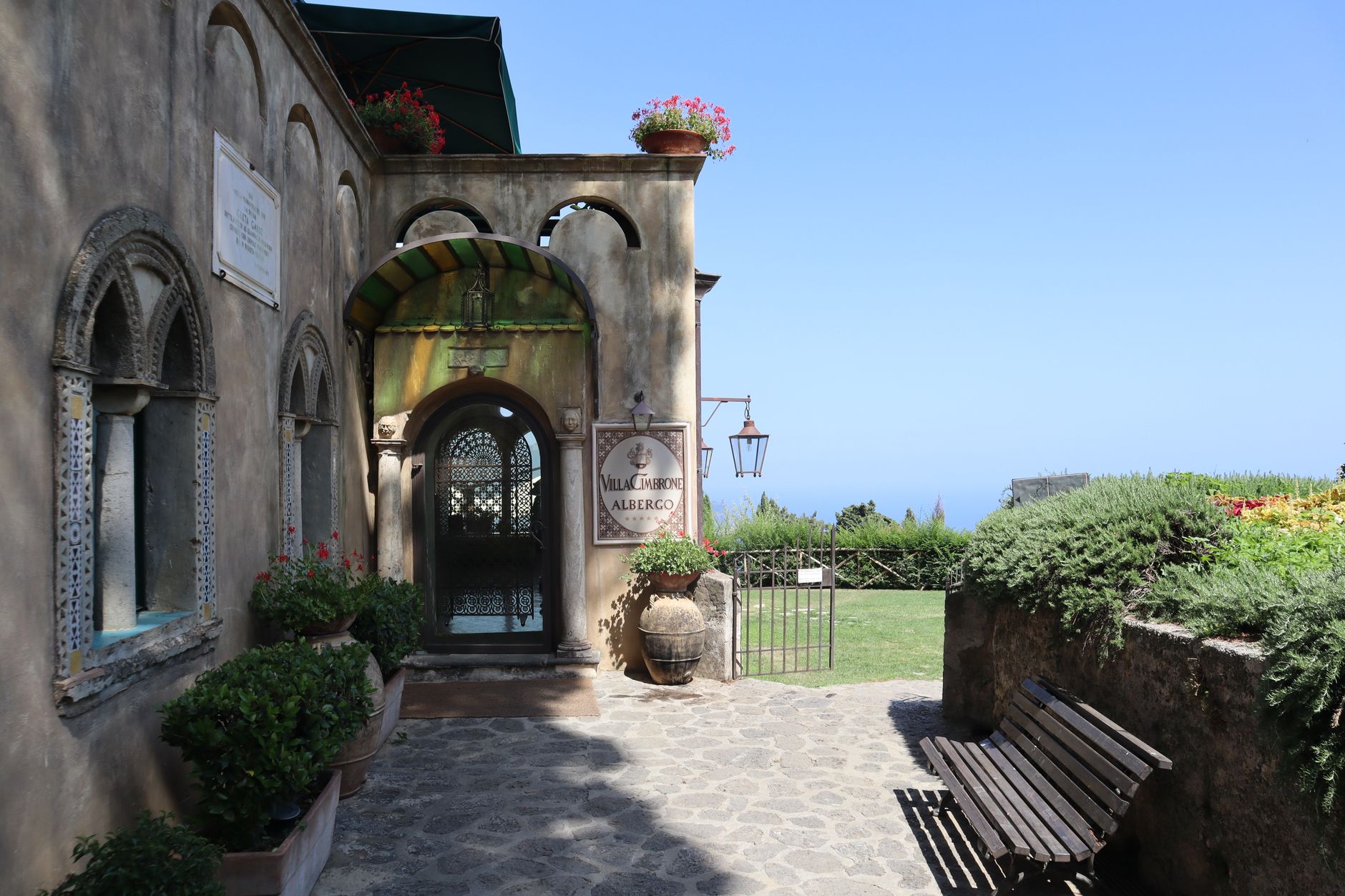
The villa's cloister is a small masterpiece of interlocking Moorish arches in alternating volcanic stone and limestone — an aesthetic fusion that reflects the Norman kingdom of Sicily's multicultural court. Walking through it feels more like Palermo or Córdoba than mainland Italy.
The Great Tower, which you can climb, rewards you with a close-up view of the villa's own tiled rooftops and then, beyond them, the same vast coastal panorama that inspired Wagner to sit down and write in his diary.
The Gardens & Festival
The lower garden terrace is planted with sub-tropical palms, cycads and explosions of bougainvillea, all arranged on a platform that cantilevers over the cliff — it doubles as the Ravello Festival's main concert stage from late June onward.
Even outside festival season the garden has a theatrical quality: the flower beds are changed seasonally, and in spring the wisteria over the cloister walkway is so heavy it bends the stone.
More of Ravello
Discover where to stay, what to do and the best deals for your trip.
Explore Ravello →


