
Wat Pho
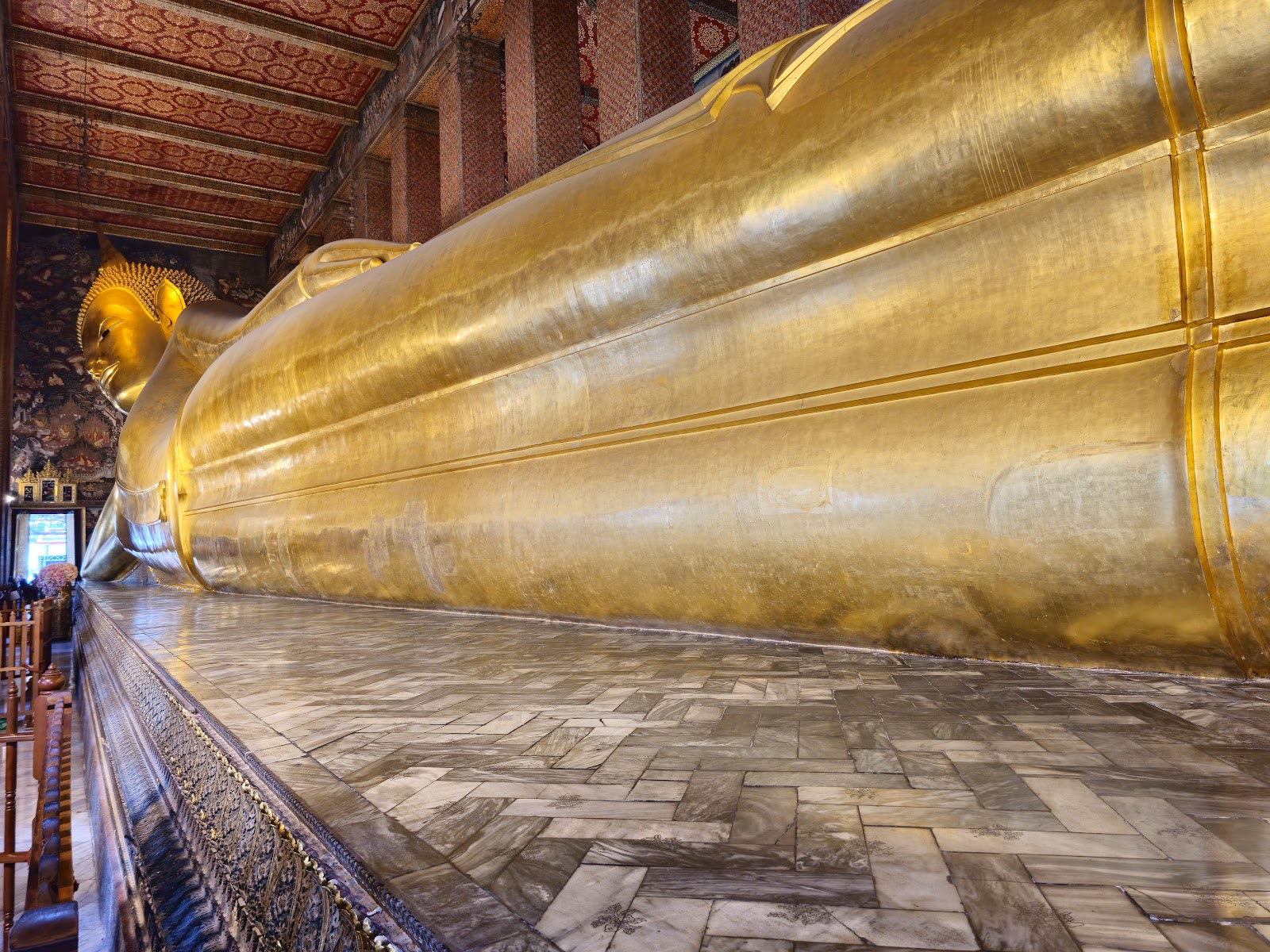
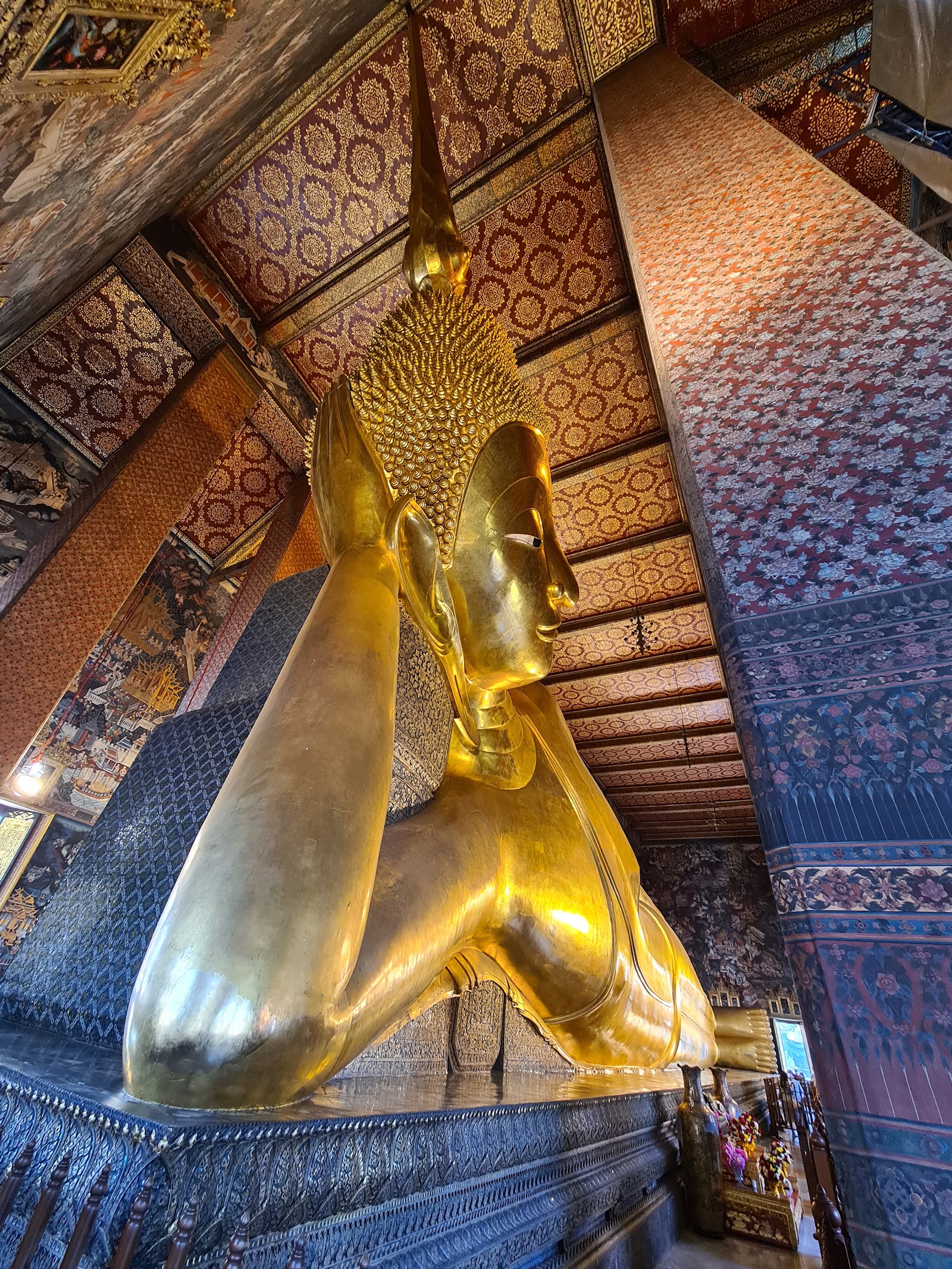
The first thing you notice inside the Reclining Buddha hall is the scale — 46 metres of gilded bronze filling a building that seems barely large enough to contain it. Then your eyes drop to the feet: nearly five metres long, their soles divided into 108 mother-of-pearl panels, each one mapping an auspicious characteristic of the Buddha in extraordinary detail.
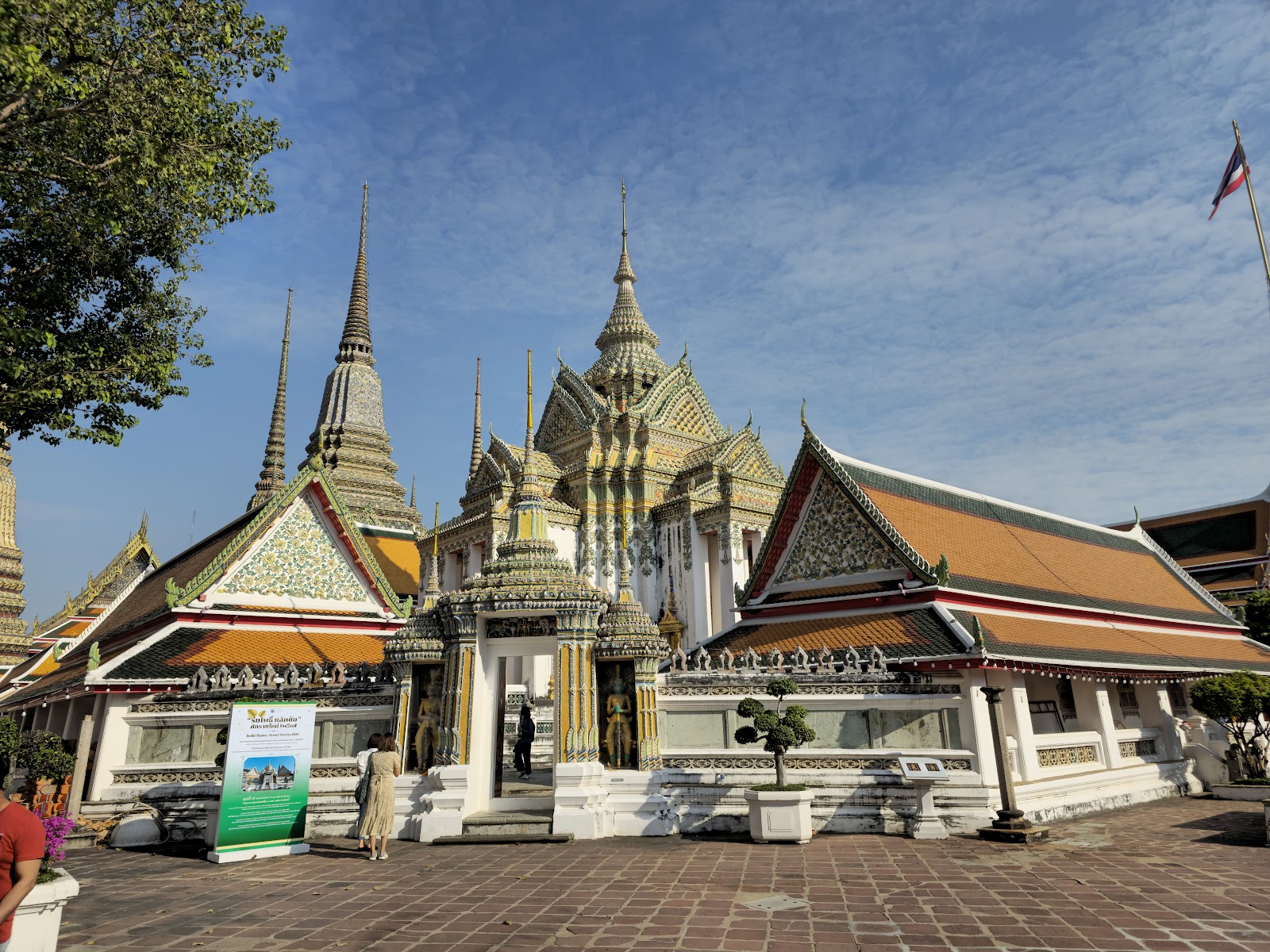
Wat Pho is one of Bangkok's oldest temple complexes, predating the city itself. Spread across nine hectares beside the Grand Palace, it holds more than 1,000 Buddha images — the largest single collection in Thailand — along with 91 chedis, two belfries, and a massage school that has been teaching traditional Thai medicine since 1955.
💛 What travellers fall for
People who return tend to arrive right at 8am, before the tour groups, and take the long way around the four great chedis — tiled in green, orange, blue and yellow — before joining the queue for the Reclining Buddha. The small bowls of coins for the 108 offering vessels along the back wall are worth the extra 20 baht.
The story behind Wat Pho
A temple stood on this site before Bangkok existed. When King Rama I established the capital in 1782 and raised the Grand Palace next door, he found the old temple in disrepair and ordered it rebuilt. Work began in 1788 and took more than seven years; the complex was renamed Wat Phra Chetuphon Vimolmangklavas in 1801.
The temple's most significant transformation came under King Rama III, who in 1832 began an expansion that lasted sixteen years and seven months. The Chapel of the Reclining Buddha dates from this period, as do most of the structures you see today. Rama III also commissioned scholars and monks — led by Supreme Patriarch Prince Paramanuchitchinorot, the temple's abbot and a noted Buddhist poet — to inscribe the walls with knowledge covering medicine, literature and astronomy, an early attempt at a public encyclopedia.
Good to know
The nearest MRT stop is Sanam Chai, a short walk away; river travellers can step off at Tha Tien Pier. Admission is 300 THB. Go between 8:00 and 9:30 or after 16:00 — midday brings crowds and heat in equal measure. Shoulders and knees must be covered; shoes come off at the main buildings.
November to February is the most comfortable window: cooler air, lower humidity, and manageable crowds. March to May turns genuinely hot, and the midday sun inside the open courtyards is relentless. The rainy season runs May to October — sudden downpours are common, but mornings are often clear.
Where is Wat Pho?
More tickets & tours for Wat Pho
Book directly at the provider
What travellers say about Wat Pho
I had a wonderful experience visiting Wat Phra Chetuphon Wimon Mangkhalaram Rajwaramahawihan (Wat Pho). The temple is beautiful, peaceful, and rich in history. The famous Reclining Buddha is absolutely breathtaking and much larger than I expected. The architecture, murals, and intricate details throughout the temple are stunning. The grounds are clean and well maintained, and there are many interesting areas to explore. It is a great place to learn about Thai culture and Buddhism while enjoying a calm atmosphere. I highly recommend visiting if you are in Bangkok
Wat Phra Chetuphon Wimon Mangkhalaram Rajwaramahawihan is an absolutely stunning temple and one of the highlights of Bangkok. The grounds are beautifully maintained, with incredible architecture, detailed murals, and impressive golden stupas throughout the complex. The Reclining Buddha is even more impressive in person and worth seeing at least once. Despite how popular the temple is, the atmosphere still feels peaceful and relaxing, especially when walking around the quieter courtyards. The temple complex is much larger than expected, so it is worth taking your time exploring all the different sections. There is so much detail everywhere you look, and you can really appreciate the history and craftsmanship behind it all. Definitely recommend visiting if you are in Bangkok. A beautiful place to experience Thai culture, history, and architecture.
A great itinerary strategy is to visit Wat Pho right after Wat Arun. I recommend taking the ferry crossing at dusk; the view of Wat Arun lighting up from across the river is a spectacle in itself. While most people visit solely to see the iconic Reclining Buddha, the real highlight is exploring the entire complex, filled with colorful stupas and smaller temples. Inside the hall of the Reclining Buddha, make sure to participate in the coin ritual: right behind the statue, there are 108 bronze bowls lined up. You can buy a small bowl with the exact number of coins for 20 Baht and drop one in each; it is a symbolic gesture to bring good luck and support the temple. For animal lovers, a charming bonus is the many kittens that call the temple gardens home. Practical info: Both the entrance fee and the coin bowl are cash only.
Our visit to was an incredible cultural experience. The temple grounds are absolutely stunning, with so much intricate detail and beautiful architecture everywhere you look. We visited on a public holiday, so it was extremely busy, but the atmosphere was still amazing and added to the experience. It was great to see that scarves and cover-ups were available at the entrance for anyone needing to dress appropriately before entering the temple grounds. There were also vendors on site selling cold drinks and souvenirs, plus a gift shop to browse through after exploring. One interesting surprise was the training massage practice available on site, which added another unique cultural element to the visit. A beautiful and memorable place to visit when in Bangkok — just be prepared for crowds, especially on public holidays!
It is one of Bangkok's oldest and largest Buddhist temples, located in the Phra Nakhon District, just south of the Grand Palace in Thailand. The temple complex is renowned for several key attractions: It houses a massive, 46-meter-long (151-foot) and 15-meter-high statue of the Reclining Buddha, which is gilded and features intricate mother-of-pearl inlays on its feet. The temple dates back to before Bangkok became the capital and features stunning architecture, over a thousand Buddha images, and numerous stupas. Thai Massage School: It is considered the birthplace of traditional Thai massage and houses an acclaimed school for it, with academic texts inscribed throughout the grounds. It is a major cultural landmark, a royal monastery, and was recognized as Thailand's first public university due to the knowledge inscribed there. Taking a guide is recommended by booking in advance which may also includes nearby attractions as well.
More of Bangkok
Discover where to stay, what to do and the best deals for your trip.
Explore Bangkok →More attractions in Bangkok
All of Bangkok →
Background adapted from Wikipedia (CC BY-SA) · map data © OpenStreetMap contributors · ratings & place photos via Google · other photos with per-image credit. Ticket links may earn us a commission at no extra cost to you.