
Chinatown Bangkok
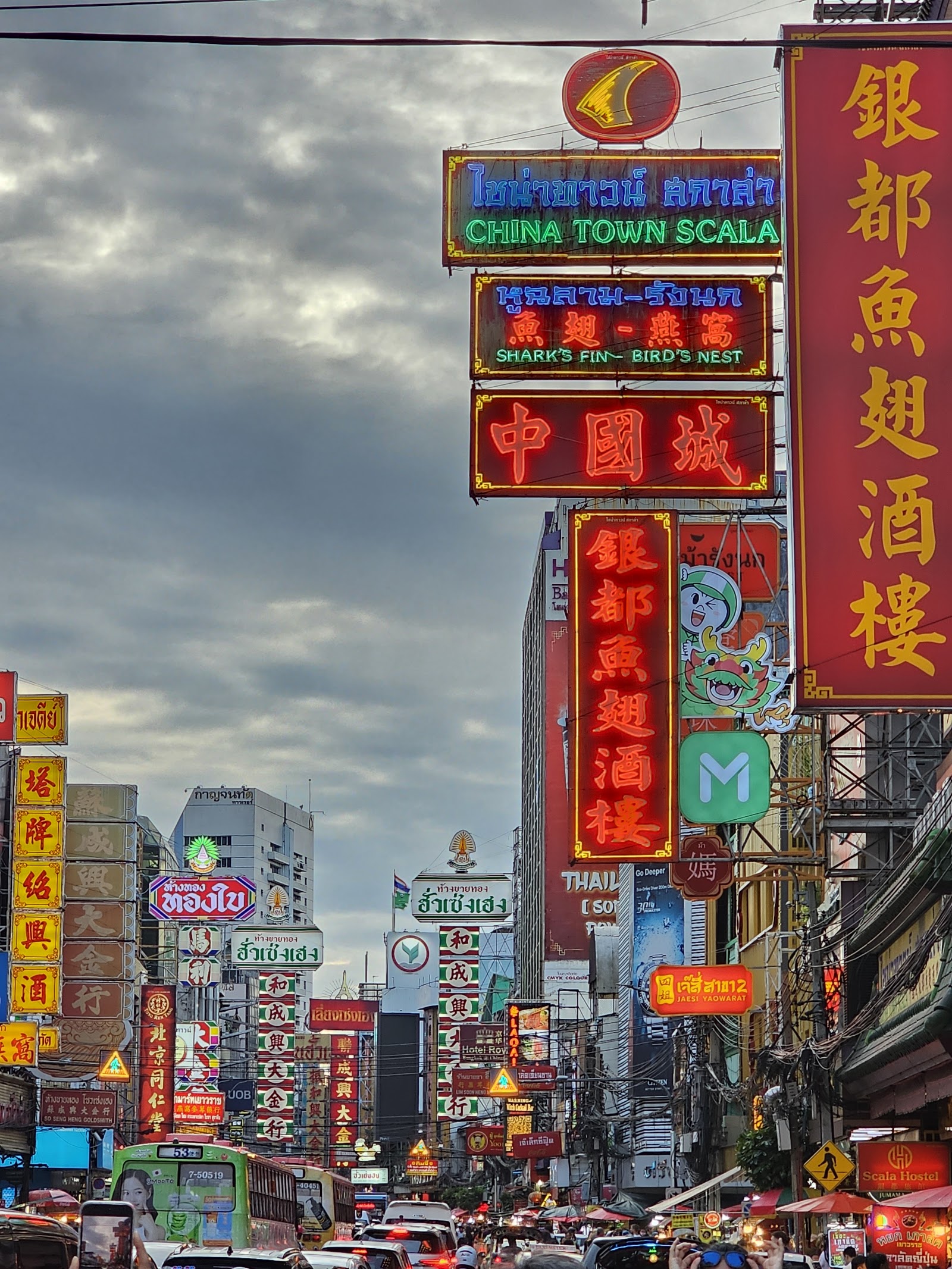
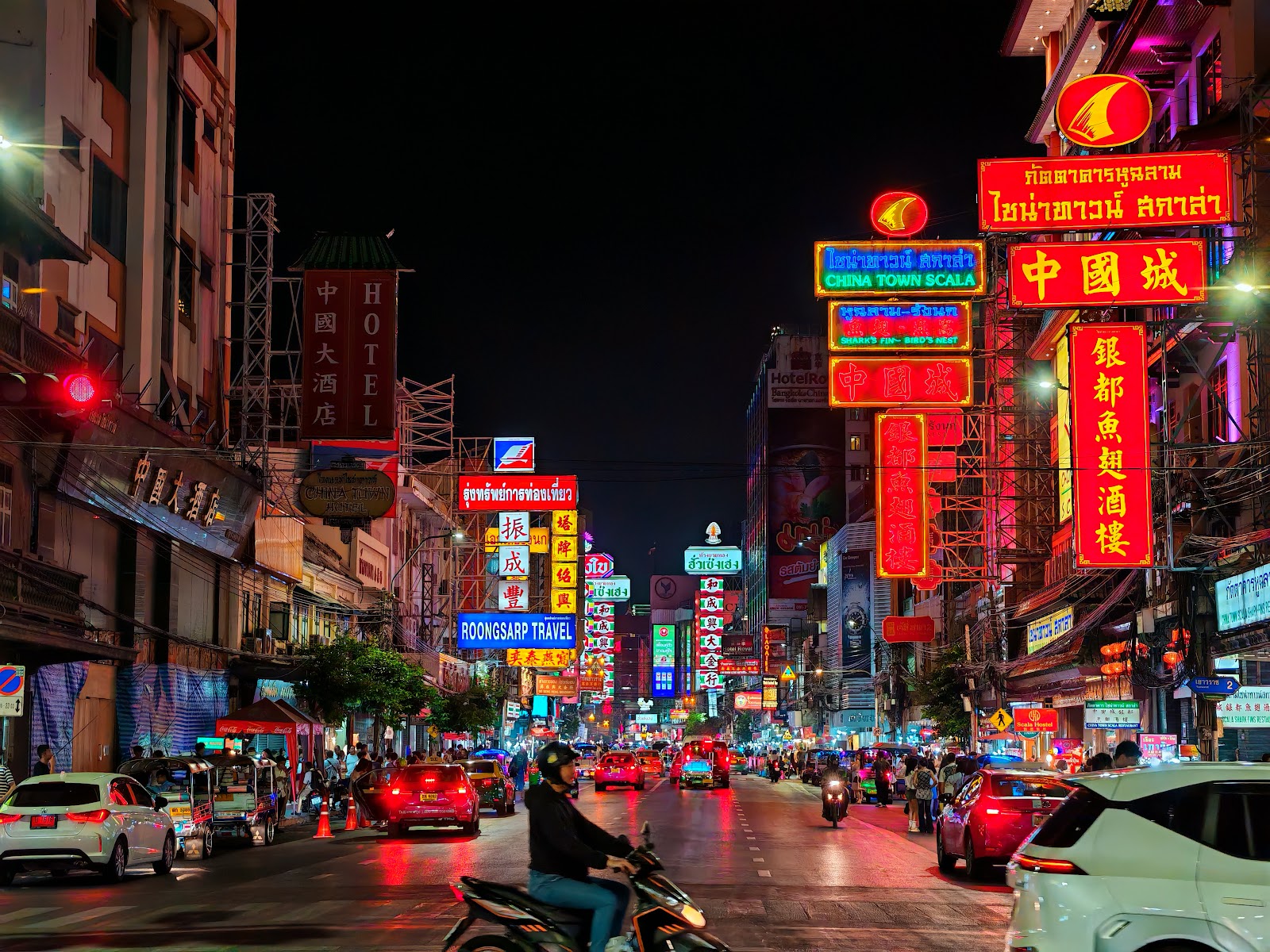
Yaowarat Road at night is a corridor of gold-shop neon and roasting duck smoke, where traders still haggle in Teochew and herbalists behind glass counters weigh remedies they've been mixing for generations. This is one of Bangkok's oldest and most densely inhabited neighbourhoods — roughly 25 people per square metre — and it wears all of that history on the surface, in the shophouse facades, the incense coiling out of temple gates, the narrow alley of Sampheng Lane where merchants have traded since the city itself began.
The anchor is Yaowarat Road, built between 1891 and 1900 on the orders of King Chulalongkorn. By day it's a trading hub; by evening the street food stalls open and the whole road shifts register entirely.
💛 What travellers fall for
People who come back tend to go straight to Songwat Road first — the riverside strip of ornate old facades is far quieter than Yaowarat and sets the right pace. Then Wat Chakrawat Rachawas for the crocodiles in the courtyard pond, and Tang To Kang gold shop on the main road, which has been there since the 1880s. Save Sampheng Lane for late morning before the crowds thicken.
The story behind Chinatown Bangkok
In 1782, when King Rama I chose this bend of the Chao Phraya to build his new capital, the Chinese merchants already living on the site were relocated eastward. They settled around Sampheng, and a Teochew community took root. The Bowring Treaty of 1855 opened Siam to broader trade, and Chinatown grew quickly; Charoen Krung Road — Bangkok's first paved street — followed in 1864. By the turn of the twentieth century the neighbourhood was the city's main commercial engine, and also its most layered: theatres, opium dens, gold traders and temples all within a few lanes of each other.
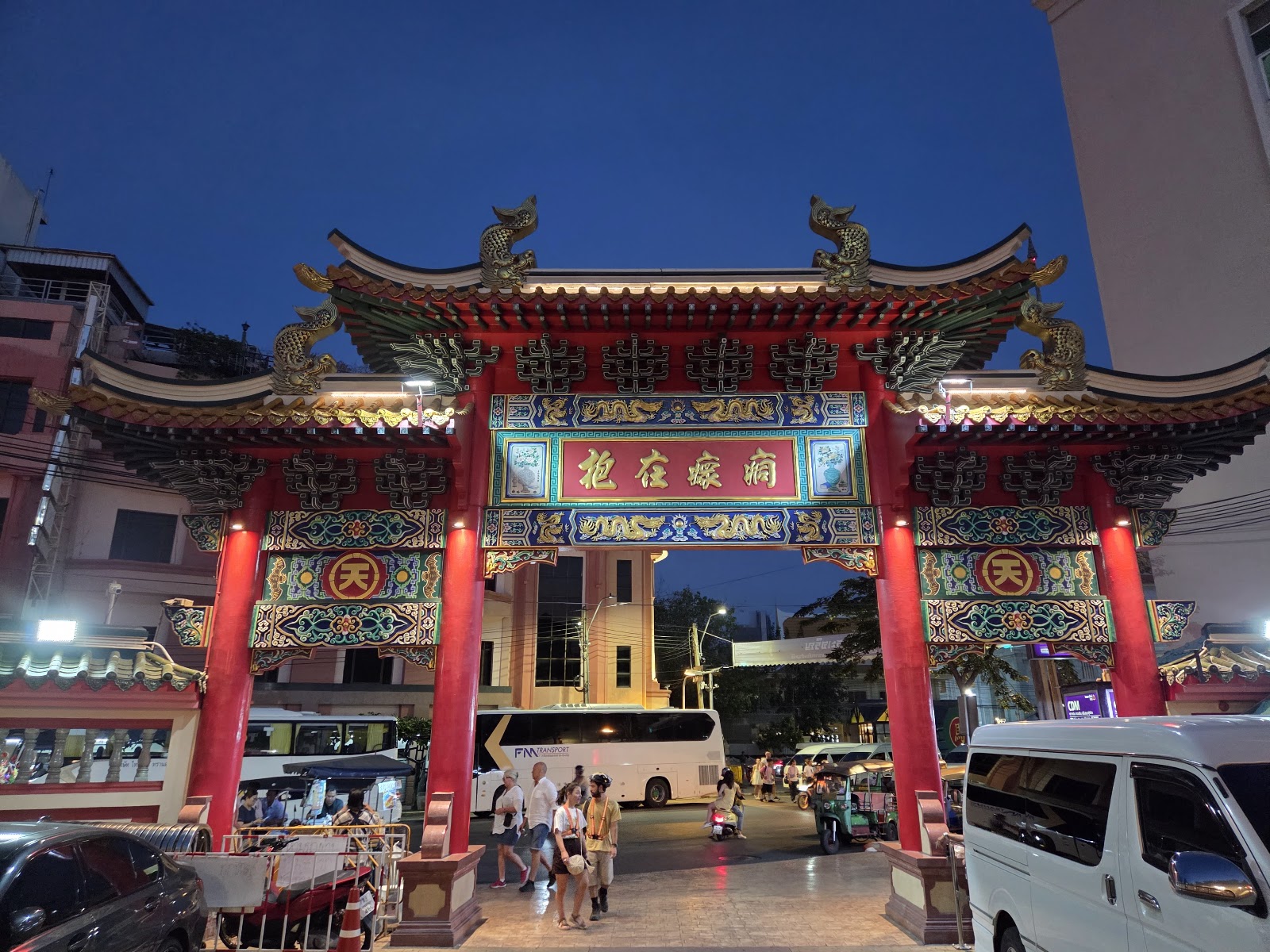
The temples accumulated across those decades. Wat Mangkon Kamalawat went up in the early 1870s. Kuan Yim Shrine followed in 1902. The Golden Buddha at Wat Traimit had been plastered over and forgotten until 1955, when workers moving it cracked the coating and found 5.5 tonnes of solid gold underneath.
Good to know
The MRT Blue Line Wat Mangkon station (BL29) drops you a few steps from the centre. Alternatively, the Chao Phraya Express Boat to Ratchawong Pier takes about 15 minutes from Sathorn. Avoid Mondays, when many street vendors are closed. Come for Chinese New Year if you can — late January or early February.
December through mid-February is the most comfortable window — temperatures sit between 21 and 32°C and the rains have eased. From March the heat builds sharply, peaking around 36°C in April and May. The rainy season runs from mid-May through October, with September the wettest month; the street food scene continues regardless, but the afternoon downpours are serious.
Where is Chinatown Bangkok?
More tickets & tours for Chinatown Bangkok
Book directly at the provider
What travellers say about Chinatown Bangkok
It’s extremely crowded, but it also has a really great atmosphere. The food is authentic, but you should still be careful about what you eat. The things we tried were really delicious. If you take a taxi, it’s better to get dropped off one street away and walk the last part.
Chinatown in Yaowarat, Bangkok, is a wonderful place to visit. The area is full of history, culture, and amazing food. I especially enjoyed visiting the old authentic Buddhist temple, which had a peaceful and traditional atmosphere. It's a great place to experience Bangkok's heritage and local charm. The location is also very convenient, just a short walk from the MRT station. Highly recommended for anyone looking to explore the cultural side of Bangkok.
✨ An unforgettable day exploring the vibrant streets of Chinatown (Yaowarat), BKK! 🏮🇹🇭 😍 From enjoying breathtaking street views and tasting delicious Chinese ice cream 🍦to sipping refreshing local drinks 🥤 visiting a beautiful Chinese temple 🏯, and capturing special moments during our journey 📸 every experience became even more meaningful because I shared it with my dear friend. 🤝 🎉 Some trips are remembered for the places you visit, but the best ones are remembered for the people you share them with.
A must see place! I was lucky to catch the Chinese New Year and the celebrations were nice. The crowd took over the entire street. It's a lovely place full of euro tourists and local Thai and Chi eating spots and little diners, markets and gold shops. And it's full of lights like a scene from a cyberpunk movie!
Visited Chinatown and it was a great experience overall. Tried a lot of street food and the variety is impressive. Fresh, tasty, and you can find something at any time of the day or night. Prices are reasonable and portions are good. Also went for a foot massage after walking around. Plenty of massage places and the one I tried was clean and relaxing. It really helped after long hours of exploring. Finished the night with a tuk tuk ride through the busy streets, which was fun and gave a real Bangkok vibe. Busy, noisy, and full of life. Definitely worth visiting if you want food, local experiences, and a lively atmosphere.
More of Bangkok
Discover where to stay, what to do and the best deals for your trip.
Explore Bangkok →More attractions in Bangkok
All of Bangkok →

Background adapted from Wikipedia (CC BY-SA) · map data © OpenStreetMap contributors · ratings & place photos via Google · other photos with per-image credit. Ticket links may earn us a commission at no extra cost to you.