
Villa Traiana
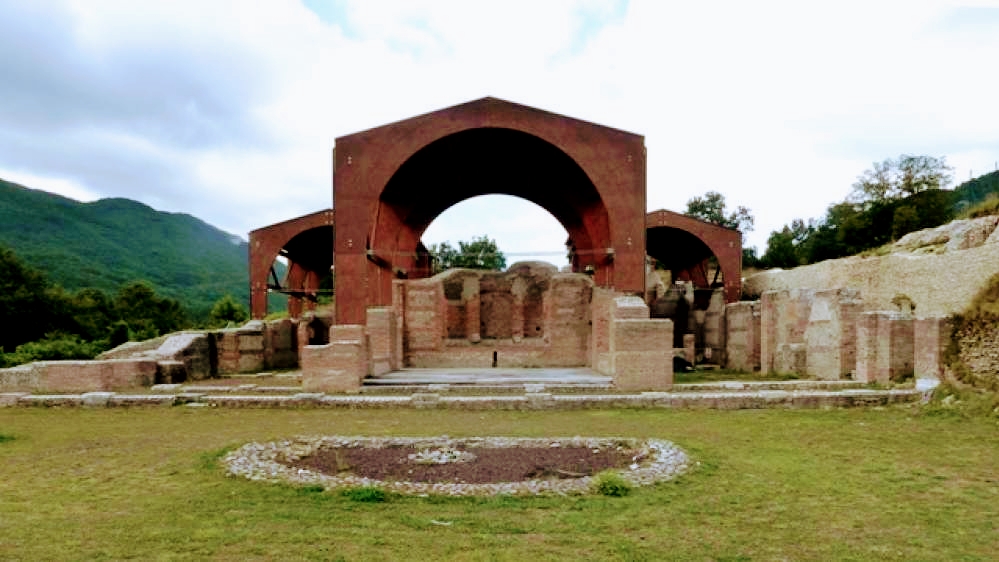
What you find here is a Roman emperor's idea of escape — a plateau in the Lazio highlands, close to the Aniene river, where Trajan built himself a summer residence and hunting lodge around the turn of the second century AD. The site covers five hectares, and excavations have been going on since 1999, so the ground still holds more than it reveals.
The floors that have been uncovered tell you something about the ambition involved: opus sectile work, thin marble sheets cut into geometric tessellae, sourced from quarries in Italy and the eastern Mediterranean. A small restored rural cottage on site now houses the Museo Civico Archeologico, keeping the recovered finds close to where they were found.
💛 What travellers fall for
People who come back tend to time it around the quieter excavation seasons, when you can linger near the protected wooden shelter covering the main ruins without a crowd. The museum cottage is compact — give it twenty minutes, then walk the perimeter of the uncovered sections, where the scale of the original complex starts to make sense.
The story behind Villa Traiana
Trajan began building here toward the end of the first century AD, choosing a high plateau with clean water, wildlife, and easy access via the Via Sublacense — the road that led toward the Aniene springs supplying Rome. The villa served as a retreat and hunting base through his reign (98–117 AD).
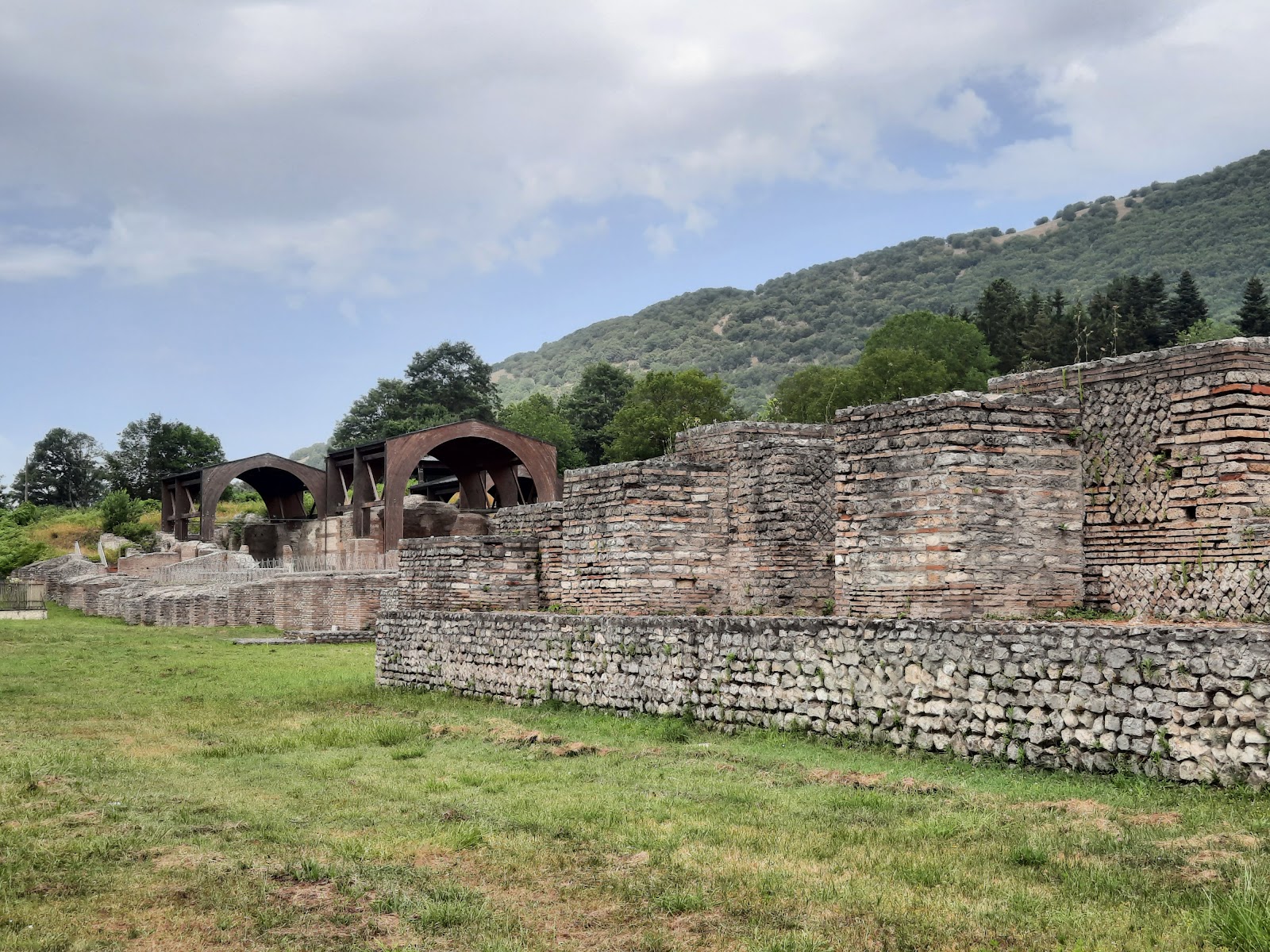
After the empire's contraction, the site was plundered in the fifth and sixth centuries, stripped again in the seventeenth, and mined for architectural material well into the nineteenth: marble went to the church of Sant'Andrea near Subiaco in 1777, and more was removed between 1829 and 1833 for the church of Santa Maria Assunta near Arcinazzo. Systematic archaeological work only began in 1999, and much of the five-hectare site remains unexcavated.
Good to know
The site sits near the village of Arcinazzo Romano, at the foot of Monte Altuino (1,271 m), roughly two kilometres from the Aniene river. Opening hours and admission fees were not confirmed at time of writing — check with the Soprintendenza Archeologia del Lazio before making the trip. A car is the practical way to get here.
The plateau sits at elevation, which means cooler summers than the coast and genuine cold in winter. Late spring and early autumn offer the most comfortable conditions for walking the outdoor sections of the site.
Where is Villa Traiana?
More tickets & tours for Villa Traiana
Book directly at the provider
What travellers say about Villa Traiana
Well worth a visit to the villa and the museum. Very reasonably tickets priced and the English language guide we bought had such a lot of detailed information, it was a fascinating read.
Here's a simple, easy-to-read version you could use for your Google review: --- "I wasn't just a visitor, but I had the honor of playing Mozart's Gran Partita as a horn player in the splendid Villa di Traiano, in the Altipiani di Arcinazzo. The venue, rich in history and surrounded by nature, was a wonderful setting for the concert. An unforgettable experience in a unique atmosphere."
A beautiful Roman villa with a museum displaying the finds from the excavations. The museum has a very interesting model of how the villa would have looked. The signage has been updated and is very clear, including in Braille. I recommend a visit, as a €3 ticket helps support the maintenance of the structure, as part of the villa is still being excavated. The villa is also accessible to wheelchair users and strollers.
Visiting this archaeological site was a wonderful experience. Trajan's Villa was the summer residence of Emperor Trajan (98-117 AD). It stands in the natural setting of the Arcinazzo Plateau, more precisely at the foot of Mount Altuino (1,271 m above sea level), in an area crossed by the Aniene River, whose precious waters were considered the best and healthiest in antiquity. The villa, on which construction began at the end of the 1st century AD, occupies an area of approximately 5 hectares, much of which remains to be excavated.
A magical site, it's understandable why an emperor would choose to build a residence there. The surrounding landscape, rich in lush vegetation, rivals even the most renowned mountainous areas, a paradise just a few kilometers from Rome. The ruins of Emperor Trajan's villa and the life that once lived there come to life thanks to the lively and captivating dialogue of our affable guide Cristiano. The ticket price of just 3 euros is nothing for the wonderful experience. Don't miss out on Cristiano's guidance, and I still commend him for his passion, which will make your journey into the past a complete success.
More of Civitavecchia
Discover where to stay, what to do and the best deals for your trip.
Explore Civitavecchia →More attractions in Civitavecchia
All of Civitavecchia →

Background adapted from Wikipedia (CC BY-SA) · map data © OpenStreetMap contributors · ratings & place photos via Google · other photos with per-image credit. Ticket links may earn us a commission at no extra cost to you.