
Porta Rugo
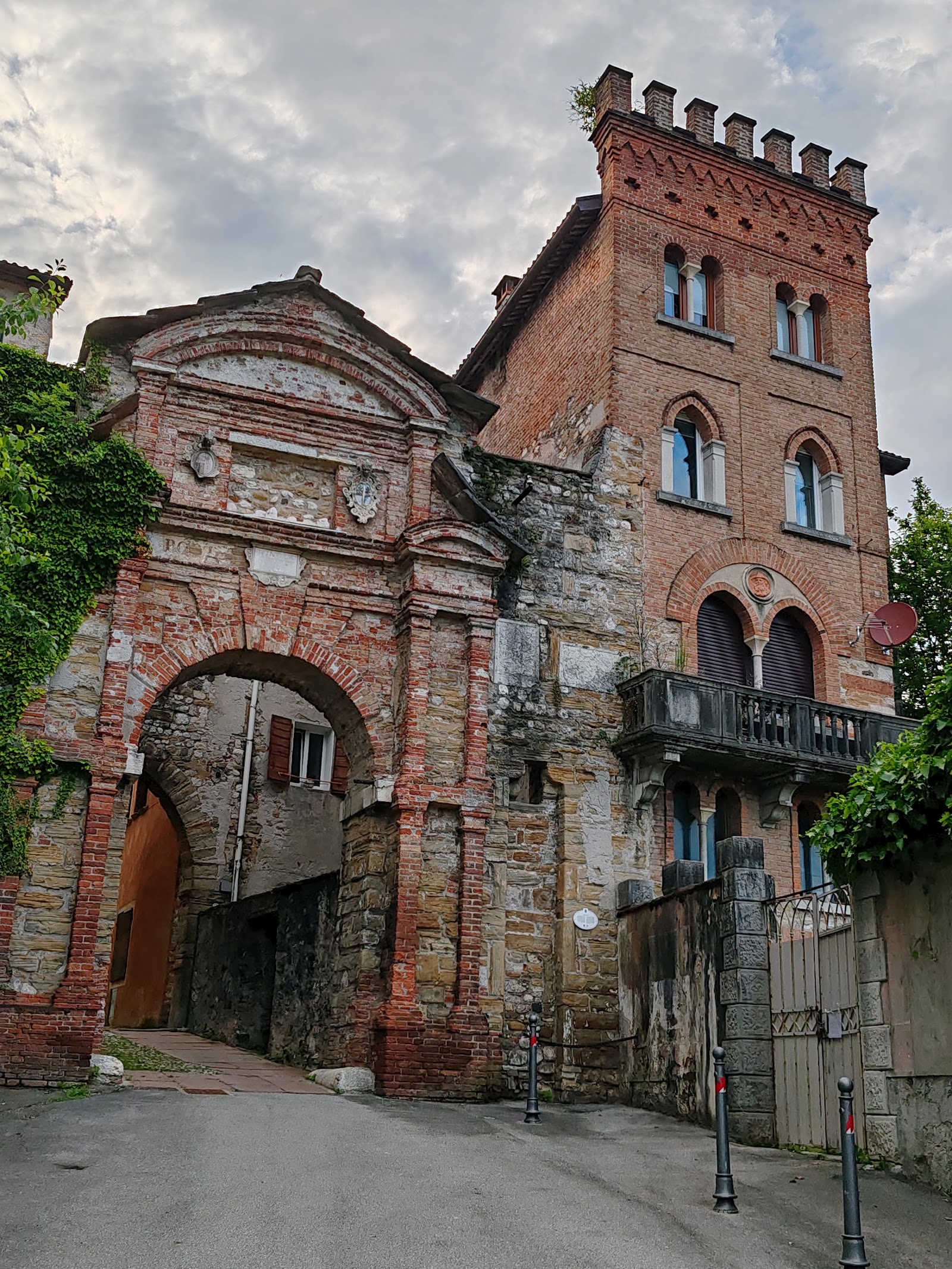
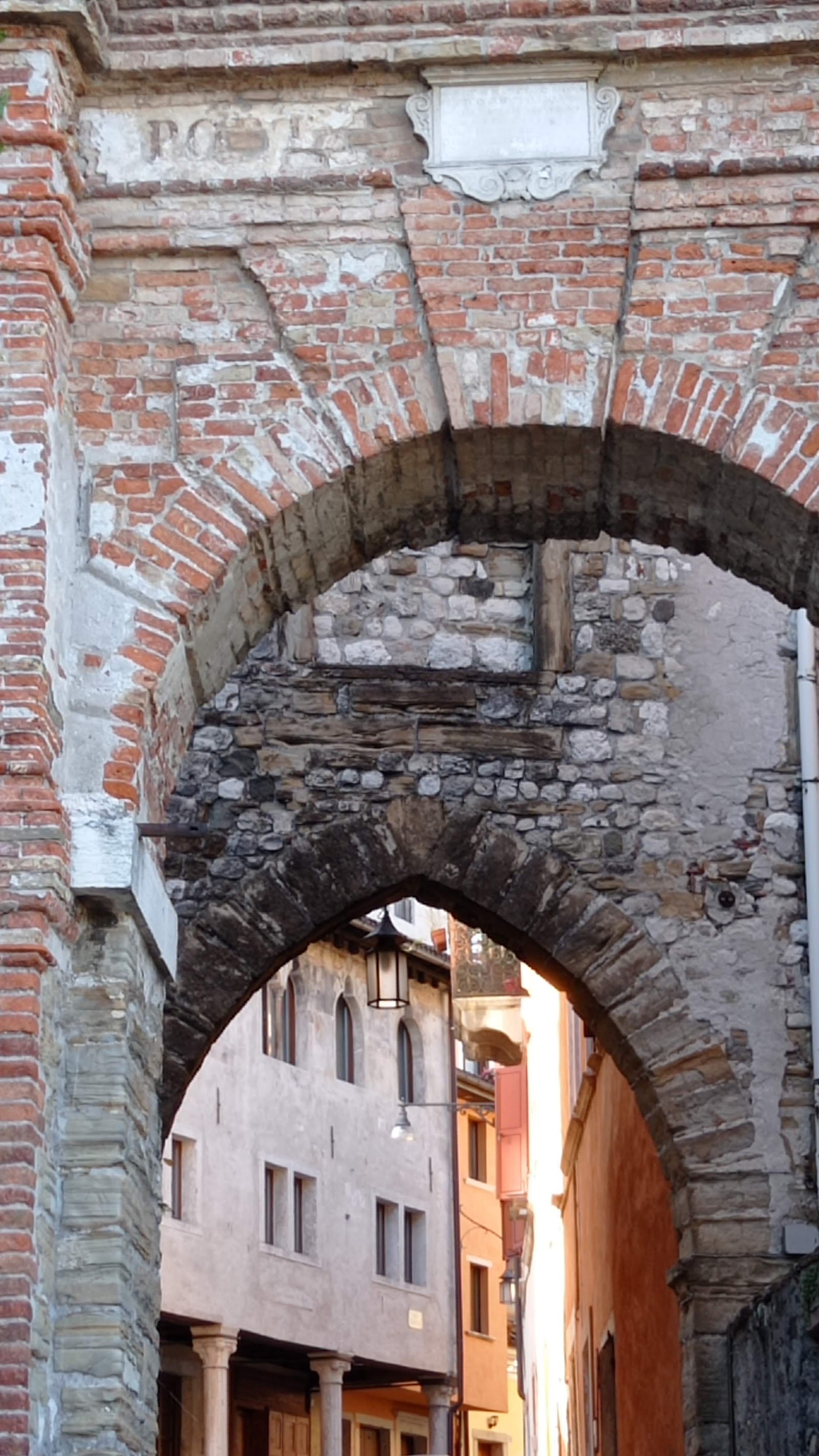
Porta Rugo sits at the southern edge of Belluno's old city, where Via Santa Croce meets the drop toward the Piave valley, and the view through the gate opens onto the river and the Nevegal ridge beyond. The outer facade — brick, which is unusual here — went up in 1622, commissioned by Venetian rector Federico Corner and designed by Lorenzo d'Alchini. Step through to the inner side and you're looking at the original pointed arch from the late thirteenth century, the older layer showing through.
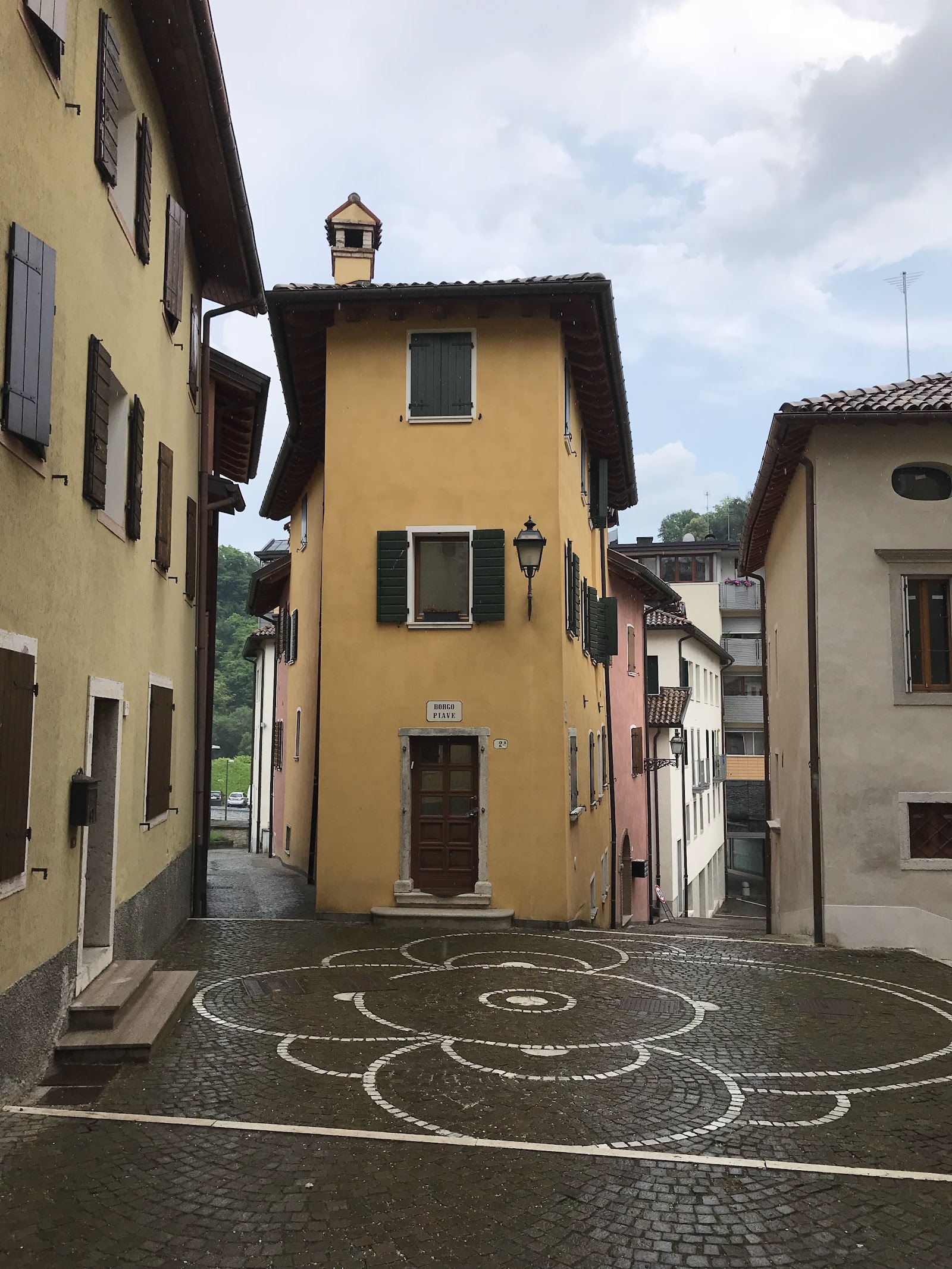
The gate once marked the end of the city and the beginning of the route down to Borgo Piave, where timber rafts loaded up for the long float to Venice along the Zattieri road.
💛 What travellers fall for
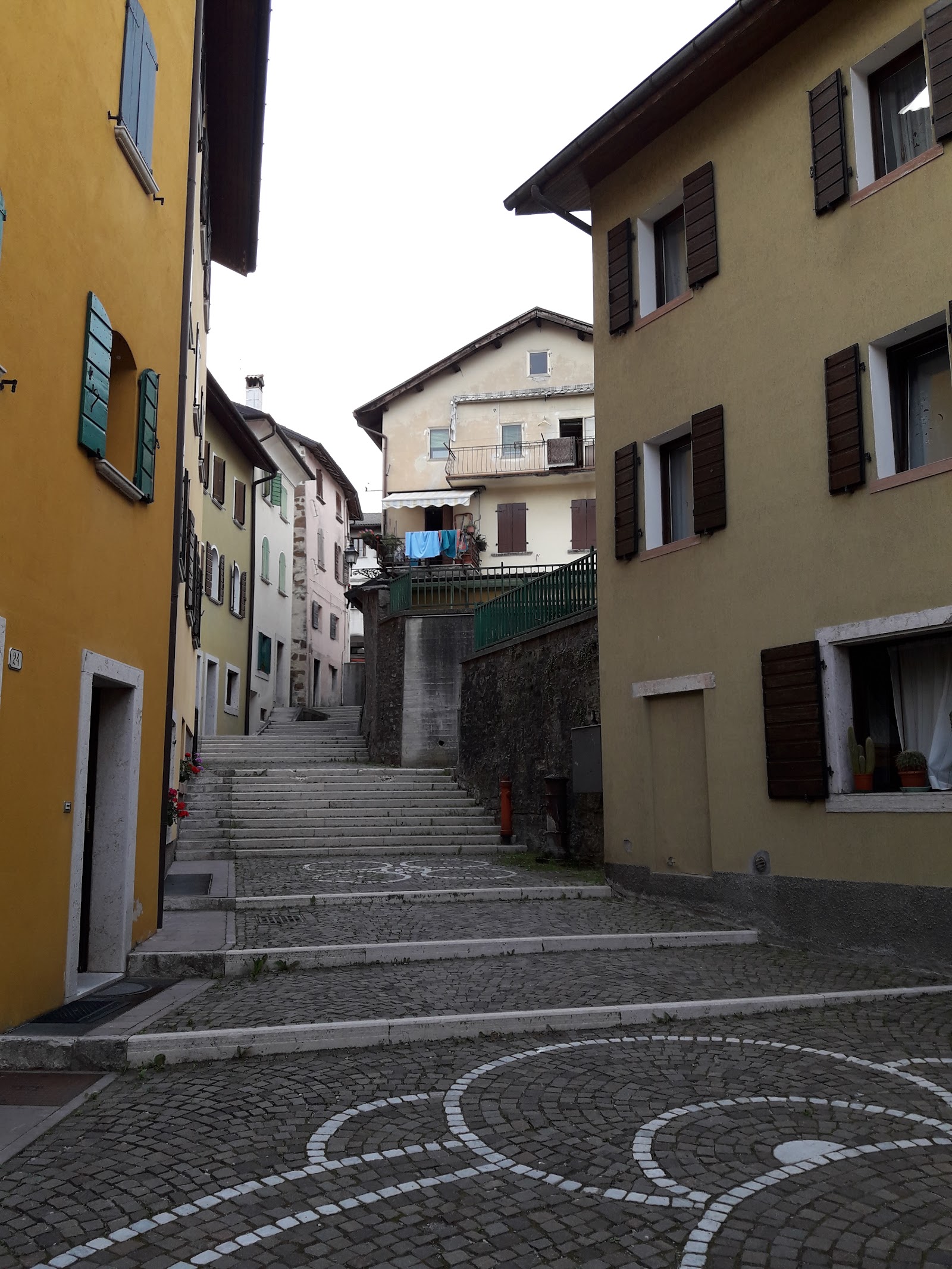
People who come back tend to approach from Via Rugo rather than the main streets — the cobbled *cogolà* paving and the low barred windows along the portico on the right side of Via Santa Croce give the approach a particular quiet. The central niche in the facade, where only the paws of the lion of St. Mark remain, is easy to overlook until someone points it out.
The story behind Porta Rugo
The inner pointed arch dates to the late thirteenth century, built as part of the city walls raised after the 1348 earthquake. The gate served as Belluno's southern entrance from the ancient river port at Borgo Piave. In 1404 the first Venetian rector, Antonio Moro, passed through it to take possession of the city; Emperor Maximilian of Habsburg used the same passage in 1509. For a period before Venetian rule, a frescoed Visconti coat of arms occupied the facade niche — the Visconti held Belluno from 1383 to 1404.
In 1622, rector Federico Corner commissioned architect Lorenzo d'Alchini to redesign the facade in brick, adding the double lesenes and broken pediment still visible today. The central niche was given a base bearing the lion of St. Mark, which Jacobin revolutionaries destroyed in May 1797. The tower on the left and the lateral fortifications came down in the early nineteenth century. The gate was last restored in 1902.
Good to know
No admission, no hours — it's a public gate on Via Santa Croce. Signage is limited, so approach from Riva San Nicolò or Via Rugo. Pair it with nearby Palazzo Nosadani and the walk connects naturally into the broader historic centre. May through September offers the most comfortable conditions.
Belluno sits in a valley with a moderately continental climate — winters are cold, often below freezing, and snow is possible. Summer is warm but cooler than the Veneto plain, with afternoon thunderstorms common in June and July. Late spring and early autumn tend to offer the steadiest conditions for a walk around the gate and surrounding streets.
Where is Porta Rugo?
More tickets & tours for Porta Rugo
Book directly at the provider
What travellers say about Porta Rugo
Travelling through time
Impressed by fountains in this city
Interesting and affecting.
One of the two entrance gates to Feltre, it deserves to be seen together with the other entrance gate to the town
Former city gate, beautiful, ancient architecture.
More of Belluno
Discover where to stay, what to do and the best deals for your trip.
Explore Belluno →More attractions in Belluno
All of Belluno →
Background adapted from Wikipedia (CC BY-SA) · map data © OpenStreetMap contributors · ratings & place photos via Google · other photos with per-image credit. Ticket links may earn us a commission at no extra cost to you.