
Borgo Piave
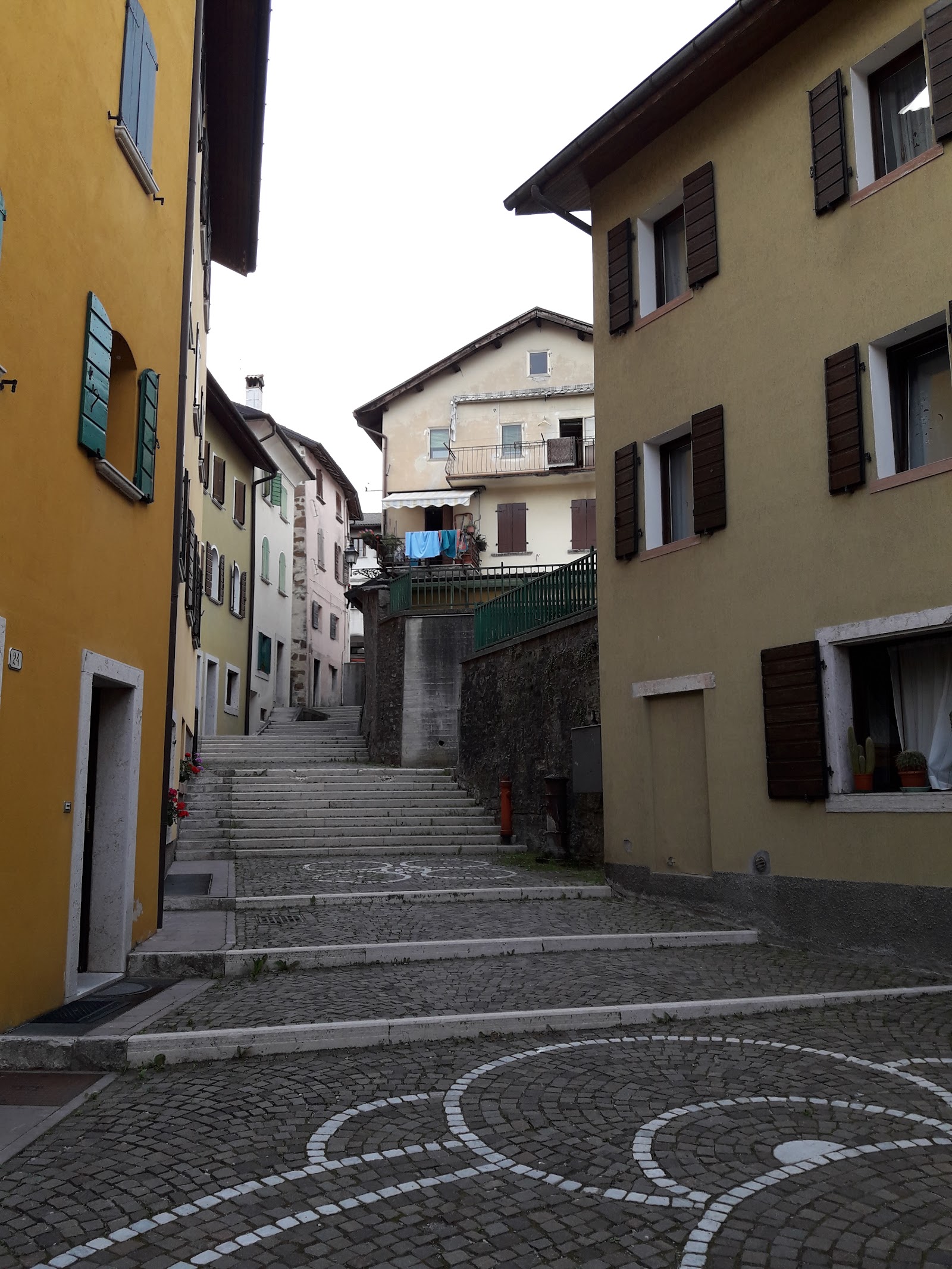
At the bottom of the descent from Porta Rugo, where the old walls give way to the Piave riverbank, Borgo Piave carries the memory of a working waterfront in its very street names. Via Uniera dei Zatér — the Street of the Raftsmen's Union — tells you what this place was before it was a quiet residential quarter: a port, a depot, a waystation for the timber that floated down from the Cadore forests all the way to Venice.
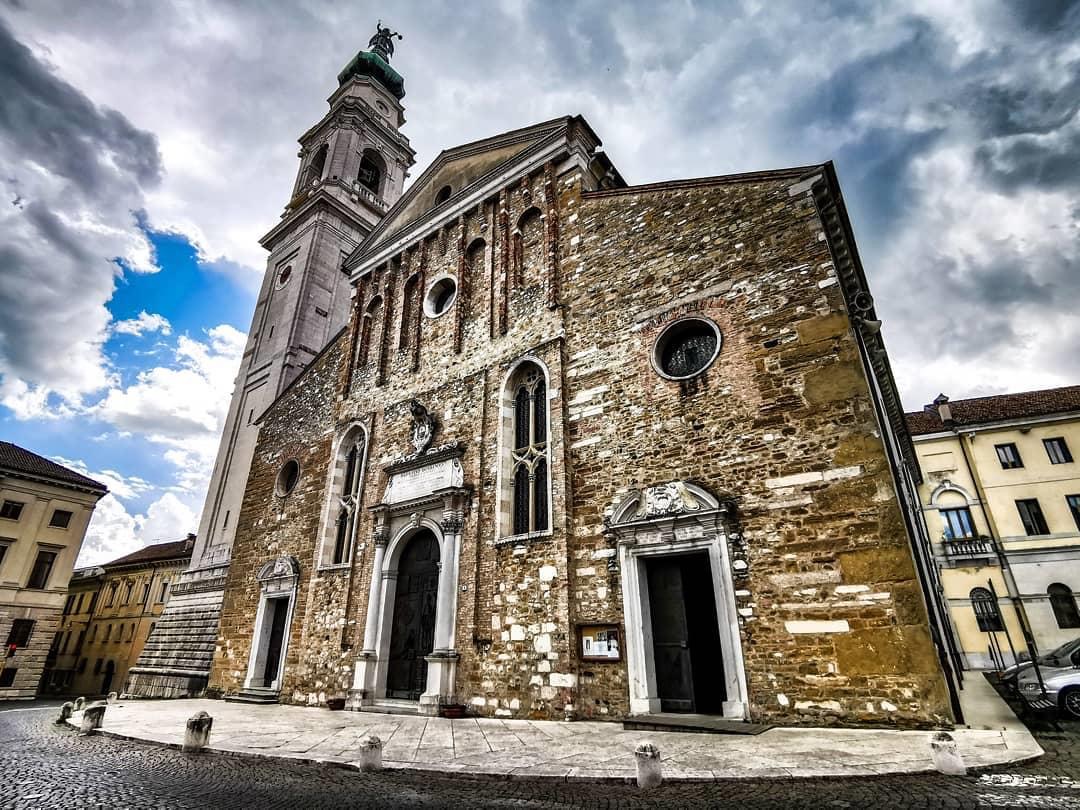
The buildings are still inhabited, so you read the neighbourhood from the outside — the sixteenth-century Palazzo Doglioni, once an inn for rafters known locally as the Botegòn, and the small church of San Nicolò, whose façade carries stone epigraphs about bridges and flood defences, the recurring anxieties of a community that always lived at the river's mercy.
💛 What travellers fall for
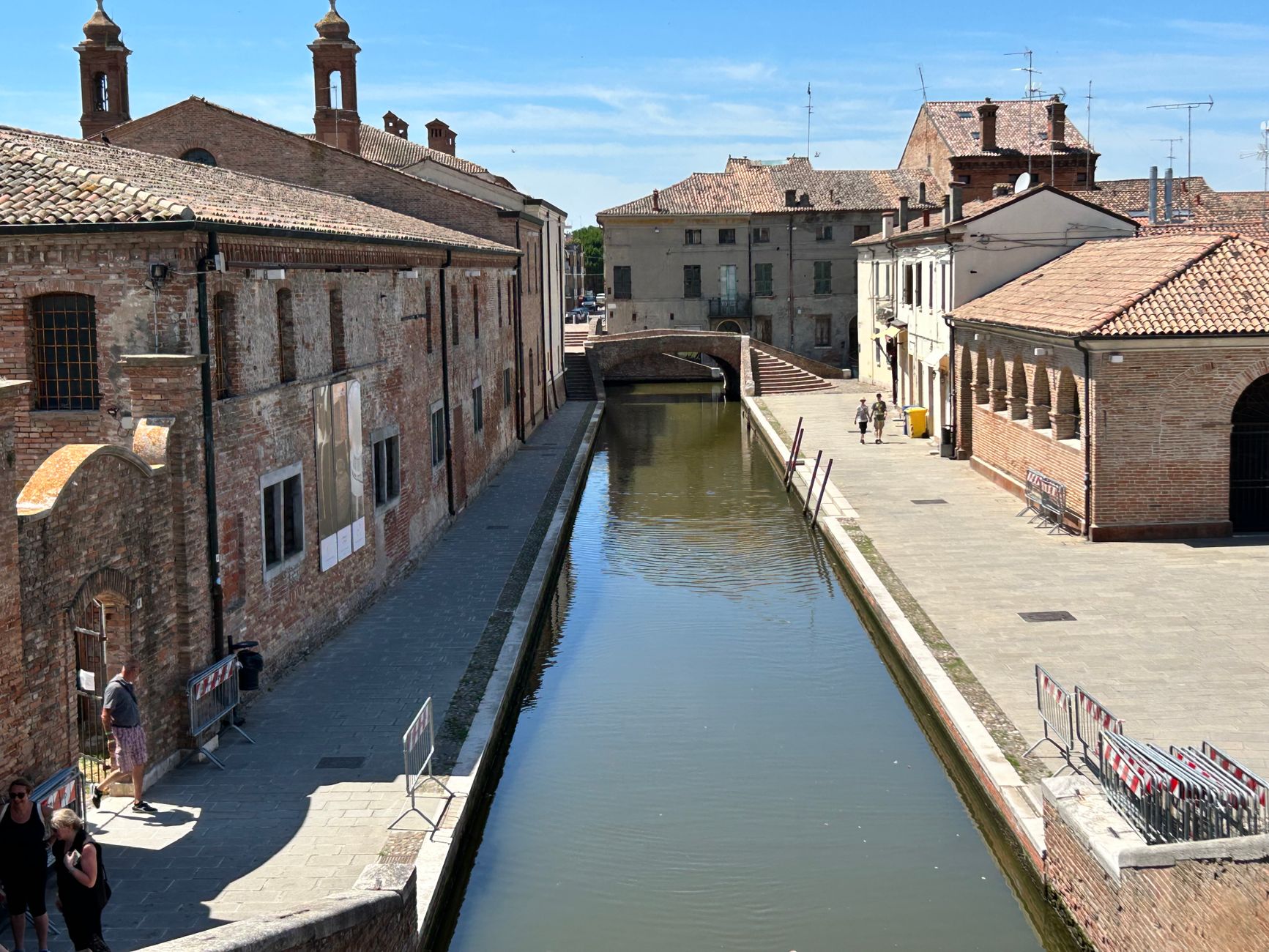
People who walk down more than once tend to time it for a weekday morning, when the bakery Giovanni is open and the quarter is going about its business. The descent via Via Sottocastello is steeper than it looks on a map; the escalators at Lambioi parking are a genuine relief on the way back up.
The story behind Borgo Piave
Mills for working wood, wheat and textiles stood here as early as 1182, and the Piave's role as a commercial artery shaped everything that followed. The neighbourhood as it stands was built in 1931, replacing and consolidating structures repeatedly remade after flooding. The church of San Nicolò, dedicated to the patron saint of raftsmen, traces its origins to 1361; the current building dates to 1861, itself a reconstruction of a 1547 version. Its façade records a bridge built over the Piave in 1568 and hydraulic works carried out in 1622 — a ledger of the river's demands.
Two more recent disasters reshaped the quarter in living memory: the 1963 Vajont catastrophe sent a wave of destruction downstream, and the catastrophic 1966 flood that struck the Veneto and Friuli forced further reconstruction. Casa Secco and Casa Fantuzzi, both fifteenth-century, survived and remain among the most quietly distinguished buildings on the street.
Good to know
Reach Borgo Piave on foot from Belluno's centre — descend through Porta Rugo or along Via Sottocastello. All historic buildings are private residences, viewable only from the street. The Raftsmen of the Piave walking route connects the quarter to Piazza Castello and back.
Spring and early autumn are the most comfortable seasons for the riverside walk — mild temperatures and long light. Winter descents can be slick after rain or frost, and the valley cold is sharper than the altitude suggests; January temperatures regularly drop below freezing.
Where is Borgo Piave?
Location
- In Belluno
- 46.1350, 12.2220
- Open in Google Maps
More tickets & tours for Borgo Piave
Book directly at the provider
More of Belluno
Discover where to stay, what to do and the best deals for your trip.
Explore Belluno →More attractions in Belluno
All of Belluno →

Background adapted from Wikipedia (CC BY-SA) · map data © OpenStreetMap contributors · ratings & place photos via Google · other photos with per-image credit. Ticket links may earn us a commission at no extra cost to you.