
Piazza dei Martiri
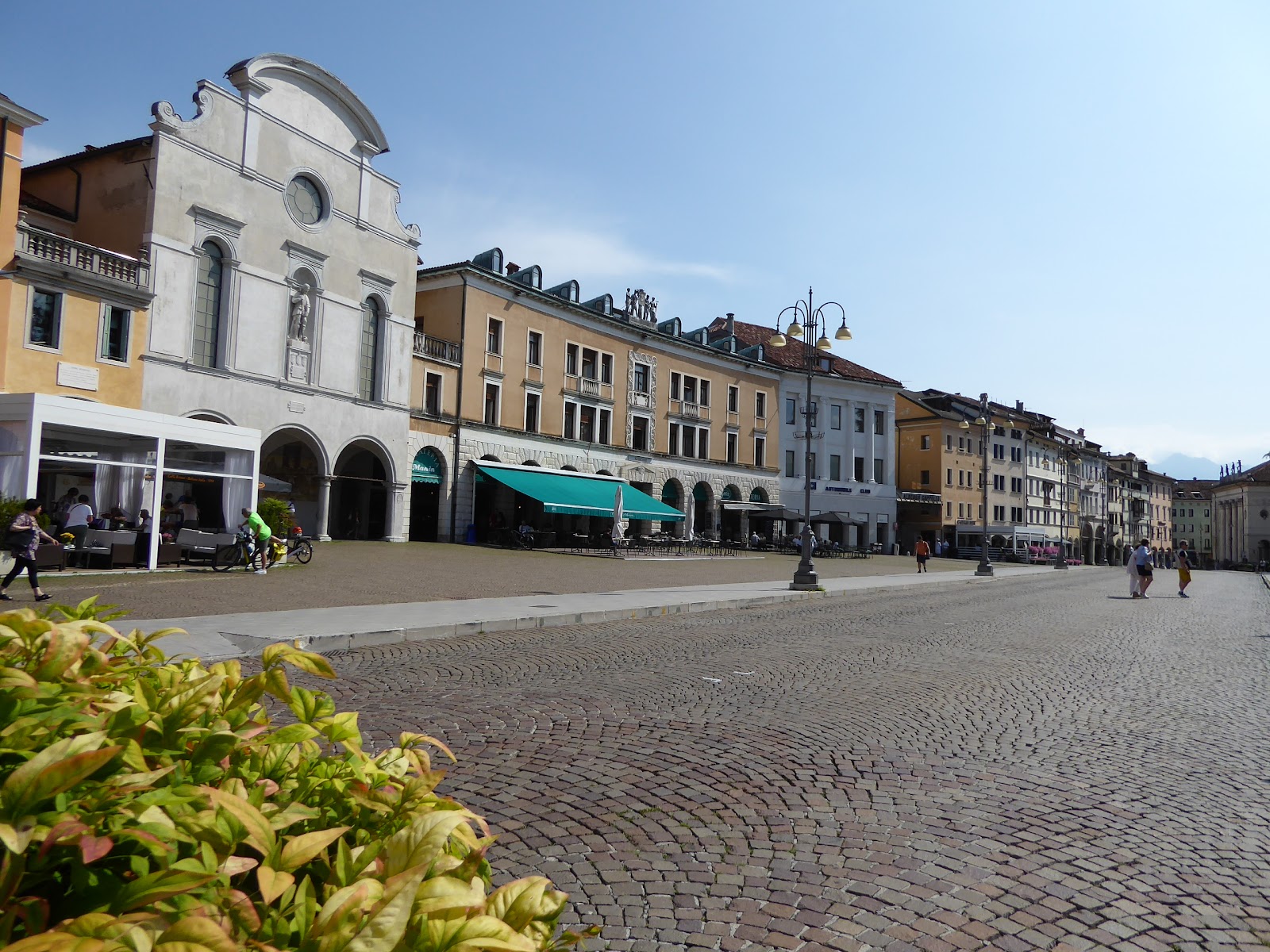
The long stone walkway known as the Liston draws you through the square under arcades and past flower beds where bronze sculptures by Augusto Murer catch the afternoon light. At the centre, a Cedar of Lebanon anchors the garden, and at the western edge the ground opens to a view over the Piave river valley — the river tracing its way toward Feltre far below.
The circular fountain at the heart of the square is 16 metres across, its basin etched with the coats of arms of all 69 municipalities in the province. On the north side, the 1530 Chiesa di San Rocco faces you in white Castellavazzo stone, and the arcaded buildings beside it house bars and restaurants that give the piazza its daily rhythm.
💛 What travellers fall for
People who know the square well tend to walk the Liston in the early evening, when the arcades on the north side fill up and the light on the Teatro Comunale's neoclassical facade turns warm. The western viewpoint over the Piave valley is easy to miss if you stay near the fountain — go to the far end of the gardens.
The story behind Piazza dei Martiri
The ground beneath the square has been in public use for a long time. In Roman times it served as a Campo di Marte — a field for military exercises. By the early modern period it had become known as Campitello, a place for fairs, markets and civic parades. After Belluno-born Bartolomeo Alberto Cappellari was elected Pope Gregory XVI in 1831, locals also called it Piazza Papa or Piazza Gregorio XVI. The gardens were laid out in the 1930s, designed by architect Alberto Alpago Novello.
The name it carries today came on June 3, 1945, when the square was renamed Piazza dei Martiri to honour four partisans hanged here on March 17, 1945. Bishop Girolamo Bortignon brought a ladder to the site to administer last rites to the men where they hung. The memorial — four bronze panels by Augusto Murer, installed in 1965 — records that moment among others: bread carried to partisans, the concentration camp, and the city's liberation on May 2.
Good to know
An eight-minute walk from Belluno train station. No entry fee. Blue-zone parking is available at nearby Piazza Piloni or the larger Lambioi car park. June through September gives you the most comfortable conditions for lingering outdoors.
Winters are cold, with temperatures regularly dipping below freezing and around 30 centimetres of snow on average — the valley traps cold air. Summers are warm but milder than the plains, with July averaging around 23°C and afternoon thunderstorms common on clear days. June through September is the easiest window for spending time in the square.
Where is Piazza dei Martiri?
More tickets & tours for Piazza dei Martiri
Book directly at the provider
What travellers say about Piazza dei Martiri
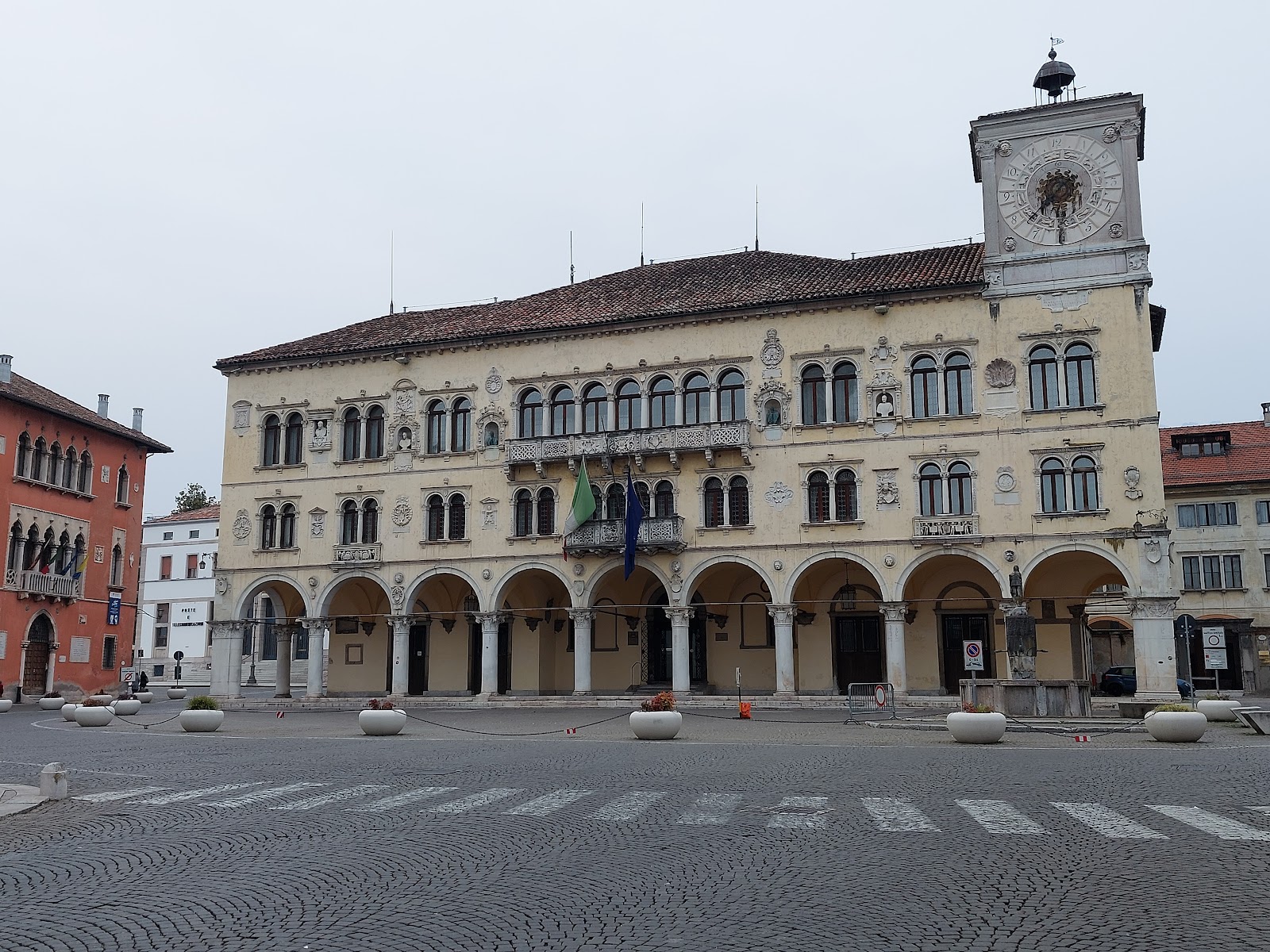
Piazza dei Martiri is considered the city's living room, a place for strolling and socializing. Accessing the square through Porta Dante, you'll see a semi-curve of colorful buildings. You'll notice the neoclassical Teatro Comunale, Palazzo Fulcis, home to the Civic Museum, the Church of Santo Rocco, the gardens with their large fountain, and the bars and shops.
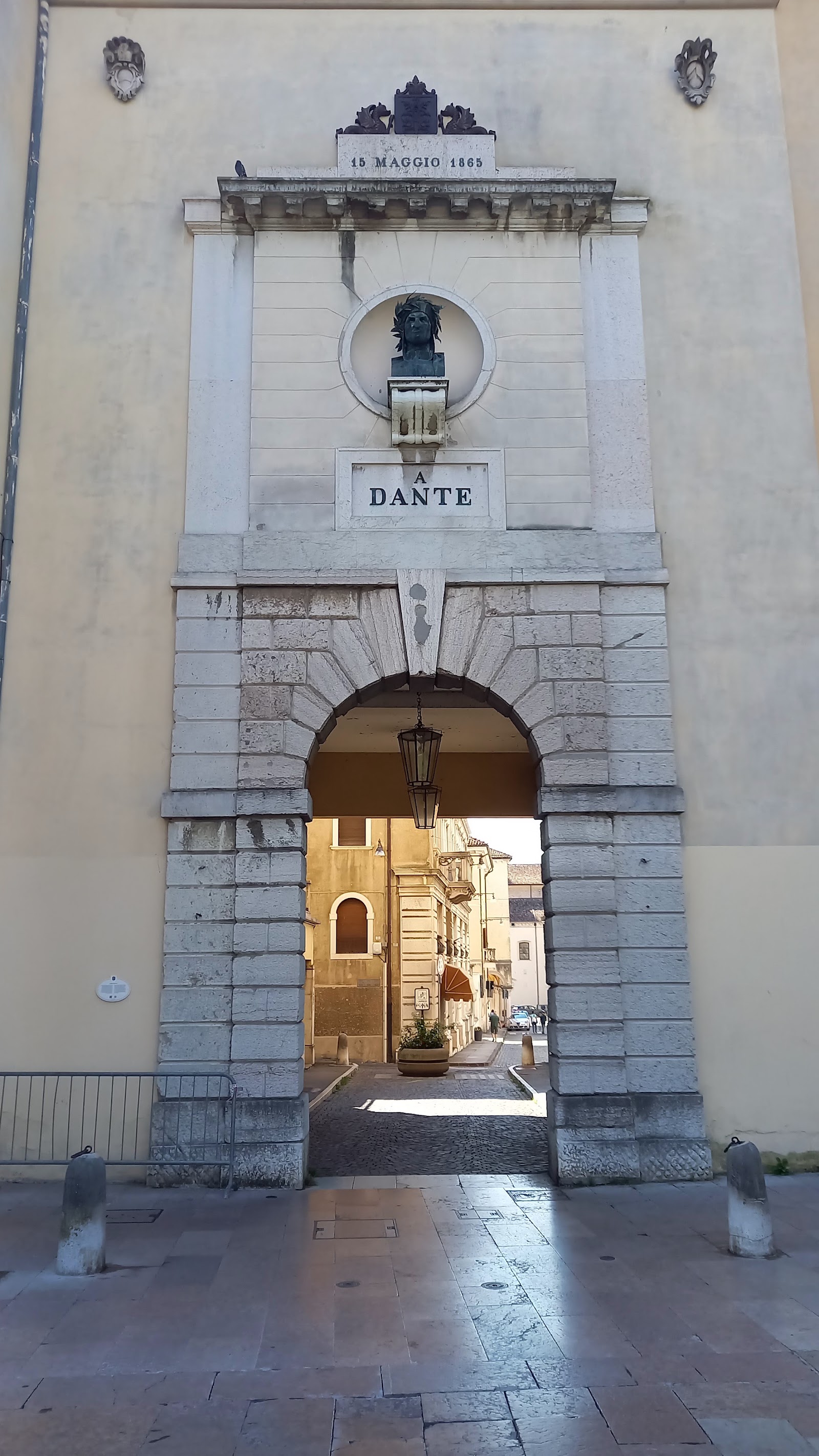
For over a century, this particular square was called Piazza del Papa, or Piazza Gregorio XVI, in homage to the Belluno pope. Piazza dei Martiri owes its name to the four young partisans hanged by the Nazis on March 17, 1945, on the four lampposts in the center of the square. The sculptures we find there were created by Falcade artist Augusto Murer in memory of the tragic event. Hidden behind the gardens are a series of buildings from various eras, which replace the city's ancient Roman walls, where a small entrance led to the castle. The entrance was called Ussolo, meaning "little door," and served as a passageway for garrison soldiers to the city castle. The Porta Dante dates back to 1865, built at the end of Habsburg rule in Belluno, as a patriotic symbol of Italy's rediscovered cultural unity.
Elliptical This is the Belluno square that was once known as Piazza Campedèl or Campitello, indicating the place where markets, fairs, or events were held outside the walls. With its elliptical shape, it has been described as the garden lounge in the city center, surrounded by the palaces of the most important Belluno families. In the past, along the south side, where the houses once stood, stood the city walls. These walls remained standing until the 18th century when, after the moat was filled in, they began to be demolished for the construction of buildings. Worth seeing.
A beautiful square, the buildings are all stunning, and standing here in the shade of the trees brings back so many childhood memories. There are so many bars and it's the liveliest area in the city!
Belluno's Martyrs' Square visited during the Christmas period
More of Belluno
Discover where to stay, what to do and the best deals for your trip.
Explore Belluno →More attractions in Belluno
All of Belluno →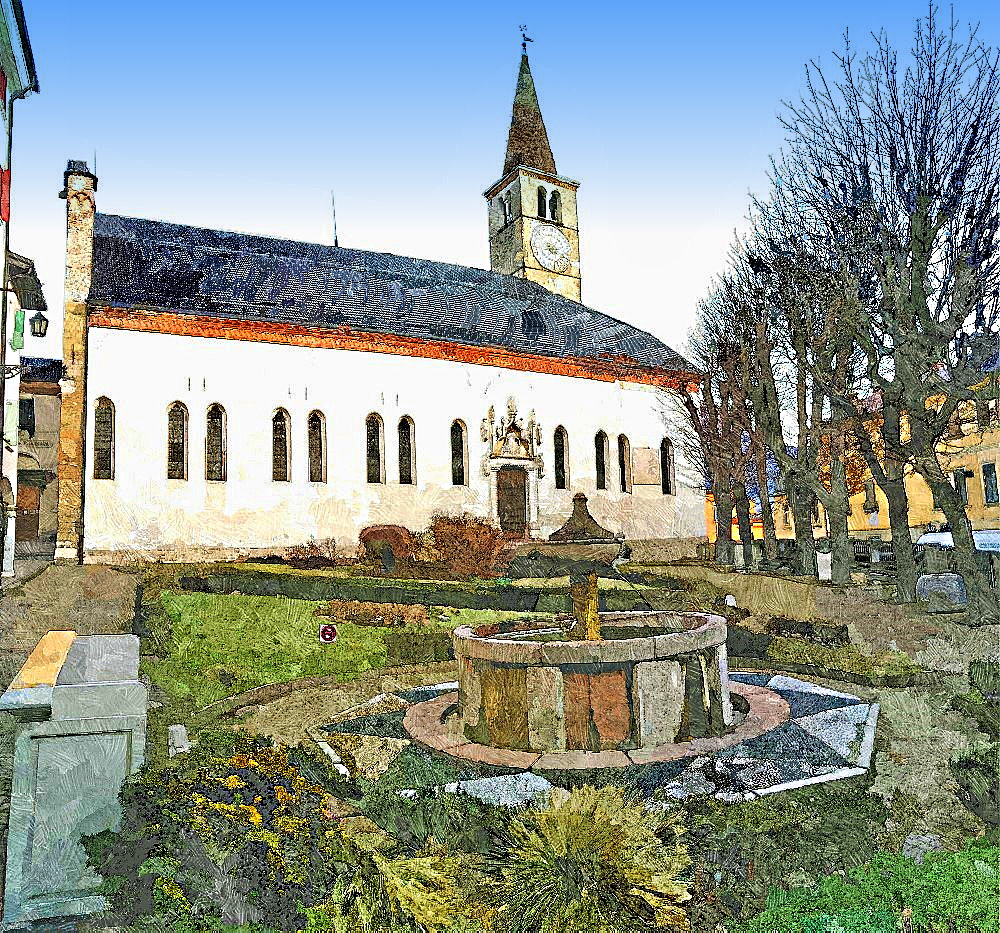
Background adapted from Wikipedia (CC BY-SA) · map data © OpenStreetMap contributors · ratings & place photos via Google · other photos with per-image credit. Ticket links may earn us a commission at no extra cost to you.