
Palazzo Ducale di Mantova

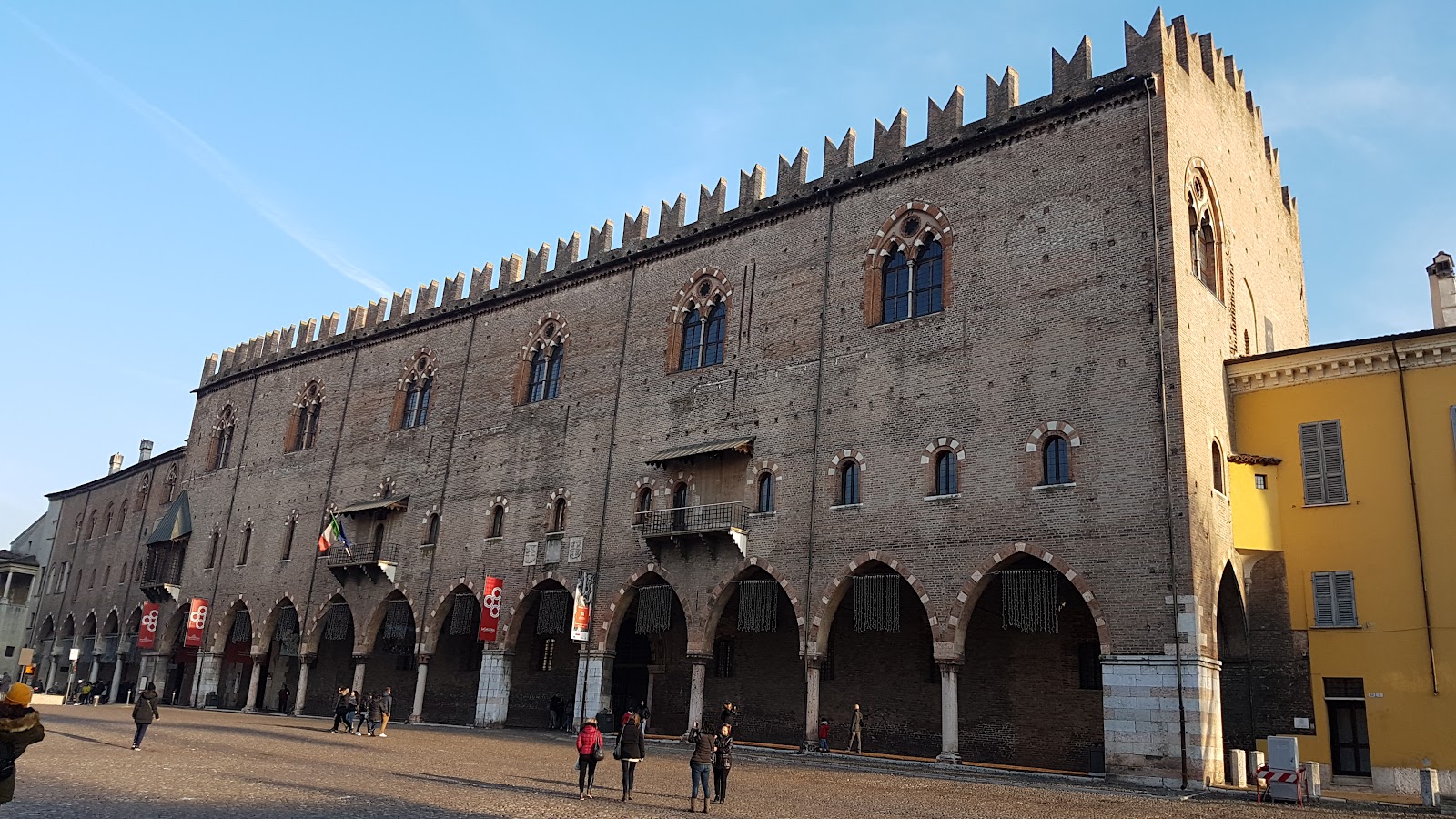
The Palazzo Ducale is not one building but a city folded inside a city — more than 1,000 rooms spread across roughly 35,000 square metres of courtyards, loggias, gardens and galleries that accumulated over four centuries of Gonzaga ambition. You enter off Piazza Sordello and almost immediately lose your bearings, which is part of the point.
The room that stops most people is the Camera degli Sposi, the Bridal Chamber in the Castello di San Giorgio, where Andrea Mantegna spent a decade — 1465 to 1475 — painting a trompe-l'oeil ceiling that opens the room to a painted sky. It remains one of the most technically audacious things done in fresco in the 15th century.
💛 What travellers fall for
Repeat visitors book the Camera degli Sposi reservation well ahead and arrive at opening — 8:15 on a Tuesday is noticeably quieter than a Saturday afternoon. Many skip the outer rooms on a first pass and return specifically for Pisanello's unfinished Arthurian frescoes in the Corte Vecchia, which reward a slower look than most people give them.
The story behind Palazzo Ducale di Mantova
The oldest part of the complex, the Palazzo del Capitano, was commissioned by Guido Bonacolsi at the end of the 13th century. When the Gonzaga seized power in 1328, they inherited the structure and never really stopped building. By the mid-16th century, Duke Guglielmo Gonzaga charged his chief architect Giovan Battista Bertani with pulling the accumulated wings, courts and passages into something coherent; Bernardino Facciotto completed that unification after Bertani's death.
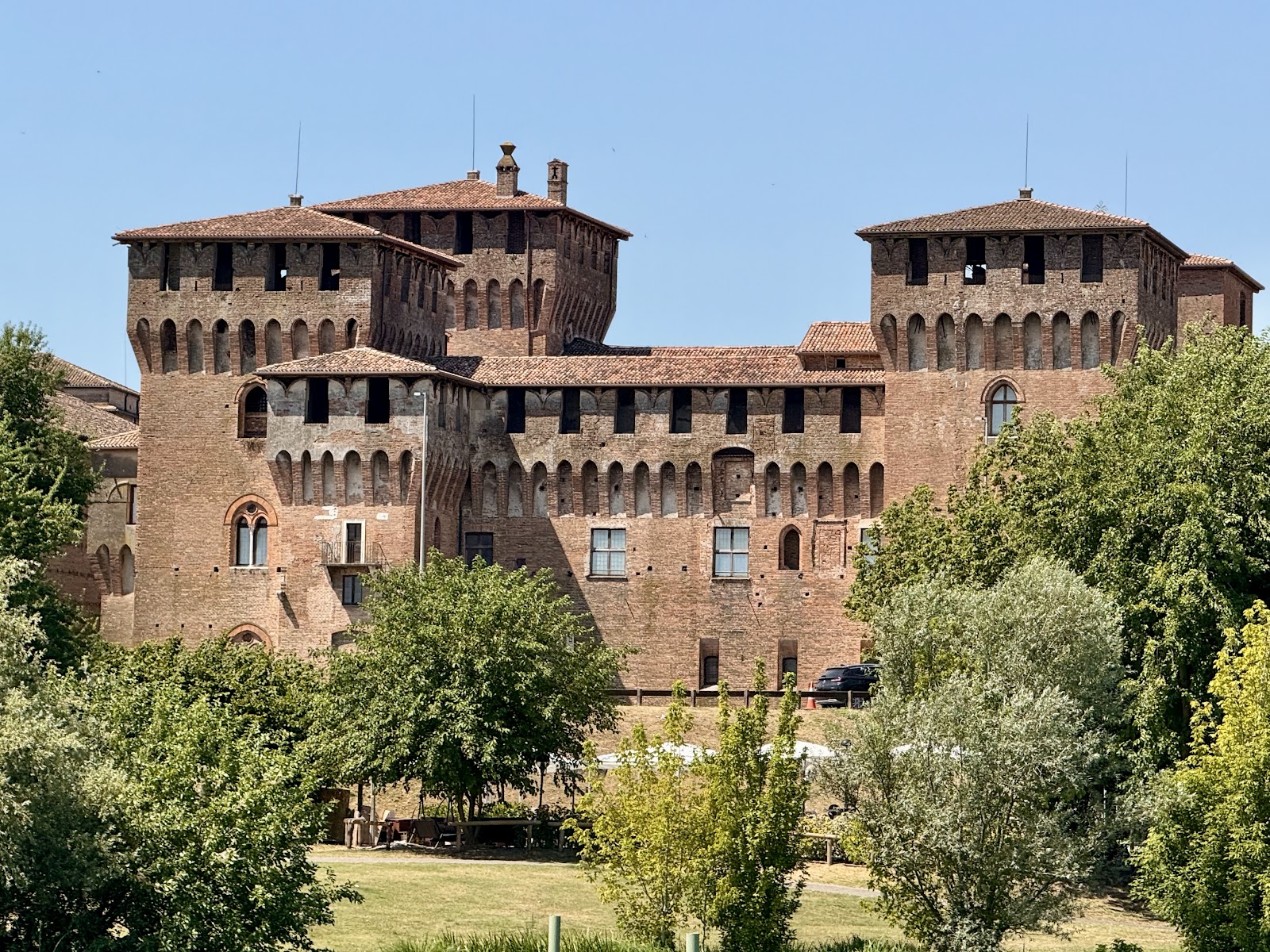
The Castello di San Giorgio — the four-towered fortress attached to the main body — was built between 1395 and 1406 by military architect Bartolino da Novara. Isabella d'Este kept her apartments here, including the Secret Garden completed in 1522. The Gonzaga line ended in 1707; in 1887 the Ministry of Public Education took over, and a formal museum register opened the same year.
Good to know
Open Tuesday to Sunday, 8:15 a.m. to 7:15 p.m.; closed Mondays, 25 December and 1 January. The full ticket is €18; the Camera degli Sposi requires a mandatory separate reservation. From Mantua station, it's a walkable 1.4 kilometres along the lakefront. Budget at least three hours — realistically more.
Where is Palazzo Ducale di Mantova?
More tickets & tours for Palazzo Ducale di Mantova
Book directly at the provider
What travellers say about Palazzo Ducale di Mantova
An outstanding palace and a must-visit in Mantua. The complex is enormous, and you can easily spend 1.5–2 hours exploring its beautiful halls, frescoes, and courtyards. The Camera degli Sposi is surprisingly small. It’s hard to believe it was painted around 1474—the quality and illusionistic perspective were far ahead of their time. The contrast with some rooms decorated a century later makes Mantegna’s masterpiece even more impressive. Mantua may be a relatively quiet city, but it is home to some truly world-class treasures.
Nice palace with an impressive array of architectural styles and interior decorations ranging from XIII to XIX centuries. Most in original state.
To call the Palazzo Ducale a "palace" is a bit of an understatement. It is a sprawling fortress-city that spans 35,000 square meters and contains over 500 rooms. For centuries, this was the headquarters of the Gonzaga dynasty, and they built it up layer by layer, resulting in a complex that rivals the Vatican in sheer scale.
Very beautiful place, with great exhibitions and excellent restoration work. The full visit takes approximately an hour and a half.
Amazing place and the ticket price (15€) is really decent compared to other more famous palaces and given the amount of space, art and history you see. We were simply astonished. You can easily spend 4-5h and if it's raining outside, you have no reason to hurry up. We loved it, it's a must if you're in Mantova.
More of Mantua
Discover where to stay, what to do and the best deals for your trip.
Explore Mantua →More attractions in Mantua
All of Mantua →
Background adapted from Wikipedia (CC BY-SA) · map data © OpenStreetMap contributors · ratings & place photos via Google · other photos with per-image credit. Ticket links may earn us a commission at no extra cost to you.