
Itsukushima Shrine
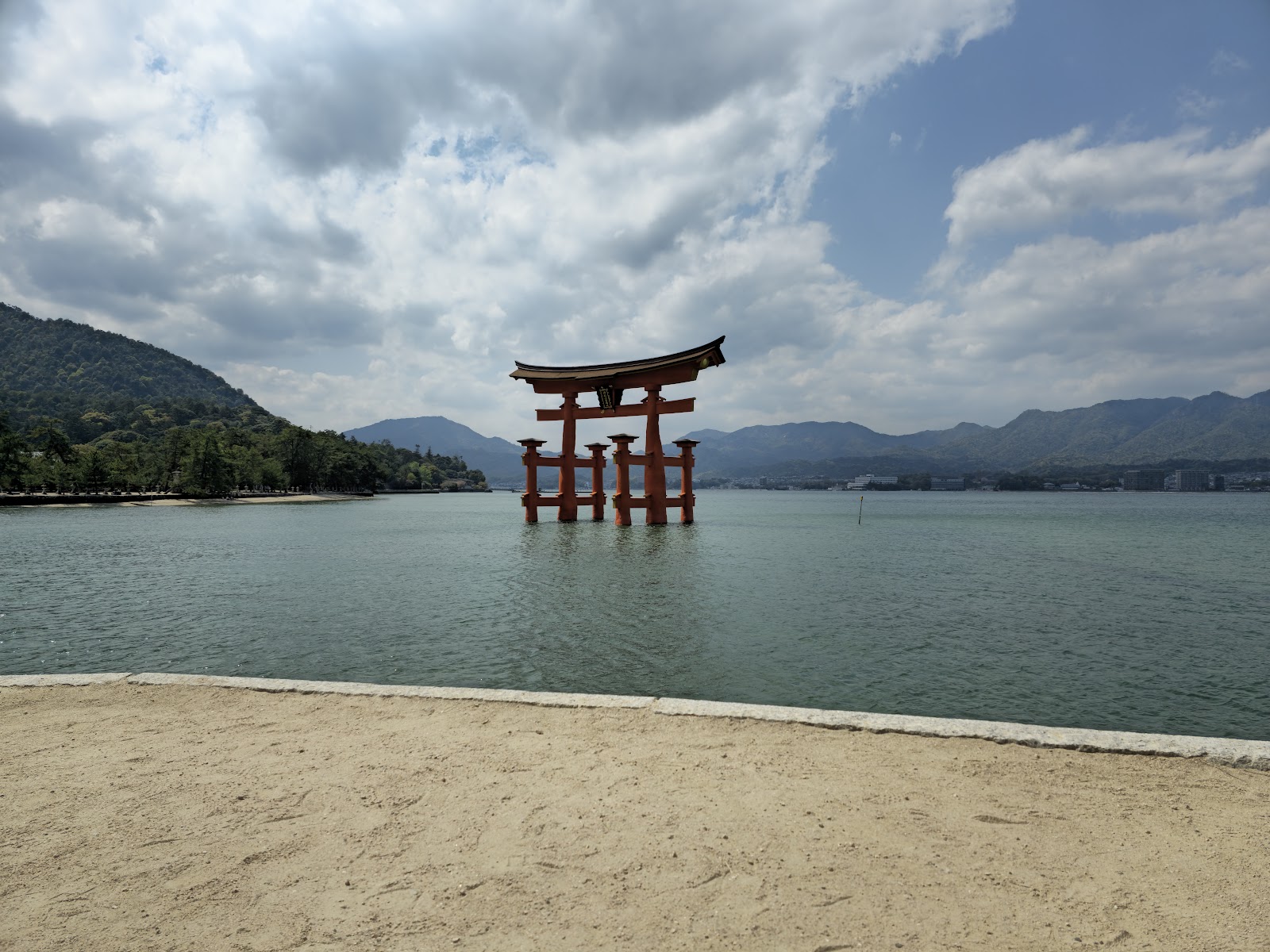
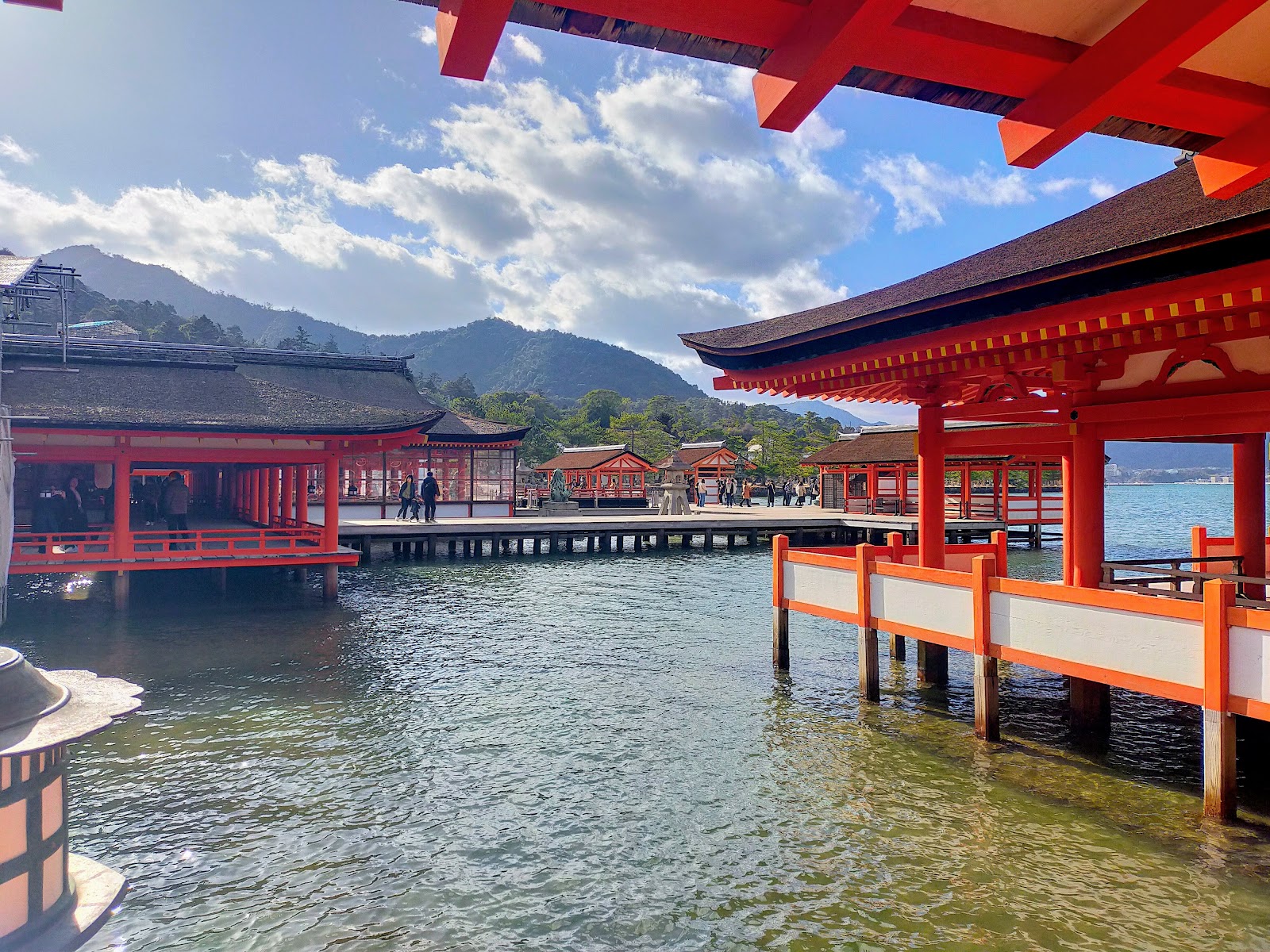
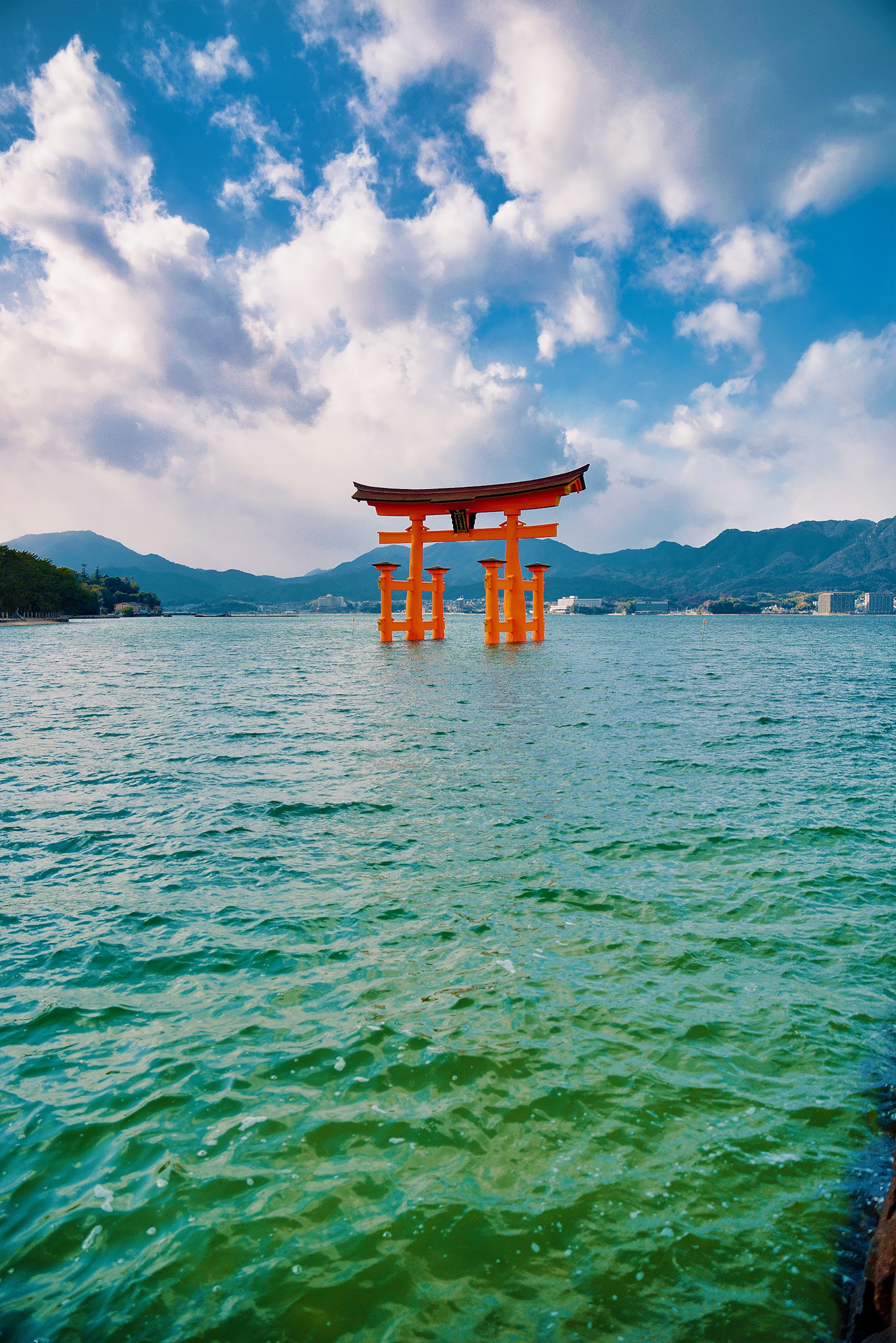
The corridors of Itsukushima Shrine run 260 metres across the water on wooden pillars, the floorboards left slightly gapped so the tide can breathe through them — no nails hold them down. At high water, the whole complex appears to float, and the great camphor-wood torii gate rises from the sea as if it grew there. Deer move through the compound at their own pace, unhurried by the visitors around them, regarded here as messengers of the Shinto gods.
The shrine sits on Miyajima island, a short ferry ride from the mainland, and the approach from the pier takes about ten minutes on foot. After dark, the shrine and torii are lit until 23:00, which changes the place entirely.
💛 What travellers fall for
People who return tend to time their visits around the tides. Walk out to the torii at low tide — below about 100 cm — and you can stand at its base and take in the scale of it up close. Come back a few hours later at high water and the same gate seems to levitate. Both are worth doing on the same trip if your schedule allows.
The story behind Itsukushima Shrine
A local governor named Saeki no Kuramoto built the first shrine here in 593, the year Empress Suiko ascended the throne, following an oracle he received on the island. For centuries it remained a place of island-scale significance. That changed in 1168, when the warlord Taira no Kiyomori rebuilt the entire complex in the shinden-zukuri palatial style and erected the first version of the great torii gate in camphor wood — transforming Itsukushima into a site of national importance and a symbol of his clan's power.
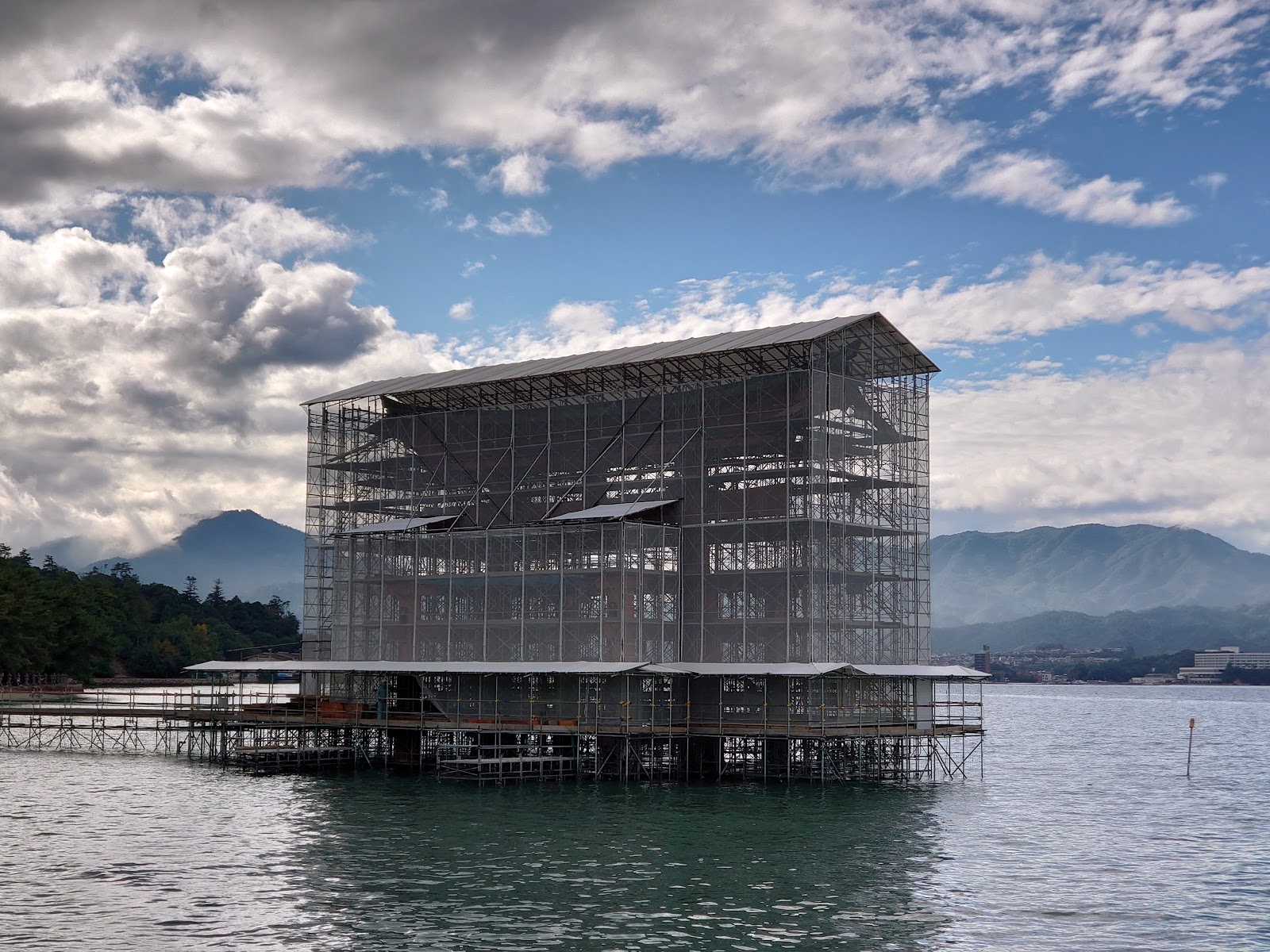
The main sanctuary standing today dates to 1571; the Marodo-jinja was built in 1241. The five-story pagoda dedicated to Yakushi, the Buddha of medicine, went up in 1407, and the Senjokaku hall was commissioned by Toyotomi Hideyoshi in the 16th century. The torii seen today is the 1875 replacement. In 1996, the shrine was designated a UNESCO World Cultural Heritage site.
Good to know
Take the JR Sanyo Line from Hiroshima to Miyajimaguchi (25-30 min), then the 10-minute ferry to Miyajima. Admission is 300 yen for adults. Allow 1.5-2 hours. Hours shift seasonally — shortest in December (6:30-17:00), longest March through mid-October (6:30-18:00).
The shrine is accessible year-round, and the sea is calmest between March and November — the only window when boat passage through the torii gate is offered. Summer brings the Kangensai festival in late July. Winter hours are shorter and the island quieter.
Where is Itsukushima Shrine?
More tickets & tours for Itsukushima Shrine
Book directly at the provider
What travellers say about Itsukushima Shrine
Miyajima Island is a place you could explore for a good two days, not just because of how big it is but because of having to navigate your way through the crowds of people. The shops and food options are extensive close to the pier and there are other places to eat the more you explore. We took in the Itsukushima Shrine which is beautiful then worked our way to the interior of the island and to higher elevation. The crowds seemed to thin out and there are some beautiful spots. We didn’t have time to do the cable car but would imagine it’s beautiful. This is a place that you really need to spend more than a few hours visiting if you can.
The Itsukushima Jinja complex is quite impressive, a beautiful Shinto shrine originating from the 17th century. It has an iconic torii gate that appears to float on the bay waters. This was our first site in our day long tour of Hiroshima. We took the ferry to Miyajima Island, and then walked a short distance to the impressive gate and the shrine and it's surrounding buildings. It was slightly drizzling rain, but it did not detract from our experience...if anything it made it more naturalistic. We came across the super domesticated small deer that will come right up to you (although don't expect a bow, they don't roll like that!). The tide was out in the morning, so the the gate didn't quite have the floating on water look since you could see the underwater wear and tear. But this didn't detract from our experience! We had the pleasure of also witnessing a traditional marriage ceremony.
Itsukushima Shrine was even more beautiful. The famous floating torii gate and the peaceful atmosphere. The scenery changes beautifully with the tide, and the shrine architecture is stunning. Admission was only around ¥300 for adults. The island is also lovely to walk around, with many shops, cafés, and friendly deer nearby. It can get quite crowded, but the view and atmosphere are absolutely worth visiting at least once ⛩️
Visited this beautiful shrine at sunset 🌅. It was nearly closing time (around 17:30), so almost everything was already shut. But we chose to come this late just for the sunset anyway. There was very little water due to the tide, so it probably wasn’t as beautiful as it could have been. The entrance cost 300 yen per person, which is a fair price 💴. There were lots of deer walking around, and they weren’t afraid of people 🦌.
Itsukushima Shrine is a UNESCO World Heritage site on Miyajima Island, Japan. It’s an amazing building, which appears to float on the sea at high tide. Built in the 12th century by Taira no Kiyomori, this architectural marvel features connected over-water boardwalks and offers stunning views against Mount Misen.
More of Hiroshima
Discover where to stay, what to do and the best deals for your trip.
Explore Hiroshima →More attractions in Hiroshima
All of Hiroshima →

Background adapted from Wikipedia (CC BY-SA) · map data © OpenStreetMap contributors · ratings & place photos via Google · other photos with per-image credit. Ticket links may earn us a commission at no extra cost to you.