
Itsukushima Floating Torii Gate
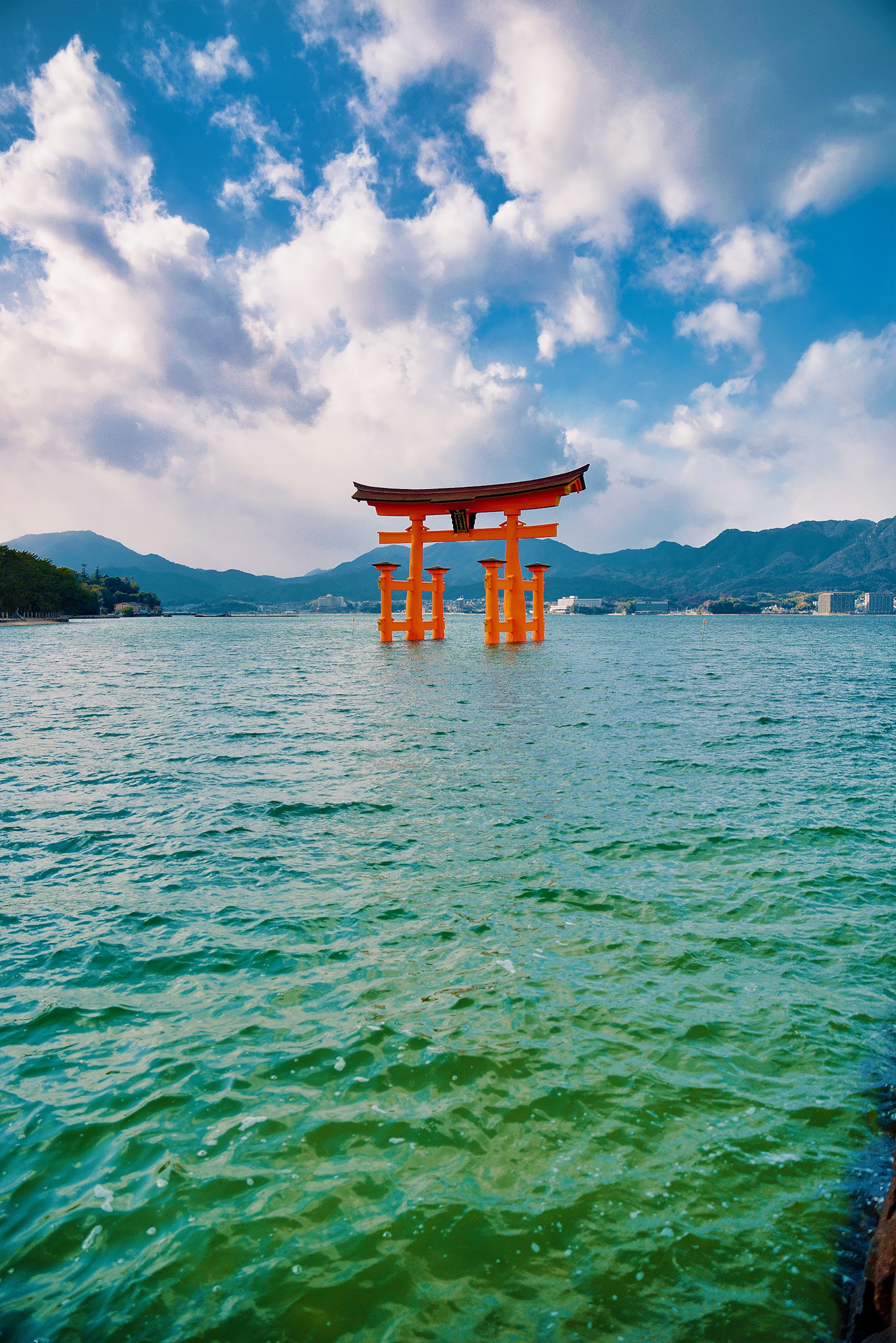
At high tide, the O-Torii stands in open water with nothing beneath it but sea — a vermilion gate, 16.8 metres tall, apparently unmoored from the earth. The main pillars are camphor wood, 500 to 600 years old and naturally resistant to rot, their base left unanchored so the gate's own weight holds it in place against the tidal pull.
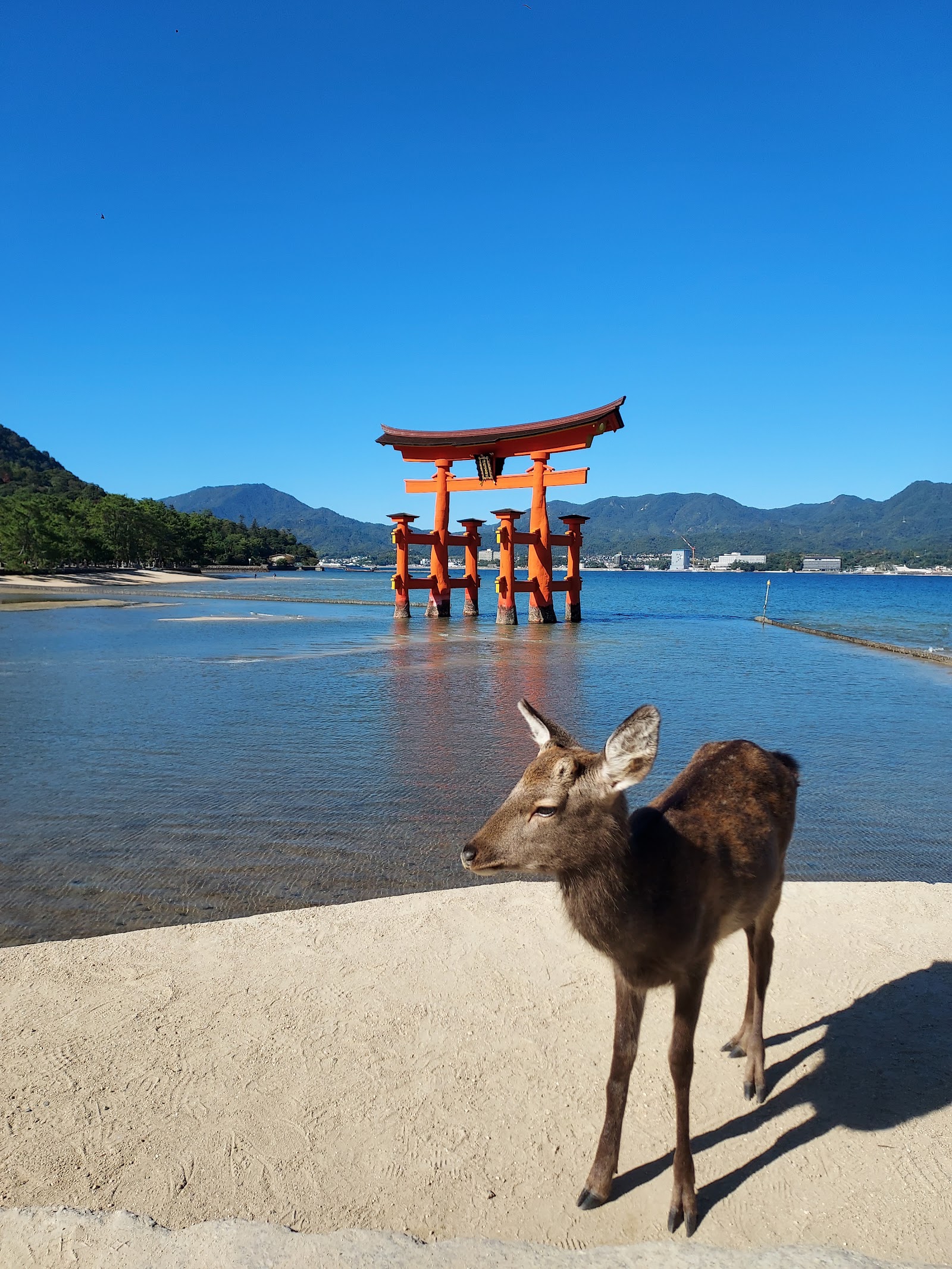
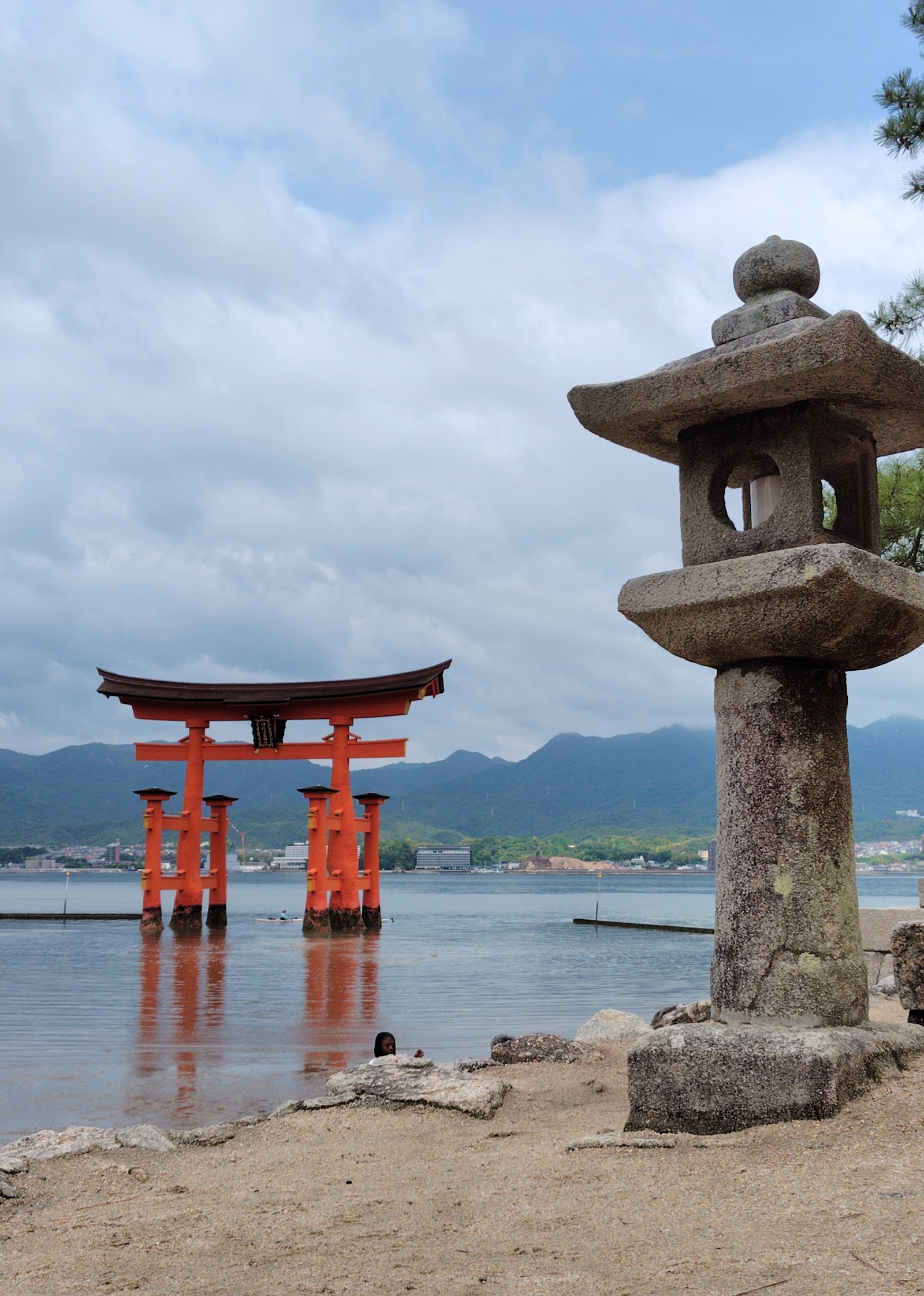
This is the ninth torii to occupy this spot, rebuilt in 1875 and most recently repaired in December 2022 after a three-and-a-half-year project. At low tide the illusion dissolves and the mud flats appear, but that's when you can walk out and stand beside the pillars, each one nearly ten metres in circumference.
💛 What travellers fall for
People who come back tend to check tide tables before booking their ferry. High tide for the floating effect, low tide to walk the flats and read the gate at close range — ideally on the same visit. After dark, the shrine is illuminated until 23:00, though you can't enter; the boat cruise (30 minutes, 1,600 yen) gives you the gate from the water at any hour.
The story behind Itsukushima Floating Torii Gate
The original shrine on Itsukushima was founded in 593 by Saeki no Kuramoto, though it was Taira no Kiyomori — the dominant political figure of the late Heian period — who transformed it in 1168 into the complex that defines the island today, choosing it as the site of his clan's family shrine. The sea-level construction, with 56 wooden structures raised on pillars above the water, was deliberate: the island itself was considered sacred ground, not to be walked on by ordinary people.
After Kiyomori's era, the complex passed through the hands of later patrons. Mōri Motonari rebuilt the main hall in 1571. The current torii dates to 1875. UNESCO listed the shrine and its gate in 1996.
Good to know
From Hiroshima Station, take the JR Sanyo Line to Miyajimaguchi (27 min), then the JR Ferry (10 min). The torii itself is free; shrine entry is 300 yen. Skip thin-heeled shoes — the boardwalk gaps are wide enough to catch a heel. Allow 1.5 to 2 hours on the island.
Spring brings mild temperatures between 10°C and 20°C, and the cherry blossoms on the island make it the most photographed season. Autumn is drier and cooler — a quieter time to visit. Summers are hot and humid; winters mild enough to be manageable, though hours shorten and the shrine closes earlier.
Where is Itsukushima Floating Torii Gate?
More tickets & tours for Itsukushima Floating Torii Gate
Book directly at the provider
What travellers say about Itsukushima Floating Torii Gate
Itsukushima Shrine and the iconic Otorii Gate make for an absolutely magical, picture-perfect destination. The way the vibrant orange gate frames the water is incredibly cinematic and easily one of the most beautiful historic sites in Japan. The traditional structures are stunning and rich with history. E As you walk around, you will constantly run into the island's free-roaming deer. They are pretty funny to watch and great for photos, but a serious word of warning: be extremely careful if you are carrying bags or have any food! They are surprisingly bold and will not hesitate to get a little aggressive to steal your snacks right out of your hands. Beyond the beautiful shrine, the local shopping streets are fantastic and full of great finds. If you make the trip out here, you absolutely have to try the fresh, locally harvested oysters-they are incredible. For something sweet, grab some Momiji Manju, the famous maple leaf-shaped pastries. Getting them freshly baked right on the island is a unique treat you just can't get anywhere else. Highly recommend visiting!
The torii that walks on water – magic and practical advice The famous O-torii of Itsukushima, on Miyajima Island, is undoubtedly one of the most iconic and evocative places in all of Japan – and arguably one of the most photographed in the world. Seeing it in person is breathtaking: the red structure seeming to float on the water, with the sea blending into the sky, creates a scene of rare beauty. However, there's one essential piece of advice I want to give to anyone planning to visit: absolutely check the tide times before you go! The tides change twice a day, and if you arrive at low tide, you risk finding the torii not "floating" but standing in muddy sand, with people walking right up to it. It's still impressive, but the magical effect of the water reflecting it is completely lost. My recommendation is to plan your visit during high tide to fully enjoy the spectacle – even better if you can catch sunset for an even more atmospheric experience. And if you have time, take a stroll around the island itself, which is a natural and cultural gem in its own right. Unmissable – but with a little planning!
Awesome experience you cannot miss. It is not only the gate itself but the island itself, the sea and the area around. A definite must see that you won’t regret. The famous floating torii gate of Itsukushima Shrine on Miyajima is one of Japan’s most iconic sights. The large red gate appears to float on the water during high tide, creating a peaceful and almost unreal view. The shrine was first built in the 6th century and later expanded by the samurai leader Taira no Kiyomori in the 1100s. Miyajima was considered so sacred that ordinary people were not allowed to set foot on the island for centuries, so the gate was built in the sea to welcome visitors spiritually before they entered. The current torii gate was rebuilt in 1875 using massive camphor wood pillars. Over time, it survived storms, tides, and centuries of change, becoming a symbol of Japanese spirituality and harmony with nature. Today, the shrine and gate are part of a UNESCO World Heritage Site and remain a place of reflection, tradition, and beauty for visitors from around the world.
The torii gate is a must visit while in Japan. It is very beautiful and impressive to witness in person. During high tide, it looks as if it’s floating on the waters. During low tide, visitors can walk up close and admire the structure. The atmosphere around the shrine is calm and spiritual.
The Itsukushima Shrine Otorii Gate is a truly iconic sight, and even in the rain, it remains incredibly beautiful and atmospheric. However, having visited five years ago, I was struck by how much it has changed; the number of tourists seems to have tripled since then. This might be partly due to the Sakura season, but the area is definitely much busier than it used to be. I highly recommend coming as early as possible to skip the heaviest crowds and really appreciate the serenity of the gate. Despite the influx of people, seeing it stand in the water is still a breathtaking experience. If you can manage an early start, it is well worth the effort to see this landmark without the wall-to-wall crowds.
More of Hiroshima
Discover where to stay, what to do and the best deals for your trip.
Explore Hiroshima →More attractions in Hiroshima
All of Hiroshima →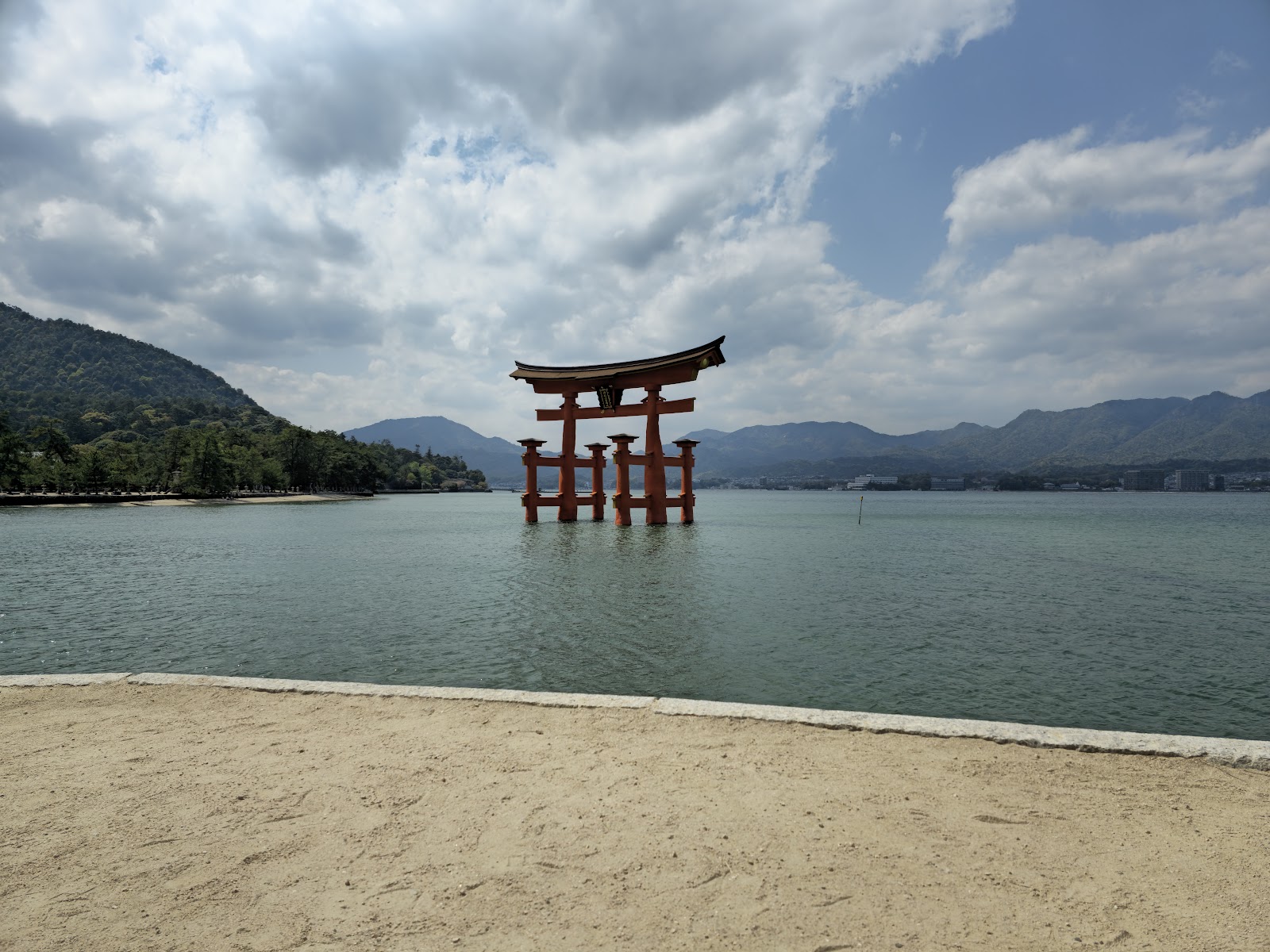


Background adapted from Wikipedia (CC BY-SA) · map data © OpenStreetMap contributors · ratings & place photos via Google · other photos with per-image credit. Ticket links may earn us a commission at no extra cost to you.