
Hiroshima Peace Memorial Park
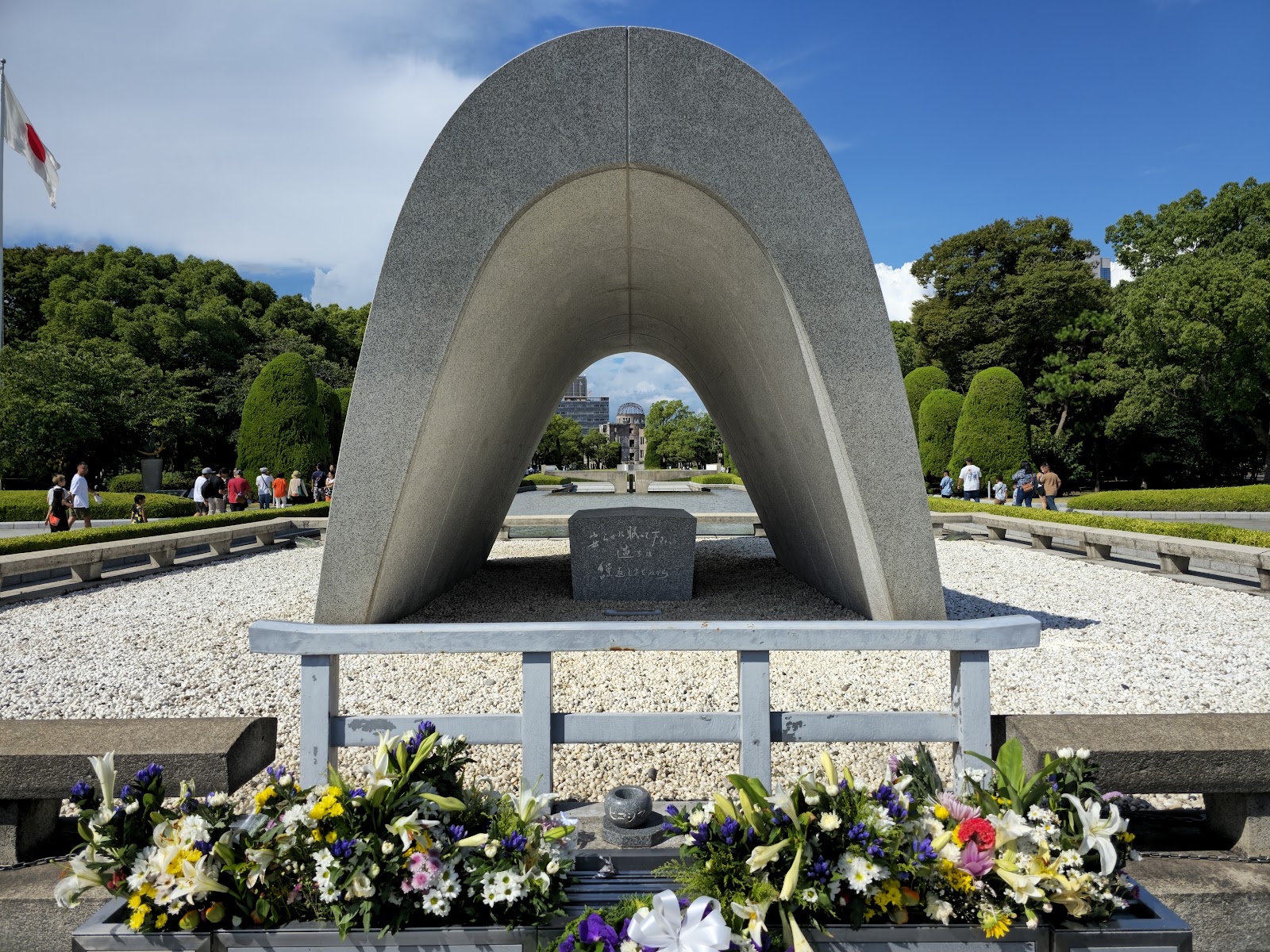
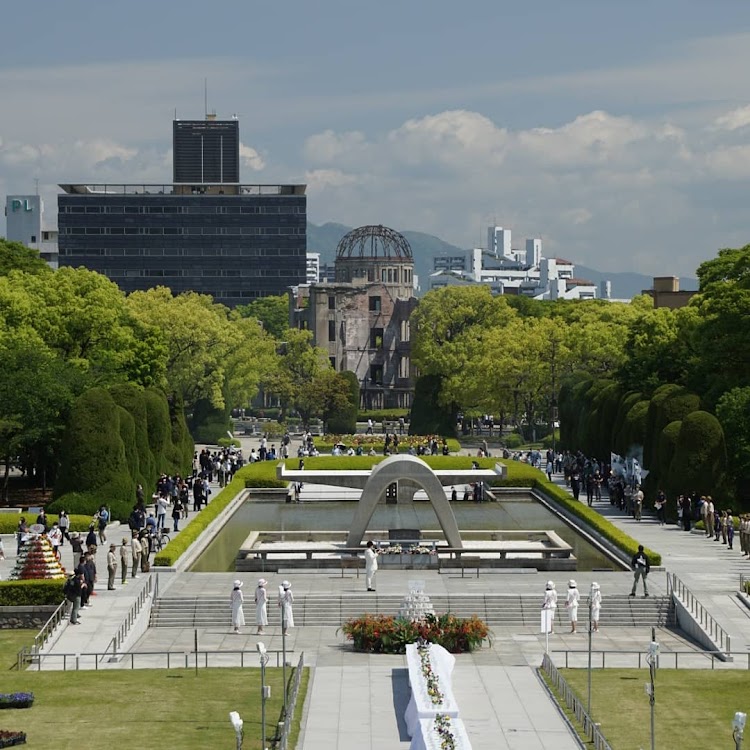
The park occupies the former Nakajima District, a residential neighbourhood that ceased to exist on the morning of August 6, 1945. What stands here now — the cenotaph, the Flame of Peace, the bell, the paths between them — was designed by Kenzō Tange and completed in 1955, a considered landscape built around the idea that memory itself is architecture.
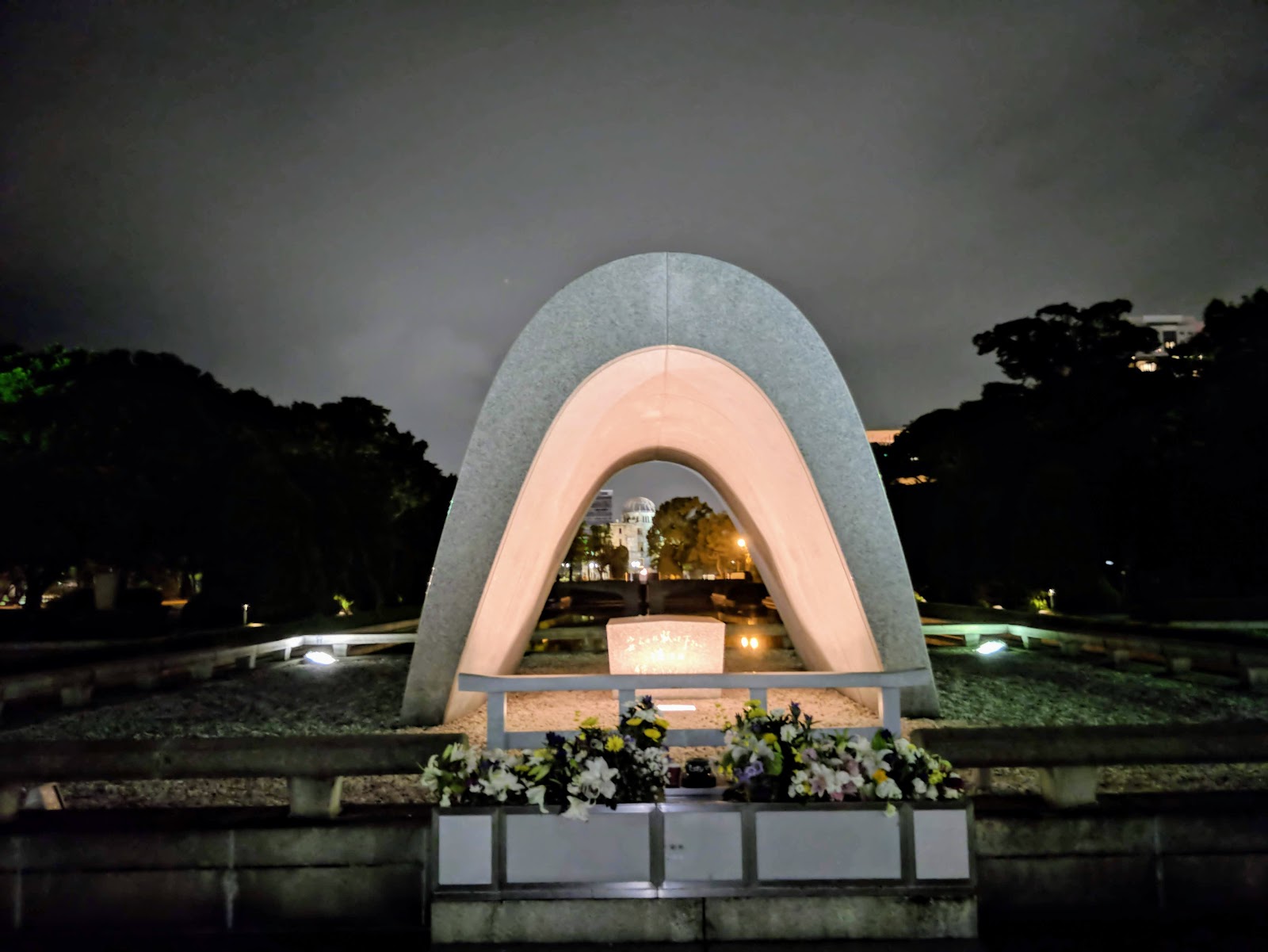
The A-Bomb Dome sits at the northern edge, its ruined iron frame still visible from the cenotaph's stone arch — a deliberate alignment Tange built into the plan. On the cenotaph, as of 2015, there are 297,684 names. The park is free to enter and open at any hour.
💛 What travellers fall for
People who come back tend to arrive early, before the tour groups, and ring the Peace Bell once. The surface is a map of the world; you strike an atomic symbol. The Rest House, easy to walk past, has a preserved basement from 1945 — worth the detour. The Children's Peace Monument draws the most paper cranes, still arriving from schools decades on.
The story behind Hiroshima Peace Memorial Park
After the atomic bombing levelled the Nakajima District, the Japanese government passed the Hiroshima Peace Memorial City Construction Law in 1949, designating the entire area for peace memorial use. A design competition drew 145 proposals; the winning entry came from Kenzō Tange's laboratory at Tokyo University. Construction proceeded through the early 1950s, with the park and museum both operational by 1955.
The structures accumulated over the following decade: the Children's Peace Monument was erected in 1958, funded by donations from 3,200 Japanese schools and nine other countries, in memory of Sadako Sasaki and others like her. The Peace Bell followed in 1964, cast by Oigo Bell Works in Takaoka and designed by Masahiko Katori. The A-Bomb Dome, which Jan Letzel had originally built as a commercial exhibition hall in 1915, was added to the UNESCO World Heritage List in 1996.
Good to know
Take Hiroden tram line 2 or 6 from Hiroshima Station (15 minutes) to Genbaku-Dome Mae. The park is free and open 24 hours. Budget 2–3 hours for the museum and another hour or two for the park. Museum admission is 200 JPY; leave large bags in the coin lockers at the East Building entrance.
August — the month of the anniversary — is hot and humid, with the museum staying open until 21:00 on the 5th and 6th. Spring and autumn offer the most comfortable conditions for spending time in the park itself; winter mornings are cold but quiet.
Where is Hiroshima Peace Memorial Park?
More tickets & tours for Hiroshima Peace Memorial Park
Book directly at the provider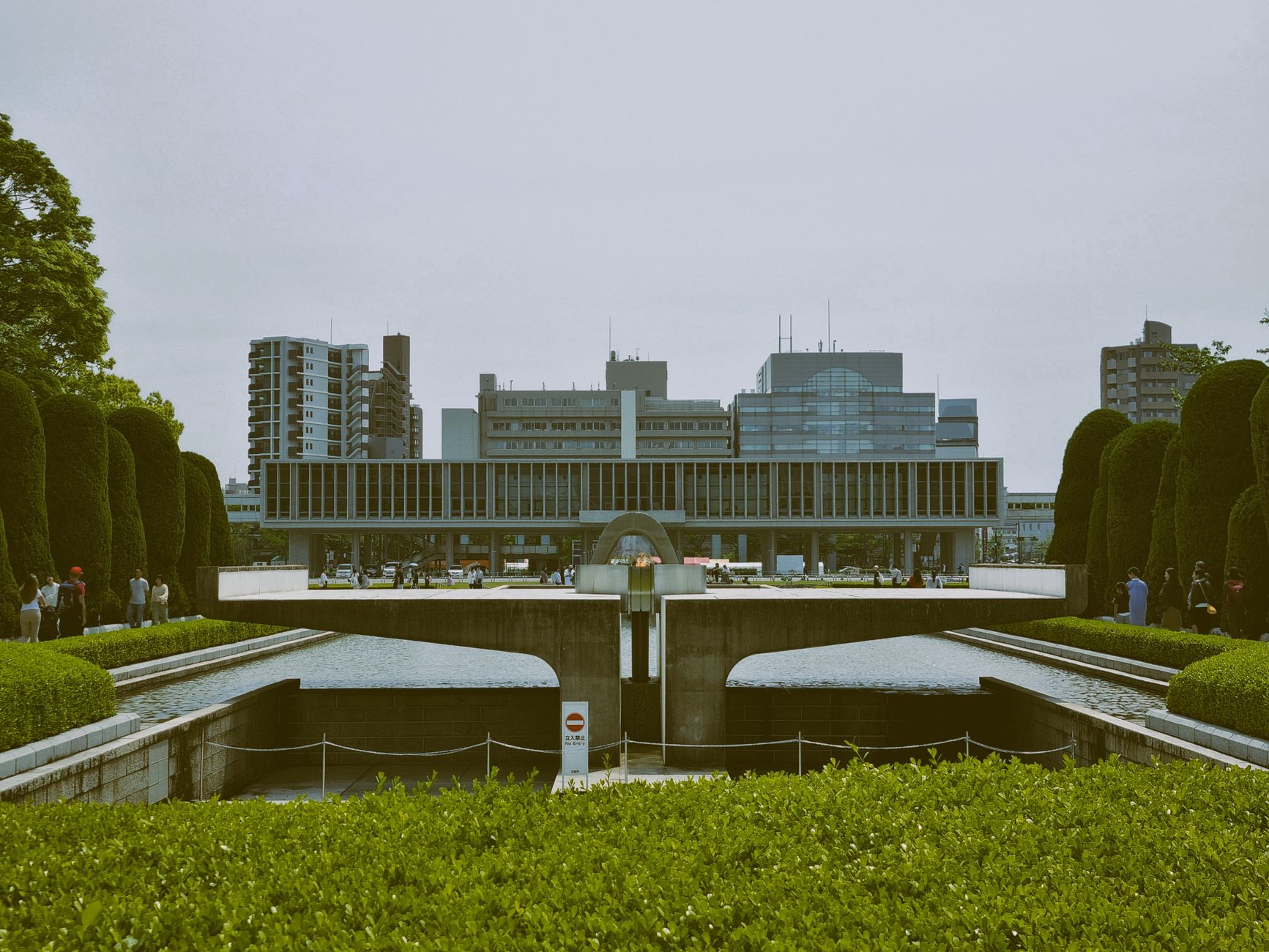
What travellers say about Hiroshima Peace Memorial Park
May26-this place is wonderful. It's laid out so well with (linear) placing of fountain, museum, cenotaph, peace flame and vision out to the A Bomb Dome building. The manicured planting, the rejuvenated trees, the expanse of space and various memorials throughout including the children's monument, the poem to peace, the peace lake, the Buddhist bell, the mound of unclaimed souls and many more. Children and school groups are plenty so it can get busy but watch as they pray, read poems and salute to peace at various spots. Emotional, uplifting, worthy day spent. Lest we ever forget that nuclear weapons/bombs must never be used again. Highly recommend. Grab a free volunteer from the museum for 1hr guide round the park. Very worthy. Yoshie was very good and her male colleague who had been to Coventry as they have reciprocal ceremonies too.
The staff at the memorial were absolutely delightful. They were polite, well-spoken, and incredibly friendly. The peaceful atmosphere was truly calming and thought provoking. The information provided was both informative and sobering, leaving me with a newfound understanding. I highly recommend this place to anyone seeking a serene and enlightening experience.
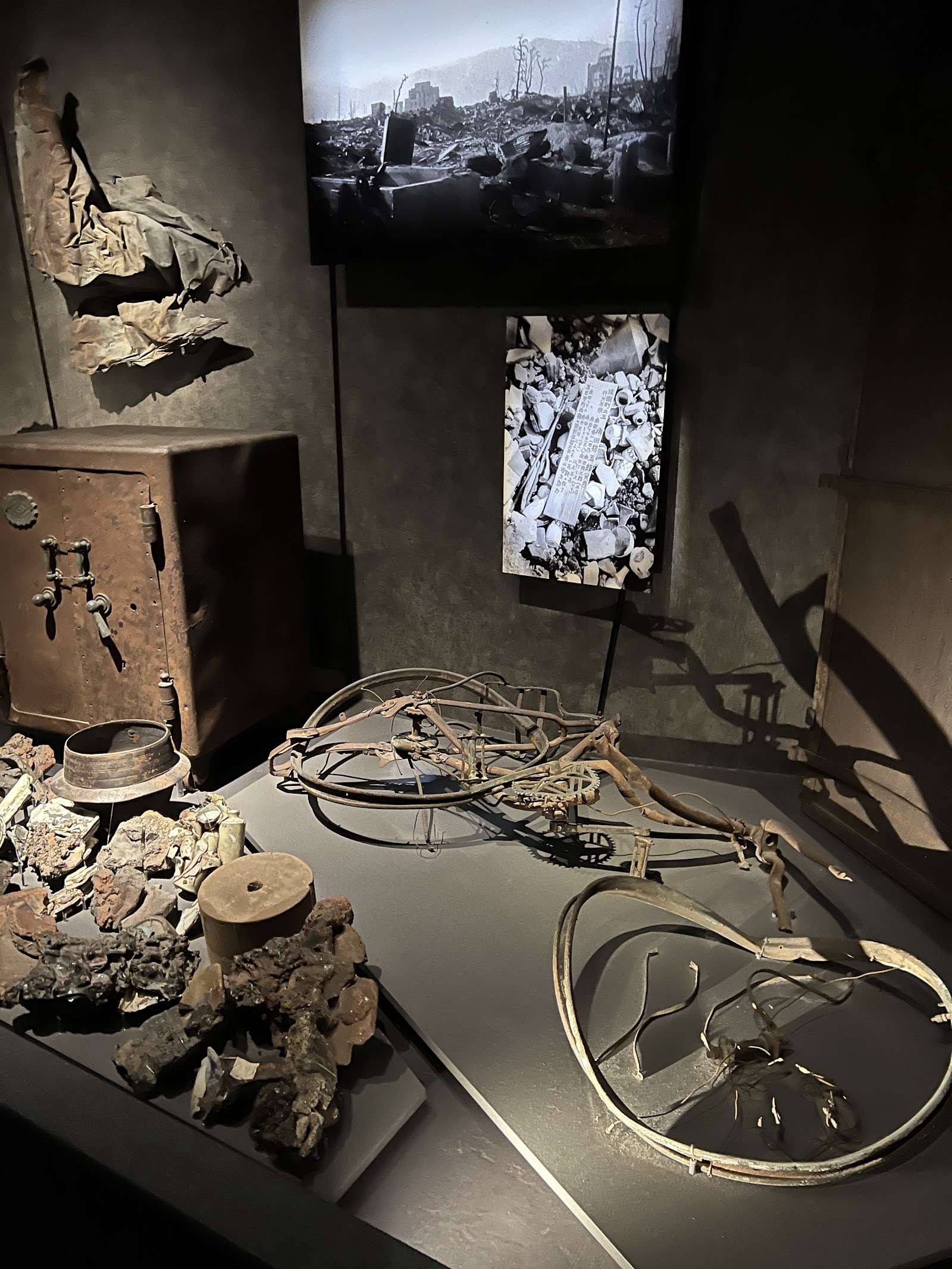
★★★★★ The Hiroshima Peace Memorial Museum was one of the most powerful and moving experiences of my trip to Japan. From the moment I entered, I was impressed by how thoughtfully the exhibits were presented and how effectively they told the story of Hiroshima before, during, and after the atomic bombing. The museum does an excellent job of combining historical facts with personal stories, allowing visitors to understand not only the scale of the tragedy but also the human impact on individuals and families. The photographs, artifacts, and survivor testimonies are presented with great respect and care, creating an experience that is both educational and deeply emotional. What stood out most was the museum’s message of peace and hope. Rather than focusing solely on the destruction, the exhibits encourage reflection on the importance of nuclear disarmament and international cooperation. It is a reminder of how valuable peace is and why future generations must work to preserve it. The museum is well organized, easy to navigate, and offers information in multiple languages, making it accessible to visitors from around the world. The staff are friendly and helpful, and the surrounding Peace Memorial Park provides a beautiful and peaceful setting for reflection after the visit. I would highly recommend the Hiroshima Peace Memorial Museum to anyone visiting Hiroshima. It is not just a museum—it is an unforgettable experience that leaves a lasting impression long after you leave. This is a place everyone should visit at least once in their lifetime. A truly deserving 5-star experience.
The Hiroshima Peace Memorial Park is an absolute must-visit and arguably the most important site to see when you are in the city. The park is beautifully maintained, offering a peaceful space to walk through and reflect on the historical significance of the area. Seeing landmarks like the Atomic Bomb Dome in person is a powerful experience that stays with you long after you leave. It serves as a central point for understanding Hiroshima’s history and its dedicated message of global peace. Whether you are there for the history or the quiet atmosphere, the park is a necessary and meaningful stop on any itinerary.
Exceptional experience. The park is very clean and extremely well maintained. This place is an absolute MUST to visit. We spent about 6 hours browsing the museum and surrounding peace park. Be prepared for a confronting experience, but one that everyone should see. We entered the museum around 12pm and had no line to get in. It is a slow walk through the museum which is perfect because there is a lot to see/read. I would absolutely come here again.
More of Hiroshima
Discover where to stay, what to do and the best deals for your trip.
Explore Hiroshima →More attractions in Hiroshima
All of Hiroshima →

Background adapted from Wikipedia (CC BY-SA) · map data © OpenStreetMap contributors · ratings & place photos via Google · other photos with per-image credit. Ticket links may earn us a commission at no extra cost to you.