
Forte Michelangelo
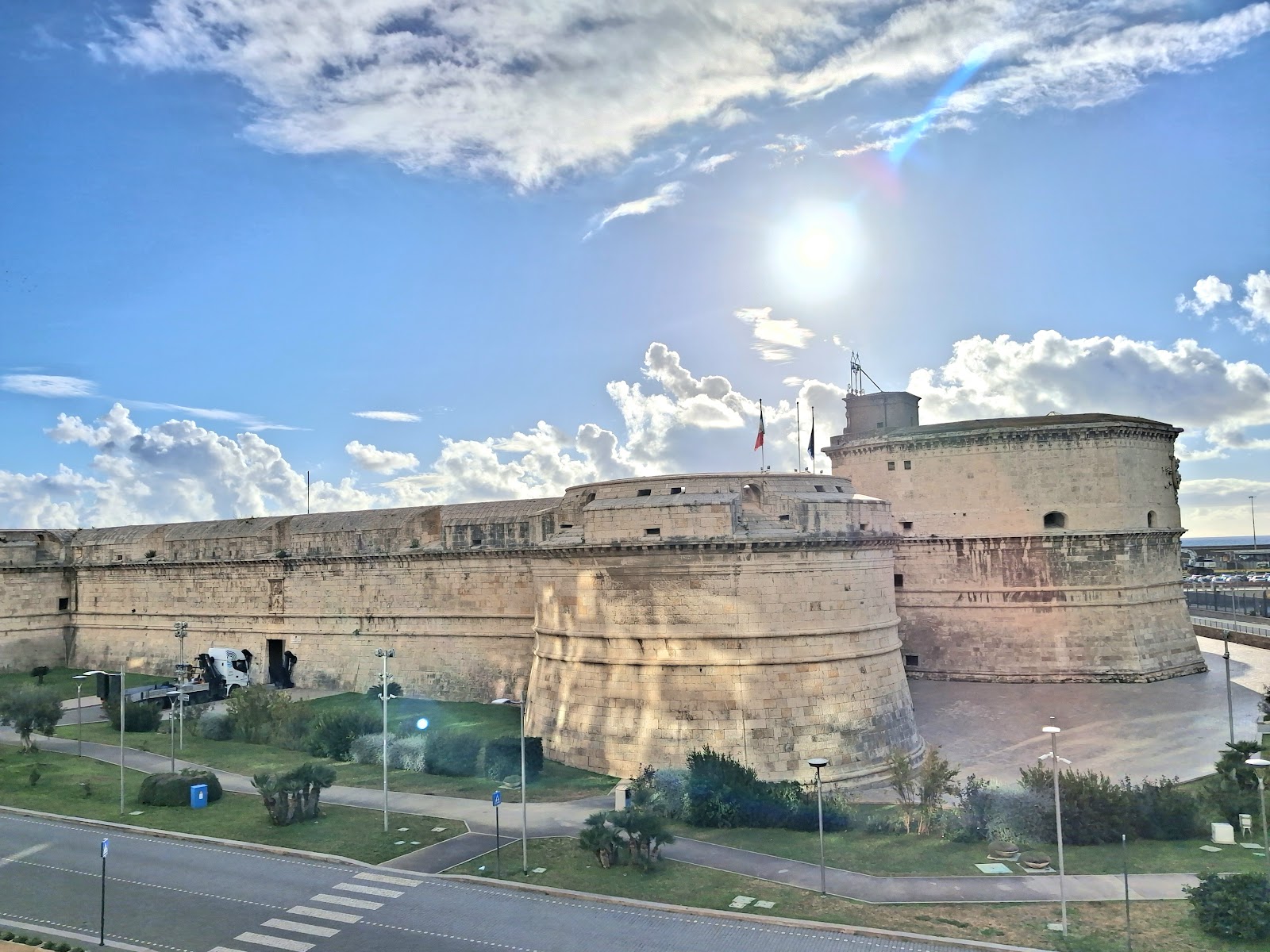
The first stone of Forte Michelangelo went down on 14 December 1508, and the fortress has been watching over the port ever since — four cylindrical corner towers, an octagonal central keep, and a perimeter that sits on the bones of a Roman imperial building. You can still see a mosaic floor with geometric patterning where excavations have opened a window into that earlier layer.
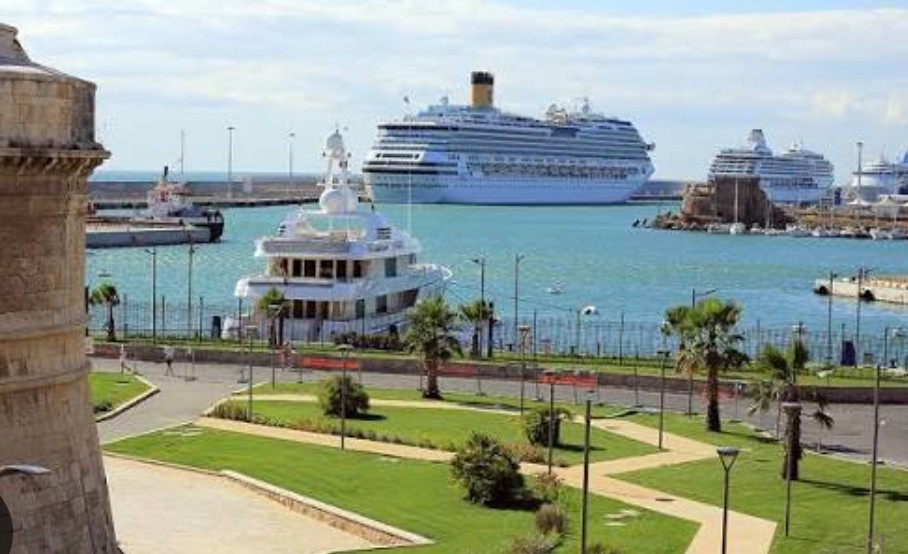
Today the fort serves as headquarters for the Port Captaincy, which means public access is limited, but the recently completed pedestrian promenade that loops around the outside — lined with flowerbeds, antique cannons, and a decorative stretch of water — gives you a full read of its scale and geometry.
💛 What travellers fall for
People who come back tend to time the perimeter walk for early morning, when the light off the water hits the stone at a low angle and the cruise ships haven't yet filled the port. The east tower's carved oak-tree coat of arms — Julius II's emblem — rewards a close look, and the bronze drawbridge pulley between the keep and the west tower is easy to miss.
The story behind Forte Michelangelo
Pope Julius II commissioned the fortress in 1508 to defend Civitavecchia's port against pirate raids. Donato Bramante drew the original plans; after his death, pupils Giuliano Leno and Antonio da Sangallo il Giovane carried the work forward. The complex was completed around 1537 under Pope Paul III, with Domenico Zanobio executing the final expansion of the main tower between 1538 and 1539. Local tradition attributes the octagonal maschio to Michelangelo Buonarroti — the source of the fort's name — though documentary confirmation is thin.
The centuries that followed were eventful: a Spanish fleet besieged it in 1527, the pirate Barbarossa attacked in 1544, French forces occupied it in 1799, and Italian troops arrived on 16 September 1870, ending its status as Papal States property. Heavy Allied bombing in World War II badly damaged the octagonal tower, the most visible wound the fortress still carries.
Good to know
The fortress is a ten-minute walk from Civitavecchia train station across Viale Garibaldi. Interior access is limited to weekends (10:00–18:00, free entry, small fee for guided tours), but the outer promenade is walkable any time. Go on a weekend if you want to step inside the inner courtyard.
Spring and autumn are the most comfortable seasons for walking the perimeter — temperatures sit in the mid-teens to low twenties Celsius, and the light is good for photography. Summer afternoons push into the high twenties and the stone radiates heat; an early morning visit saves you from the worst of it. Winter is mild enough for a coat-and-scarf walk, with rare rain and almost no frost.
Where is Forte Michelangelo?
More tickets & tours for Forte Michelangelo
Book directly at the provider
What travellers say about Forte Michelangelo
Fort Michelangelo was built in the 16th century to defend the port of Civitavecchia from the constant incursions from pirates, something that the city had been subjected to since the 15th century and which had resulted in it being subjected to looting, fires and massacres. Built under the direction of Michelangelo Buonarroti - who the fortress was named after – it was commissioned by Giulio II della Rovere who became Pope Julius II in 1502 and who laid the first stone on 14th December 1508
Beautiful old fortress now a municipal building.
Great place for the views. Beach is beautiful but made out of rocks not sand. Nice place to take a wqlk and watch a sunset
We were only able to view the fortress from the outside, as it was apparently closed to visitors or tours from what we gleaned from the signage on the entrances. However, it is still an impressive structure up close - and we indeed saw some of the mysterious symbols carved into its stones!
Could not be visited
More of Civitavecchia
Discover where to stay, what to do and the best deals for your trip.
Explore Civitavecchia →More attractions in Civitavecchia
All of Civitavecchia →
Background adapted from Wikipedia (CC BY-SA) · map data © OpenStreetMap contributors · ratings & place photos via Google · other photos with per-image credit. Ticket links may earn us a commission at no extra cost to you.