
Fontana di Bellerofonte
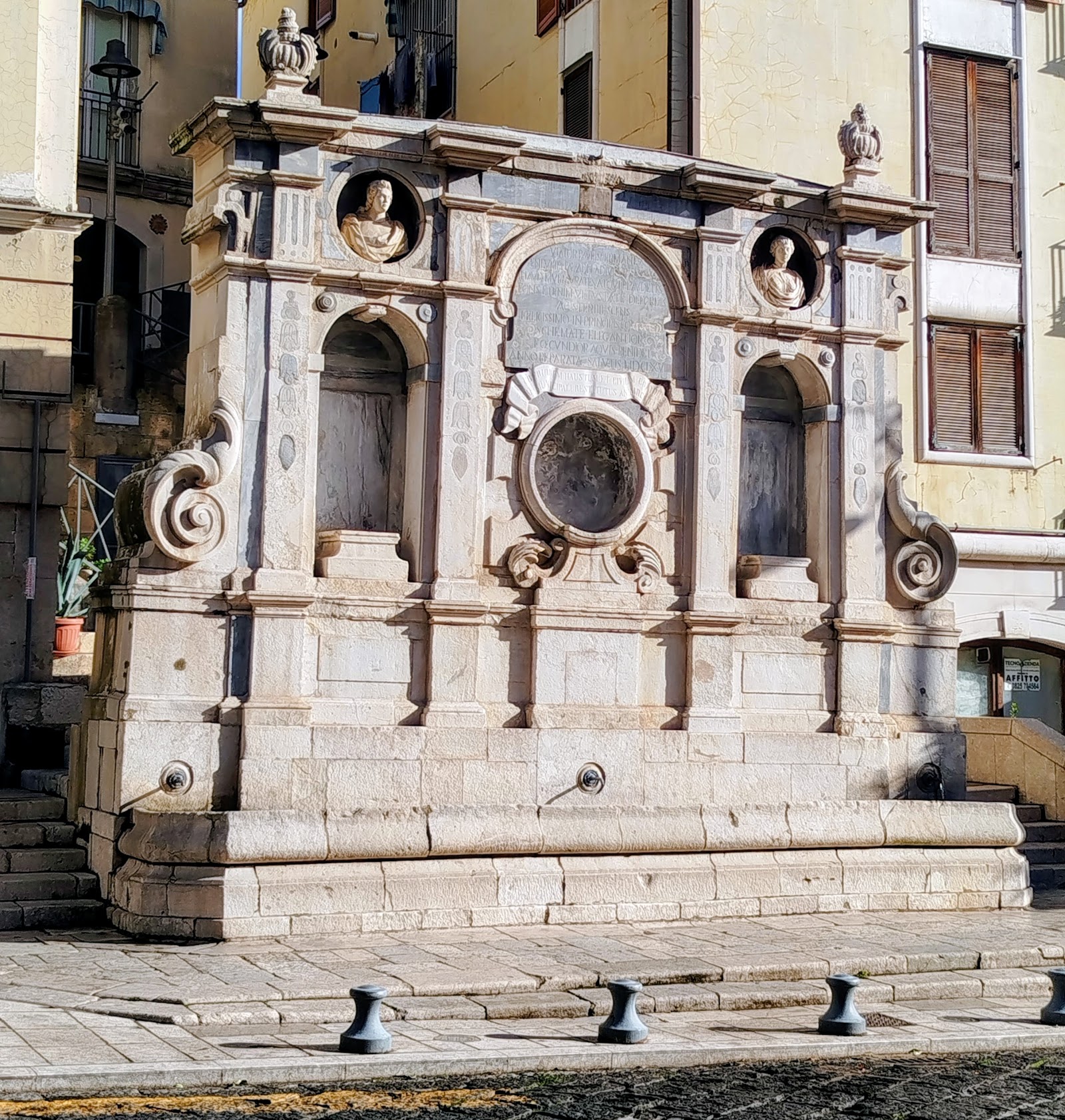
On the upper stretch of Corso Umberto I, a Baroque fountain stands in three sections of pale stone, its semi-columns dividing niches that once held marble statues. The water still comes from Mount Partenio — cold, even in summer — and it emerges from spouts at the base into a basin worn smooth by centuries of use. Two of the three spouts run today; the third is quiet.
What's missing is as much the story as what remains. The central figure of Bellerofonte slaying the Chimera — the piece that gave the fountain its name — was stolen sometime after the 1980 earthquake. The originals of the lateral statues, a Roman patrician and matron thought to have come from ancient Abellinum, now live in the Museo civico di Villa Amendola.
💛 What travellers fall for
People who know Avellino well tend to stop here without planning to. The bus stop is steps away, the water is genuinely cold on a hot afternoon, and the 1866 Latin inscription on the base — added when the municipality lowered the street level and reset the basin — rewards a closer look if you have any patience for stone-cut civic pride.
The story behind Fontana di Bellerofonte
In 1669, Prince Francesco Marino Caracciolo commissioned the Bergamo sculptor Cosimo Fanzago to transform what had been a utilitarian public water trough into something more ceremonial. Fanzago — already well known for his work in Naples — produced a tripartite composition in marble: a central body with the mounted figure of Bellerofonte, flanked by niched sections carrying older statues likely salvaged from the Roman city of Abellinum nearby. The Caracciolo coat of arms and the civic emblem were set into the stone.
The fountain lived a working life for two centuries before the municipality intervened in 1866, lowering the street level, repositioning the basin, and adding a second plaque in Latin to record the restoration. The earthquake of 1980 — and the theft that followed in its aftermath — removed the Bellerofonte figure entirely, leaving the central niche empty.
Good to know
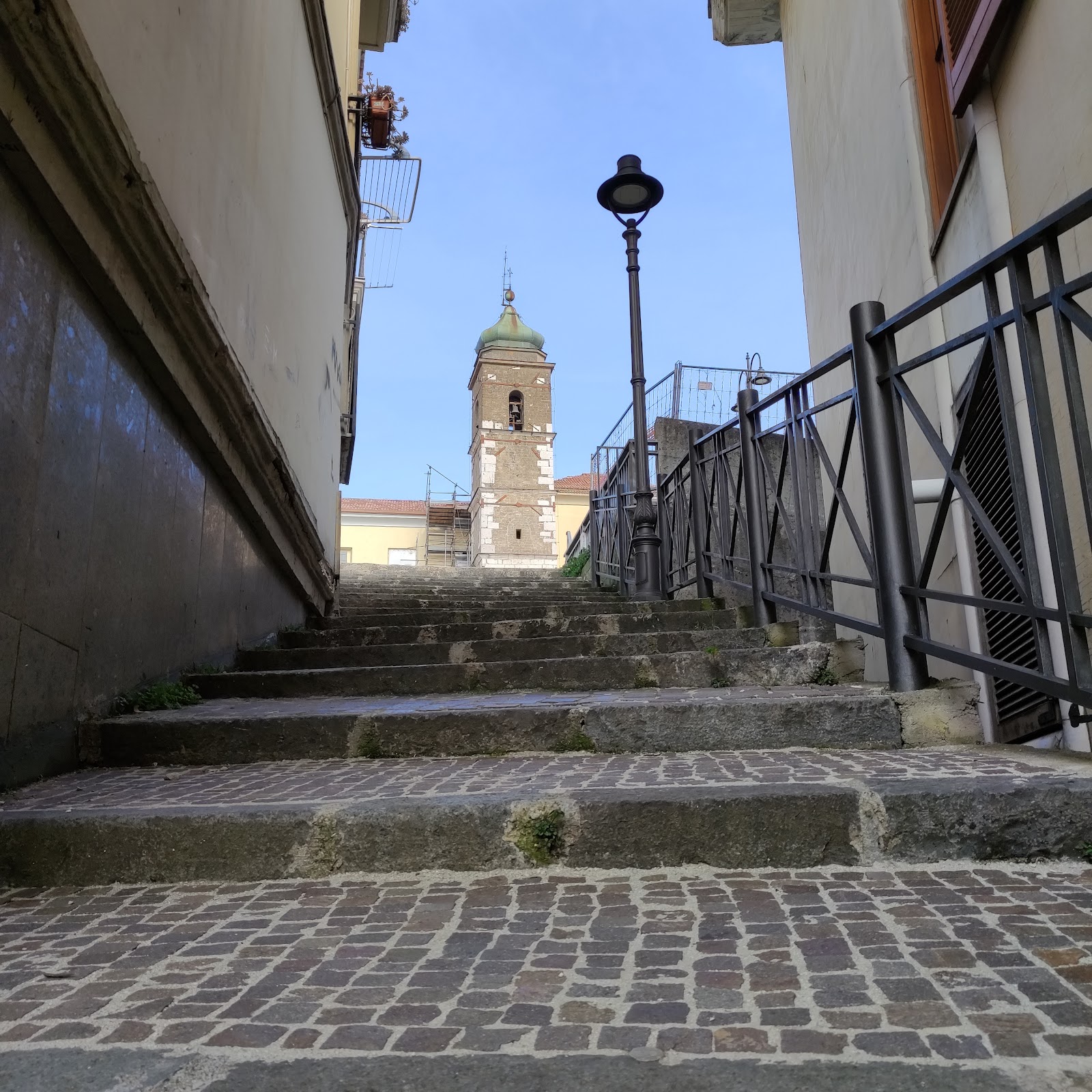
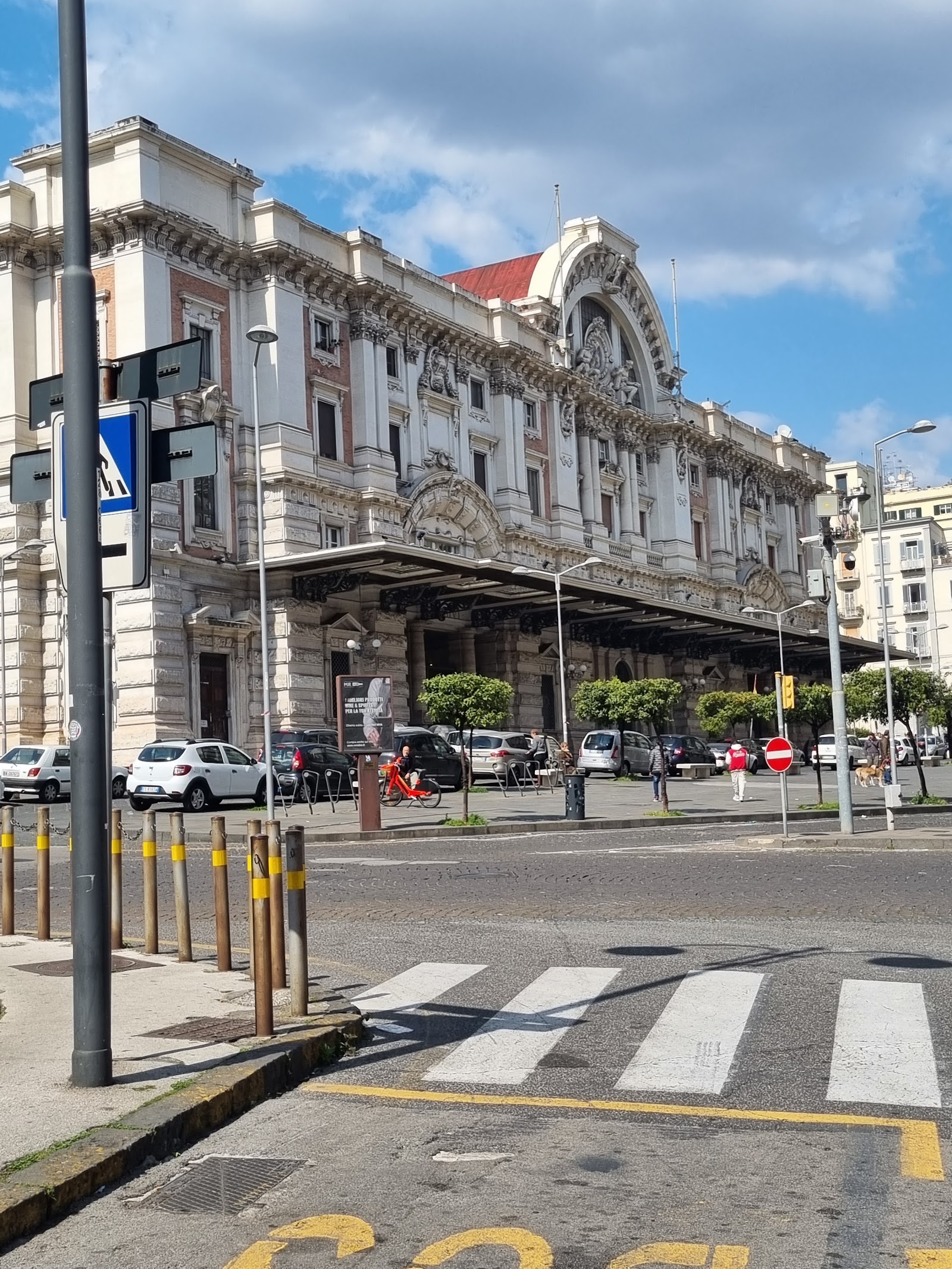
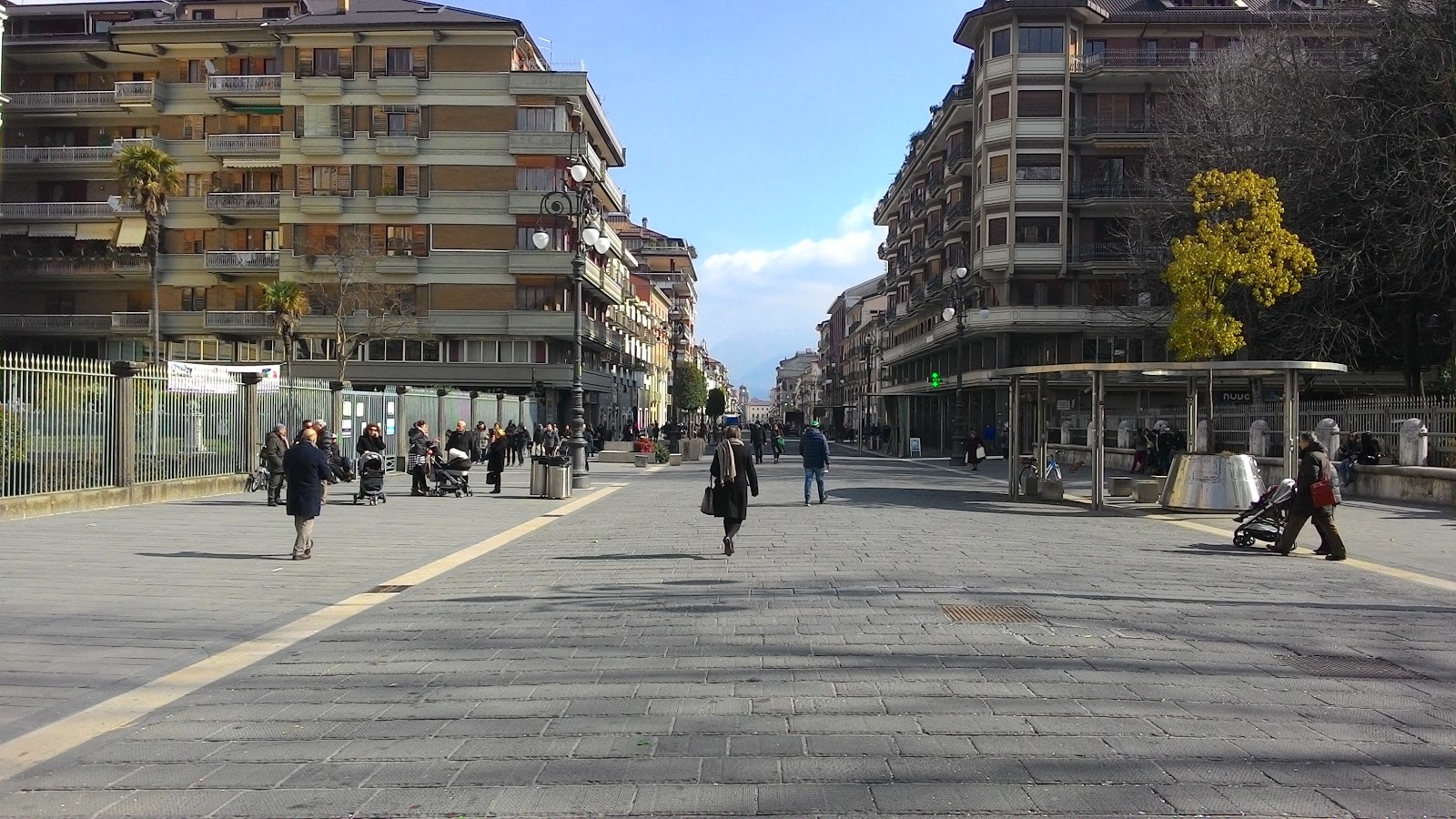
The fountain is on Corso Umberto I in the historic center, a short walk from the bus stop "Corso Umberto I-Fontana." Avellino's train station is about 2.5 km out; take a local bus or taxi into the center. No admission, no hours — it's a public monument. Spring and early autumn are the most comfortable seasons to linger.
Mid-April through mid-June and September into early October are the steadiest windows for a visit — warm without the sharp heat of July and August, when daytime temperatures can reach the high thirties. Winter is mild but variable, with occasional fog and the possibility of cold snaps.
Where is Fontana di Bellerofonte?
More tickets & tours for Fontana di Bellerofonte
Book directly at the provider
What travellers say about Fontana di Bellerofonte
So cool and nice
Ok
Wow
Among the features characterizing Avellino's historic center, the Fountain of Bellerophon deserves a special place. Popularly known as "à fontana ri tre cannuoli," it was built by order of Prince Caracciolo and designed by the architect Fanzago. An ancient drinking trough, in 1669, was embellished and decorated with friezes, niches containing statues, and a commemorative plaque. At the center was the image of the hero standing over the chimera, flanked by two busts representing a patrician and a Roman matron.
Avellino's historic fountain on Corso Umberto, dating back to the second half of the 17th century, was originally a simple drinking trough. Known locally as the "Fountain of the Three Spouts," especially if you need directions to the three spouts from which the water flows. As per the updated photos, the water flows and is good, although it's obvious that in the warmer months or with little rain (rarely), the flow may decrease. Enjoy!
More of Avellino
Discover where to stay, what to do and the best deals for your trip.
Explore Avellino →More attractions in Avellino
All of Avellino →
Background adapted from Wikipedia (CC BY-SA) · map data © OpenStreetMap contributors · ratings & place photos via Google · other photos with per-image credit. Ticket links may earn us a commission at no extra cost to you.