
Cattedrale di Sant'Andrea Apostolo

The bronze doors stop you before you even step inside. Cast in relief with scenes from Avellino's religious and civil history, they were set into the central doorway that Bishop Roberto commissioned in 1133 — and they remain the cathedral's most direct conversation with the past. Above them, a bas-relief of the Last Supper fills the lunette, worn enough to look like it has been rained on for centuries, because it has.
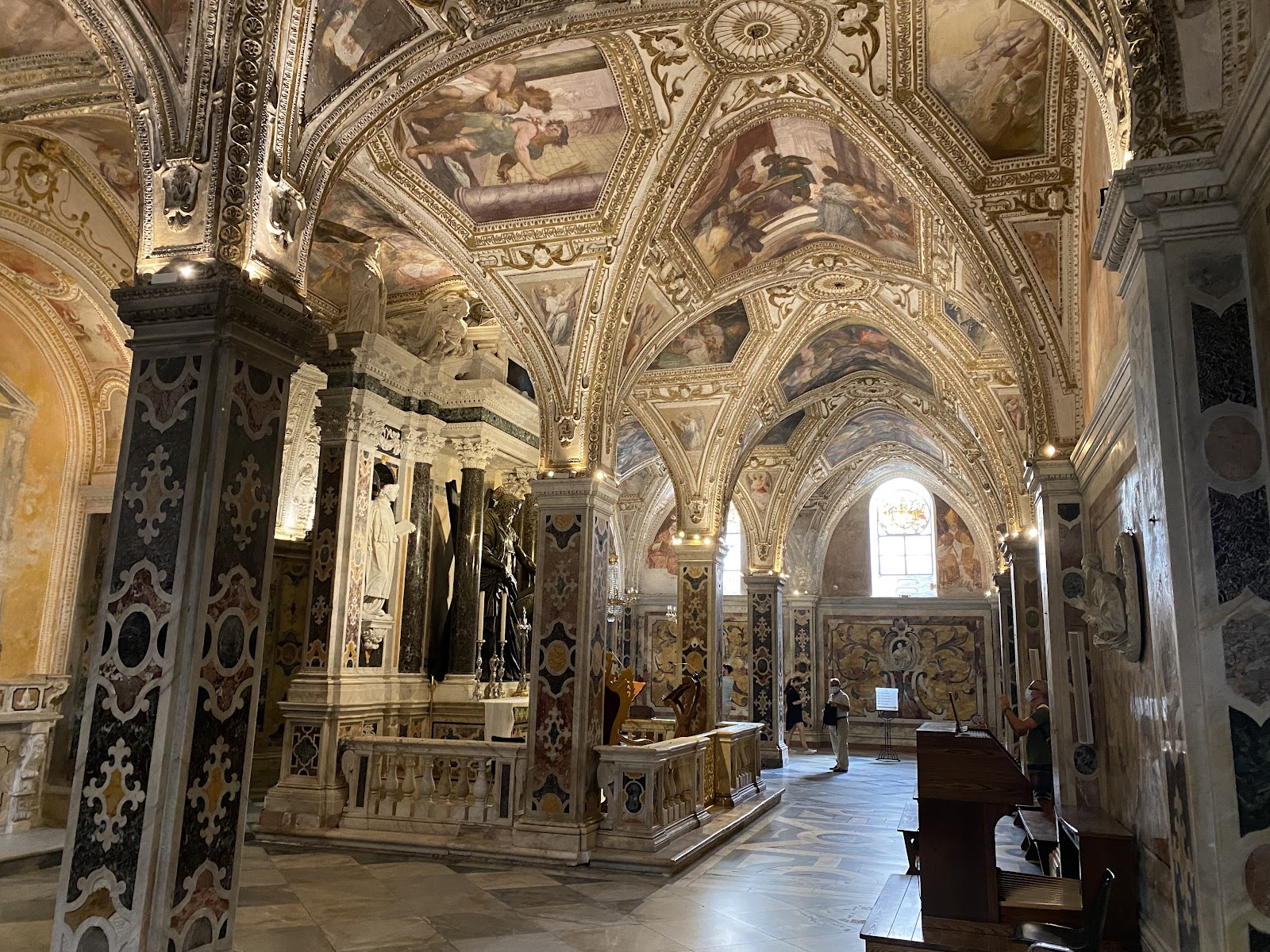
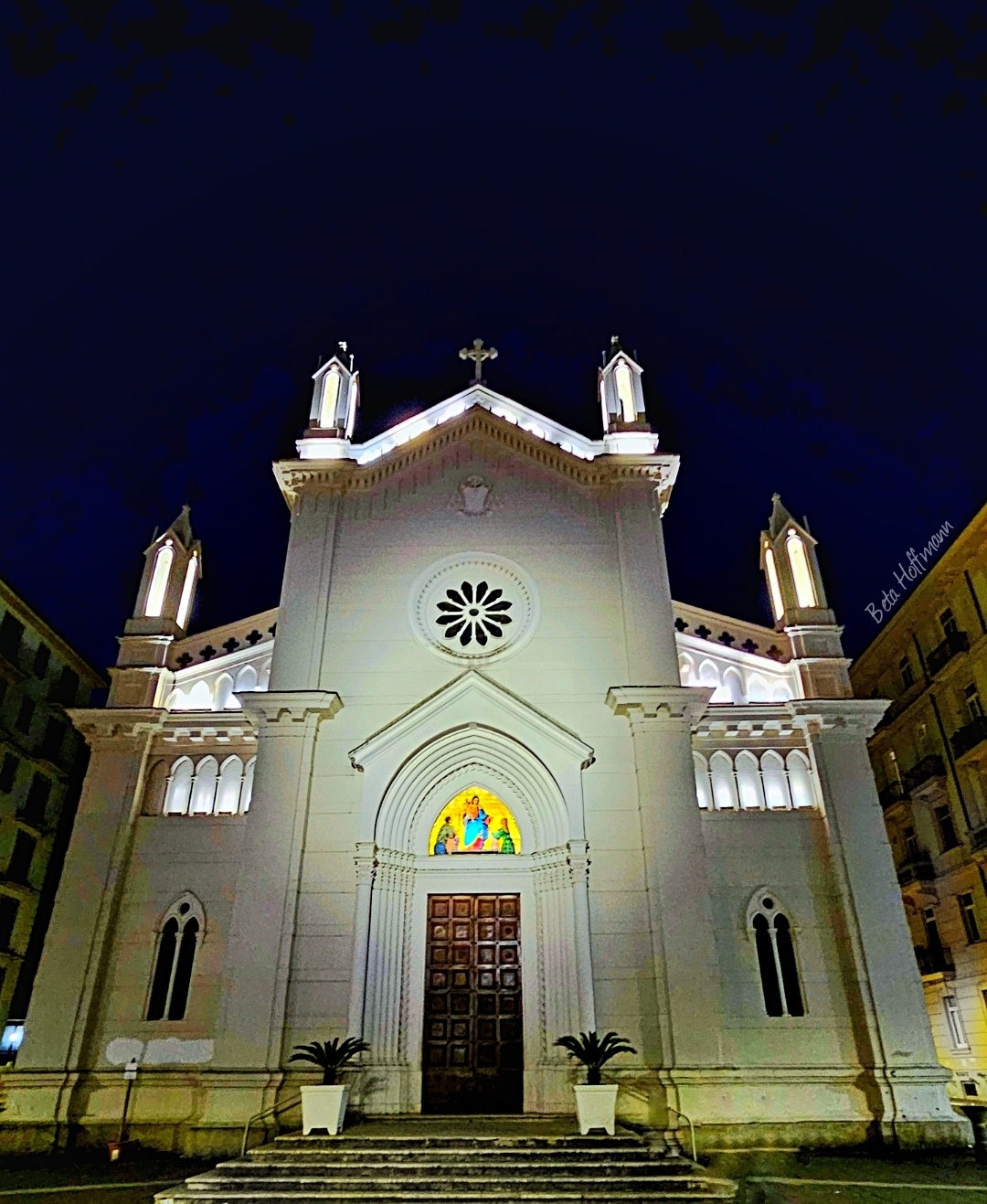
The building you see today is largely the work of the 19th century: Pasquale Cardola refaced the façade between 1857 and 1868, and Vincenzo Varriale converted the interior between 1880 and 1889, giving it the Neoclassical lines that now frame everything. Underneath all of that, the crypt holds the older memory — three Romanesque aisles, stone columns, and ceiling frescoes from the 17th century.
💛 What travellers fall for
People who come back tend to go straight down to the crypt, where the scale drops and the light changes. The Chapel of Saint Modestinus, with its silver bust of the patron saint, rewards a slower look than most visitors give it. The high altar, quietly relocated here from a sanctuary near Summonte in 1813, is easy to walk past without knowing its age.
The story behind Cattedrale di Sant'Andrea Apostolo
The cathedral's foundation dates to between 1132 and 1166, when Bishop Roberto of Avellino built it on ground that had once supported a Roman villa, itself abandoned after the earthquake and Vesuvius eruption of 346 AD. Roberto dedicated the church to Saint Modestinus, Avellino's patron, and the crypt's Romanesque structure is the clearest surviving evidence of that original building.
Centuries of alteration followed. At the end of the 17th century, Bishop Martinez added the Baroque stairway and reorganised the piazza. Then, under Bishop Francesco Gallo in the second half of the 19th century, the cathedral was substantially remade: Cardola's new façade arrived first, Varriale's interior conversion came after, and the Neoclassical character that now defines the space was set. A final restoration, completed in 1985 under Bishop Pasquale Venezia, followed the devastating 1980 Irpinia earthquake.
Good to know
The cathedral sits on Piazza Libertà in central Avellino, about 47 kilometres east of Naples. Opening hours are not officially published online, so aim for a mid-morning visit on a weekday. Spring and early autumn are the most comfortable seasons for the town overall.
Where is Cattedrale di Sant'Andrea Apostolo?
More tickets & tours for Cattedrale di Sant'Andrea Apostolo
Book directly at the provider
What travellers say about Cattedrale di Sant'Andrea Apostolo
Beautiful cathedral! The mass was so beautiful to participate in at this church. The organ fills the atmosphere with such glorifying music and the church community so boldly worships in song. We loved attending!
Not only did the Cathedral of the apostle St Andrew have some serious history, but the relics alone are worth seeing. It can gather a crowd, but mostly outside with the Instagram peeps taking pictures, inside there was enough elbow room to inhale all of the glorious architecture and beauty. I highly suggest going here when in AMALFI, in the Amalfi Coast. Majestic!
Extremely beautiful cathedral in Amalfi. The stairs leading to the cathedral resemble a lot the Spanish steps in Rome. Entry requires a small ticket fee, but it well worth it. The garden yard very neatly laid out, crypt very solemn. Whole cathedral tells much of the history of entire Amalfi.
The Cathedral of Saint Andrew (Duomo di Amalfi) is a Must See. It is the architectural crown jewel of the Amalfi Coast. Located in the bustling Piazza del Duomo, this 9th-century Roman Catholic complex sits at the top of a grand 62-step staircase. It seamlessly blends Arab-Norman, Byzantine, Gothic, and Baroque design elements. Key Highlights to Explore • The Crypt of Saint Andrew: The underground heart of the cathedral houses the sacred relics of Saint Andrew the Apostle, which were brought to Amalfi in 1208 during the Fourth Crusade. • The Cloister of Paradise (Chiostro del Paradiso): Built in the 13th century as a burial ground for Amalfi's nobility, it features stunning white Moorish-style arches and a tranquil inner garden. • The Byzantine Bronze Doors: Cast in Constantinople before 1066, these magnificent doors mark the main entrance to the church. • Basilica of the Crucifix & Museum: The oldest structure in the complex (dating back to the 9th century), it now serves as a museum displaying sacred art and historical treasures.
Similar like Positano🥴 It’s only April, it's not even high season yet, and it’s a weekday! I can't even imagine what it will be like during the peak season. Last time I was here, I left with beautiful memories, but today was just horrible. Too many cars, motorbikes, and pedestrians—it was impossible to park. The whole experience was ruined. I’m never coming back! 🥴
More of Avellino
Discover where to stay, what to do and the best deals for your trip.
Explore Avellino →More attractions in Avellino
All of Avellino →
Background adapted from Wikipedia (CC BY-SA) · map data © OpenStreetMap contributors · ratings & place photos via Google · other photos with per-image credit. Ticket links may earn us a commission at no extra cost to you.