
Cattedrale di San Nicola di Bari

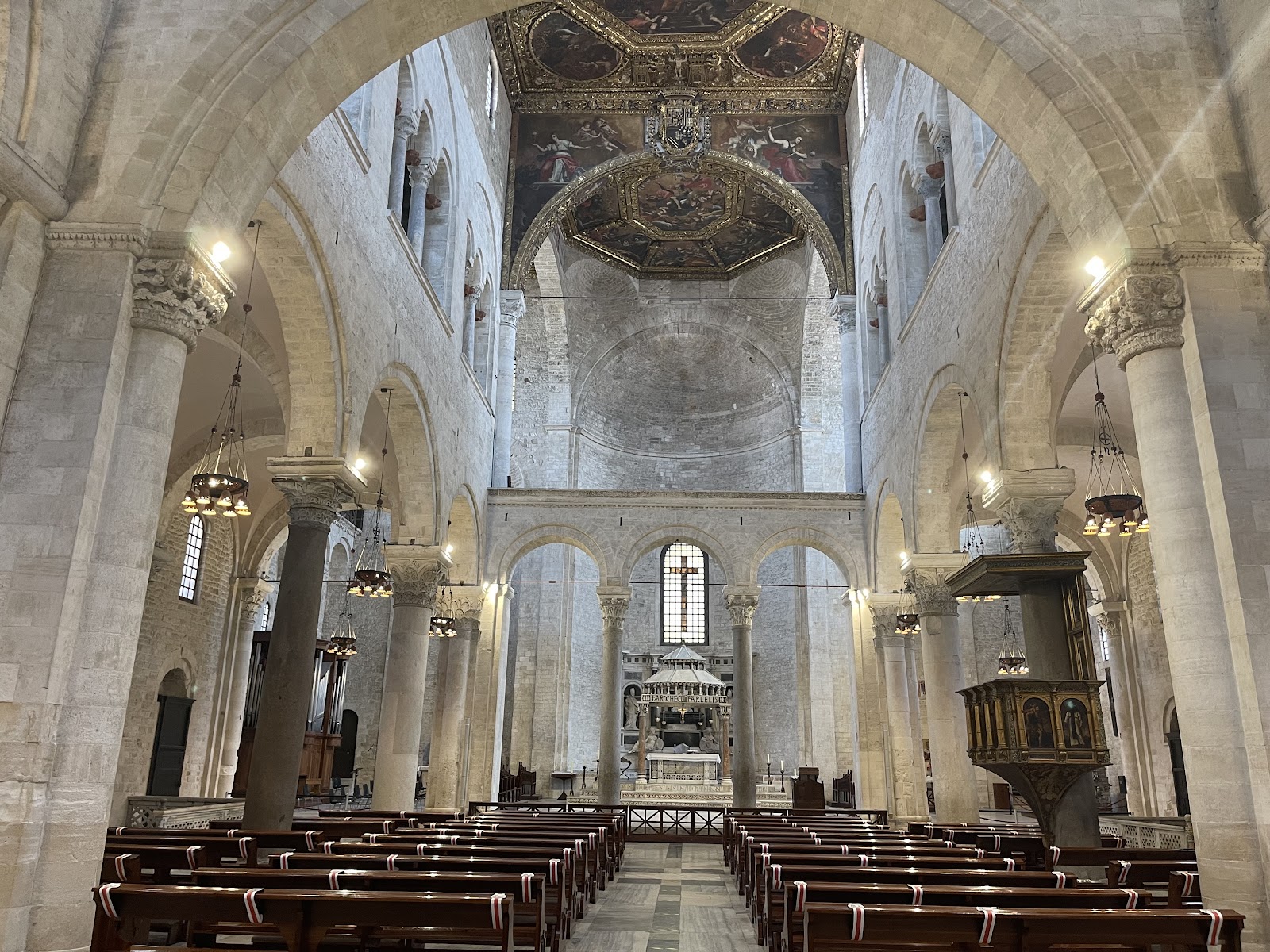
Stand in Piazza Duomo and the first thing you notice is the battlements — this cathedral looks more like a medieval garrison than a house of worship, which is exactly what the locals mean when they call it *la cattedrale fortezza*. Step inside and the severity softens into something else: six columns of pink Taormina marble, their capitals carved with leaves and fish scales, carrying a ceiling of heavy wooden beams worked in Arabic motifs rendered in the Gothic manner.
At the far end, a Byzantine Madonna stares back at you from beneath a silver casing set with semi-precious stones — a reminder that this corner of Sicily absorbed Greek, Arab, Norman and Spanish influences before it ever settled on a single architectural language.

💛 What travellers fall for
Regulars tend to slow down in front of Antonello de Saliba's 1504 polyptych — the Madonna and Child panel, then the Pietà, then the Last Supper — reading them left to right like a triptych book. The west portal, framed in black lava stone with grape-cluster bas-reliefs, also rewards a second look from the outside before you leave.
The story behind Cattedrale di San Nicola di Bari
Building began in the 13th century on the foundations of an earlier church dedicated to San Nicola di Bari, and the structure was reshaped repeatedly over the following centuries — in the 15th, 16th and 18th centuries — each campaign leaving its own layer. The Renaissance marble portal, attributed to the Gaginian school, arrived in the 15th century; the main portal was rebuilt in 1636 with Corinthian columns and a broken pediment; the bastion tower received its bells in 1750.
The most revealing work came last. Between 1945 and 1948, Neapolitan architect Armando Dillon stripped away Baroque stuccos to find the primitive apse arches underneath, restoring the terrazzo floors of the lateral naves in the process. In 1980, Pope John Paul II elevated the church to a minor basilica.
Good to know
The cathedral sits in Piazza Duomo, steps from Porta Catania on Corso Umberto I. Entry is free; dress modestly. Hours run roughly 9 am to 8 pm, though times have been known to vary — worth a quick check before making it the centrepiece of your morning.
Where is Cattedrale di San Nicola di Bari?
More tickets & tours for Cattedrale di San Nicola di Bari
Book directly at the provider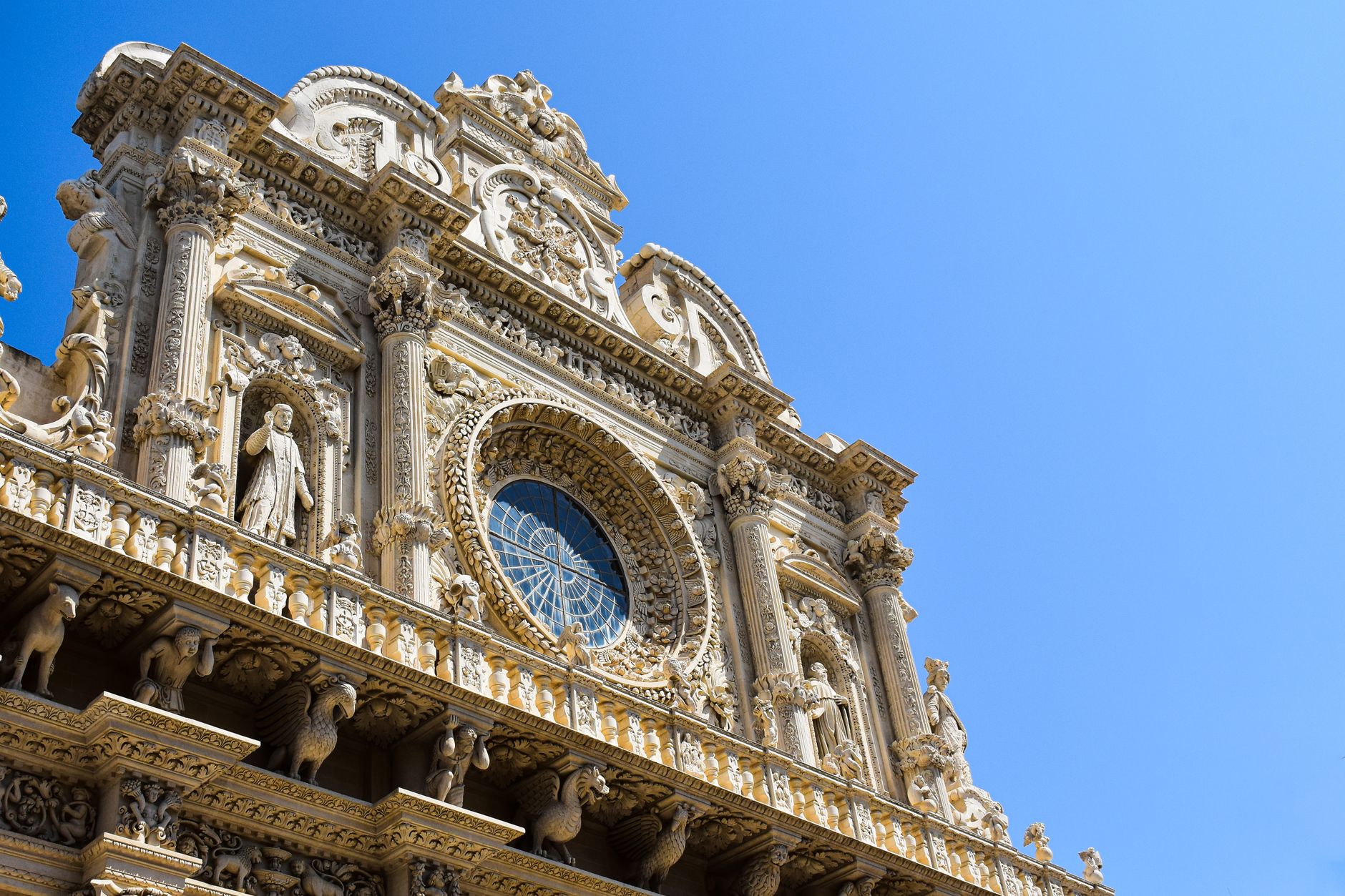
What travellers say about Cattedrale di San Nicola di Bari
Really loved visiting this beautiful church, we were lucky enough be there for the ceremony the week ahead of the celebration of St Nicholas. Even so it wasn't too busy and we could explore, take in the peace and serenity of the crypt as well as the church. If you're around in Bari, and interested in history, architecture or faith, a great place to visit.
The Pontifical Basilica of Saint Nicholas is a church in Bari, southern Italy, that holds wide religious significance throughout Europe and the Christian world.The basilica was built between 1087 and 1197, during the Italo-Norman domination of Apulia, the area previously occupied by the Byzantine Catapan of which Bari was the seat. Its foundation is related to the recovery of some of the relics of Saint Nicholas from the saint's original shrine in Myra, in what is now Turkey. When Myra passed into the hands of the Saracens, some saw it as an opportunity to move the saint's relics to a safer location. According to the justifying legend, the saint, passing by the city on his way to Rome, had chosen Bari as his burial place. There was great competition for the relics between Venice and Bari. The latter won, the relics were carried off under the noses of the lawful Greek custodians and their Muslim masters, and on 9 May 1087, were safely landed at Bari. A new church was built to shelter Nicholas' remains and Pope Urban II was present at the consecration of the crypt in 1089. The edifice was officially consecrated in 1197, in the presence of the Imperial Vicar, Bishop Conrad of Hildesheim, and of numerous bishops, prelates and noblemen. Elias, abbot of the nearby monastery of Saint Benedict, was named as first archbishop. His cathedra (bishop's throne) still stands in the church.The Basilica houses one of the most noteworthy Romanesque sculptural works of southern Italy, a cathedra (bishop's throne) finished in the late eleventh century for Elias. There are precious mosaic pavements in the crypt and presbytery. The ciborium, the most ancient in the region, is also decorated with mosaic; it has four columns with foliage, animals and mythological figures. The crypt, with 26 columns sporting capitals in Byzantine and Romanesque style, houses the relics of Saint Nicholas.In the church there is a 16th-century Renaissance tomb of Bona Sforza, Queen of Poland, made from marble. The Museum of the Basilica has valuable works of art, including a collection of twelfth-century candelabras donated by King Charles I of Anjou. The church was restored in the late 13th century, in 1456 and in the 17th century. In the 20th-century restoration, most of the Baroque additions were removed, leaving only the gilded wooden ceiling, enframing canvases by Carlo De Rosa.
Great architecture and artwork. I have never been so close to religious relics - it was a powerful experience. Gentlemen: please remove your hats. It is also customary to cover shoulders and knees. Honestly still trying to figure out the unusual lack of symmetry with columns - have to do some more research!
Saint Nicolas is a Roman Catholic amd Eastern Orthodox saint. The patron saint of Christmas, Saint Nicolas is known as “Santa Claus” to many. Widely known and accepted as a miracle worker for those in need, whether sailors, children, those suffering mental anguish or depression, many have made pilgrimages to this place in search of the manna and holy oil. Every year, only May 9, the bones of Saint Nicolas provide a consecrated liquid known as “the manna of Saint Nicolas”. This liquid was scientifically tested in 1925 and found to primarily consist of water in contact with the Saint’s bones. The bones of Saint Nicolas are housed in the bottom floor of this church. In this area there are multiple pews and areas for prayer. If you wish to stand in line to make pilgrimage to the bones, be prepared to wait. On a not crowded day, the line was 25 in front of us. Each person takes approximately 3-4 minutes with the bones. Eastern Orthodox women have their head covered, as is their tradition, but Catholic women are in no way obligated to cover our heads, as this is not our practice. Suffice to say, all are welcomed here. The holy manna, oil and holy water are highly sought after commodities for those seeking healing, whether spiritual, emotional, physical or psychological. Single bottles of oil are available for purchase in the gift shop. Prince range according to size. The smallest bottle is €3, which is also available in packs of three and five inside a plastic pouch. For heavy duty problems which will require more oil, larger amounts are available or but be prepared to pay. If you are standing facing the church, the gift shop is to the right, in the next building over. Bathrooms are in the rear of the church, available for €1 per person. Children also must pay this fee, unlike other places in Italy where the child is allowed entry free with the paying mother.
A beautiful and impressive church in the heart of Bari. The architecture is stunning, with a magnificent stone façade and a large rose window that really stands out. The square in front of the church is lively and a great place to sit, relax, and admire the building while watching local life and visitors passing by. Definitely a must-see when visiting Bari.
More of Taormina
Discover where to stay, what to do and the best deals for your trip.
Explore Taormina →More attractions in Taormina
All of Taormina →

Background adapted from Wikipedia (CC BY-SA) · map data © OpenStreetMap contributors · ratings & place photos via Google · other photos with per-image credit. Ticket links may earn us a commission at no extra cost to you.