
Casa di Giulio Romano
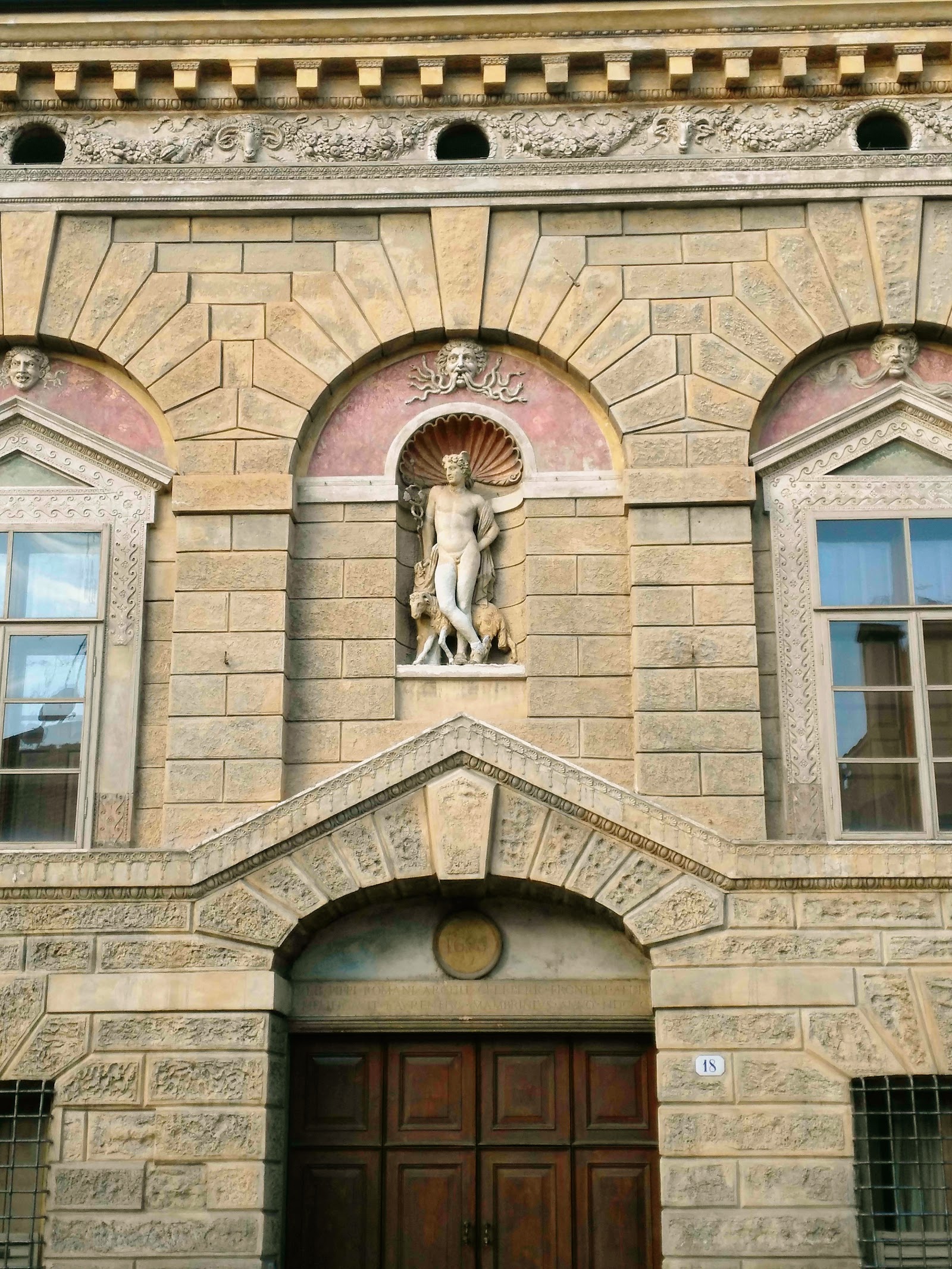
At number 18 on Via Carlo Poma, a Renaissance façade stops you mid-stride. There are no columns — Giulio Romano made that choice deliberately — just a quietly authoritative arrangement of entablature, pedimented windows, and a single oversized doorway whose string course bends upward as if making room for something important. In the niche above, Mercury stands with a ram at his feet: the artist's own emblem, carved in stone on the front of his own house.
This is where one of the sixteenth century's most inventive architects chose to live and work, his studio occupying the ground floor, the whole building a kind of argument about what a house could say.
💛 What travellers fall for
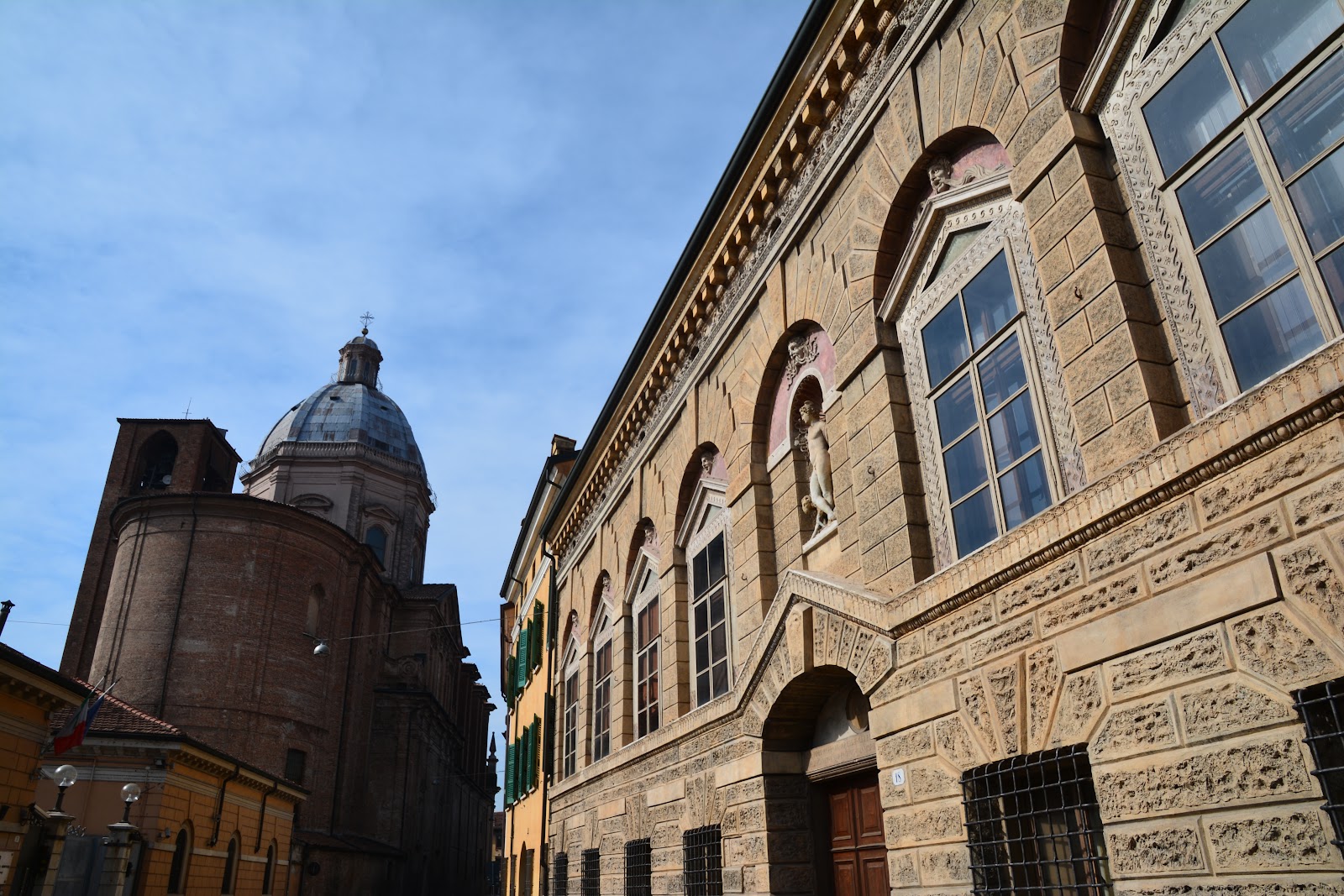
People who've already spent time at Palazzo Te come here to close the loop — to stand in front of the place where Romano actually lived, and notice how much he packed into a façade that doesn't try too hard. The Mercury figure is the detail everyone ends up photographing. Give it five minutes of unhurried looking.
The story behind Casa di Giulio Romano
Giulio Romano — born in Rome around 1499, trained under Raphael — arrived in Mantua in late 1524 at the invitation of the Gonzaga court and never left. He purchased the house on what is now Via Carlo Poma in 1538, and remodelling was completed by 1544. Two years later he was dead, at roughly 47.
The façade he designed is one of the earliest examples of Mannerist residential architecture, and Giorgio Vasari singled it out for praise. In the nineteenth century, architect Paolo Pozzo enlarged and adjusted the façade — moving the entrance door to the centre and absorbing a former lodge on the left — so what you see today is a layered thing: Romano's intentions filtered through a later hand.
Good to know
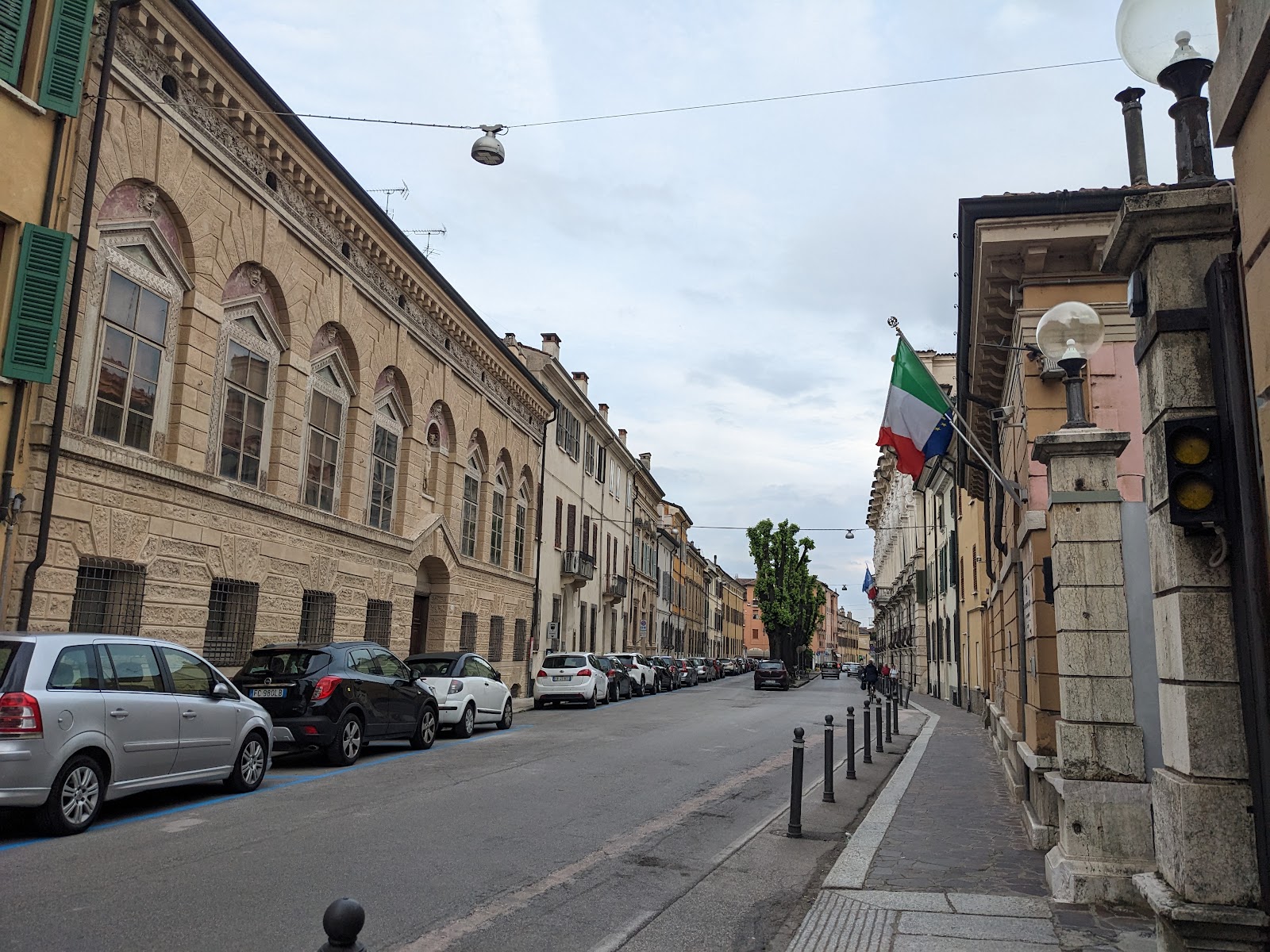
The building is private and closed to visitors; you're here for the exterior only. Via Carlo Poma is walkable from Piazza Sordello in under ten minutes. Spring and early autumn offer the most comfortable conditions for lingering on the street.
Mantua winters run cold and grey, with temperatures near freezing through January and February. Mid-April to mid-June is the most comfortable window for street-level sightseeing; September is a quieter, still-warm alternative. Summer afternoons can be muggy, with thunderstorms arriving by evening.
Where is Casa di Giulio Romano?
More tickets & tours for Casa di Giulio Romano
Book directly at the provider
What travellers say about Casa di Giulio Romano
Romano purchased the house in 1538, but he began living there a few years later. He personally painted the interiors with the help of some of his students and redesigned the architecture. The palace is privately owned and cannot be visited inside, only from the outside, along Via Carlo Poma in Mantua.
The house is now a private residence and cannot be visited. The façade alone, however, is enough to ensure its beauty.
The house Giulio Romano purchased in 1538 to make his home is located on what is now Via Poma, the ancient district of Mantua known as the Unicorno. The artist, who had gradually gained fame and honor with the Gonzaga family, had previously owned two other homes in the city, but he renovated and modified this fifteenth-century building to suit his needs, making it his permanent home. Giorgio Vasari, in 1568, described the house the artist wanted: "Giulio built a house for himself in Mantua opposite San Barnaba, for which he created a fantastic exterior façade, entirely decorated with colorful stucco."
Even if it is only visible from the outside, it is very beautiful.
Only the exterior can be visited. The house is currently a private residence.
More of Mantua
Discover where to stay, what to do and the best deals for your trip.
Explore Mantua →More attractions in Mantua
All of Mantua →
Background adapted from Wikipedia (CC BY-SA) · map data © OpenStreetMap contributors · ratings & place photos via Google · other photos with per-image credit. Ticket links may earn us a commission at no extra cost to you.