
Basilica di Sant'Andrea
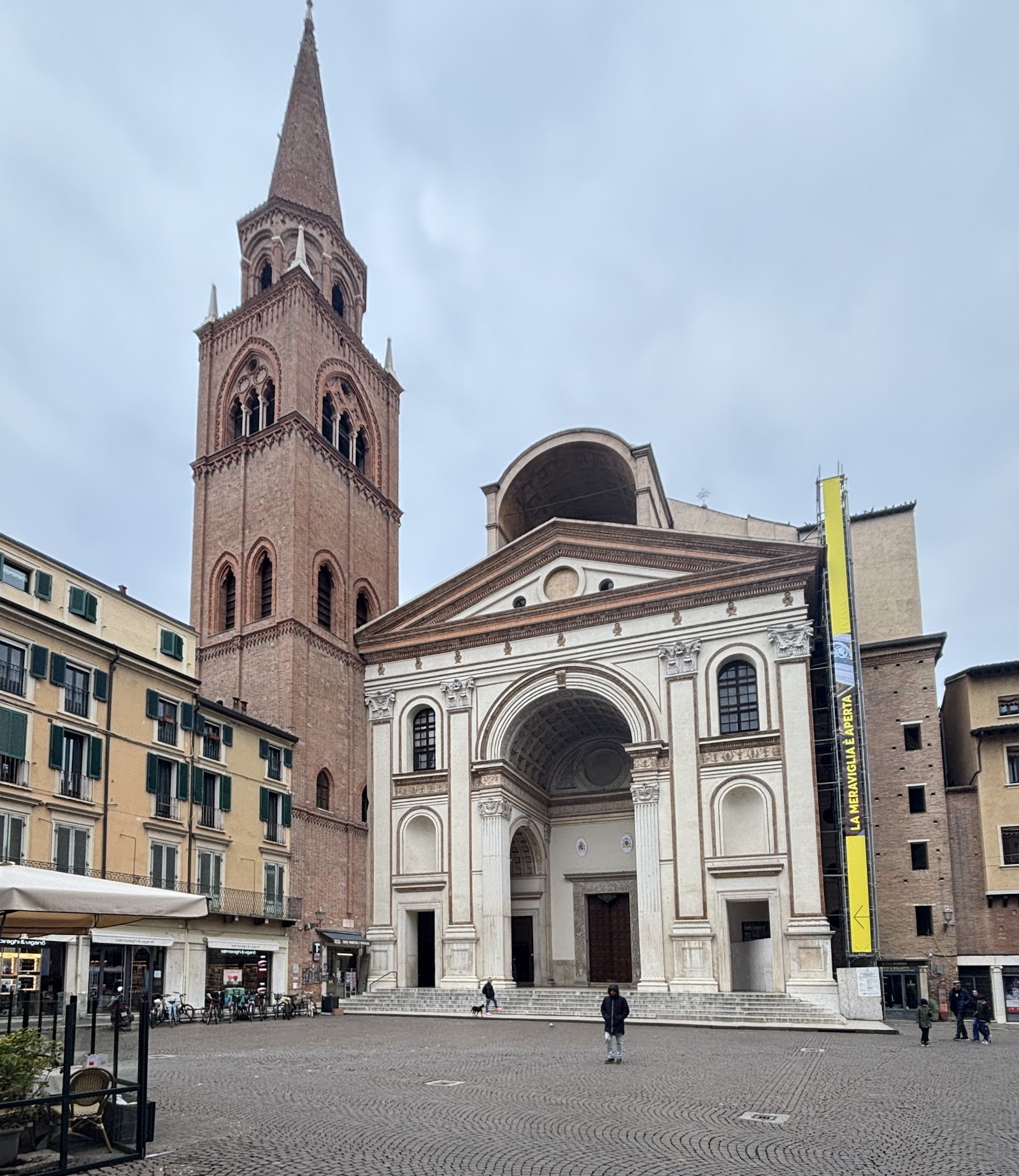
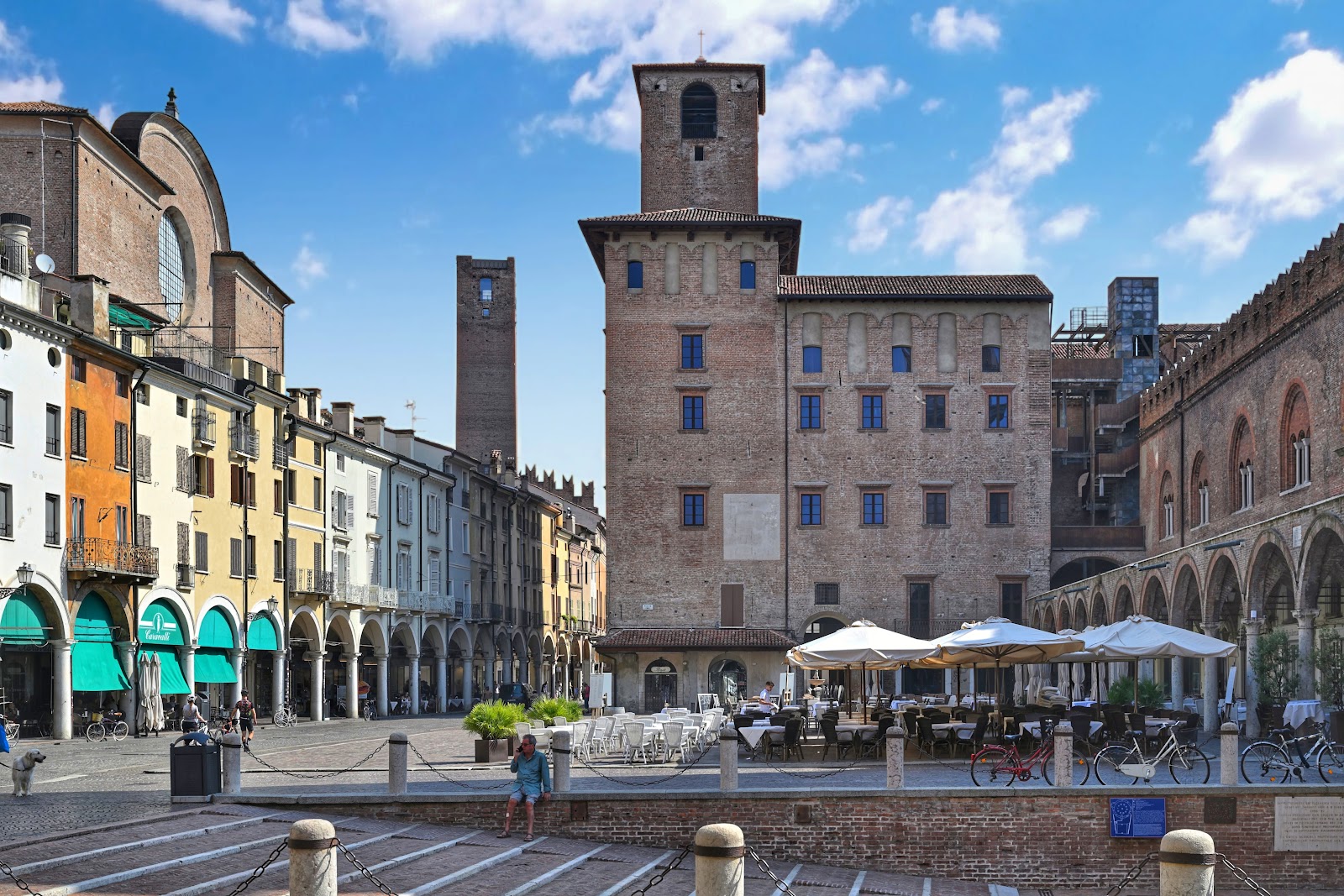
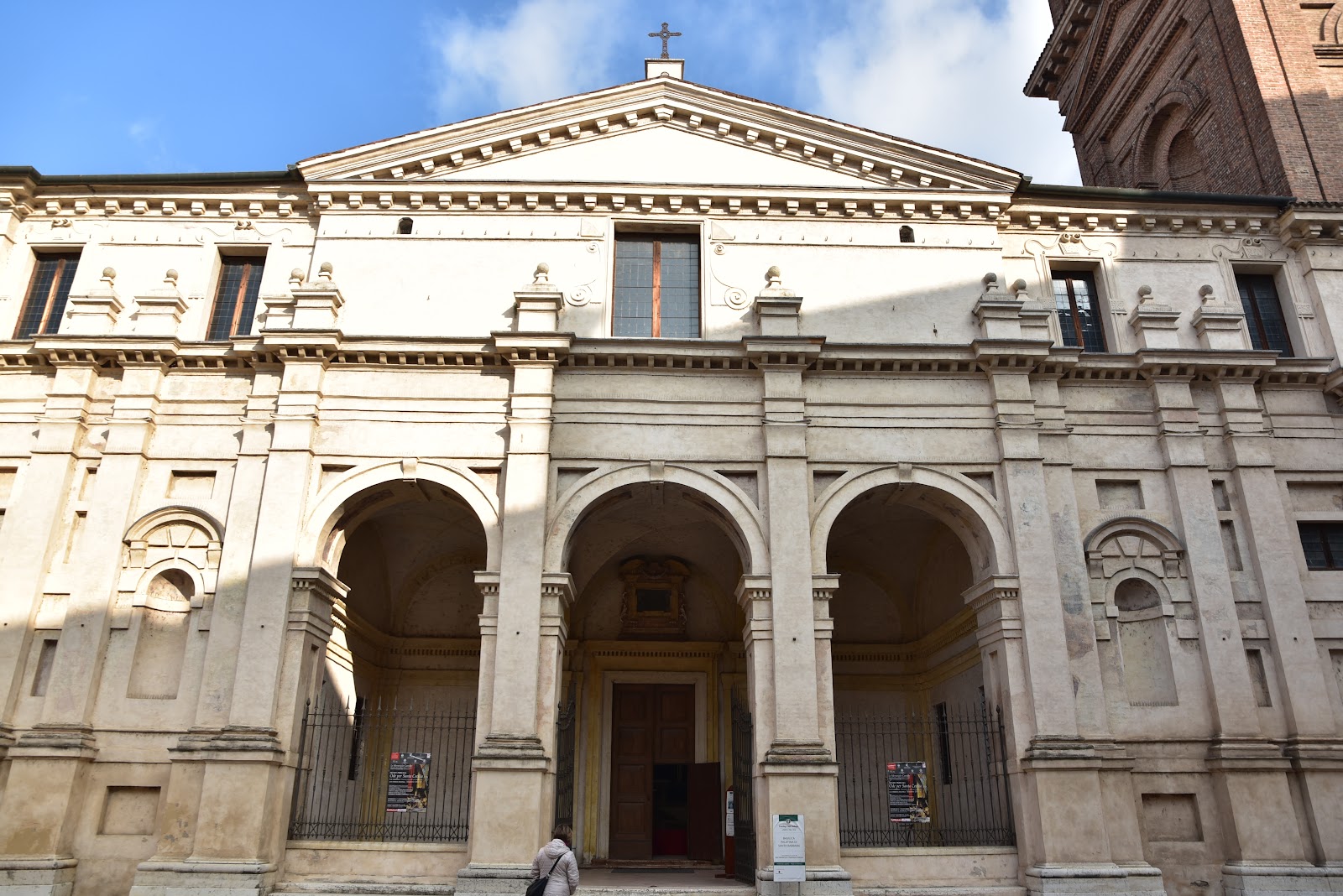
The façade of Sant'Andrea stops you before you even reach the door. Alberti designed it in 1472 to echo the ancient Arch of Trajan at Ancona — a single great arch flanked by Corinthian pilasters — and it still reads as something closer to a Roman triumphal gateway than a church entrance. The bell tower beside it predates Alberti by half a century, a reminder that this site has held sacred buildings since at least the 1050s.
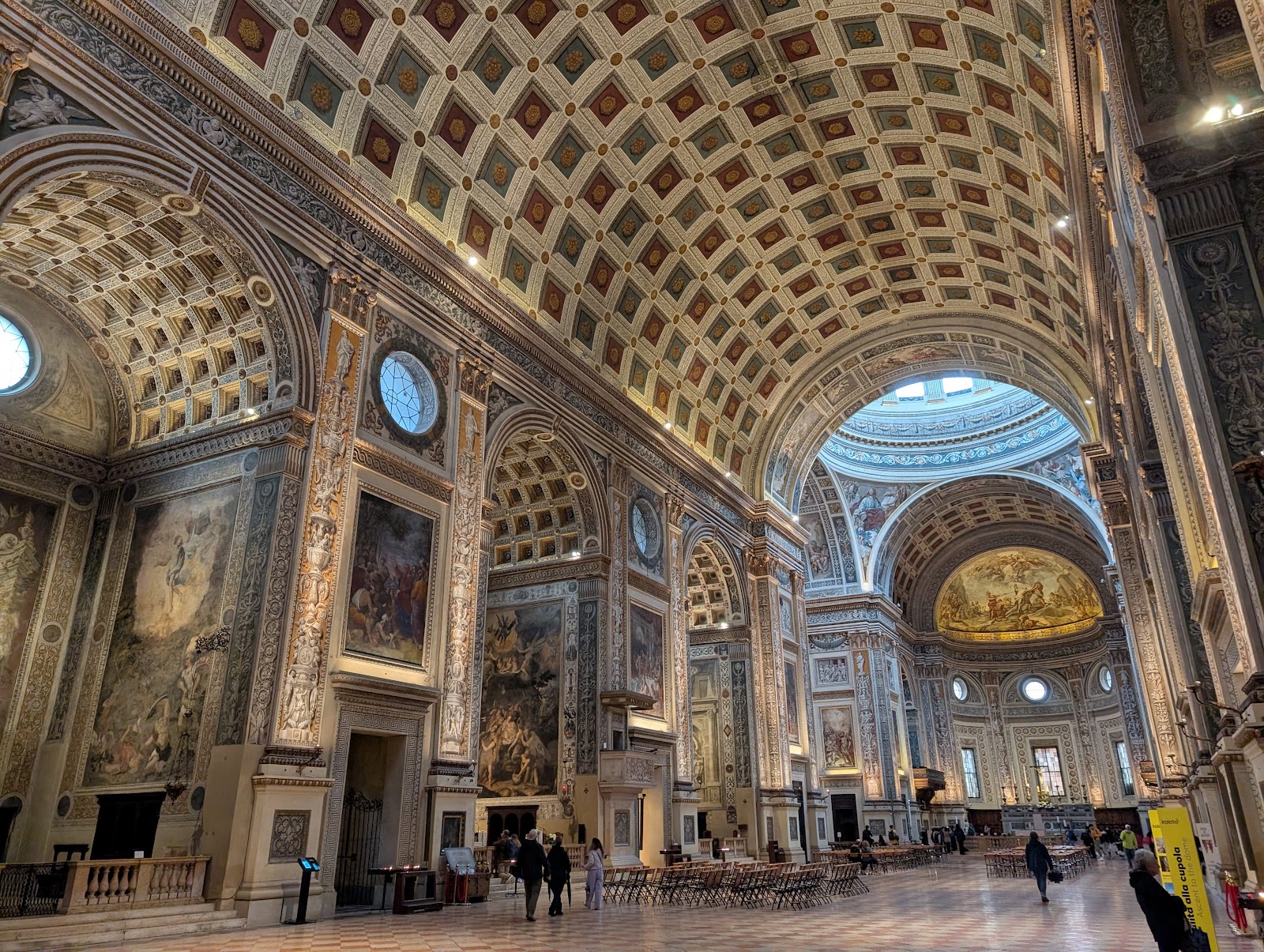
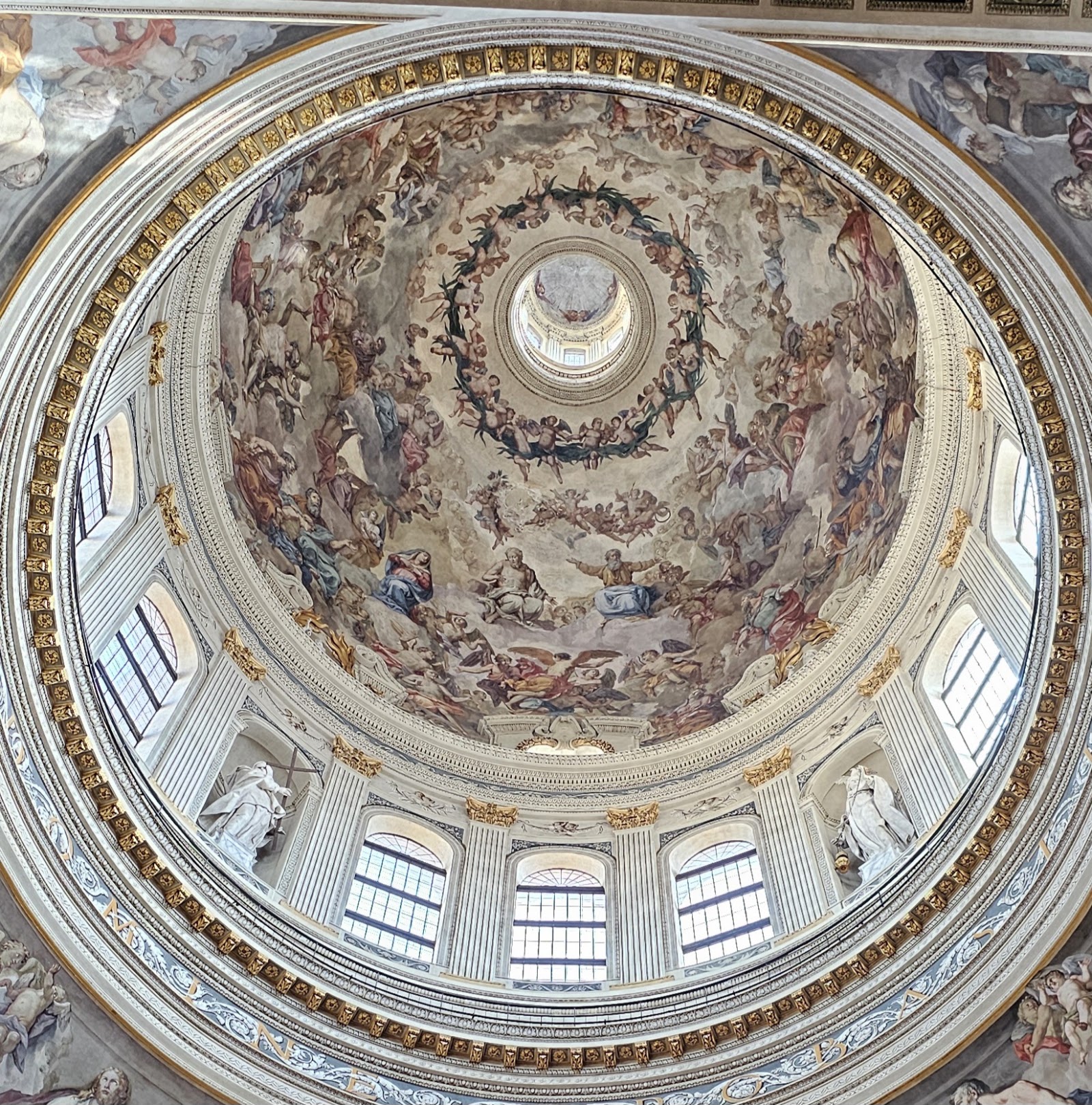
Step inside and the scale shifts again. A single barrel-vaulted nave, one of the first monumental uses of that form since antiquity, stretches toward a dome that Filippo Juvarra designed in 1732 and which rises 80 metres above the floor.
💛 What travellers fall for
People who come back tend to head straight for the Mantegna chapel — the painter is buried here, his tomb marked by a bronze self-portrait attributed to Gianmarco Cavalli. The dome visits run on fixed time slots, so check the schedule before you arrive rather than after. The crypt, which holds two reliquaries said to contain earth soaked in the blood of Christ, opens only when volunteers are present.
The story behind Basilica di Sant'Andrea
Ludovico III Gonzaga commissioned the church in 1472, appointing Leon Battista Alberti as designer — one of the architect's last and most ambitious works. Alberti died the following year, and Luca Fancelli guided construction from a wooden model. The initial building phase concluded in 1494, but the project stretched across centuries: lateral arms were added in 1597, the crypt finished the same year, and Filippo Juvarra's dome was built between 1732 and 1782. Interior decorations under Paolo Pozzo and others continued into the early 19th century.
The basilica was not formally complete until 1800 — 328 years after the first stone. Beneath it all lies a much older story: an oratory stood on this ground by 1055, and a crypt and church were commissioned in the same decade by Beatrice of Lorraine.
Good to know
Sant'Andrea sits on Piazza Mantegna in central Mantua, an easy walk from the train station. Entry is free; dome access runs on timed slots between late morning and late afternoon. The dome climb is not accessible to visitors with motor disabilities. Plan 1–2 hours. Closed Mondays.
Where is Basilica di Sant'Andrea?
More tickets & tours for Basilica di Sant'Andrea
Book directly at the provider
What travellers say about Basilica di Sant'Andrea
An incredible place that was one of the highlights of my trip to Mantua! The architecture of the basilica is simply breathtaking in its scale and harmony—a true Renaissance masterpiece by Leon Battista Alberti.I was most impressed by the monumental facade designed as a triumphal arch and the massive coffered ceiling inside. The interior is majestic: the space is filled with light, and you could spend hours admiring the frescoes and decorative details. Be sure to visit the first chapel on the left, which houses the tomb of the painter Andrea Mantegna, and go down to the crypt to see where the sacred relic—the Vessels of the Holy Blood—is kept.Even if you aren’t an architecture expert, this building is impossible to miss. It feels much more grand than the nearby Duomo. A true Italian gem and a must-visit!
If you are visiting Mantua, the Basilica di Sant'Andrea is not just a church you should visit; it is an architectural milestone that defines the city. Designed by the great humanist Leon Battista Alberti in 1472, this structure is widely considered one of the most important works of the 15th century. As you approach from the piazza, the façade is immediately striking. It is unique because Alberti combined two ancient Roman forms: the Triumphal Arch and the Temple Front. It feels massive, imposing, and incredibly ancient, despite being a Renaissance creation.
Soul soothing and fulfilling. A feast for the mind and eyes just being in here. I personally prefer visiting churches compared to the Museums or Art galleries - it is usually free of charge, a lot less people and I get to relish their beautiful and unprecedented work of art and architecture. Treasure all around and above - It is best done sitting on one of the long pews and simply look up. There are a staggering collection of beauty and religious significance here. "Do not judge a book by its cover" it is a place that is unassuming on the outside but absolutely phenomenal inside and dominates over the Piazza Mantegna. Here preserves the greatest relic of Christianity: the Sacred Vessels containing the blood of Christ.
Superb Renaissance church beautifully decorated still displaying original frescoes and decorations.
Cool, ornate church. Certainly worth a stop to check it out. Looks like during the season there is annoption for crypt tours and to the walkway up in the main dome. We saw the sign for them, but it was behind bars and the tours were clearly not being offered at this time. Looks like it would be an interesting option. Even without, it is certainly worth admiring this chiesa.
More of Mantua
Discover where to stay, what to do and the best deals for your trip.
Explore Mantua →More attractions in Mantua
All of Mantua →
Background adapted from Wikipedia (CC BY-SA) · map data © OpenStreetMap contributors · ratings & place photos via Google · other photos with per-image credit. Ticket links may earn us a commission at no extra cost to you.