
Baptistery of Padua

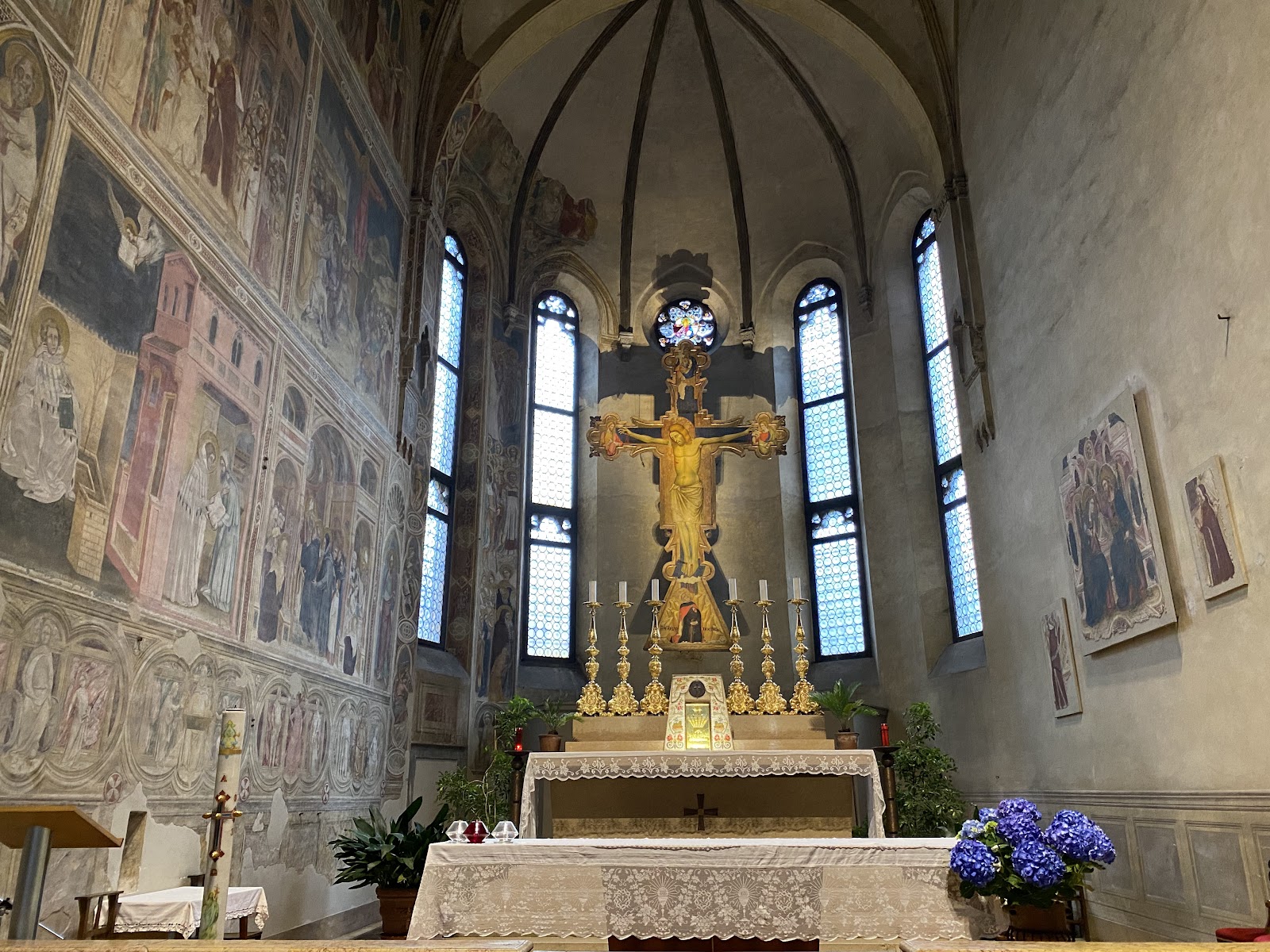
Step inside and the scale of it stops you: every surface of this small building on the Piazza del Duomo is covered in fresco, floor to dome, with barely a centimetre of bare wall. Above you, Giusto de' Menabuoi's Paradise fills the cupola — Christ Pantocrator at its centre, ringed by concentric circles of saints and angels painted between 1375 and 1378.
Around one hundred scenes unfold across the walls: Genesis, the Apocalypse, the life of John the Baptist. The light through the windows rakes across the pigment in the early morning and late afternoon, pulling colours forward that midday flattens. It is one of the most complete fourteenth-century fresco cycles in Italy, and in 2021 it was inscribed as part of the UNESCO World Heritage site Padova Urbs Picta.

💛 What travellers fall for
People who return tend to mention the same thing: look up before you look around. The Paradise dome rewards a slow, still minute at the centre of the room — the composition only resolves fully when you stop moving. The audioguide (available in Italian, English, French, German and Spanish) earns its keep here, giving names to faces you'd otherwise just admire.
The story behind Baptistery of Padua
The building dates to the twelfth century, raised on the foundations of an earlier structure and reworked over the following hundred years before its consecration by Guido, Patriarch of Grado, in 1281. It functioned as a baptistery attached to the cathedral beside it on the Piazza del Duomo.
In 1370, Francesco I da Carrara — lord of Padua — and his wife Fina Buzzaccarini repurposed it as a dynastic mausoleum. It was Fina who commissioned Giusto de' Menabuoi, a Florentine painter serving as court artist to the Carrara family, to cover the interior with frescoes between 1375 and 1378. The family's tomb did not survive: when the House of Carrara fell to Venice in 1405, the sarcophagus was destroyed and replaced, eventually, by the baptismal font by sculptor Giovanni da Firenze that stands at the centre of the room today.

Good to know
Tickets are bought at the adjacent Diocesan Museum, where a short introductory film precedes your guided entry. Online booking is required on Saturdays, Sundays and public holidays. The Baptistery is closed Mondays until 2 p.m., and shut entirely on Christmas, New Year's Eve and Easter. The Padova Urbs Picta Card covers admission.
Where is Baptistery of Padua?
More tickets & tours for Baptistery of Padua
Book directly at the provider
What travellers say about Baptistery of Padua
Visiting the Battistero di San Giovanni Battista with Kalatà is an exceptional and deeply immersive experience that goes far beyond a standard sightseeing visit. Located next to the Duomo in Padova, the baptistery is already a remarkable monument, but the guided visit elevates it into a true journey through art, symbolism, and history. Inside, the fresco cycle by Giusto de’ Menabuoi is absolutely breathtaking. The vibrant colors, the dramatic depiction of Paradise in the dome, and the intricate biblical scenes covering the walls create an overwhelming sense of beauty and spiritual intensity. With Kalatà’s guidance, the frescoes come alive—details, meanings, and connections that might otherwise be missed are explained clearly and engagingly.
A stunning glimpse into Florentine faith and art Before visiting the Baptistery of St. John the Baptist, I knew it was the place where Florentines like Dante and members of the Medici family were baptized. But seeing it in person is something else entirely. Dedicated to Florence’s patron saint, this octagonal structure dates back to the 4th–5th century, making it one of the city’s oldest buildings. The real treasure is the spectacular 13th-century mosaic ceiling. I highly recommend joining the guided tour—without it, you’ll miss the context behind those stunning biblical scenes. The guide explains how the mosaics illustrate the most important stories from the Bible, from Genesis and the life of Joseph to the life of Christ and the Last Judgment. Seeing Christ in Majesty surrounded by choirs of angels and scenes of heaven and hell is breathtaking. The guide helps you spot details you’d otherwise overlook, like the dramatic depiction of demons tormenting the damned. If you love history, art, or simply want to understand Florence’s soul, don’t just peek through the doors. Book the guided tour—it’s worth every euro.
A magnificent masterpiece. The details can be admired endlessly. The only thing that slightly spoils the experience is the incredibly long queue.
Gorgeous, incredible. Our favourite visit in Padova. Atmospheric and informative video and audioguide. Visual masterpiece, really special.
In addition to the extraordinary artistic value of the frescoes, the visit was exceptionally well explained by the previous video and the audioguide inside the Battisterio. It was probably the best of the many visits to art sites we have experienced in many countries. Congratulations. As a comparison, during the visit to the inside of the Scrovegni Chapel, there was no similar audioguide and the time allowed was only 15 minutes.
More of Padua
Discover where to stay, what to do and the best deals for your trip.
Explore Padua →More attractions in Padua
All of Padua →

Background adapted from Wikipedia (CC BY-SA) · map data © OpenStreetMap contributors · ratings & place photos via Google · other photos with per-image credit. Ticket links may earn us a commission at no extra cost to you.