
Prato della Valle
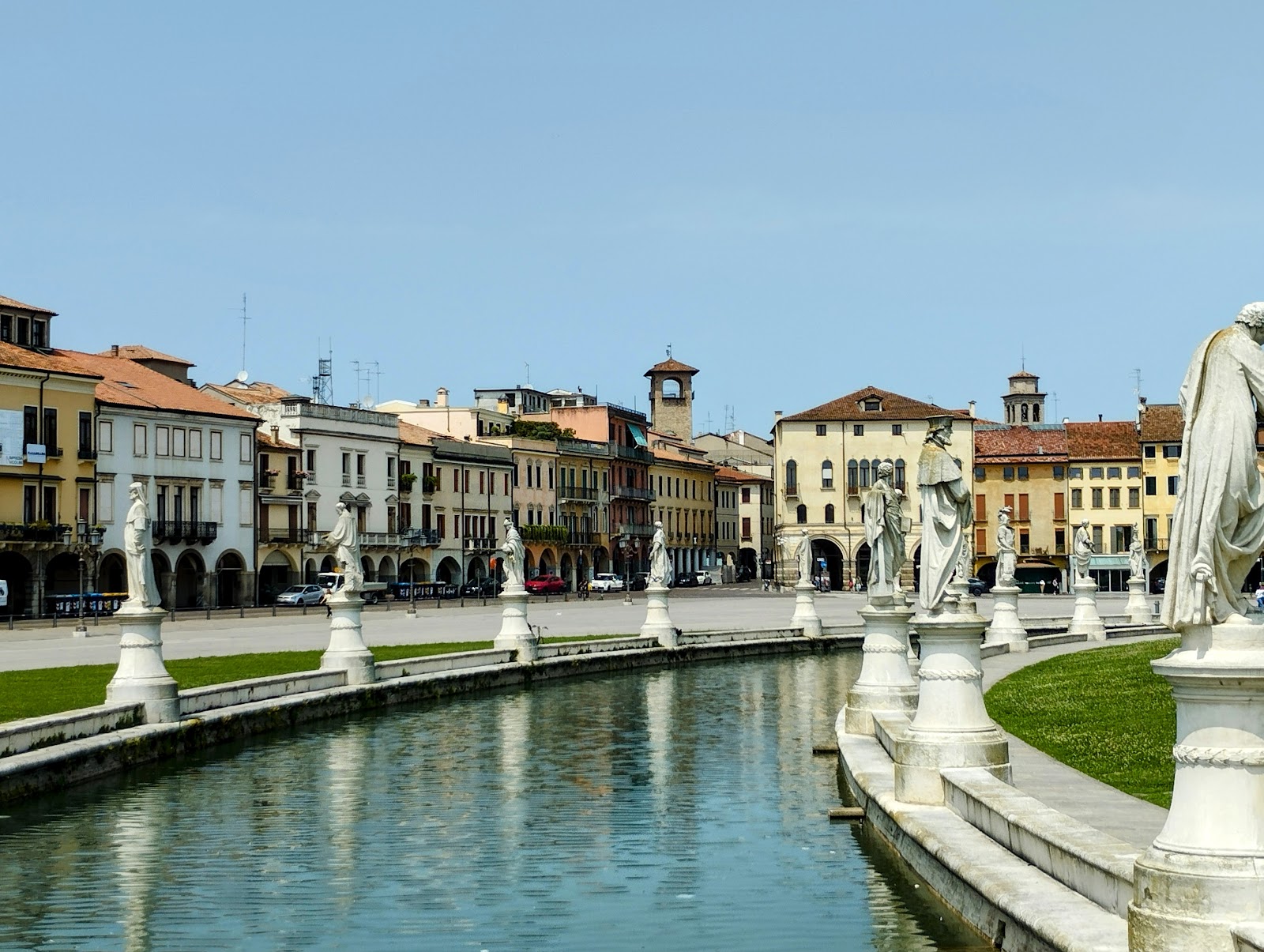
At 88,000 square metres, Prato della Valle is one of the largest squares in Europe, and its scale still catches people off guard. An elliptical canal rings a green island at the centre, and two concentric rows of statues — 78 in total, carved mostly from Istrian stone — stand along the banks like a petrified senate. Galileo Galilei is number 36 on the inner ring, placed here because he spent what he himself called the happiest eighteen years of his life in Padua.
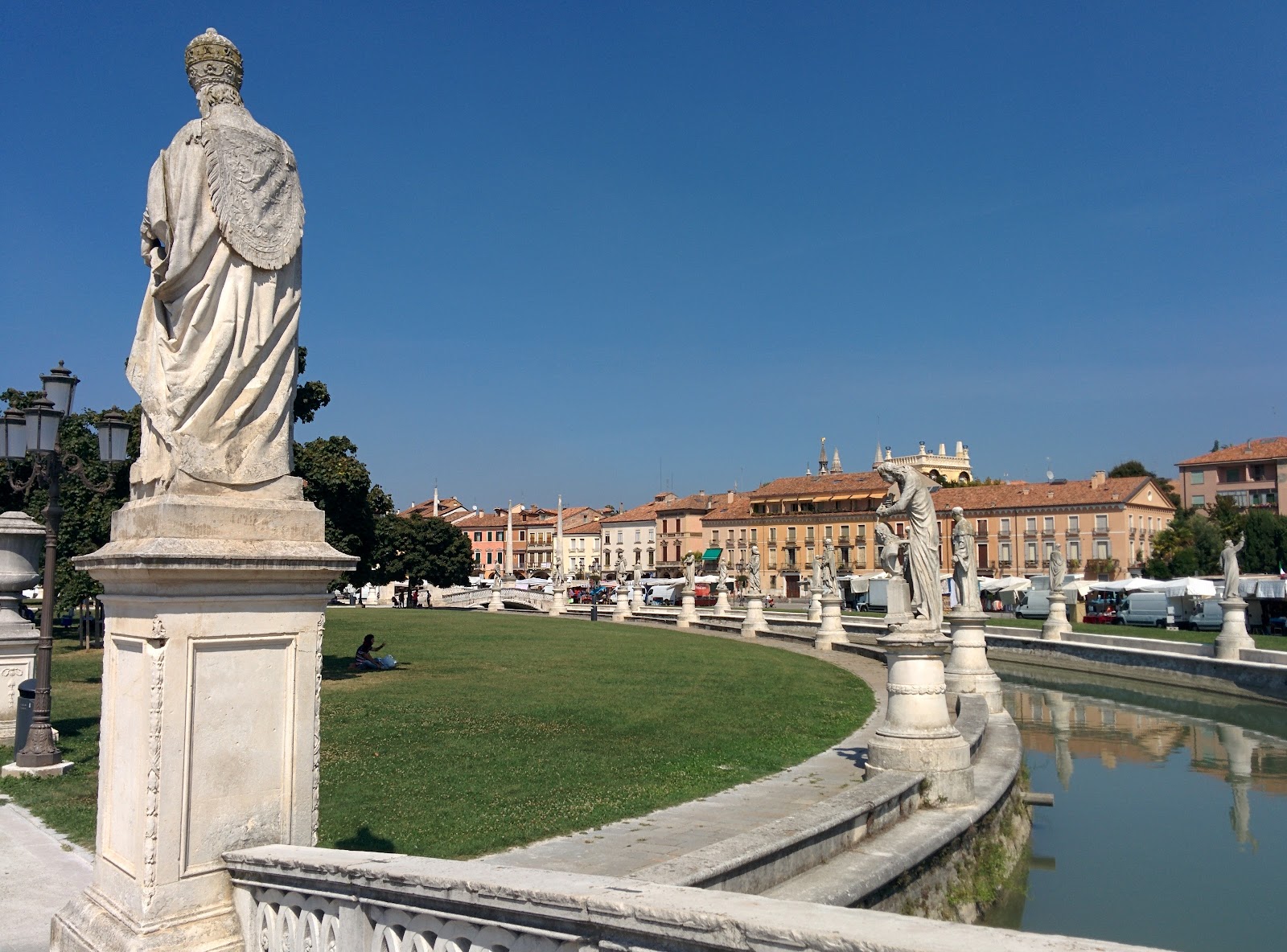
The square functions as a genuine civic space rather than a monument to itself. On market days the stalls spread outward from the canal; on weekday evenings students sit on the grass of the Isola Memmia; on weekends families circle the paths.
💛 What travellers fall for
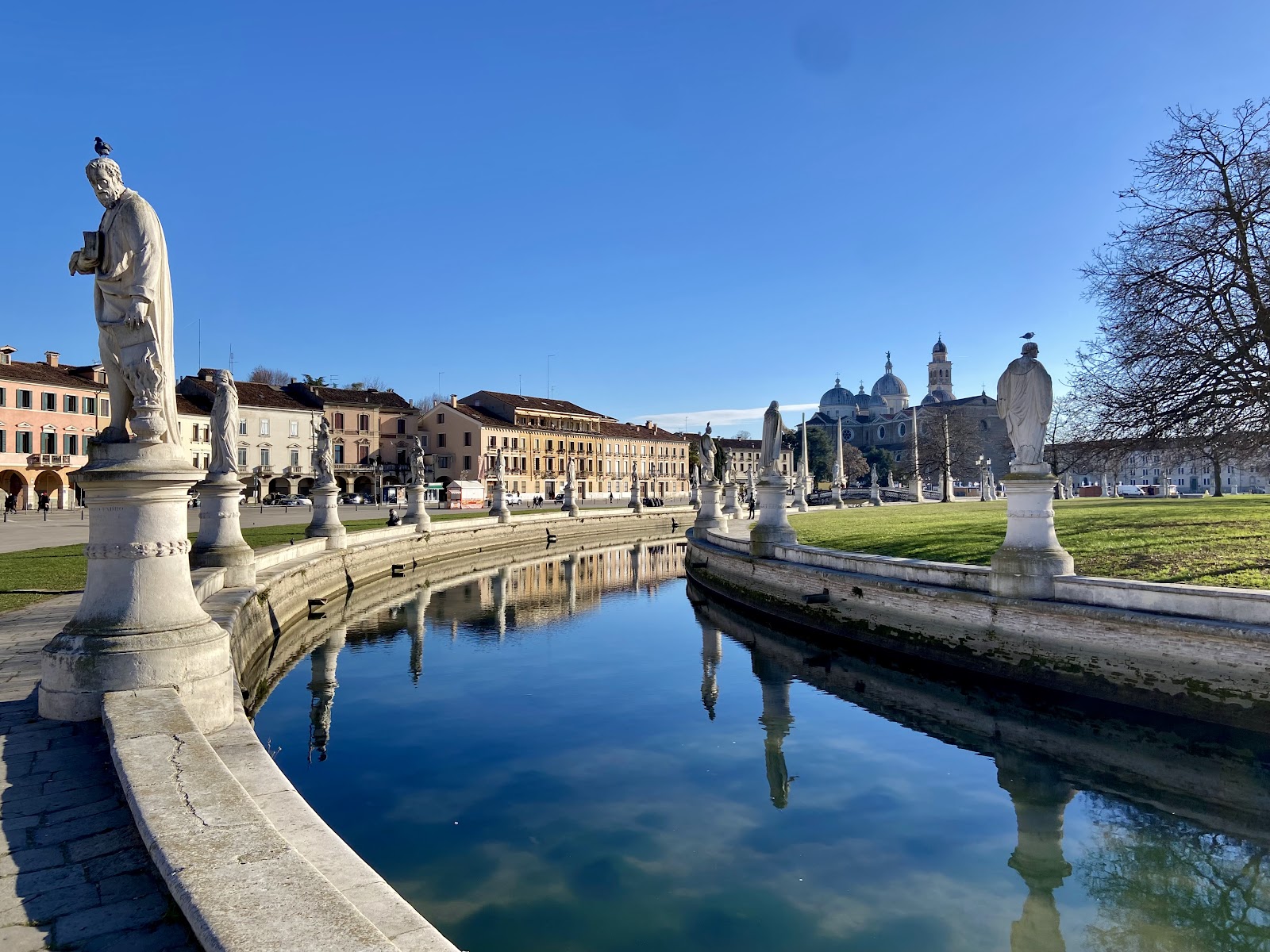
People who come back tend to do a slow lap of the statues with a specific target in mind — Galileo, Canova's contributions, the very first statue placed here in 1775 (Antenor, the mythical founder of Padua, on the inner ring). Saturday morning, when the market runs longest, is the lap that comes with the best distraction.
The story behind Prato della Valle
For most of its medieval life the site was open, semi-swampy ground just south of the old city walls, used for markets as far back as 1077. In 1636 it briefly became something stranger: a temporary theatre, lavishly fitted out for mock cavalry battles, whose musical prologue is considered a direct ancestor of the first public opera performances in Venice the following year. Then it slid back into neglect and marsh.
In 1775, Andrea Memmo, the Venetian superintendent governing Padua, decided enough was enough. He commissioned the architect Domenico Cerato to drain and redesign the space; Simone Stratico oversaw the excavations that installed the drainage and revealed the foundations of an ancient Roman theatre beneath. By 1776 the elliptical canal and island configuration was complete. The statues followed across the next century, the last installed in 1883.
Good to know
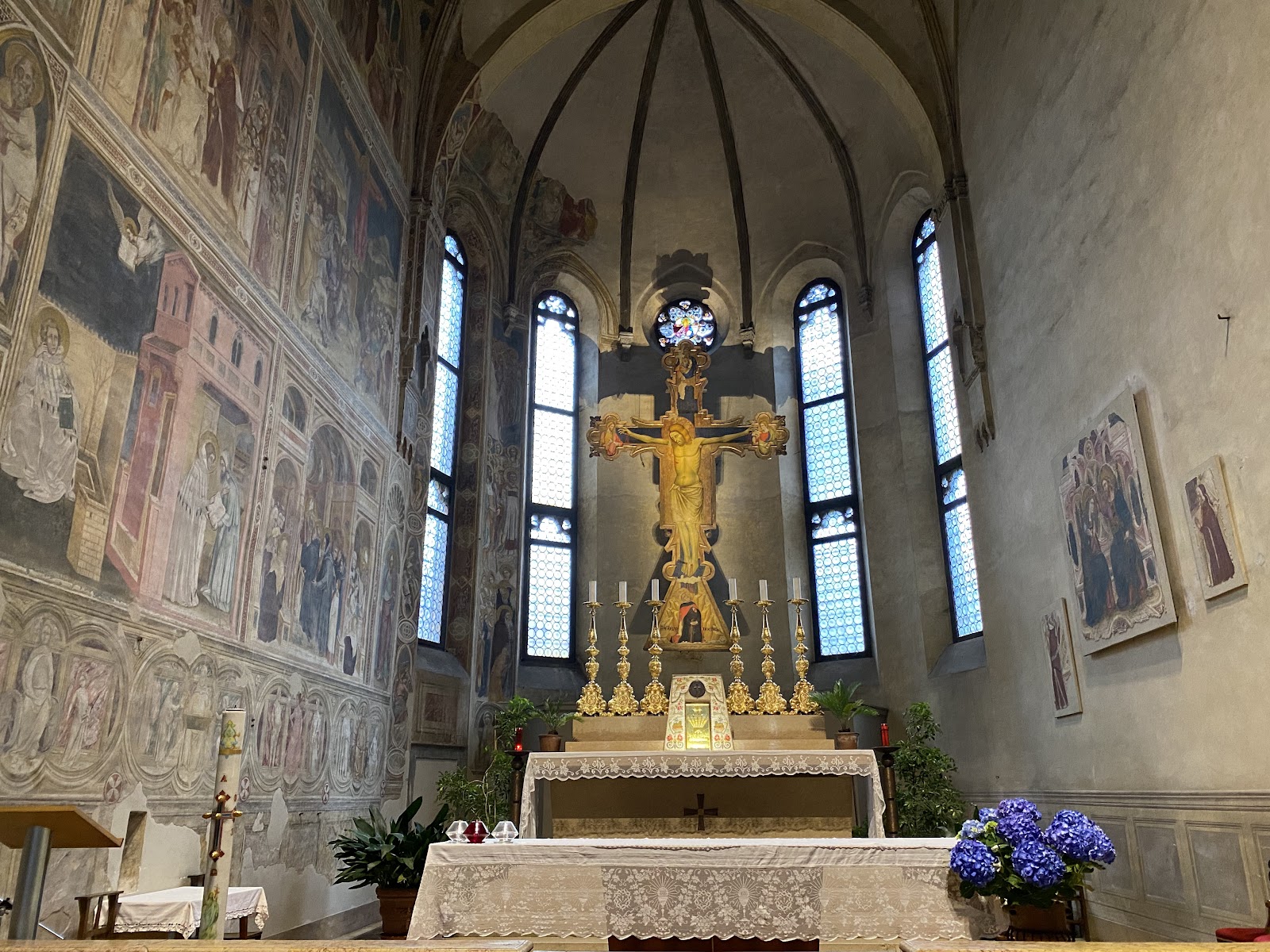
The square is free and open around the clock. From Padua's train station, the tram gets you here in just over ten minutes, or it's a 20–25 minute walk through the historic centre. Markets run roughly 7:30 to early afternoon on weekdays, later on Saturdays. Budget at least an hour; two if you plan to step inside Santa Giustina.
Padua summers are warm and humid; the Prato's open expanse offers little shade, so morning visits are more comfortable from June through August. Spring and autumn are the easiest seasons to be here — mild enough to sit on the island grass without much thought. Winter brings cold fog off the Veneto plain, but the square empties out and has a different, quieter character.
Where is Prato della Valle?
More tickets & tours for Prato della Valle
Book directly at the provider
What travellers say about Prato della Valle
Beautiful park with fountain and a lot of sculptures. It is not very big. It is surrounded by water and old Italian style buildings. Near the park there is a groceries market for fruits and vegetables. Also, it is not far from Sant Antonio cathedral that is the main attraction in Padua.
Prato della Valle is one of the most beautiful squares I’ve seen in Italy. The space is huge and very атмосферic, with a canal and dozens of statues around it. It’s perfect for a relaxing walk, photos, or just sitting on the grass and enjoying the view. The atmosphere feels calm and local, not too touristy. Definitely worth visiting while in Padua.
Beautiful and epic! Can enjoy sitting or exploring. Great place to gather with friends or family, or to walk/exercise. Perfect time to visit is day or night.
Prato della Valle is a beautiful and lively piazza, it’s a huge open space. The elliptical canal with its ring of statues is very unique — walking around feels like being in an open-air museum. On market days the square is buzzing with stalls, it’s a also beautiful place to stroll, sit under the trees, or just take in the atmosphere. I loved the night atmosphere, stunning lights and beautiful views. It’s also a great spot to start or end a walk through Padua, since it connects easily to the Basilica of St. Anthony and the historic center.
A beautiful, calm place to relax in the evening! It's very clean, free for everyone, and a highly recommended spot for a summer picnic.💗
More of Padua
Discover where to stay, what to do and the best deals for your trip.
Explore Padua →More attractions in Padua
All of Padua →

Background adapted from Wikipedia (CC BY-SA) · map data © OpenStreetMap contributors · ratings & place photos via Google · other photos with per-image credit. Ticket links may earn us a commission at no extra cost to you.