
Piazza dei Signori
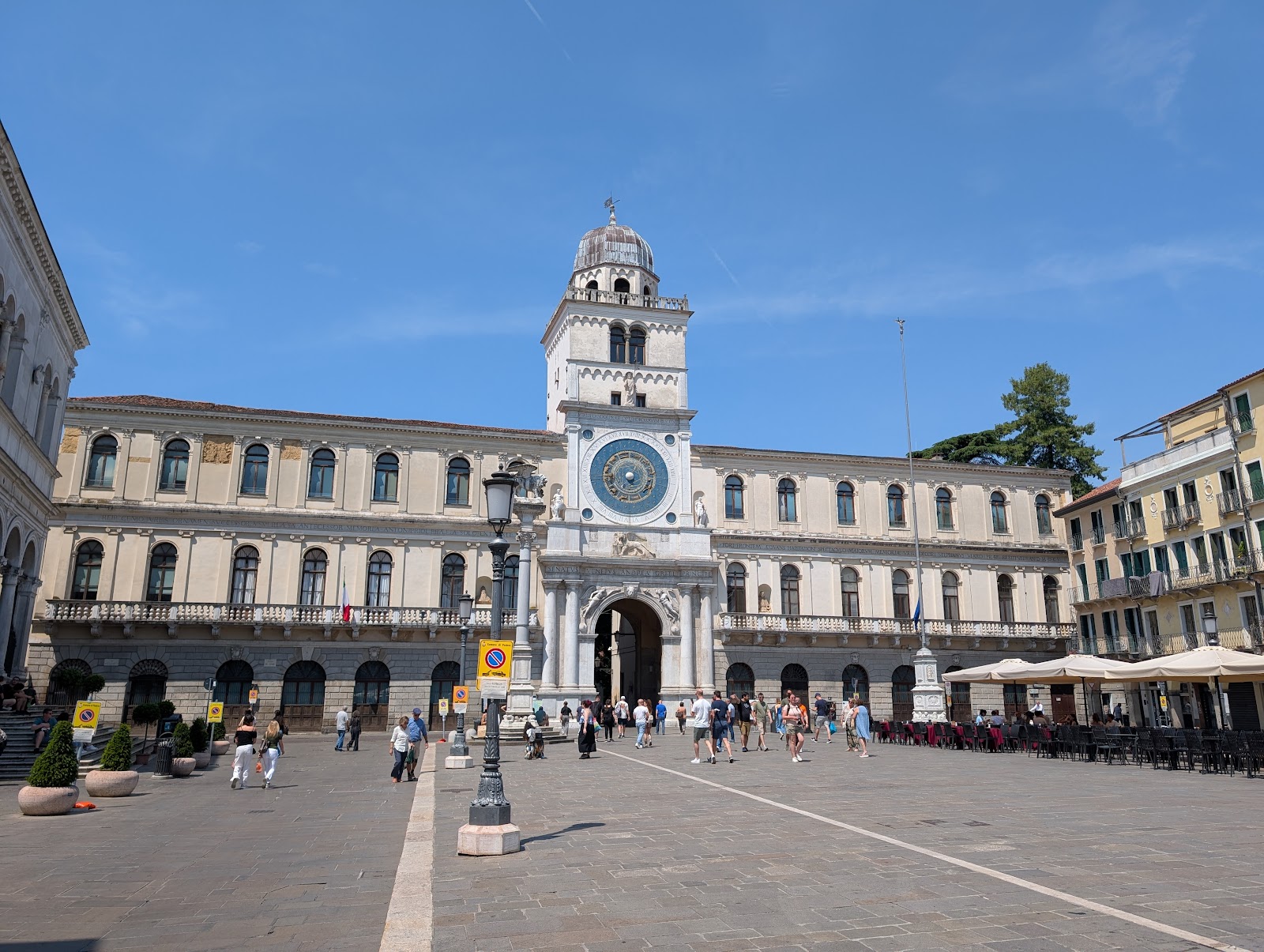
The first thing you notice in Piazza dei Signori is the clock. High on its tower, an astronomical face built to a 1428 design by Jacopo Dondi tracks the sun, moon and zodiac against a deep-blue ground — a piece of medieval cosmology still ticking at the centre of daily Paduan life. Below it, the portico of the Palazzo del Capitanio runs across the square on seven arches, its polychrome marble facade catching the morning light.
This is one of Padua's five historic civic squares, and it reads like a palimpsest: Roman column, medieval church, Venetian government palace and a paving of Euganean trachyte slabs that replaced the original herringbone brick in the eighteenth century. A morning market spreads across the stone most days, selling clothes and sundries under the gaze of a replica Lion of Saint Mark.
💛 What travellers fall for
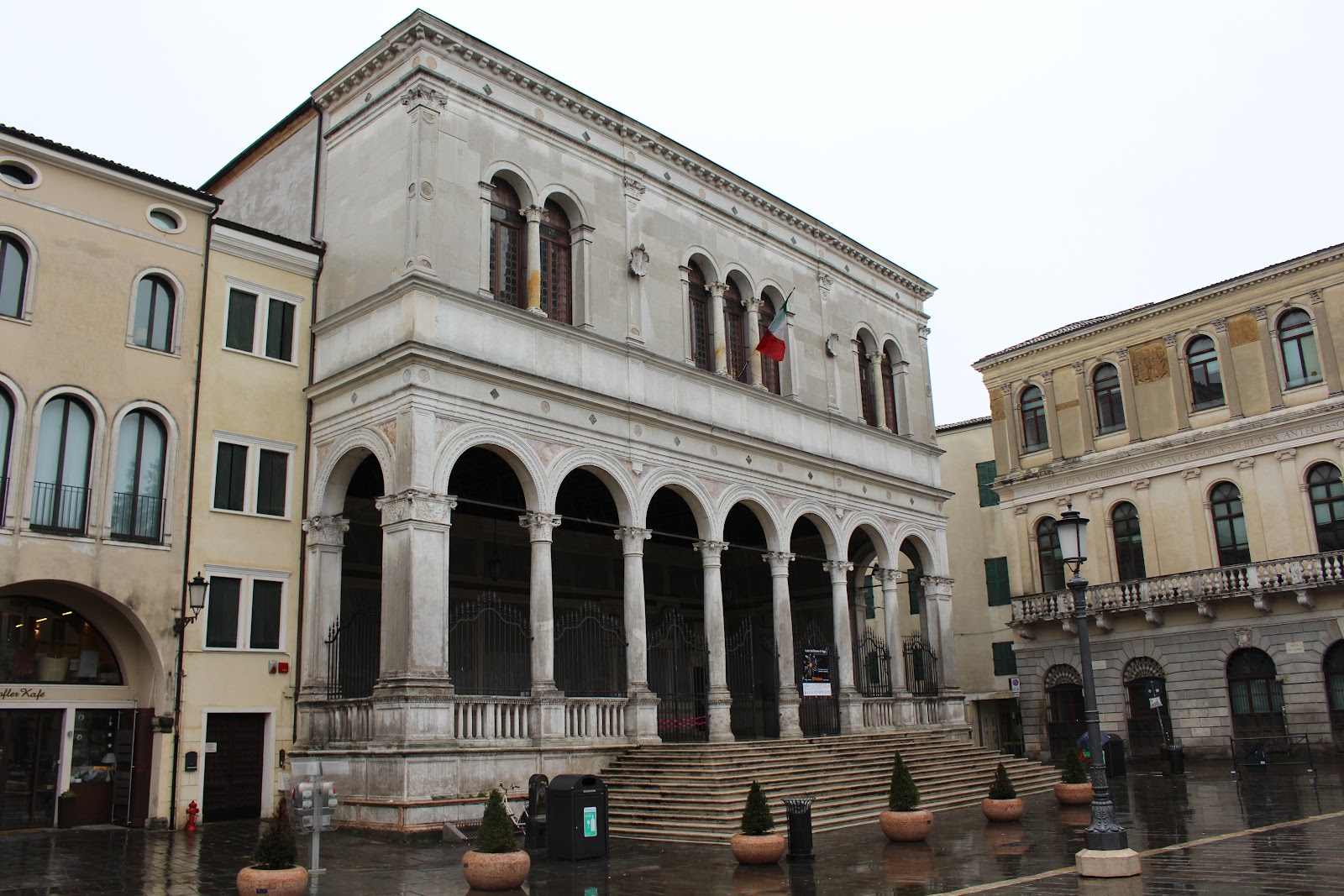
People who come back tend to time their arrival for early morning, before the market crowds settle in, when the clock tower and the Loggia del Consiglio are sharp in low-angled light. The column carrying the Lion of Saint Mark is worth a close look — the original was pulled down by Napoleon's troops in 1797, and the replacement, carved by Natale Sanavio in 1870, carries that history quietly.
The story behind Piazza dei Signori
Piazza dei Signori took shape in the fourteenth century when Ubertino da Carrara ordered the demolition of a district that had stood in front of the church of San Clemente. The Carrara lords gave the square its name, though war with the Visconti left it badly damaged — a period the chroniclers called 'the Desolation'. Venetian rule from the fifteenth century restored and enlarged its civic role: tournaments, concerts, courtship and public spectacle all played out here.
The square's name has shifted with the politics. On 9 May 1848 the priest Alexander Gavazzi renamed it Piazza Pius IX as a gesture against Austrian rule; after unification in 1870 it became Piazza Unità d'Italia, then reverted to its original name in the fascist era. The Lion of Saint Mark column tells its own compressed history: the original was toppled by Napoleon's soldiers in 1797, and the copy standing today was carved by Natale Sanavio seventy-three years later.
Good to know
The square is open at all hours and free to enter. From Padua's main railway station it's a 15–20 minute walk through the market squares, or a short tram or bus ride to the old town. The Duomo bus stop on line U02 is about 140 metres away. Individual buildings have restricted hours; check before planning a visit inside.
Summer afternoons can be hot and the square offers little shade, so mornings are more comfortable for lingering. Spring and autumn bring mild temperatures that suit an unhurried circuit of the buildings and a drink under the portico; winter mornings are cold but the square is quieter and the clock tower reads well in flat grey light.
Where is Piazza dei Signori?
More tickets & tours for Piazza dei Signori
Book directly at the provider
What travellers say about Piazza dei Signori
Fabulous spot. Enjoy the vista, the ambience and the culture. We sat outside a bar, resplendent in provided blankets to keep the chill off as the sun set. Beer, wine & snacks kept us there for a couple of hours. A wonderful place to relax! 🍷
Piazza dei Signori is one of the most elegant and historically rich squares in the heart of Padova’s historic center, offering visitors a perfect blend of culture, architecture, and local daily life. Its long rectangular shape and surrounding porticoes immediately set the tone for a stroll in a space that feels both relaxed and deeply rooted in centuries-old civic tradition.  From the moment you step into the square, you’re surrounded by architectural gems. The Torre dell’Orologio dominates the western end, anchored between the symmetrical facades of Palazzo del Capitanio and Palazzo dei Camerlenghi, giving the piazza a timeless sense of balance and historical weight.  On the southern side, the elegant Loggia del Consiglio adds Renaissance grace, while the charming medieval Chiesa di San Clemente brings a quieter, devotional note to the overall ensemble.
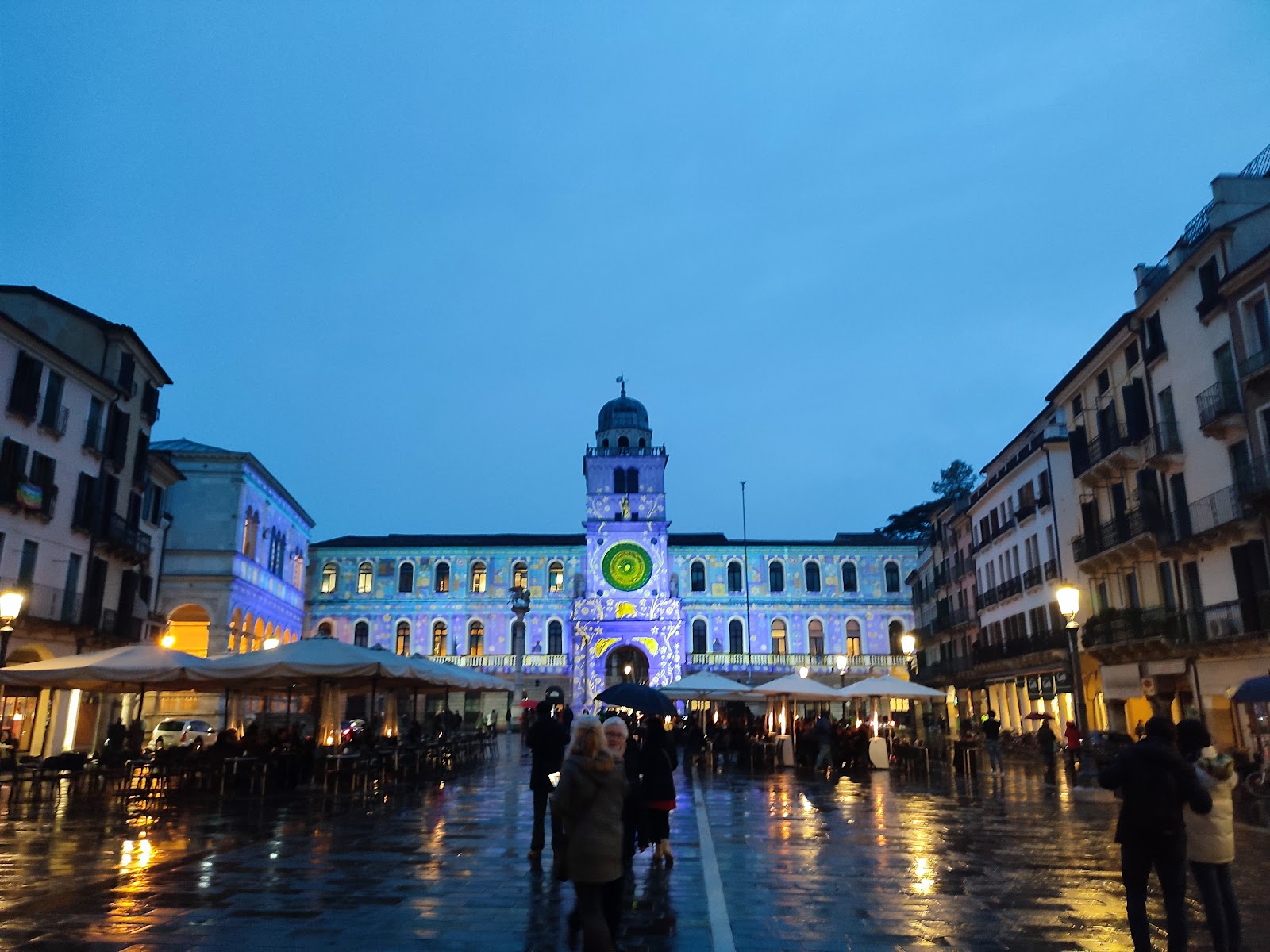
It was a magical experience. I was not expecting the feel that that place had in the evening time. It is a 100% recommendation to go there if you’re visiting Padova.
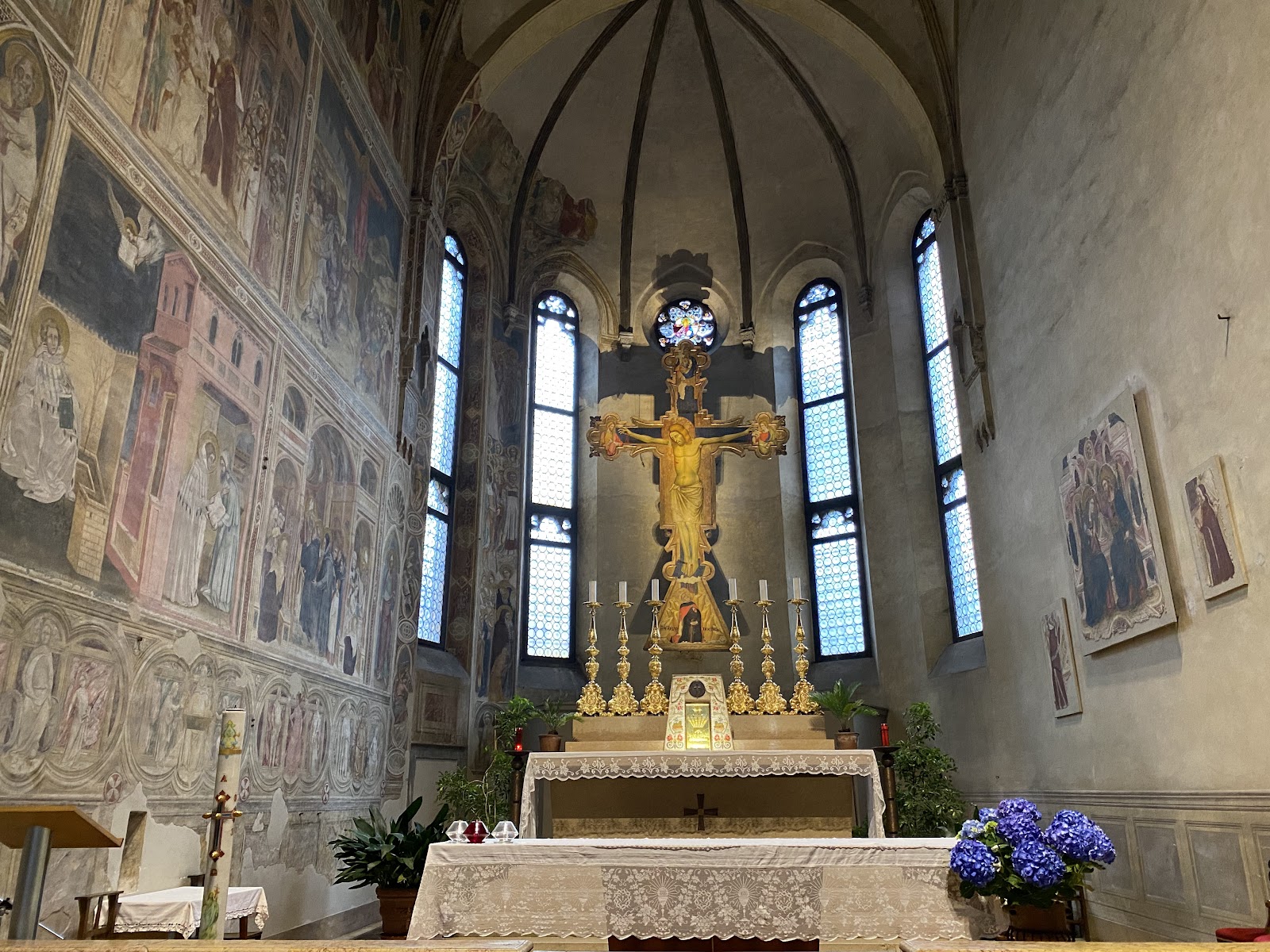
Awe inspiring! We visited as a stop on the way between Verona and Venice. The clock is beautiful, of course, and there’s a reason why it’s the showstopper, but the Church of San Clemente on the opposite side is very beautiful as well!
It is cute Piazze that make you feel to live city’s history and all legacy. Gathering place for people take a walk or sitting for evening. For sure also there are many places around the piazza.
More of Padua
Discover where to stay, what to do and the best deals for your trip.
Explore Padua →More attractions in Padua
All of Padua →

Background adapted from Wikipedia (CC BY-SA) · map data © OpenStreetMap contributors · ratings & place photos via Google · other photos with per-image credit. Ticket links may earn us a commission at no extra cost to you.