
Anfiteatro Romano di Arezzo
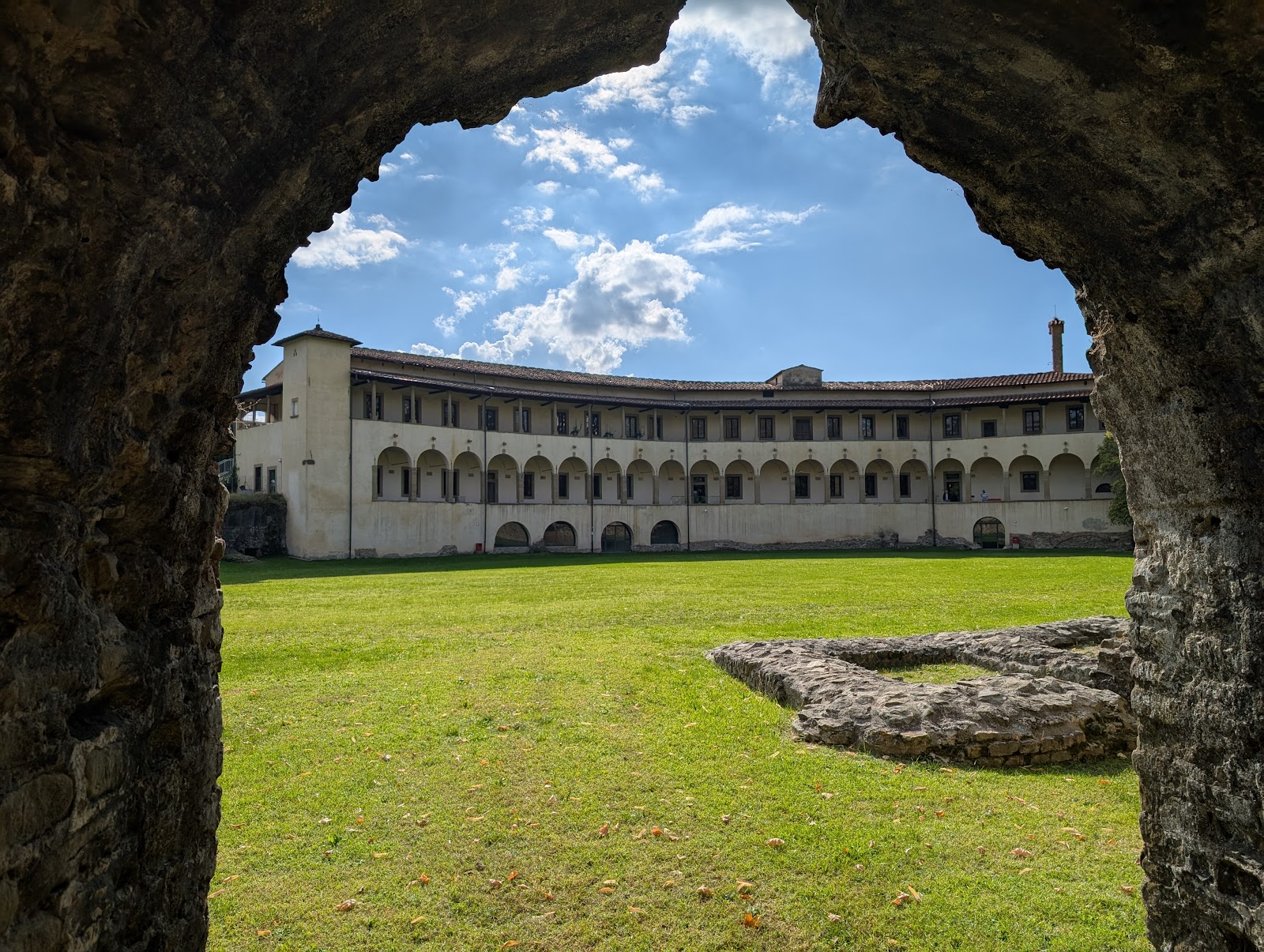
Stand at the perimeter path along Via Crispi and you're looking at an ellipse 121 metres long, built from sandstone, brick, and marble sometime in the reign of Hadrian — a structure that once held eight or nine thousand people watching things happen in an arena that is now open sky and grass. The scale takes a moment to settle.
What makes Arezzo's amphitheatre unusual is the 14th-century Monastery of San Bernardo grafted directly onto its curved outer wall. The two buildings have grown into each other over centuries, and the monastery now houses the archaeological museum — so Roman ruin and medieval cloister share the same address.
💛 What travellers fall for
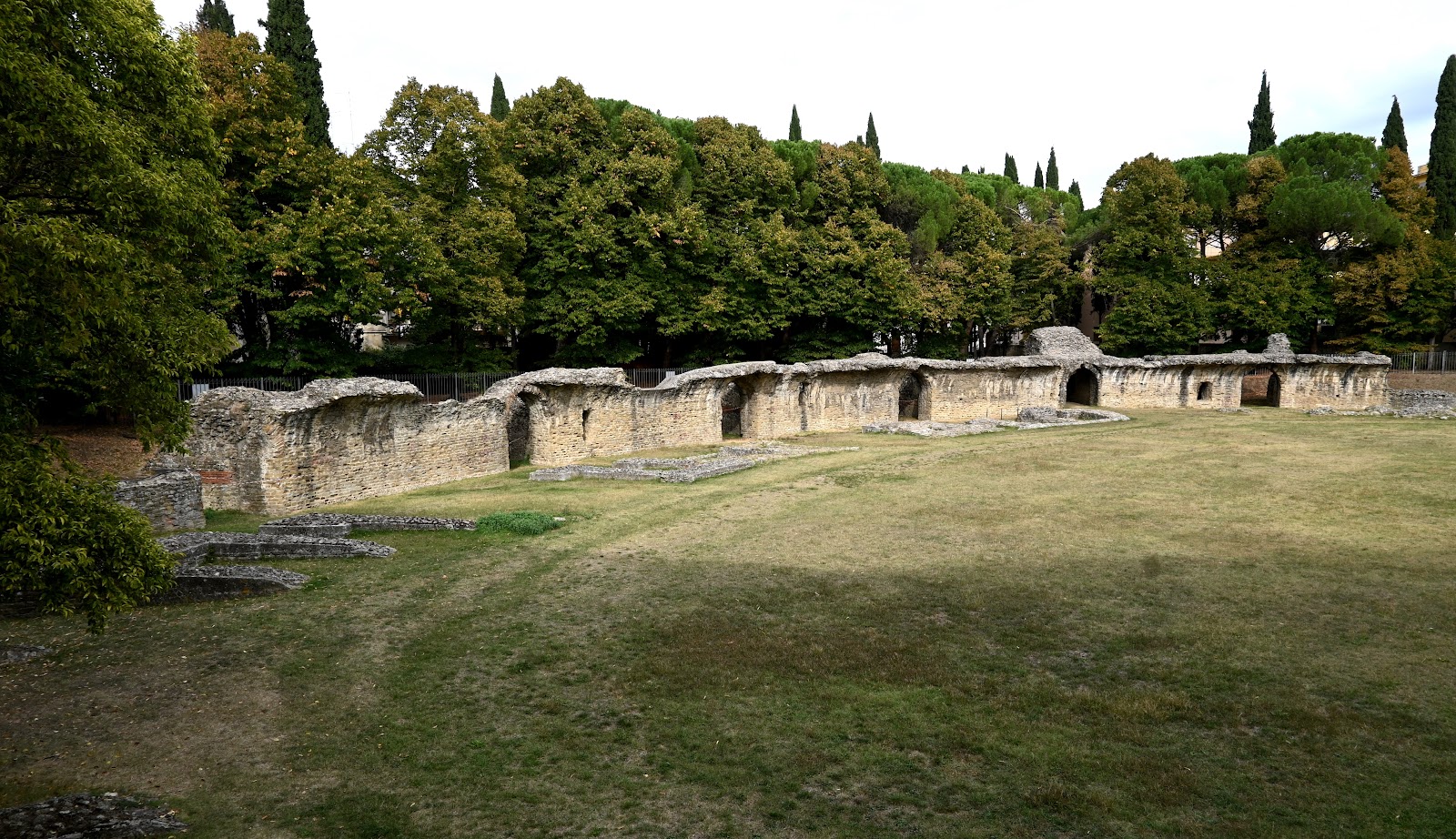
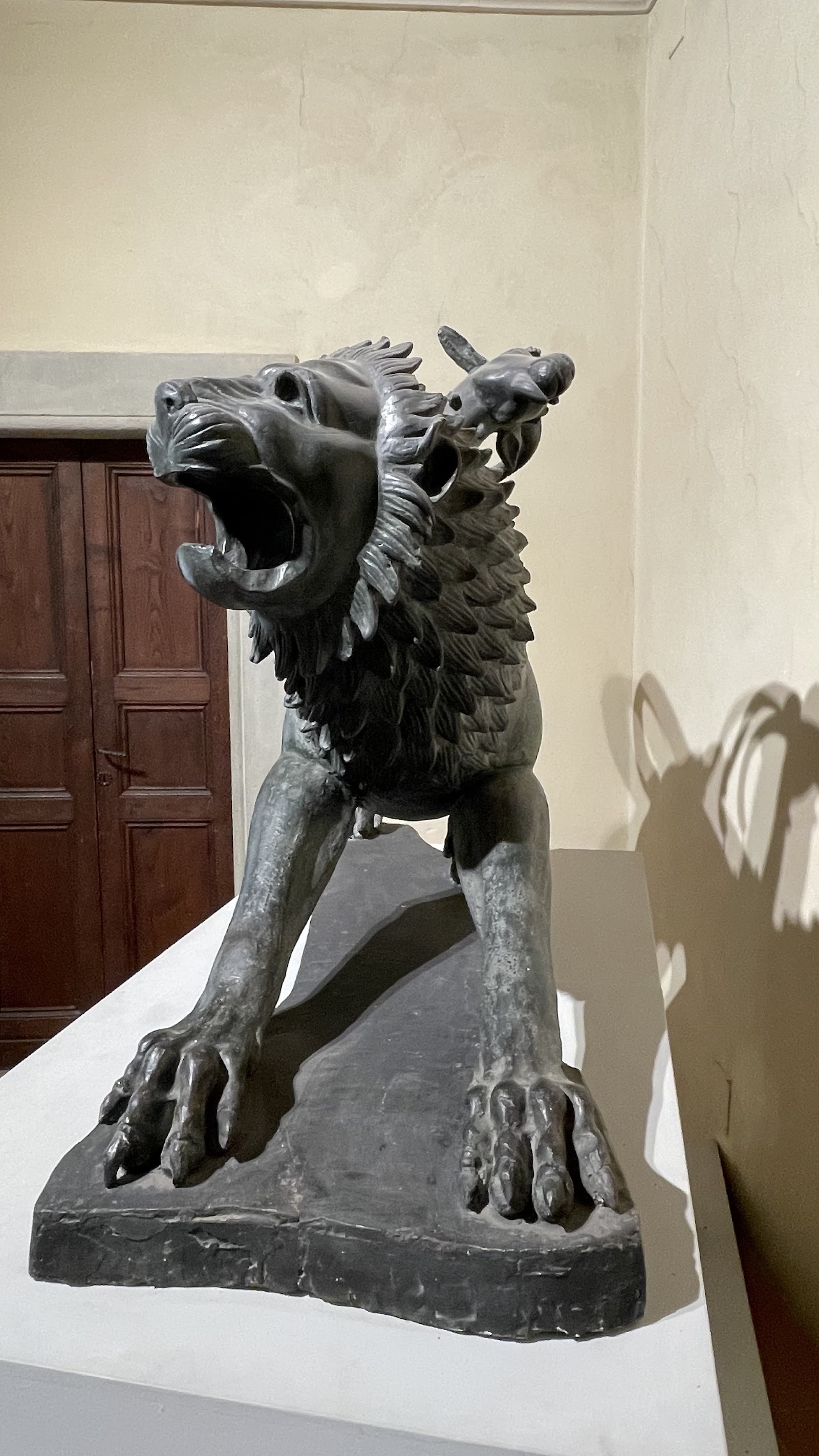
People who come back tend to go straight to the museum's terra sigillata collection — the coral-red vases produced in Arezzo itself between the mid-1st century BC and mid-1st century AD, the finest such collection anywhere. The vaulted entrance corridors along the major axis are worth a slow walk through; two thousand years of stonework, still standing.
The story behind Anfiteatro Romano di Arezzo
Construction dates to the Hadrianic period, roughly 117–138 AD, making it one of the later major amphitheatres built in Roman Italy. For centuries after Rome's decline it was treated as a quarry: stone, brick, and marble were systematically stripped to build other structures across Arezzo, which explains why so little of the upper tiers survives.
In the 14th century the Monastery of San Bernardo rose along part of the amphitheatre's curved perimeter, cementing the ruin's new role as foundation rather than spectacle. Serious archaeology began only in 1914–1915, was interrupted by the First World War, resumed in 1926, and continued through restorations from 1950 onward. The museum occupying the monastery was established in 1936.
Good to know
Arezzo's train station is a short walk south — easy day-trip from Florence or Rome. The amphitheatre exterior is free; the Gaio Cilnio Mecenate Museum costs €6 (free the first Sunday of each month). Thursday through Saturday the museum stays open until 7:30 PM. The arena floor itself is not accessible — best views come from the perimeter path and the monastery loggia.
Mid-April to mid-June and September into early October give you the most comfortable conditions for walking the perimeter — mild temperatures and manageable crowds. Summer afternoons push into the high twenties Celsius and the site offers little shade; if you visit in July or August, go in the morning.
Where is Anfiteatro Romano di Arezzo?
More tickets & tours for Anfiteatro Romano di Arezzo
Book directly at the provider
What travellers say about Anfiteatro Romano di Arezzo
The Amphitheatre can only be seen from the inside by entering the museum. We only looked at the outside by walking partly around it in the public park that partly surrounds it. Unfortunately none of the details remain but the basic structure left gives a good idea of the size and layout. Worth the walk.
Update July 2022. 5 minute walk from train station. Free admission to view Roman Amphitheatre from the park. ( although you can pay for museum entry and up close access. However, museum has very restricted hours) see attached pictures. It was nice to view the ruins and it’s ground. Not much explanation but it allows your imagination go wild!!
More a museum now, actually a very good one. It shows you a history of Etruscan Arezzo and later of Roman Arezzo. How the first monopoly industry started in Arezzo and went all around the Roman empire. What I loved the most are 500BC Etruscan earings. Amazing details so long ago. And outside is a amphitheatre that was later transformed to monastery. Did the monks know what happened here?🤣🤣🤣
If you go to Arezzo don’t miss it. It deserves a little visit.
This is a decent enough ruin in a nice location but there’s not much left to see frankly. And there’s nothing much in the way of explanation.
More of Arezzo
Discover where to stay, what to do and the best deals for your trip.
Explore Arezzo →More attractions in Arezzo
All of Arezzo →
Background adapted from Wikipedia (CC BY-SA) · map data © OpenStreetMap contributors · ratings & place photos via Google · other photos with per-image credit. Ticket links may earn us a commission at no extra cost to you.