
Cattedrale dei Santi Pietro e Donato
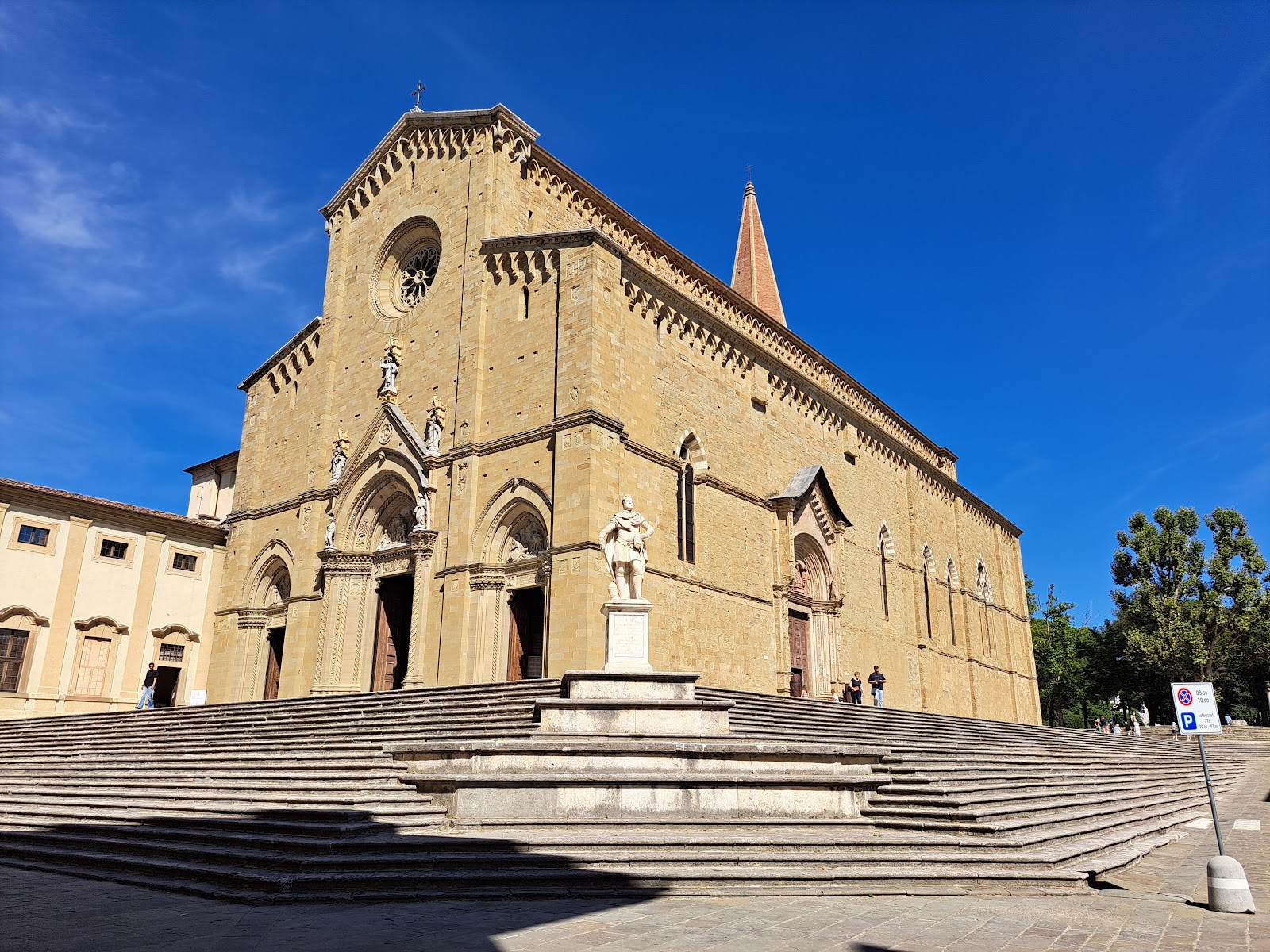
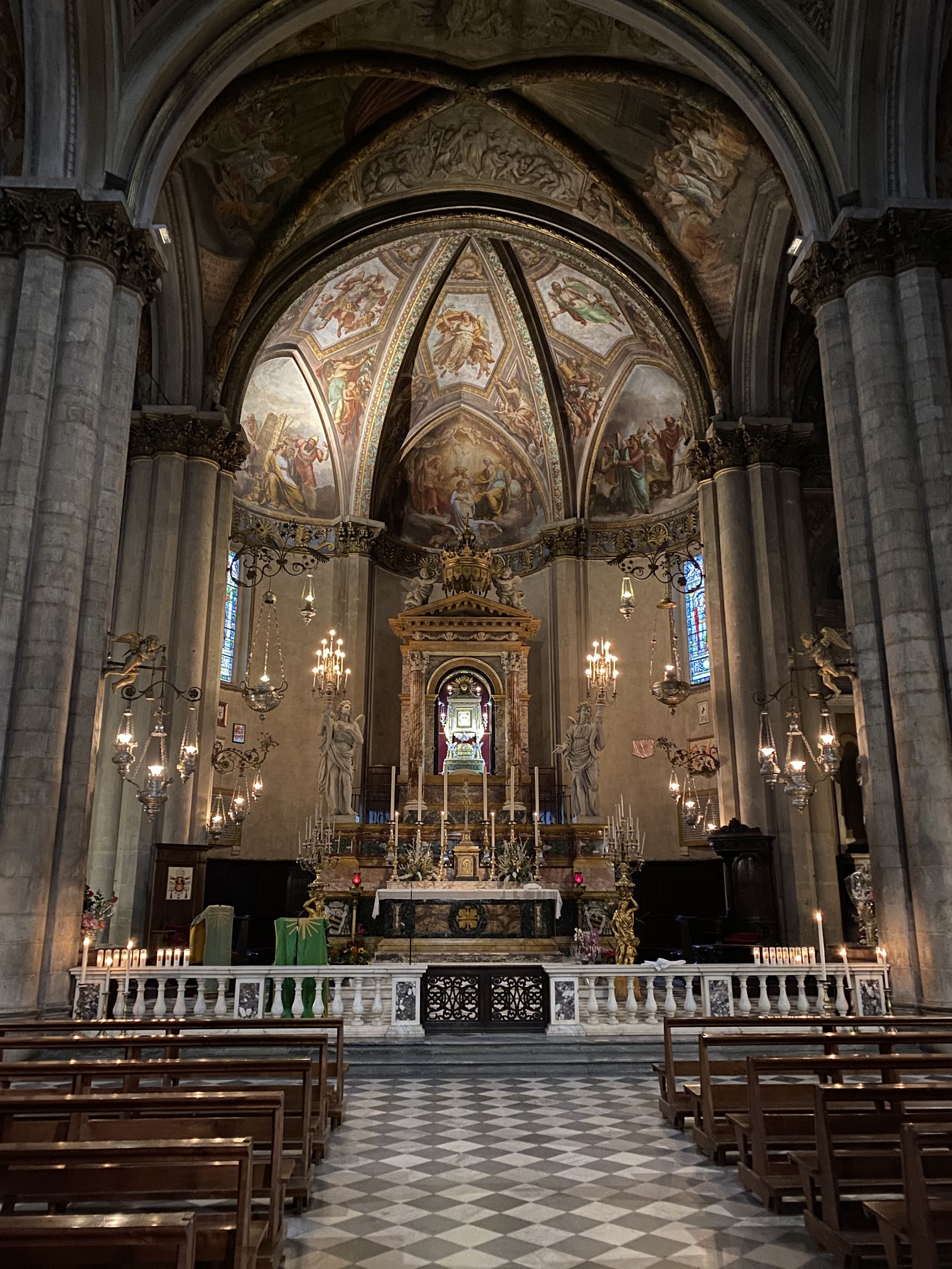
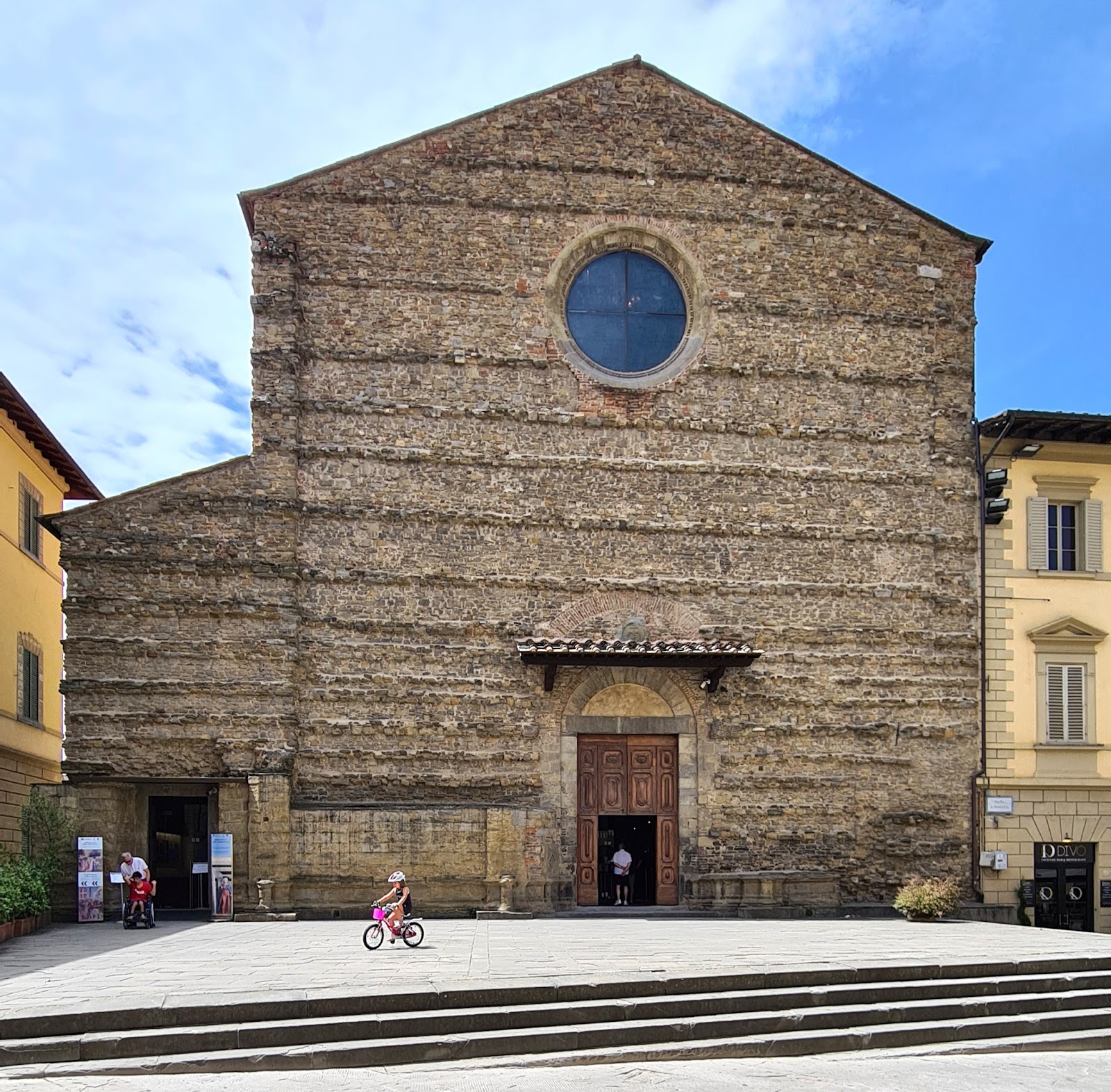
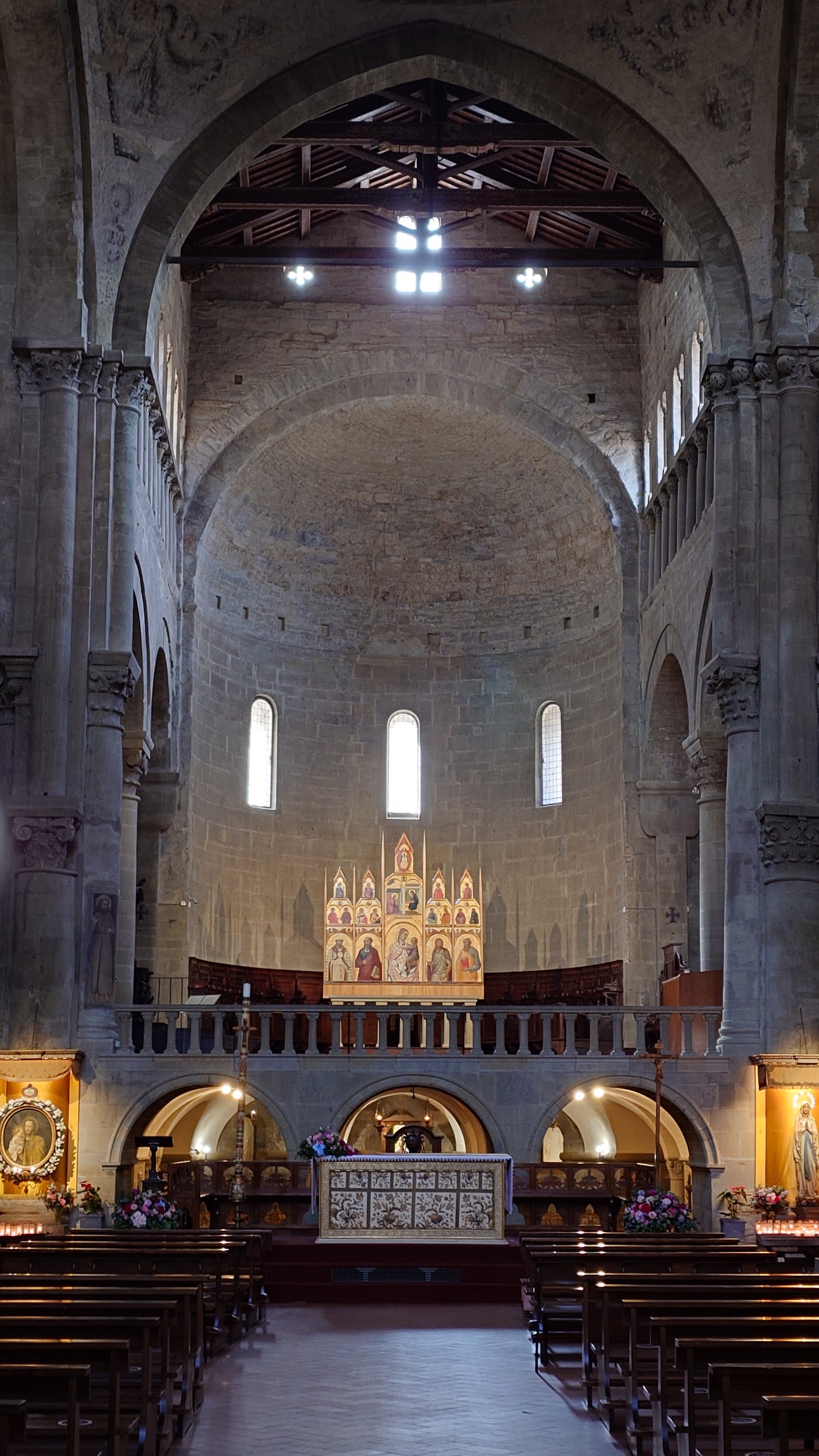
The cathedral sits at the top of Arezzo's old hill, its early-twentieth-century façade — completed between 1901 and 1914 to designs by Dante Viviani — giving little away about what accumulated inside over two and a half centuries of construction. Step through and your eyes go straight up: seven stained-glass windows by the French painter Guillaume de Marcillat fill the nave with colour the way few Italian cathedrals manage.
The building holds a remarkable density of authorship. Piero della Francesca painted a Mary Magdalene here in the 1460s. Giorgio Vasari designed the wooden choir in 1554. The cenotaph of Bishop Guido Tarlati, possibly conceived by Giotto, stands as one of the more quietly powerful funerary monuments in Tuscany.

💛 What travellers fall for
People who come back tend to time their visit for a clear morning, when the Marcillat windows — painted between 1516 and 1524 — catch direct light and the nave changes entirely. The Piero della Francesca fresco is easy to walk past; it's tucked near a pillar, small and still, worth stopping for longer than you think.
The story behind Cattedrale dei Santi Pietro e Donato
The cathedral's origins lie off-site: Pope Innocent III authorised its move to the current position in 1203, away from Colle di Pionta. Pope Gregory X visited in December 1275, died in Arezzo on 10 January 1276, and left 30 gold florins toward construction. Building began formally in 1278 under Bishop Guglielmino of the Ubertini, and by the Battle of Campaldino in 1289 the apse and first two bays were already consecrated.
Progress stalled when Arezzo submitted to Florence in 1384. Bishop Guido Tarlati had earlier driven a revival of the project during his tenure from 1312 to 1327, but the main campaign didn't resume until 1471, reaching structural completion in 1511. Marcillat arrived in 1516; Vasari's choir came in 1554; Salvi Castellucci finished the ceiling frescoes in 1663. The façade, the last major intervention, was finished in 1914.
Good to know
Entry is free Monday through Saturday. The combined ticket with Palazzo Vescovile and the Diocesan Museum is worth it if you have an extra hour. The historic centre requires walking — buses stop at the lower town, and the cathedral is uphill from there. Audio guides are available in English.
Where is Cattedrale dei Santi Pietro e Donato?
More tickets & tours for Cattedrale dei Santi Pietro e Donato
Book directly at the provider
What travellers say about Cattedrale dei Santi Pietro e Donato
Stunning church! So many details, simply divine. While i was visiting, on the side altar mass was being celebrated and it’s all so peaceful, solemn. A gem of the city, super close to the place where Christmas Market is held.
Beautiful cathedral with incredible interior views of its domes. Sit and reflect in the relative darkness with candies flickering. It’s a slight uphill climb all the way from the train station and past the main piazza.
The Cathedral of Saints Peter and Donatus is a Gothic masterpiece that sits at the highest point of the city. Beyond its grand architecture, it hides several fascinating stories and artistic mysteries. Inside the left aisle, you’ll find a fresco of Mary Magdalene painted by Piero della Francesca around 1460. Fun Fact: The Cathedral also holds the tomb of Pope Gregory X, who died in Arezzo in 1276. Because he died there, the subsequent Papal Conclave was held in the city—the first one in history to feature the strict "locked-door" rules we still use today!
I cant remember buying tickets here...maybe because there was a funeral right before we entered. The frescoes on the ceiling are breathtaking. The interior is a little darker than other churches/cathedrals so far. You wanna sit here and just enjoy the details.
This fantastic Cathedral rises atop a hill in the upper part of the city, on the foundations of an ancient early Christian church where a Roman acropolis likely once stood. Begun in the Gothic style during the 13th century, the construction of the dome, dedicated to Saints Peter and Donatus, was not completed until three centuries later, in 1511, after numerous cycles of alteration. Its bell tower with tall, twin windows, designed by Luigi Mercanti, was built between 1857 and 1859. The last reconstruction of the façade was carried out between 1901 and 1914, based on a design by Viviani intended to replace the unfinished one dating back to the 15th century. Dominating the city, this imposing three-nave building, without a transept, boasts seven beautiful stained-glass windows created by the monk and master glassmaker Guillaume de Marcillat from Berry. The French artist worked between Arezzo and Cortona from 1516. This masterpiece of glass art was created in two phases, between 1516 and 1517, and then between 1522 and 1524. These illustrious biblical tales can be admired in the vaults of the first three bays of the main nave and the first bay of the left aisle. Also inside are the small but famous 15th-century fresco of Mary Magdalene by Piero della Francesca, glazed terracotta sculptures by Andrea della Robbia, and the tombs of the 14th-century Bishop Guido Tarlati and Pope Gregory X, who died in Arezzo in 1276.
More of Arezzo
Discover where to stay, what to do and the best deals for your trip.
Explore Arezzo →More attractions in Arezzo
All of Arezzo →
Background adapted from Wikipedia (CC BY-SA) · map data © OpenStreetMap contributors · ratings & place photos via Google · other photos with per-image credit. Ticket links may earn us a commission at no extra cost to you.