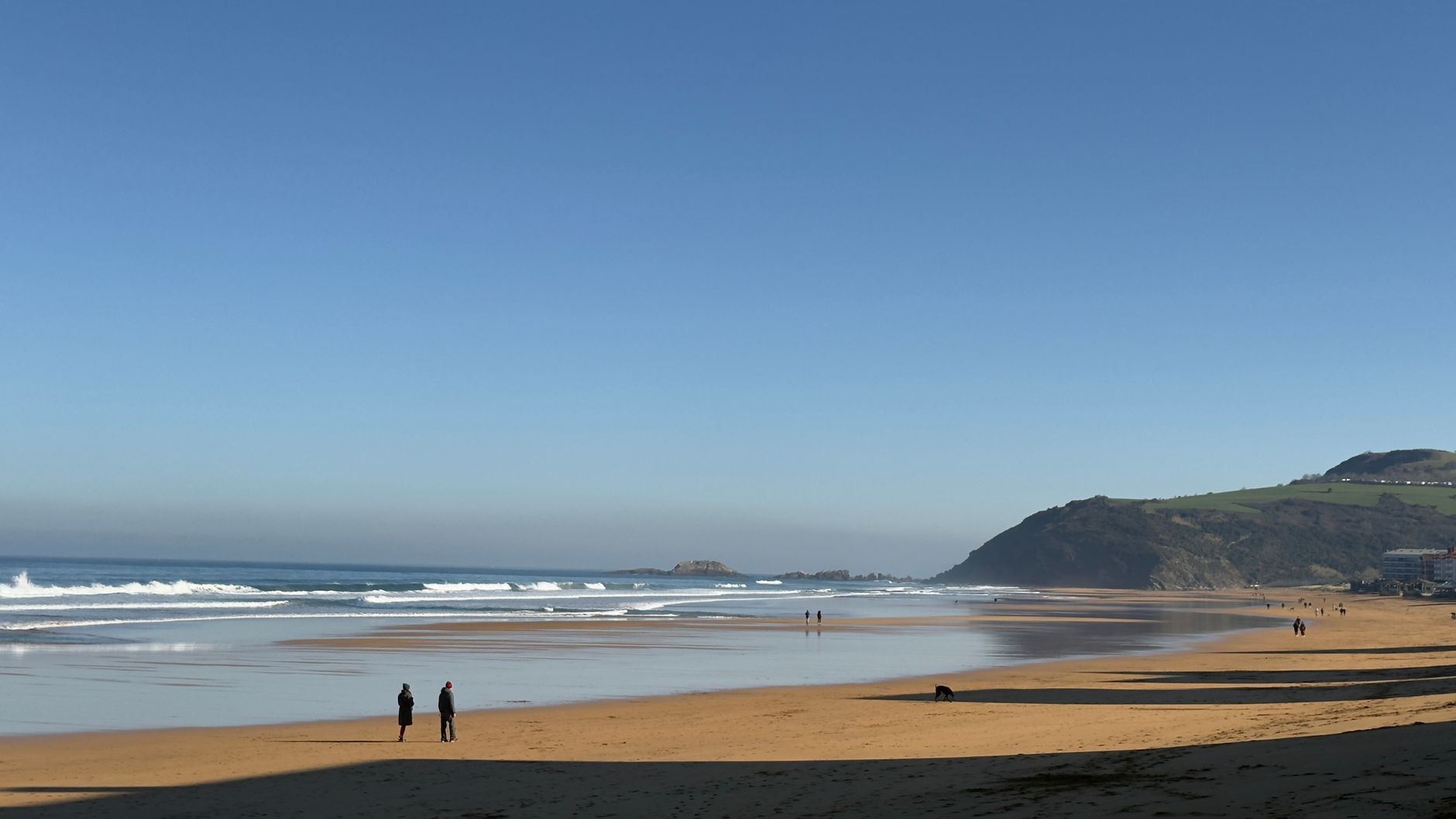
Camino de Santiago Coastal Stage – Zarautz to Zumaia
The coastal variant of the Camino del Norte passes directly through Zarautz and the stage east to Zumaia is widely considered the most visually spectacular single day's walk on any Camino route in Spain. You traverse the famous flysch cliffs of the Basque coast — UNESCO-recognised rock strata that form a 60-million-year geological record exposed in sheer sea-facing walls.
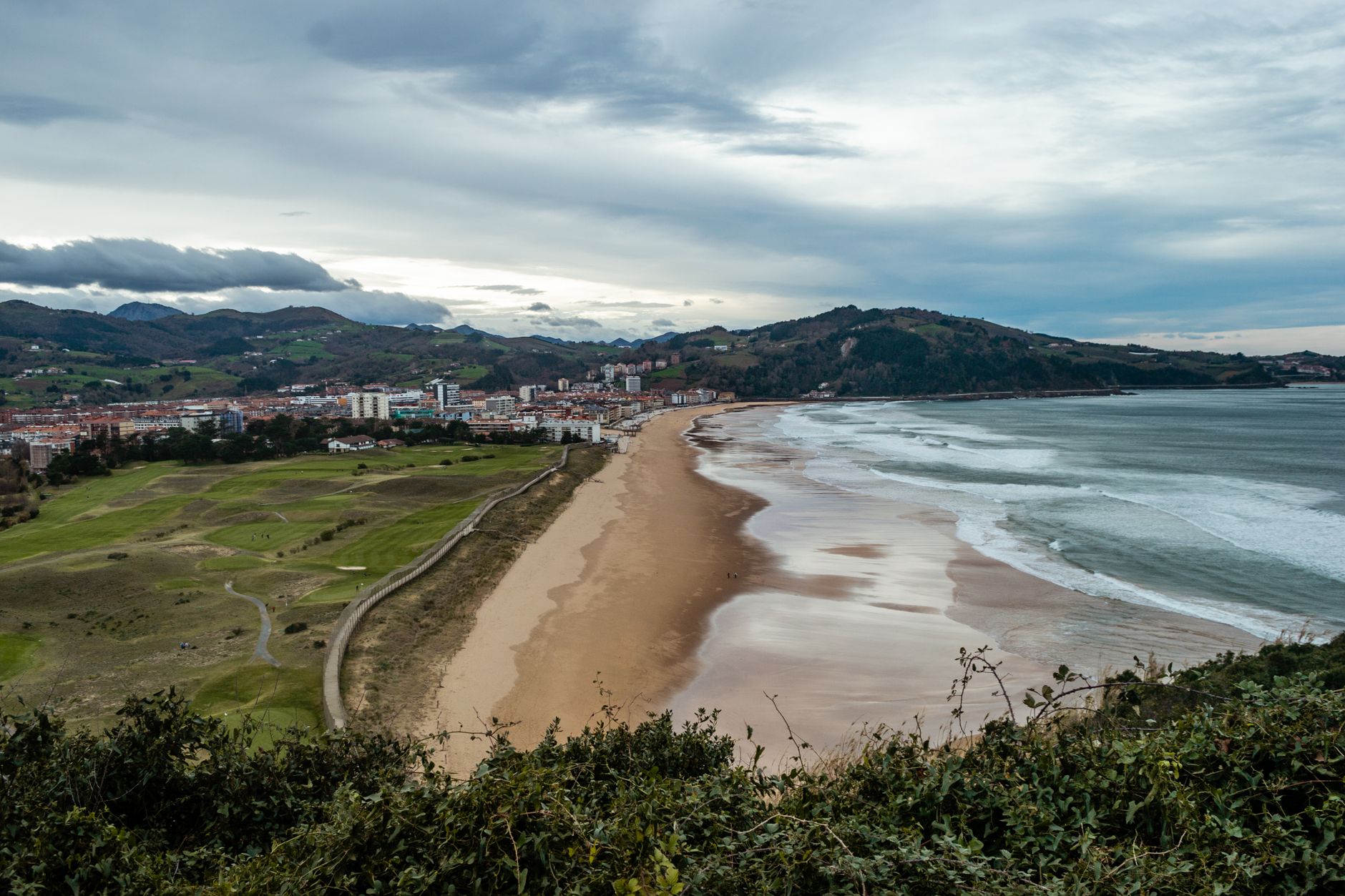
The Flysch Cliffs of Sakoneta
Leaving Zarautz eastward, the path climbs from the beach onto clifftop tracks with vertiginous drops to the Atlantic below. Within an hour you reach the Sakoneta flysch formation near Zumaia, where horizontal bands of limestone and dark shale stack up like the pages of an enormous book — each layer representing thousands of years of ocean sediment.
Geologists come from around the world to study these cliffs because they contain the K-Pg boundary, the thin dark layer marking the mass extinction event that ended the dinosaurs 66 million years ago. A small interpretive panel at the cliff edge explains what you are looking at, which transforms the view from beautiful to mind-bending.
Practical Hiking Details
The Zarautz–Zumaia stage is approximately 12 kilometres and takes 3–4 hours at a relaxed pace. The path is waymarked with yellow Camino arrows and the iconic yellow scallop shell. Terrain alternates between clifftop grass tracks, short forest sections and a final descent into Zumaia's estuary.
From Zumaia you can return to Zarautz by Euskotren (roughly 20 minutes, trains every 30 minutes) making it an easy out-and-back day trip without needing a car or pre-booked accommodation.
More of Zarautz
Discover where to stay, what to do and the best deals for your trip.
Explore Zarautz →