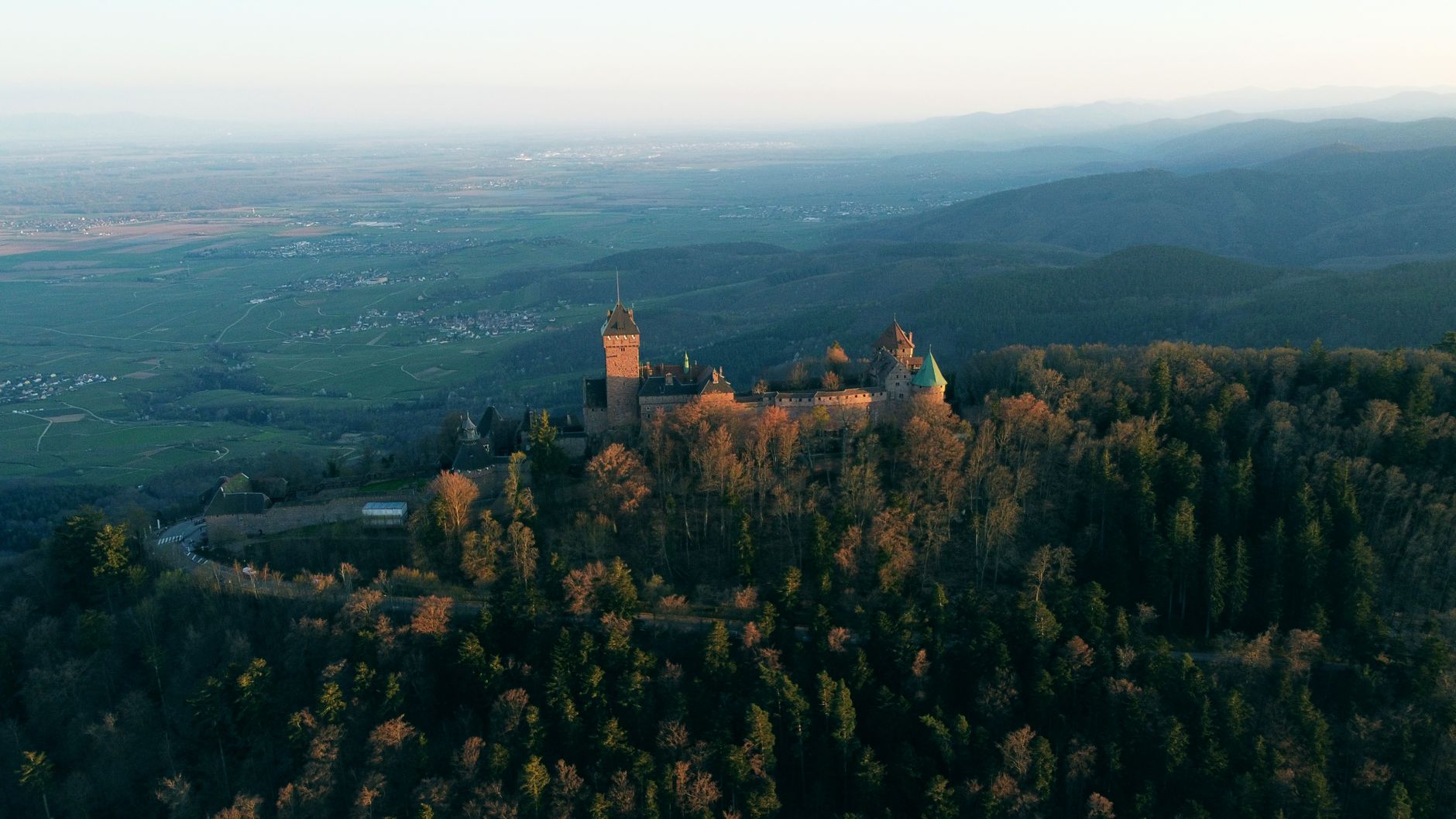
Chapelle Saint-Ulrich and the Tanners' Quarter
Most visitors walk straight up Grand'Rue and miss the tangle of medieval lanes that branch off to the east — the old tanners' quarter, where the Strengbach stream once powered the leather trade. Here, moss-covered wash-houses, asymmetric half-timbered facades and a tiny Romanesque chapel create the most photogenic and least-crowded corner of the entire town.
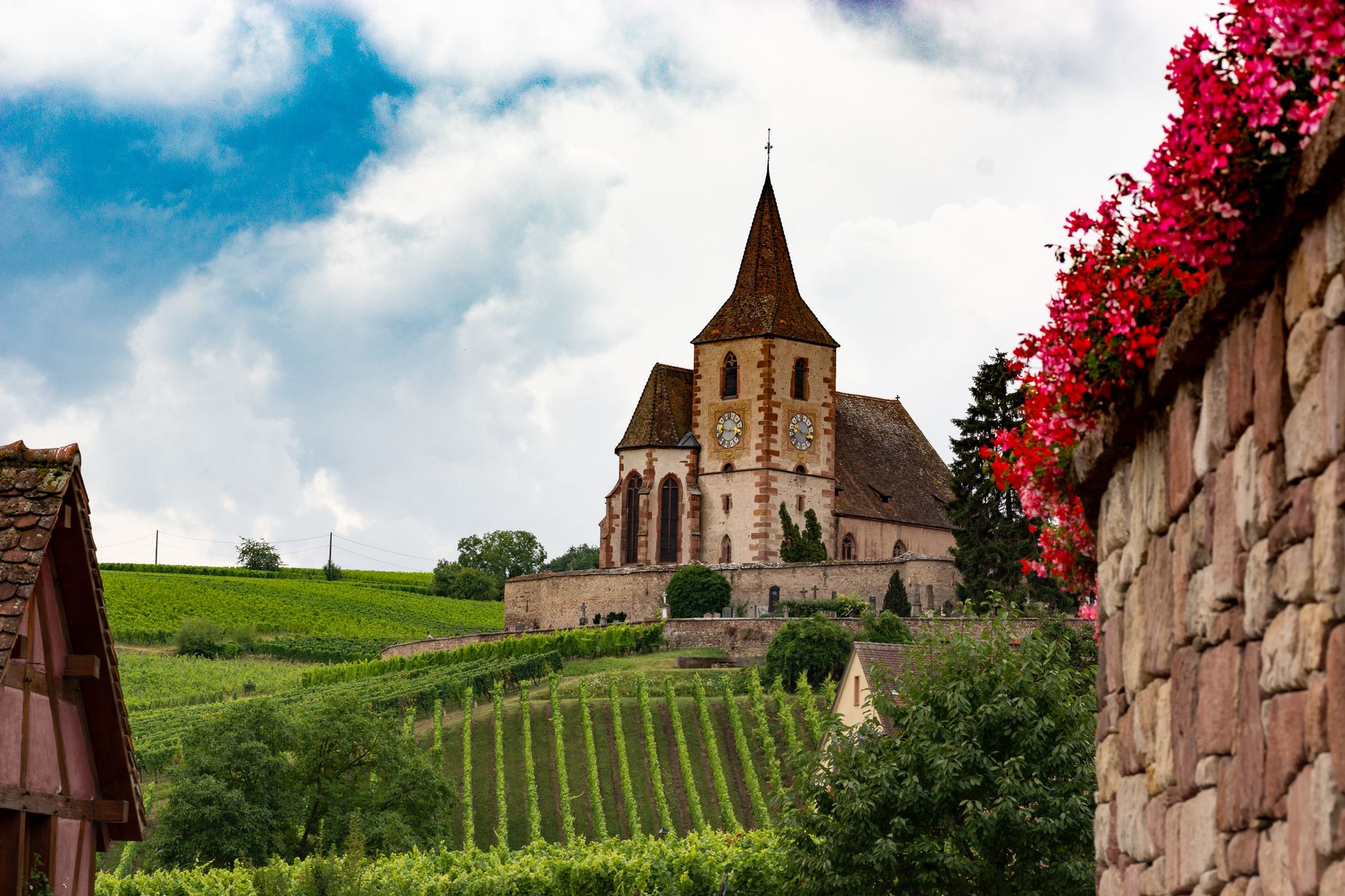
The Wash-Houses and the Stream
Three historic lavoirs (public wash-houses) survive along the Strengbach, the most picturesque sitting at the junction of Rue des Tanneurs and Rue de la Fraternité. The stone troughs are still intact, framed by geranium-draped window boxes and the sound of running water — a scene virtually unchanged since the 18th century.
The best time to photograph this quarter is early morning, before 8 a.m., when the light is soft and the lane is empty. A single narrow alley, Ruelle des Tanneurs, is so tight that two people can barely pass — look up at the overhanging upper storeys leaning toward each other.
Chapelle Saint-Ulrich
At the top of the tanners' quarter, a short stepped path leads to the small Chapelle Saint-Ulrich, a Romanesque oratory that predates the town's main church. It is rarely locked and almost never visited, offering a moment of genuine quiet amid carved stone corbels and a single stained-glass lancet window.
The chapel's exterior wall retains a carved relief of a bishop that local historians date to the 12th century — remarkable for surviving the upheavals of the Revolution and two World Wars.
More of Ribeauvillé
Discover where to stay, what to do and the best deals for your trip.
Explore Ribeauvillé →