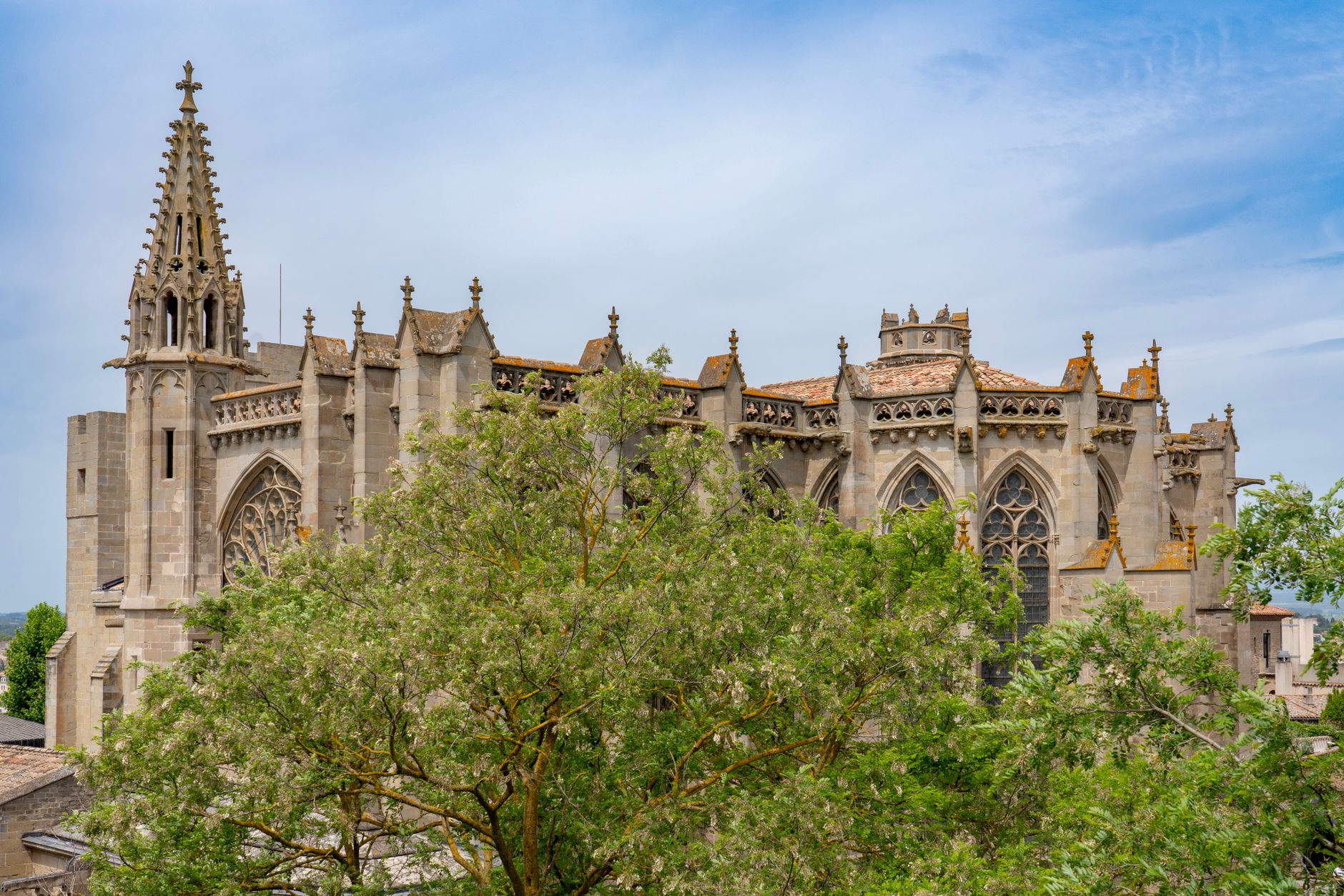
Quartier Montferrand
While most visitors stay around the cathedral and Place Jaude, the historic district of Montferrand — a separate medieval town absorbed into Clermont-Ferrand only in 1731 — preserves a remarkably intact grid of 15th- and 16th-century merchants' houses in warm Arkose sandstone, almost entirely free of souvenir shops or tour groups.

Walking the Maisons à Tourelles
Montferrand's signature architectural feature is the maison à tourelle — a merchant's townhouse with a corbelled turret at the corner, used historically as a private office or watchtower. The finest examples cluster along Rue Jules-Guesde and Rue de la Rodade; look for the carved lintels and Renaissance medallions above the doorways.
The Office de Tourisme distributes a free self-guided walking map (also downloadable) that identifies 23 classified historic buildings within a 600-metre radius. The full circuit takes about 90 minutes at a gentle pace and passes through several quiet courtyards that are open to the public during the day.
The Musée d'Art Roger-Quilliot
At the heart of Montferrand, installed in a converted 17th-century Ursuline convent, the Musée d'Art Roger-Quilliot (MARQ) holds the city's fine-art collection: Flemish primitives, French 18th-century paintings, decorative arts and a strong collection of Auvergne Romanesque sculpture. The cloister garden alone is worth the entrance fee.
The museum runs free entry on the first Sunday of every month, making it an ideal rainy-day anchor for a Montferrand morning. The permanent collection is rarely crowded and the temporary exhibition programme is genuinely ambitious for a regional museum.
Quartier Montferrand on video
More of Clermont-Ferrand
Discover where to stay, what to do and the best deals for your trip.
Explore Clermont-Ferrand →