
Clermont-Ferrand

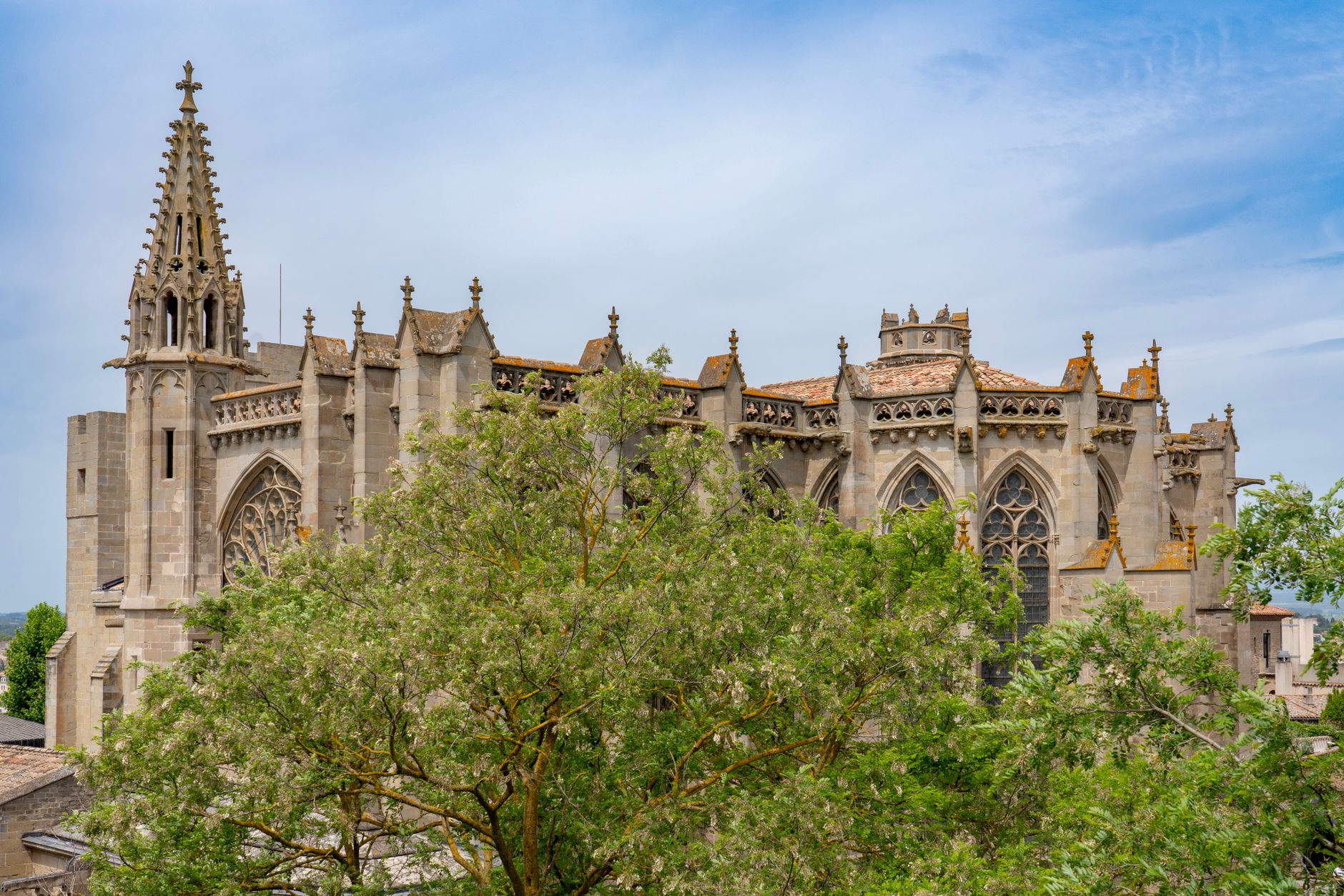
The first thing that stops you in Clermont-Ferrand is the colour of the cathedral. Most Gothic churches reach for pale limestone or cream sandstone; this one is built entirely from black volcanic stone, and it sits against the sky like a fact. The Massif Central is not decorative geology — it shaped what people here built, ate, and believed, and that dark basalt runs through the city's bones.
Clerk-Ferrand is also, quietly, a city of unlikely firsts: the First Crusade was called here, Pascal was born here, and the tyre that changed how the world moves was invented here. None of these things announce themselves loudly, which suits the place.
💛 What travellers fall for
People who come back tend to spend a morning in the Montferrand quarter before the day organises itself — medieval lanes, almost no signage, easy to lose an hour. They also mention the Parc de Montjuzet for the view over the city toward the volcanic chain, especially late afternoon when the light goes sideways.
Experiences you don't want to miss





Deals in Clermont-Ferrand
Book directly at the provider
How Clermont-Ferrand came to be
The Arverni tribe held their capital here long before Rome arrived. When Rome did, the settlement became Augustonemetum, a significant Gallic city whose most famous son — the chieftain Vercingetorix — had led the great Gallic resistance against Caesar a generation earlier. Christianity came in the 3rd or 4th century via Saint Austremonius, and the city became a seat of bishops, including the poet-diplomat Sidonius Apollinaris, who organised its defence against the Visigoths in the 5th century, and Gregory of Tours, whose History of the Franks became the foundational document of early French history.
In 1095, Pope Urban II convened the Second Council of Clermont here and launched the First Crusade. For centuries the city coexisted awkwardly with its neighbour Montferrand, founded in 1120 on a nearby mound by rival counts. The two were formally merged by the Edict of Troyes in 1630, though the modern unified city dates to 1731. In 1889, André and Édouard Michelin founded their company here — and the city has been synonymous with the tyre industry ever since.
Who and what shaped it
People who shaped it
Landmark buildings
See Clermont-Ferrand in motion
Plan your visit
On the map
When to go
Winters are cold, occasionally snowy, and average around 0–7°C; summers are warm without being extreme. May and June are the wettest months, so if you want dry streets and manageable temperatures, September and early October tend to deliver both.
Right now
Background & history adapted from Wikipedia (CC BY-SA) · specs from Wikidata (CC0) · weather from Open-Meteo · map data © OpenStreetMap contributors · photos from Wikimedia Commons / Unsplash with per-image credit. No third-party reviews or social posts reproduced.