Kanheri Caves
Hidden six kilometres inside the forest of Sanjay Gandhi National Park, Kanheri is one of India's most atmospheric ancient sites — 109 caves chiselled from a single black basalt hill by Buddhist monks over a millennium. Few places in the world let you stand inside a 2,000-year-old prayer hall while monkeys peer down from the canopy above.

A monastery carved from a mountain
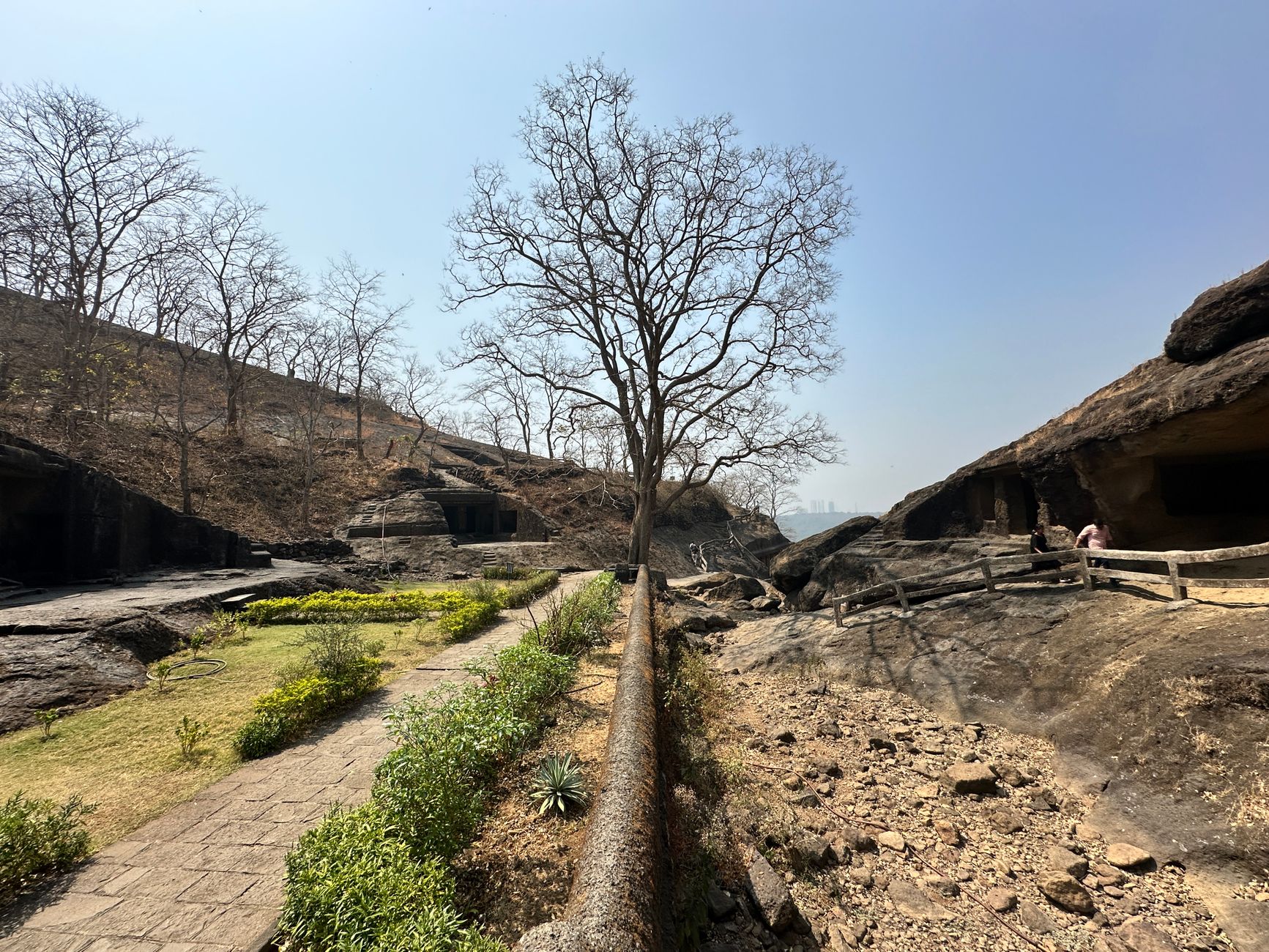
The name Kanheri derives from the Sanskrit Krishnagiri, meaning 'black mountain' — a nod to the dark basalt rock from which every cell, stupa, and pillar was hand-hewn. The earliest excavations date back to the 1st century BCE, and monks continued expanding the complex right through to the 10th century CE, making it one of the longest continuously occupied monastic sites in South Asia.
The 109 caves served as living quarters, meditation cells, and collective prayer halls. The great Chaitya hall features towering carved Buddha figures and enormous stone pillars, while rock-cut cisterns and channels — an ancient rainwater-harvesting system — still impress engineers today. Around 30 unfinished paintings of the Buddha survive on the cave walls, frozen mid-creation.
During its peak, Kanheri functioned as a Buddhist university, attracting scholars and pilgrims from across the subcontinent. Dynasties from the Mauryas to the Rashtrakutas each left their mark on the site's cultural landscape.

Planning your visit
The caves are a 6 km journey from the national park's main gate — reachable by the park's own shuttle bus or on foot along a forest trail that is rewarding in its own right. Wear sturdy shoes; some paths between caves are steep.
Allow at least 1.5–2 hours to explore properly. Arrive early on weekdays to have the great prayer hall almost to yourself — the cool stone, soft light, and centuries of silence are genuinely transportive.
Kanheri Caves on video
More of Borivali
Discover where to stay, what to do and the best deals for your trip.
Explore Borivali →