Medinet Habu — Temple of Ramesses III
Rising from the sugarcane fields just minutes from Al-Bayadiyya, Medinet Habu is the most complete and least-crowded mortuary temple on Luxor's West Bank — a pharaonic fortress hiding colour that will stop you cold. Walk its shadowed hypostyle halls while the crowds are still queuing at Karnak across the river.

A Temple That Doubles as a Fortress
Medinet Habu served as the mortuary temple of Ramesses III and also functioned as the administrative centre of western Thebes — a fact that explains its unusually defensive design, with massive mud-brick enclosure walls you can still trace today.
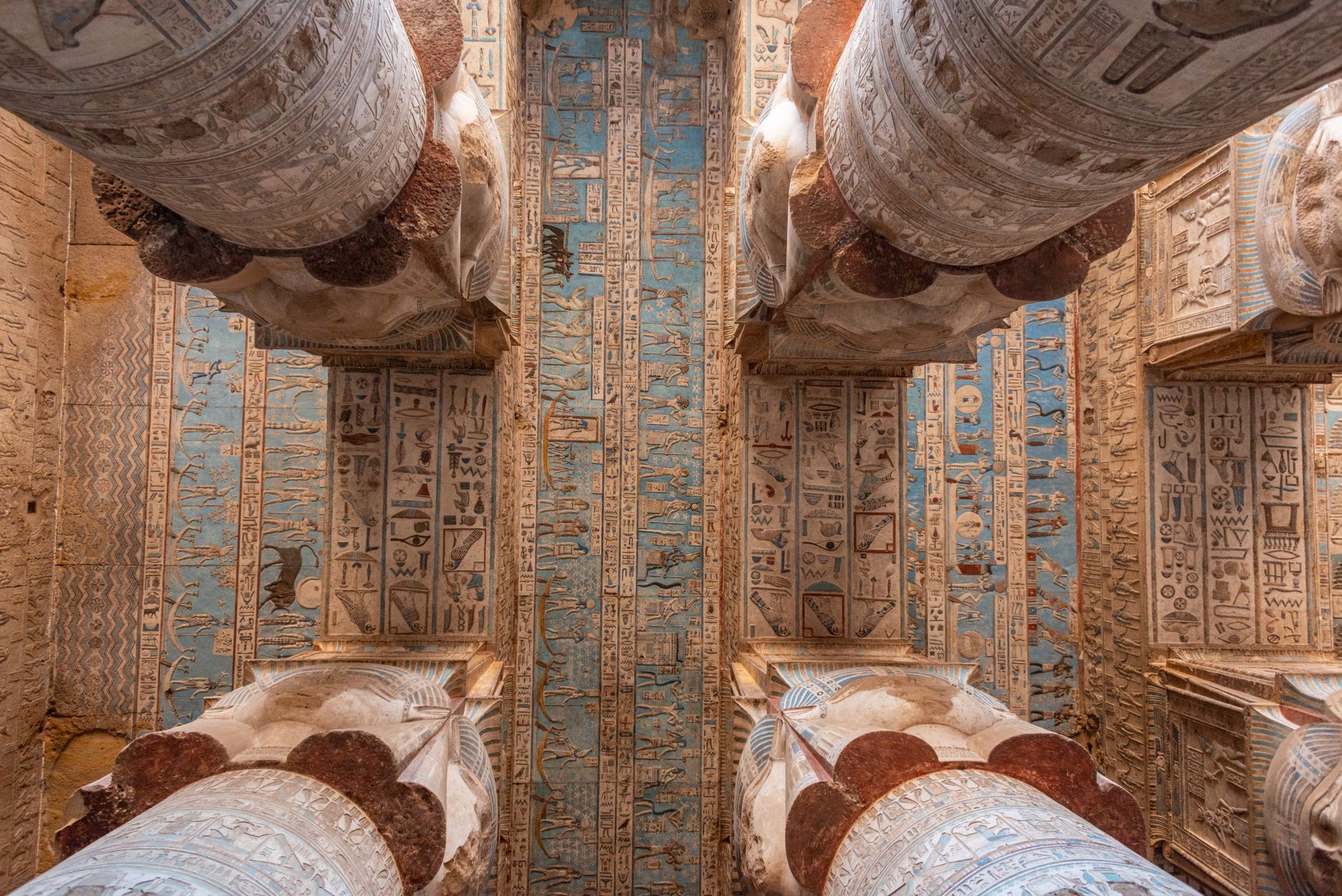
Its soaring pylons are carved with battle scenes from the Libyan and Sea Peoples campaigns, rendered in such crisp relief that the ancient paint — ochre, turquoise, crimson — still clings to sheltered sections of the walls.

Hidden Colour & Sacred Chapels
Step into the inner sanctuaries and you'll find painted ceilings of midnight-blue studded with gold stars, a level of preservation that rivals anything in the Valley of the Kings.
A small but exquisite chapel dedicated to the God's Wives of Amun sits in the northwest corner — almost nobody finds it, yet its intimate carvings are among the finest on the West Bank.
Getting There & Beating the Crowds
The temple is a short tuk-tuk or bicycle ride from the Al-Bayadiyya ferry landing, making it the logical first stop after crossing the Nile in the morning cool.
Arrive at opening time and you will often have the Great Forecourt entirely to yourself for the first 30 minutes — a rare gift in Egyptian tourism.
More of Al-Bayadiyya
Discover where to stay, what to do and the best deals for your trip.
Explore Al-Bayadiyya →