
Villa d'Este
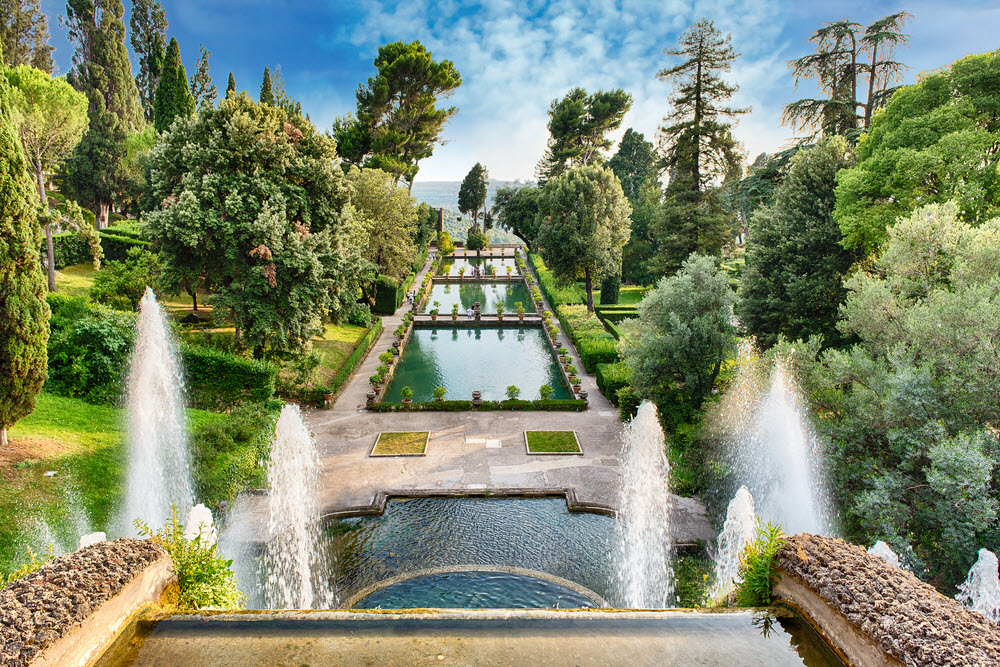
The first thing you notice at Villa d'Este is the sound — water, everywhere, in registers from a whisper to a roar. Over 500 fountains feed off a single diverted stream, and the whole hillside hums with it. Stand at the Wall of the Hundred Fountains and you're looking at a 100-metre corridor of obelisks, eagles and lilies, each one leaking water into the next in a long, mossy chain.
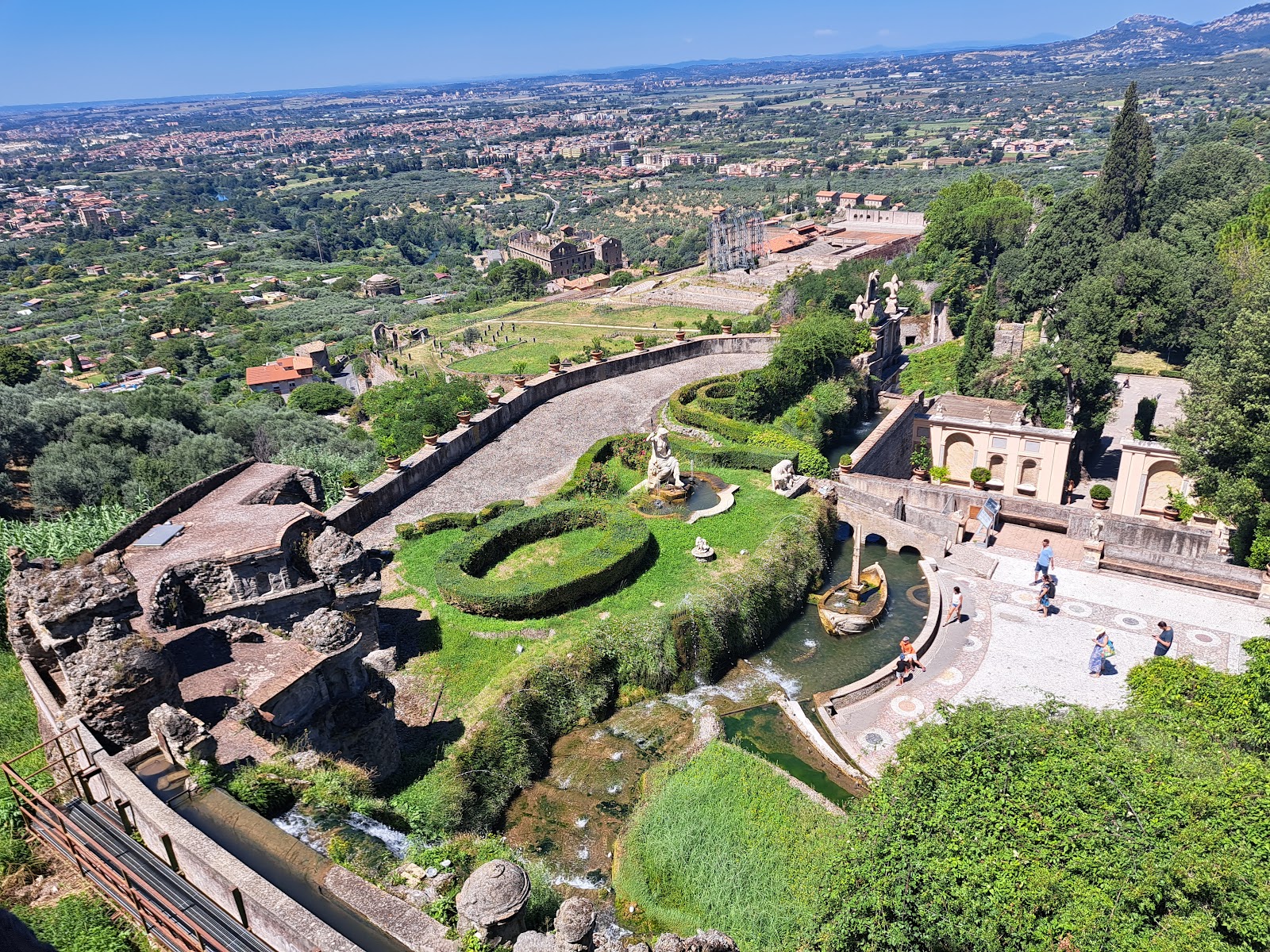
This is a Renaissance cardinal's idea of paradise, built into a steep slope above Tivoli and descending in terraces like a green amphitheatre. The fountains aren't decoration — they are the architecture.
💛 What travellers fall for
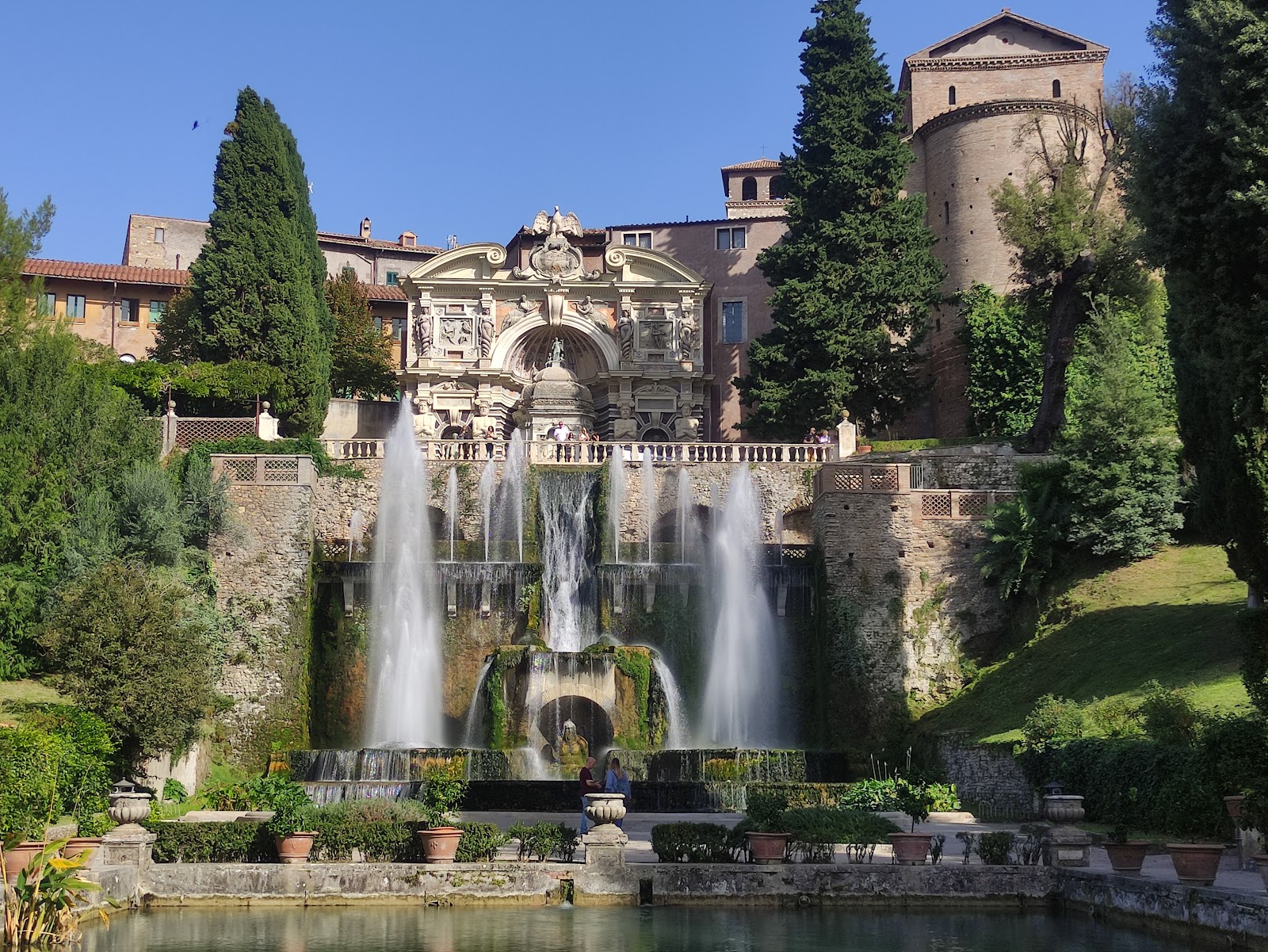
People who come back tend to arrive early, before tour groups reach the Organ Fountain at its 10:30 activation. The Fountain of the Bicchierone — Bernini's serrated chalice, tucked slightly off the main axis — gets missed by half the visitors. The interior frescoes by Zuccari and Muziano are worth the ten minutes it takes to step inside out of the sun.
The story behind Villa d'Este
In 1550, Cardinal Ippolito II d'Este — grandson of Lucrezia Borgia, son of the Duke of Ferrara — was appointed governor of Tivoli, a posting he considered beneath him. He channelled that frustration into ambition: from 1560, architect Pirro Ligorio began carving the hillside into terraced gardens and hydraulic systems of extraordinary complexity. The cardinal died in 1572 without seeing it finished.
The villa passed through neglect and revival several times. Cardinal Alessandro d'Este renovated it in the late 1590s; Gian Lorenzo Bernini added a cascade to the Organ Fountain in 1661 and designed the Bicchierone fountain shortly after. By the 19th century the grounds had fallen into decay until Cardinal Gustav von Hohenlohe rebuilt them — and, between 1867 and 1882, hosted Franz Liszt, who composed 'Les jeux d'eau à la Villa d'Este' here. The Italian state took ownership in the 1920s. UNESCO listed it in 2001.
Good to know
Take the FL2 train from Tiburtina to Tivoli, then bus CAT 1 or 4 to Piazza Garibaldi — the villa is a short walk from there. Entry is €12; free on the first Sunday of the month. Allow at least two and a half hours. Monday mornings the villa is closed.
Spring and early autumn are the most comfortable seasons — warm enough to walk the terraces without effort, cool enough to linger. Summer visits mean full sun on exposed stone paths with little shade on the lower terraces; mornings are significantly cooler than afternoons. In winter the fountains still run, and the gardens are almost empty.
Where is Villa d'Este?
More tickets & tours for Villa d'Este
Book directly at the provider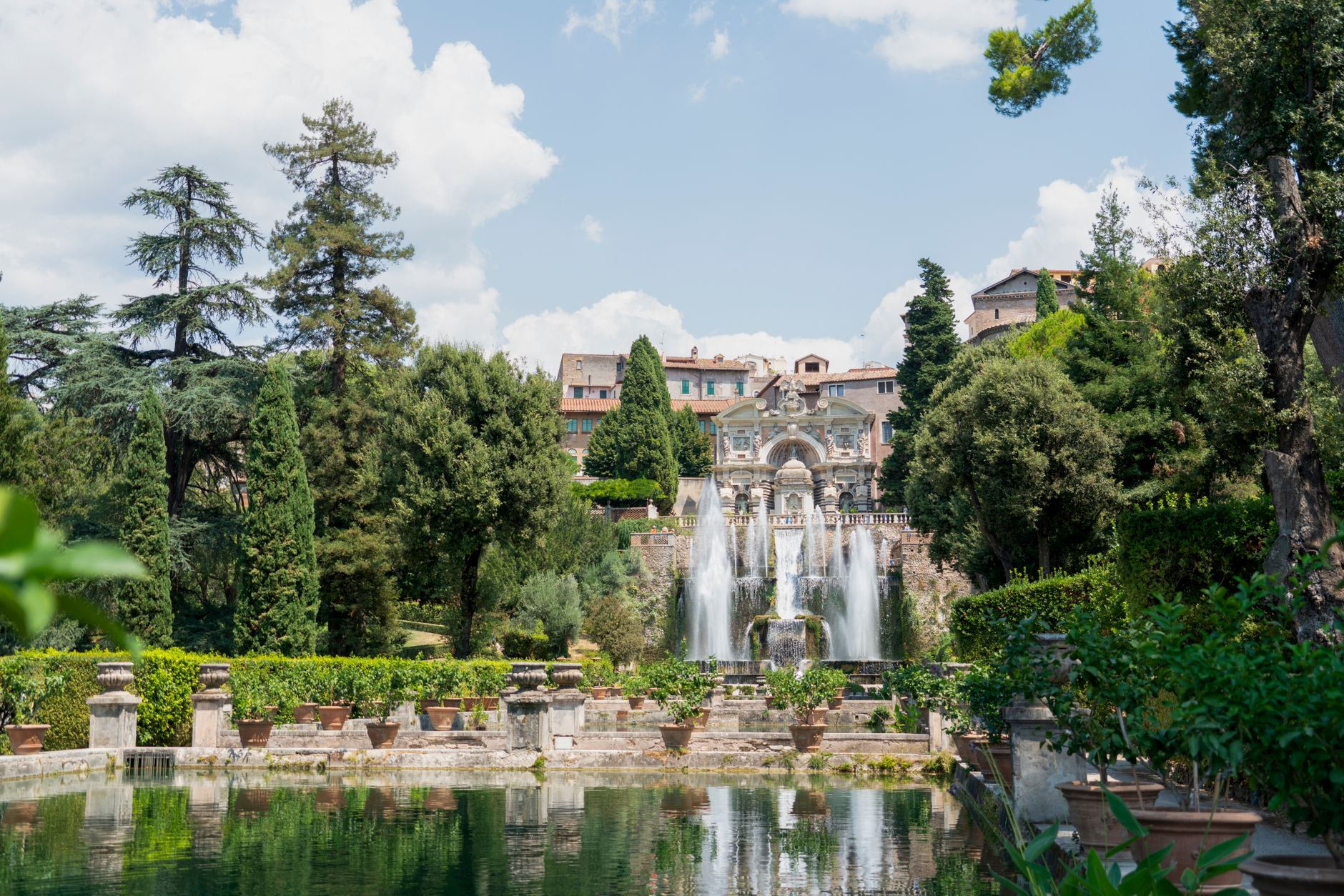
What travellers say about Villa d'Este
What a wonderful place! So quiet and beautiful! Villa d’Este, in Tivoli, is a lovely place to visit. The gardens are beautifully maintained, and there are fountains everywhere. You can spend hours walking around and admiring the views. After the crowds and the fast pace of Rome, this place feels like an oasis of peace. If you are looking for a break from the busy streets and tourist attractions, Villa d’Este is the perfect escape. Definitely worth a visit!
The main garden itself unfolds as you go through with very beautiful composition. There are some lovely views out to the rest of Lazio as well as an interesting "water organ" that plays a song at set points of day. The internal museum is a bit less interesting though in comparison to the fountains, waters and foliage of the main gardens.
I have seen many historic villas, but Villa d’Este truly won my heart with its charming and compact design. Located in the town of Tivoli, on a gentle hillside just outside Rome, the villa offers beautiful views over the town below and the surrounding landscape, capturing the feeling of Renaissance Italy at its finest. The rooms were beautifully decorated with painted wall scenes and ceiling frescoes, each room featuring its own unique artwork. The gardens were filled with stunning fountains, water features, and all kinds of playful statues and sculptural details. There were also lovely viewpoints throughout the grounds, offering peaceful and picturesque perspectives of the villa and the valley below. Overall, it feels like stepping into a living piece of Renaissance history, and I would highly recommend experiencing it in person.
After a short wait we were able to explore this amazing piece of Roman history. The entire area boasts an incredible amount of statues, fountains and art. The temporary exhibition about the Chinese Imperial Palace was interesting but a bit underwhelming compared to what Villa d'Este has to offer. The only part I didn't enjoy that much is the organ fountain. If you miss the 'show' don't worry.
Well this place is simply incredible. It’s perfect for a day trip if you’re staying nearby. The villa itself is massive and beautiful, peek of the Italian renaissance, but the garden is what does the trick. It’s huge with lots of fountains and an amazing view. It’s really not something you can see every day.
More of Tivoli
Discover where to stay, what to do and the best deals for your trip.
Explore Tivoli →More attractions in Tivoli
All of Tivoli →

Background adapted from Wikipedia (CC BY-SA) · map data © OpenStreetMap contributors · ratings & place photos via Google · other photos with per-image credit. Ticket links may earn us a commission at no extra cost to you.