
Villa Adriana (Hadrian's Villa)
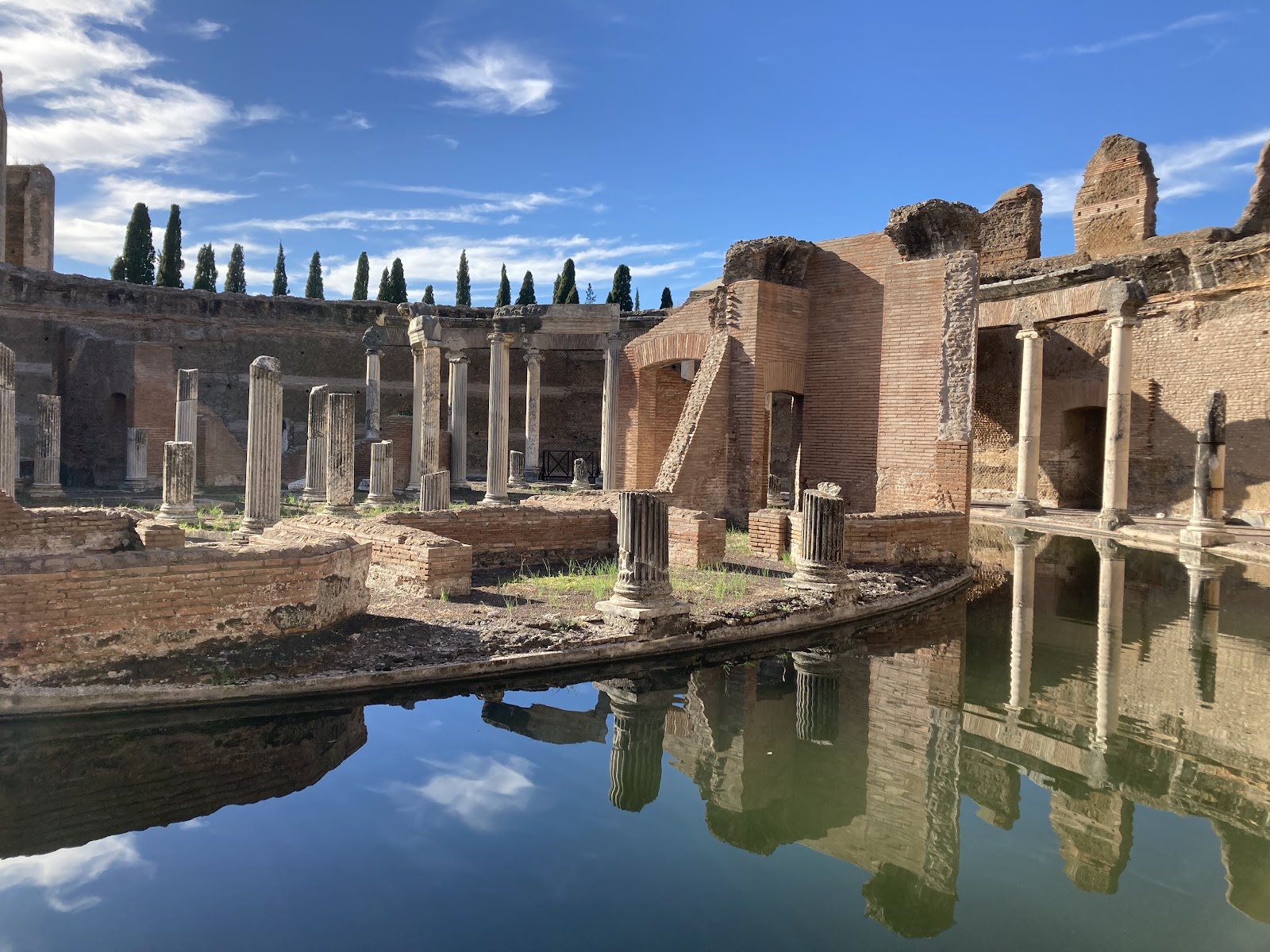
Walk the Canopus on a quiet morning and you begin to understand the scale of what Hadrian built here between 125 and 134 CE: not a villa but an entire imperial city, spread across roughly 18 square kilometres of Tiburtine hillside. The long reflecting pool, named after an Egyptian city on the Nile, is flanked by copies of Greek statues and ends at a domed dining exedra where the emperor once reclined on a semicircular stone couch.
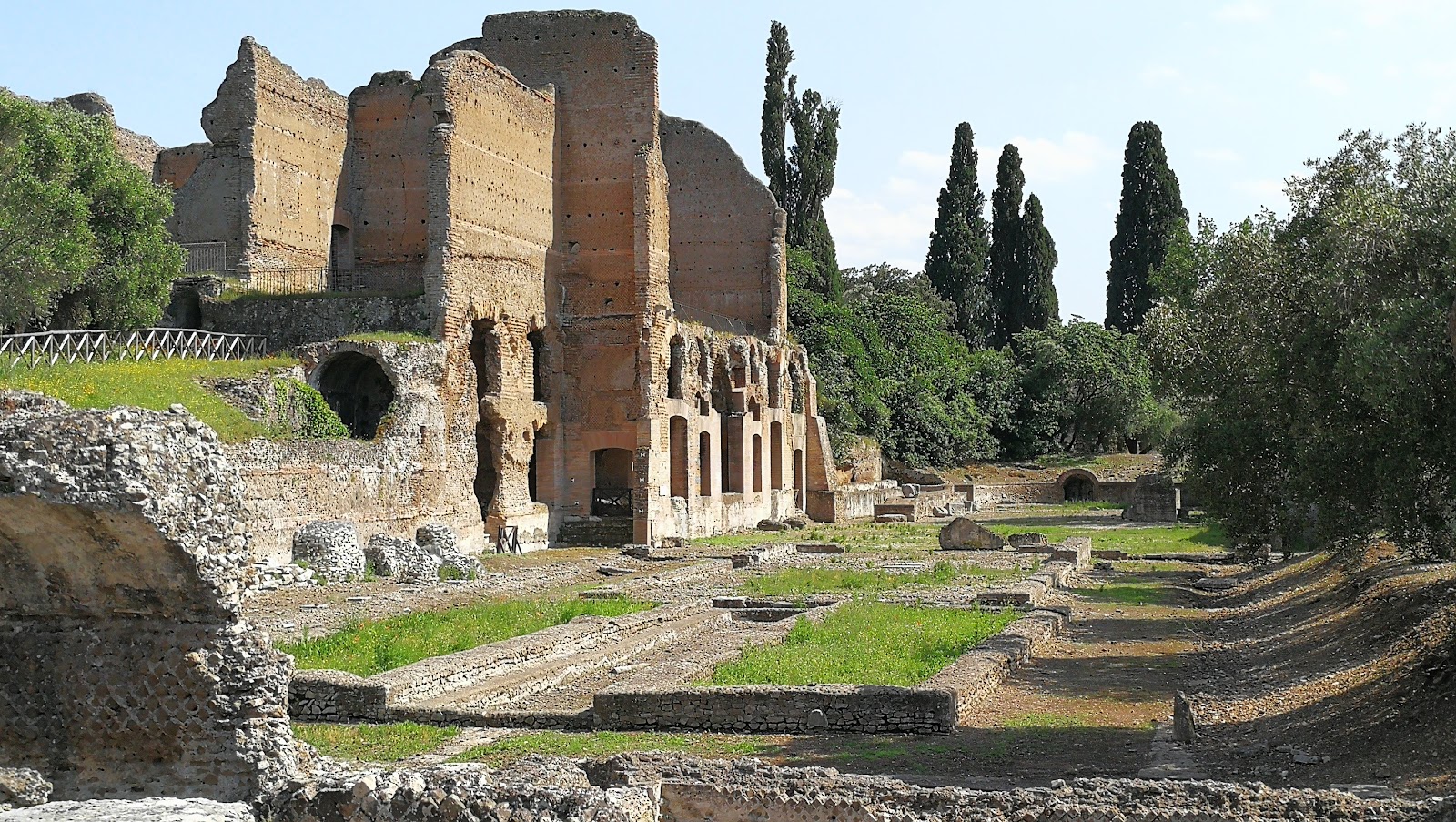
More than 30 monumental structures survive in various states — baths split by rank, a circular island theatre surrounded by a moat, two libraries facing a garden, nearly a hundred stacked chambers for staff. The ambition of it is visible in every artificial terrace and water basin.

💛 What travellers fall for
People who come back tend to head straight for the Maritime Theatre — the circular moated island that Hadrian apparently used as a private retreat — and linger there before the tour groups arrive. The Pecile's long shadow in early morning is worth timing. Bring water; shade is intermittent across the open stretches between structures.
The story behind Villa Adriana (Hadrian's Villa)
Construction began around 117 CE on a Republican-era house that Hadrian's wife, Vibia Sabina, had inherited. Hadrian, who personally oversaw the work and drew on his extensive travels across the Empire for architectural inspiration, was first documented at the villa in 125 and made it his official residence from around 128. He returned to Rome in early 134 and died at Baia in 138.
After his death, the site declined steadily. Diocletian ordered restorations in the late third century, but by the fourth century marble and statues were being stripped out. The Gothic War of 535–554 left further damage. The historian Biondo Flavio brought the ruins to Pope Pius II's attention in the late fifteenth century, and in the sixteenth century Cardinal Ippolito II d'Este removed much of what remained to furnish his own villa nearby. The Italian state purchased the site in 1870; UNESCO listed it in 1999.
Good to know
Tivoli is about 30 km east of Rome; take the COTRAL bus from Ponte Mammolo (Line B) or a regional train to Tivoli station, then a local bus or taxi to the site. Wear flat, grip-soled shoes — the ground is uneven. Allow at least three hours; the site is larger than it looks on a map.
Spring (April to early June) and autumn (September to October) offer mild temperatures and lower crowds — the best conditions for walking the exposed terraces and open gardens. Summer heat on the unshaded paths between structures can be punishing by midday; if you visit in July or August, start at opening time.
Where is Villa Adriana (Hadrian's Villa)?
More tickets & tours for Villa Adriana (Hadrian's Villa)
Book directly at the provider
What travellers say about Villa Adriana (Hadrian's Villa)
Amazing site 40 hectares big. So much to see and explore. Handy bilingual info boards. Literally every where we went was a 'wow' moment. Easily a half day to explore. There are a few lockers at the entrance but only a handful big enough for backpacks etc. Lots of tour groups especially school kids but this did not detract from our visit to this amazing site
A slice of history that takes you back 2000 years to the life of an Imperial Roman Emperor. The preservation is sensitive - no garish displays or plastic centurions. But there is a lot of information next to each structure for the interested. Plan on spending at least two hours to walk around and marvel, more to see everything including the museum.
Amazing place if you love history and Roman Empire. Buses can be a bit irregular and hard to get. It is overall a small town, so no Uber and taxis can be expensive. But worth visiting! Take the train to Tivoli or Tivoli Terme (a bit closer, but need to walk a bit for bus). No crowds during weekday in November (off season).
This place was amazing with a very expansive layout. It was absolutely beautiful and in some areas still in very good shape. It is easily covered in about 2-3 of walking. I can't tell you how cool it is to be back in Italy and trying my best to remember some Italian.
Do NOT MISS Villa Adriana. It is neck and neck for first place with Ostia Antiqua in terms of the greatest Roman Ruins (near modern day Rome) to explore. It's also very close to a marvel of a town called Tivoli which contains "Villa D'este" and "Tivoli Gardens" which are such feasts for the eyes it makes one wonder if they are in Eden. The Villa Adriana archeological site is extremely active, meaning they are constantly unearthing larger and larger swaths of the grounds of the original site. I think it's fair to say that the area accessible to visitors doubled in size within a single decade. On my last visit, there were vast new areas to explore so it wasn't "like" seeing again for the first time, it was seeing it for the first time. My suggestion for the budget traveller is to take the train and bus from Roma to get out to Villa Adriana on a weekday in the morning. Afterwards, flag a taxi outside the museum and go into Tivoli and have a bite at Ristorante Sibilla. You can walk to Villa D'este and Tivoli Gardens from the restaurant. Then, find the bus station and head back into Rome in the afternoon. If you follow this itinerary, come back and leave a fire emoticon so I know you had a blast.
More of Tivoli
Discover where to stay, what to do and the best deals for your trip.
Explore Tivoli →More attractions in Tivoli
All of Tivoli →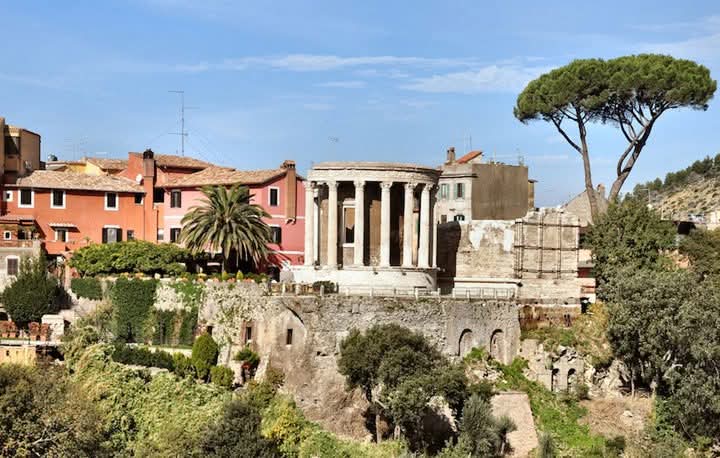

Background adapted from Wikipedia (CC BY-SA) · map data © OpenStreetMap contributors · ratings & place photos via Google · other photos with per-image credit. Ticket links may earn us a commission at no extra cost to you.