
Vie Cave (Etruscan Sunken Roads)
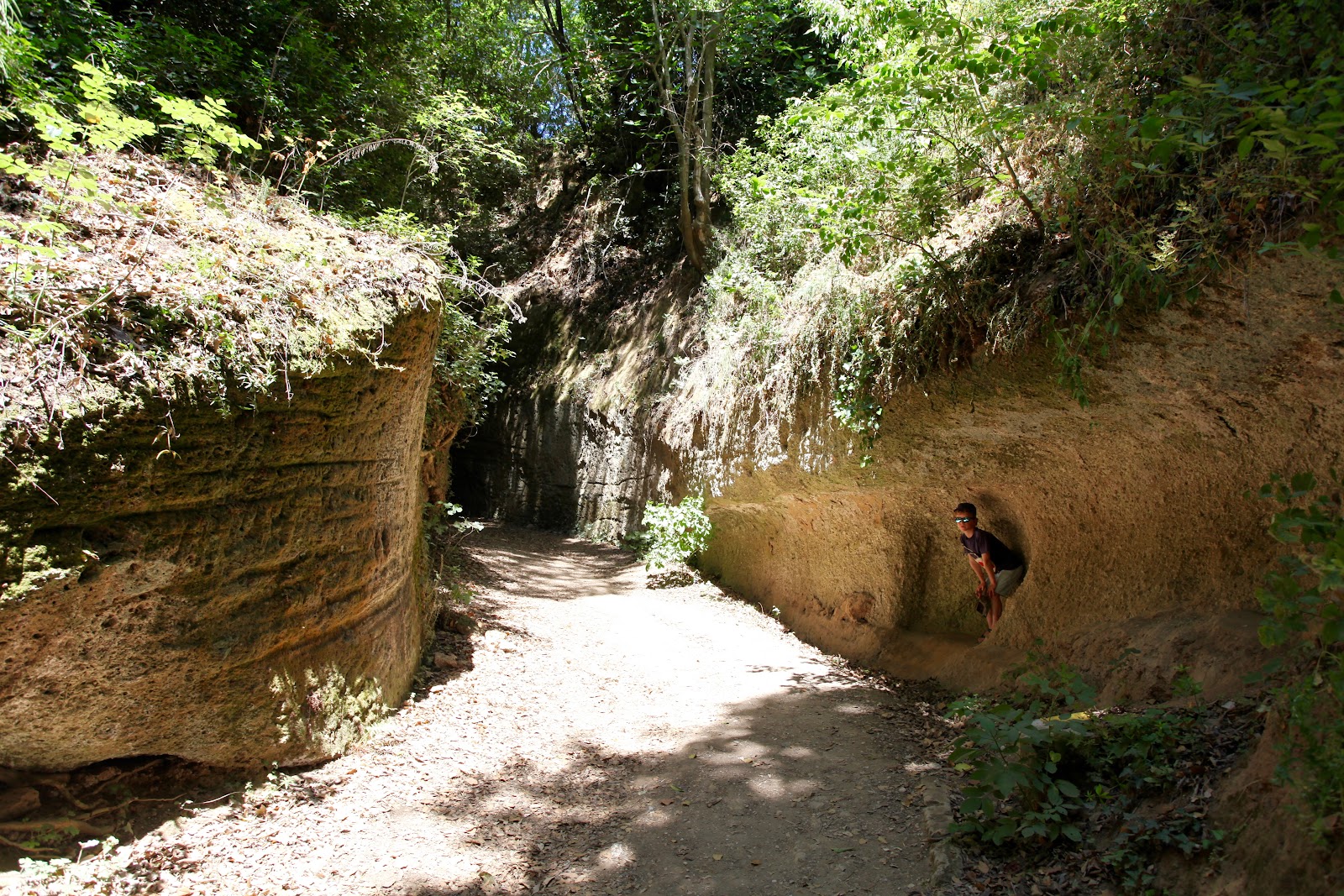
Some of the chisel marks are still there, cut into soft tufo stone almost three thousand years ago. The Vie Cave are a network of at least fifteen sunken lanes carved below the volcanic plateau of Pitigliano, some dropping twenty metres deep and only three metres wide — corridors so narrow and tall that midday light arrives as a thin stripe overhead.
Who made them, and precisely why, remains genuinely open. The Etruscans are the most likely architects, probably working between the 7th and 2nd centuries BCE, though some researchers push the origins back further still, to the Iron-Age Villanovan people who preceded them. What you walk through today is one of the least-explained large-scale engineering projects in ancient Italy.

💛 What travellers fall for
People who come back tend to single out Via Cava di San Giuseppe for the Fontana dell'Olmo — a fountain carved from a single block of rock, its sculpted Bacchus head still readable after two millennia. Via Cava di Fratenuti gets the nod for sheer verticality and the density of Etruscan markings. Go early; the light inside the corridors shifts quickly.
The story behind Vie Cave (Etruscan Sunken Roads)
The carving appears to have begun sometime between the 7th and 2nd centuries BCE, cut by hand using bronze tools into the soft tufo bedrock. Whether the lanes served as processional routes, livestock corridors, defensive passages, or something else is still debated. The rock is porous and fragile, which means the passages have survived largely because of their own geography — shaded, narrow, rarely flooded — rather than any deliberate preservation.
By Roman times, segments had been absorbed into the Via Clodia, the road linking Rome northward to Manciano. Early Christians left their own marks too: crosses and devotional symbols carved into the same tufo walls, and small churches built alongside the routes, layering one belief system quietly on top of another.

Good to know
A car is the practical way in; RAMA buses connect from Grosseto or Albinia, but schedules are limited. The full 9.97 km circuit takes around three hours; the 8 km walk to Sovana incorporates several stretches of via cava. Free maps from the tourist office on Piazza Garibaldi. Trails are free to walk.
May through September offers the most reliable walking weather, with summer temperatures reaching 30°C on the plateau above — though inside the deepest corridors the air stays noticeably cooler and the rare ferns that line the walls (including the delicate Adiantum capillus-veneris) stay green. Winter brings more rain and temperatures that can drop to 3°C at night; the paths become slippery and some stretches erode quickly after heavy rain.
Where is Vie Cave (Etruscan Sunken Roads)?
More tickets & tours for Vie Cave (Etruscan Sunken Roads)
Book directly at the provider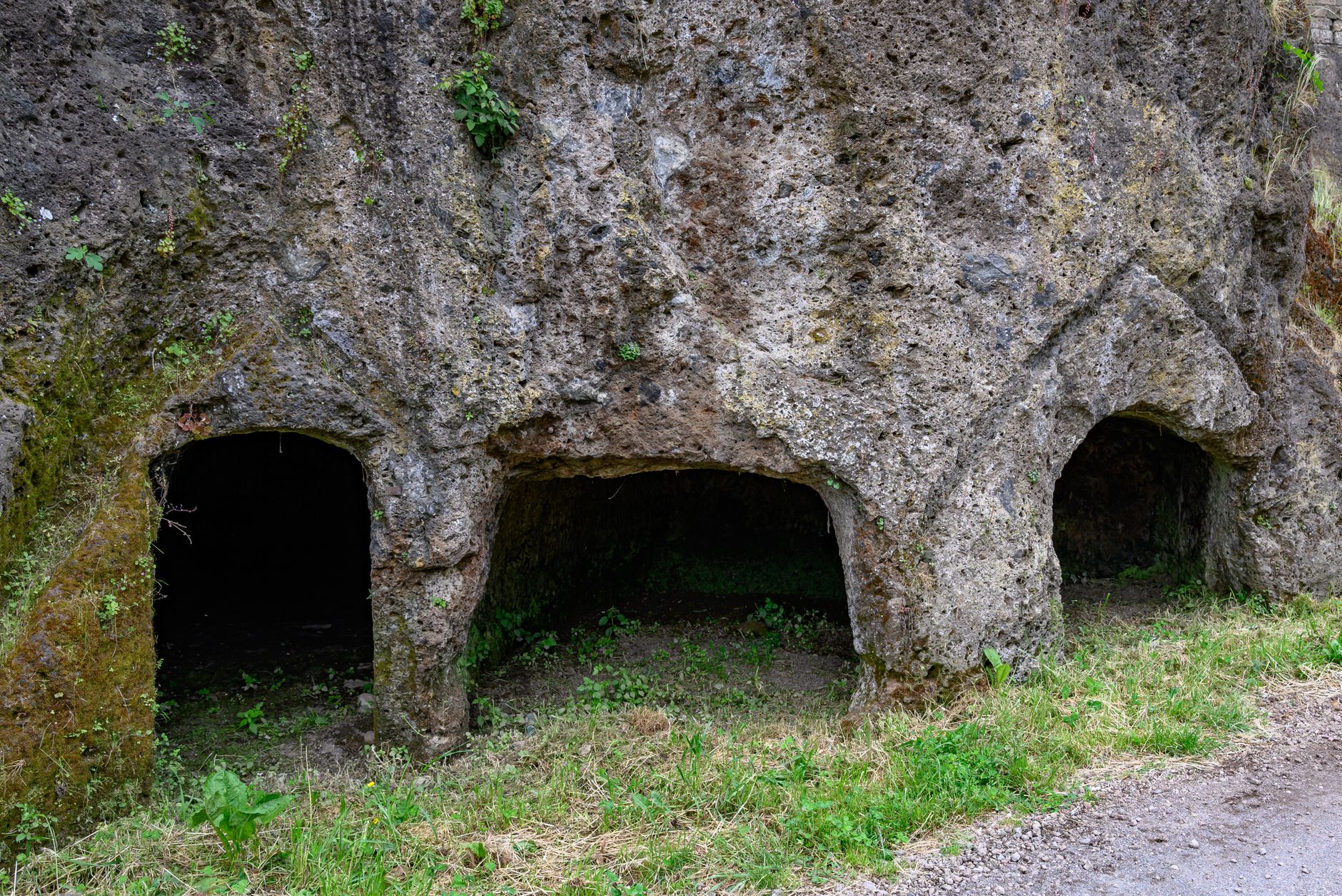
What travellers say about Vie Cave (Etruscan Sunken Roads)
Worth the trip to walk through. It is easy and won’t take long. Great views of the borgo and ancient history for free…
Great place- beautiful canyons . Pity such a poor signage and information.
Just stunning, the history is amazing
Hidden but worth a visit, especially when it's hot and crowded up above in town.
History and beautiful
More of Pitigliano
Discover where to stay, what to do and the best deals for your trip.
Explore Pitigliano →More attractions in Pitigliano
All of Pitigliano →
Background adapted from Wikipedia (CC BY-SA) · map data © OpenStreetMap contributors · ratings & place photos via Google · other photos with per-image credit. Ticket links may earn us a commission at no extra cost to you.