
Palazzo Orsini
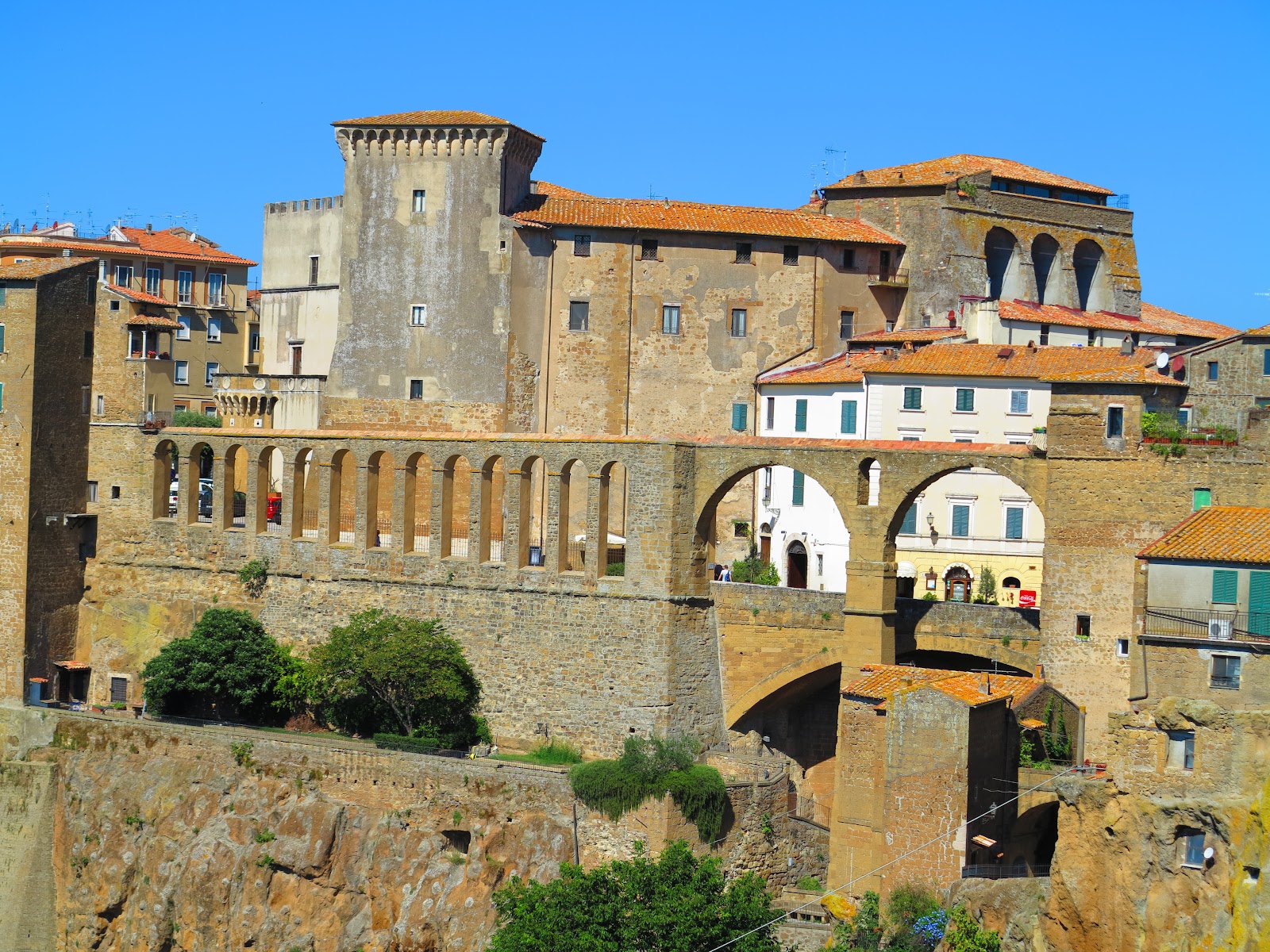
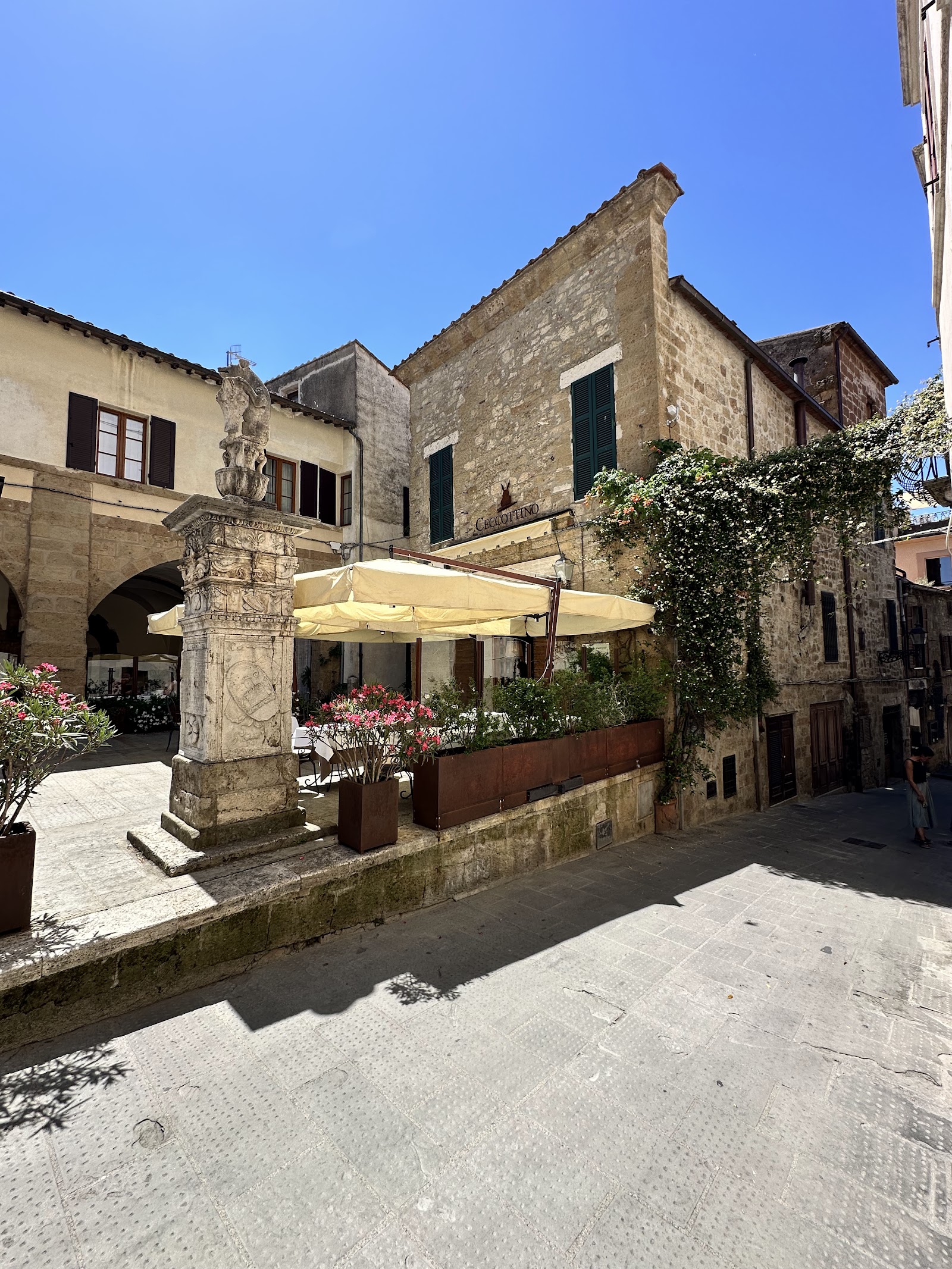
At the edge of Pitigliano's tufa plateau, the Palazzo Orsini rises in crenellated stone — a keep flanked by two towers that have watched over this cliff-top town since the eleventh century. Walk through the round-arched doorway and up the ramp into the courtyard, and the first thing that stops you is the well: cream-coloured travertine carved with floral motifs, built in the fifteenth century and still standing at the centre of things as if it owns the place.
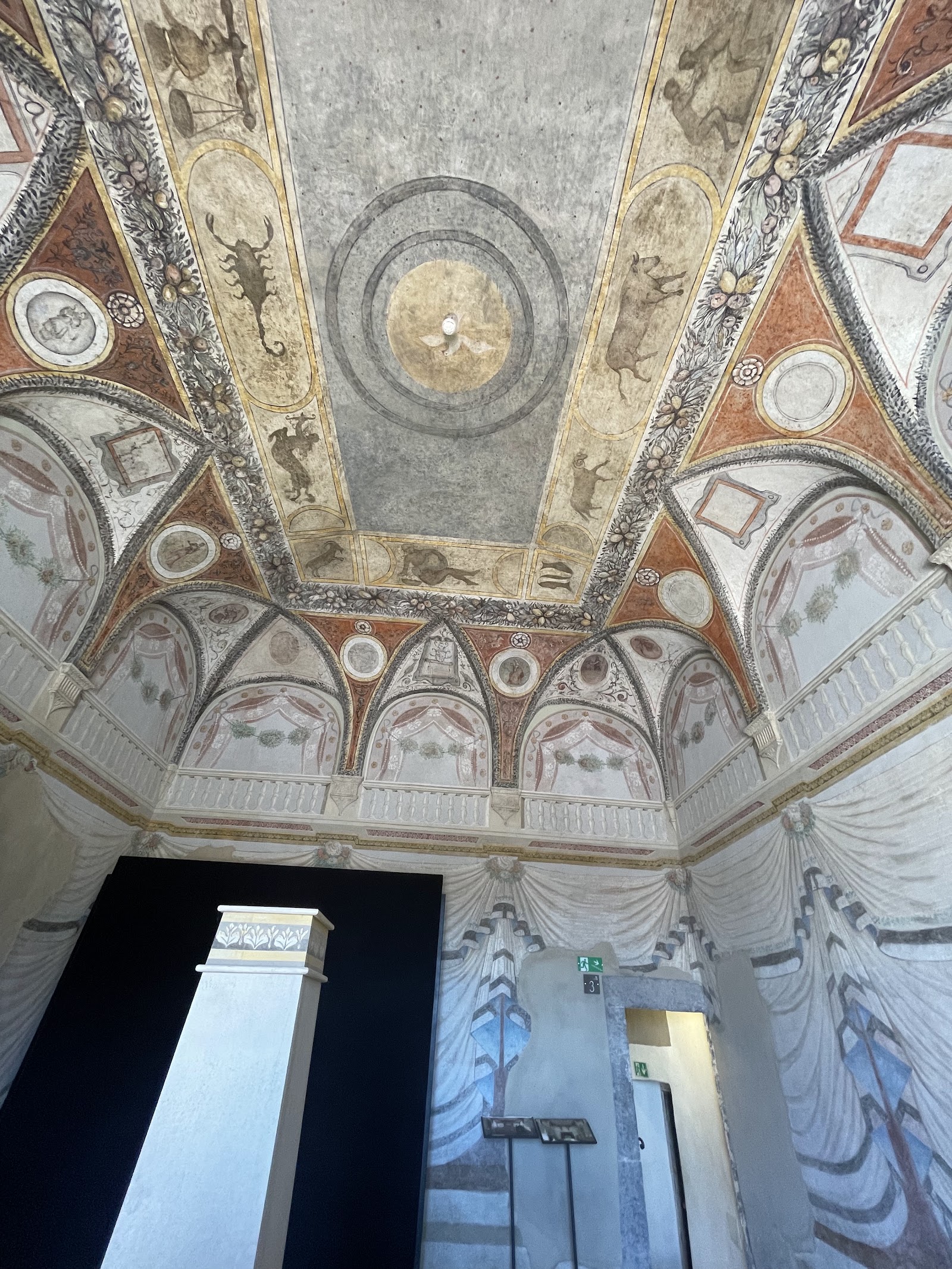
Inside, twenty-one rooms are entirely frescoed, and the collections move across seven centuries without apology — wooden sculpture, sacred silver, painted altarpieces, and a cycle of portraits tracing the Orsini counts who shaped this corner of Tuscany.
💛 What travellers fall for
People who come back tend to slow down in the room with the Jacopo della Quercia Madonna — a fifteenth-century painted wooden sculpture that rewards a second look. The sacred art collection surprises most visitors; the filigree crosses and ninth-century scrolls are easy to rush past, but they're worth the pause.
The story behind Palazzo Orsini
The building began as a convent in the eleventh or twelfth century before the Aldobrandeschi family purchased it in the latter half of the thirteenth century and converted it into their residence. When Margherita Aldobrandeschi, the family's last heir, married Romano Orsini, the palace passed to the Orsini in 1293 — a dynastic transfer that would define it for the next five centuries.
In 1465, Niccolò III Orsini — then serving as a captain of the Venetian Republic — enlarged the palace to mark his marriage to Elena Conti di Montelanico. Around 1520, Antonio da Sangallo the Younger was brought in to fortify the structure. The Orsini line eventually gave way to the Tuscan archdukes, who ceded the building to the Diocese of Sovana in 1793. Since 1989, much of it has functioned as a museum.
Good to know
Closed Mondays. In August the palazzo opens until 8pm daily, with midnight hours around the 15th. Tickets are €5 full price. The address is Piazza Fortezza Orsini, 25 — the same square as the Fortezza Orsini nearby. Allow at least an hour.
Where is Palazzo Orsini?
More tickets & tours for Palazzo Orsini
Book directly at the provider
What travellers say about Palazzo Orsini
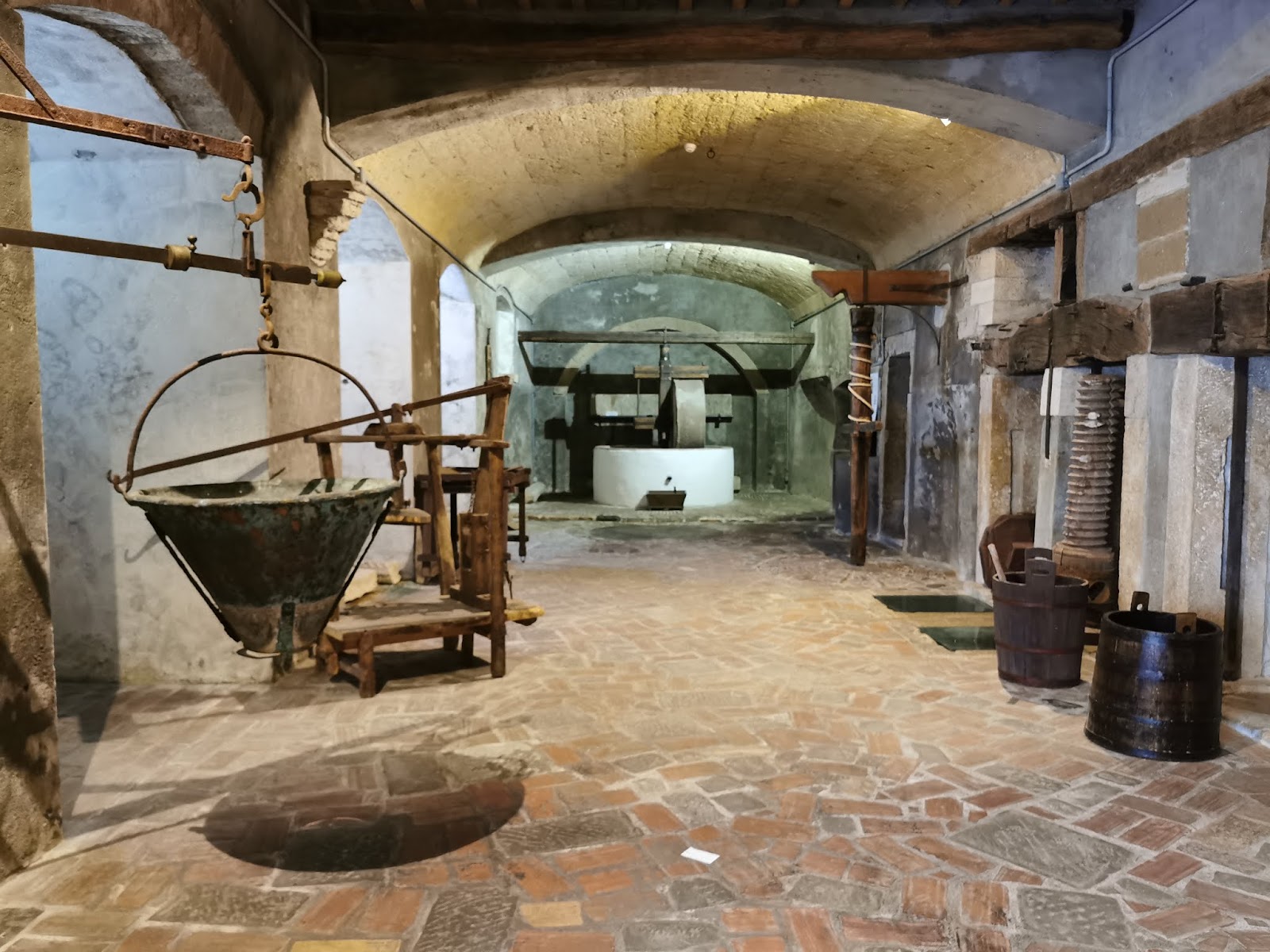
Barely frescoed rooms; ultimately it's a museum. There is something interesting in it (the oil mill, the balcony onto the central square, some paintings), but I don't know if it's really worth it.
The middle aged man at the reception was very rude. I approached and asked in Italian "good evening, how are you? Do you speak English?" because I need to ask a question I didn't have the vocabulary for. .... he replied in a mocking voice, in Italian, "no I only speak Italian because I am in Italy!" like a child - com'è uno bambino!!! Everyone else in Pitigliano of all ages and languages has been so kind, polite, and helpful - we turned and left immediately due to his attitude!!
The Sforza Castle and Museum is a wonderful example of construction. It stands in the town of Pitigliano, which is an outstanding example of a town on tuff. Tuff is a type of rock made from volcanic ash ejected from a vent during a volcanic eruption. After being ejected and deposited, the ash turns into solid rock. I especially liked the lion statue on the outside of the castle.
Small museum in the old city centre
Very beautiful.
More of Pitigliano
Discover where to stay, what to do and the best deals for your trip.
Explore Pitigliano →More attractions in Pitigliano
All of Pitigliano →
Background adapted from Wikipedia (CC BY-SA) · map data © OpenStreetMap contributors · ratings & place photos via Google · other photos with per-image credit. Ticket links may earn us a commission at no extra cost to you.