
Via Etnea
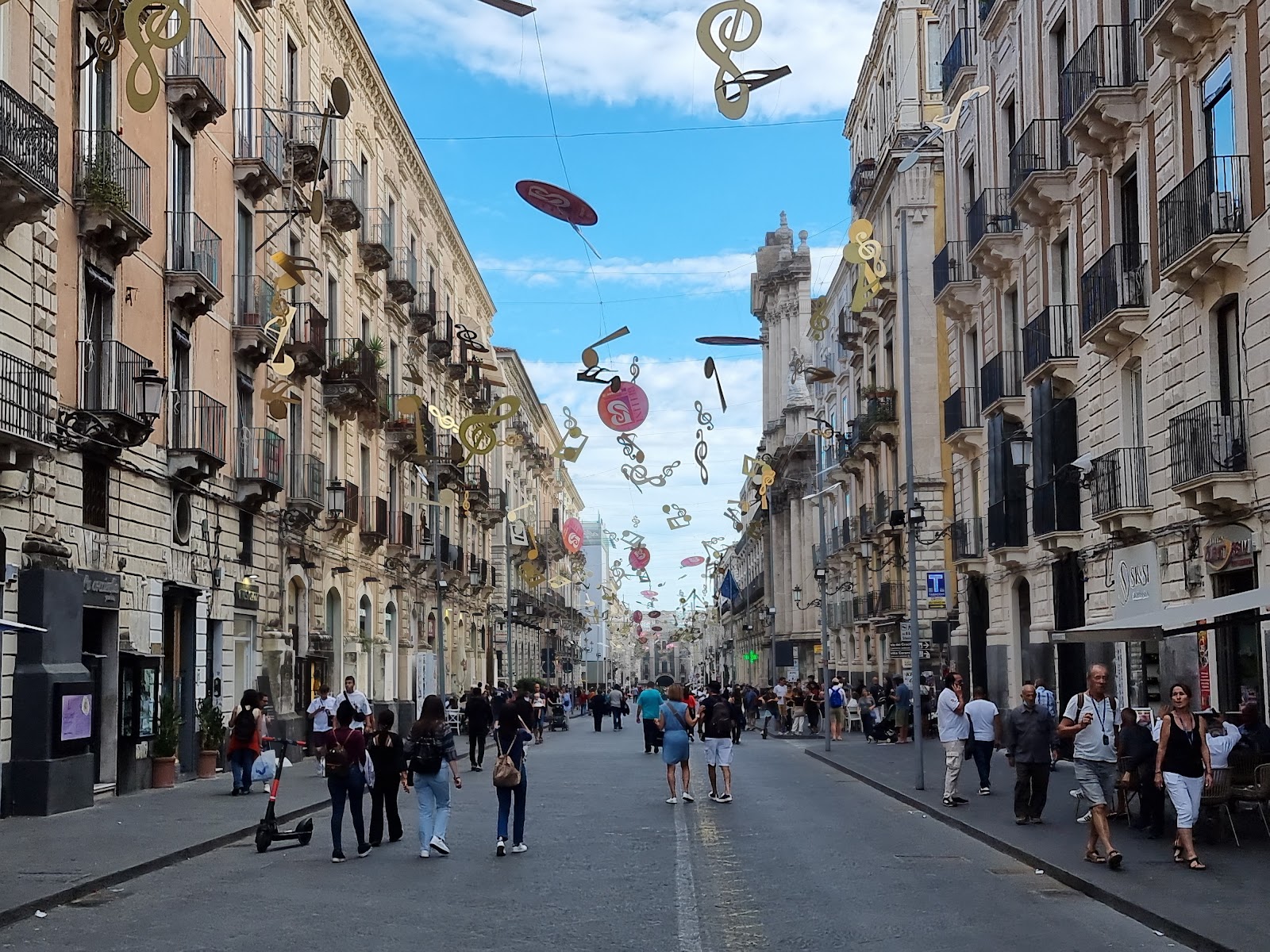
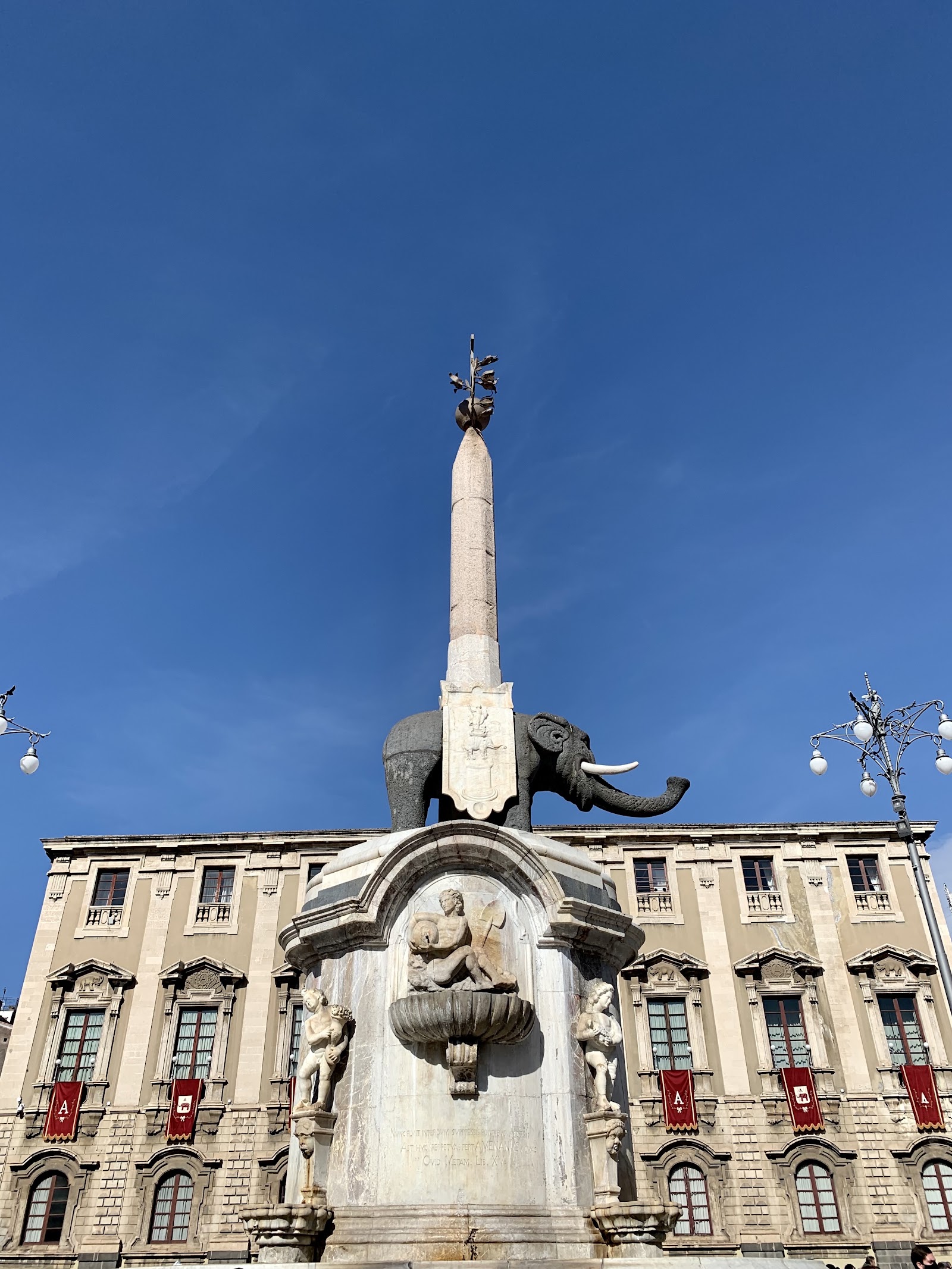
Via Etnea runs straight as a ruled line from the cathedral to the foothills of Etna, and the volcano is genuinely visible from it on clear days — a fact that never quite loses its strangeness. The street is paved in dark basalt, and on summer afternoons the stone holds heat the way cast iron does. Walk it from Piazza del Duomo northward and the city unfolds in layers: roasted coffee drifting from arcade cafés, the sudden opening of Piazza dell'Università where students argue on steps, and, halfway up, the ghost of a Roman amphitheater sitting in the middle of Piazza Stesicoro as though it simply refused to leave.
The first 800 metres — from the cathedral to Piazza Stesicoro — concentrate most of what Via Etnea has to offer historically. Beyond that, the street stretches toward Villa Bellini and quieter residential blocks, worth continuing for the garden alone.
💛 What travellers fall for
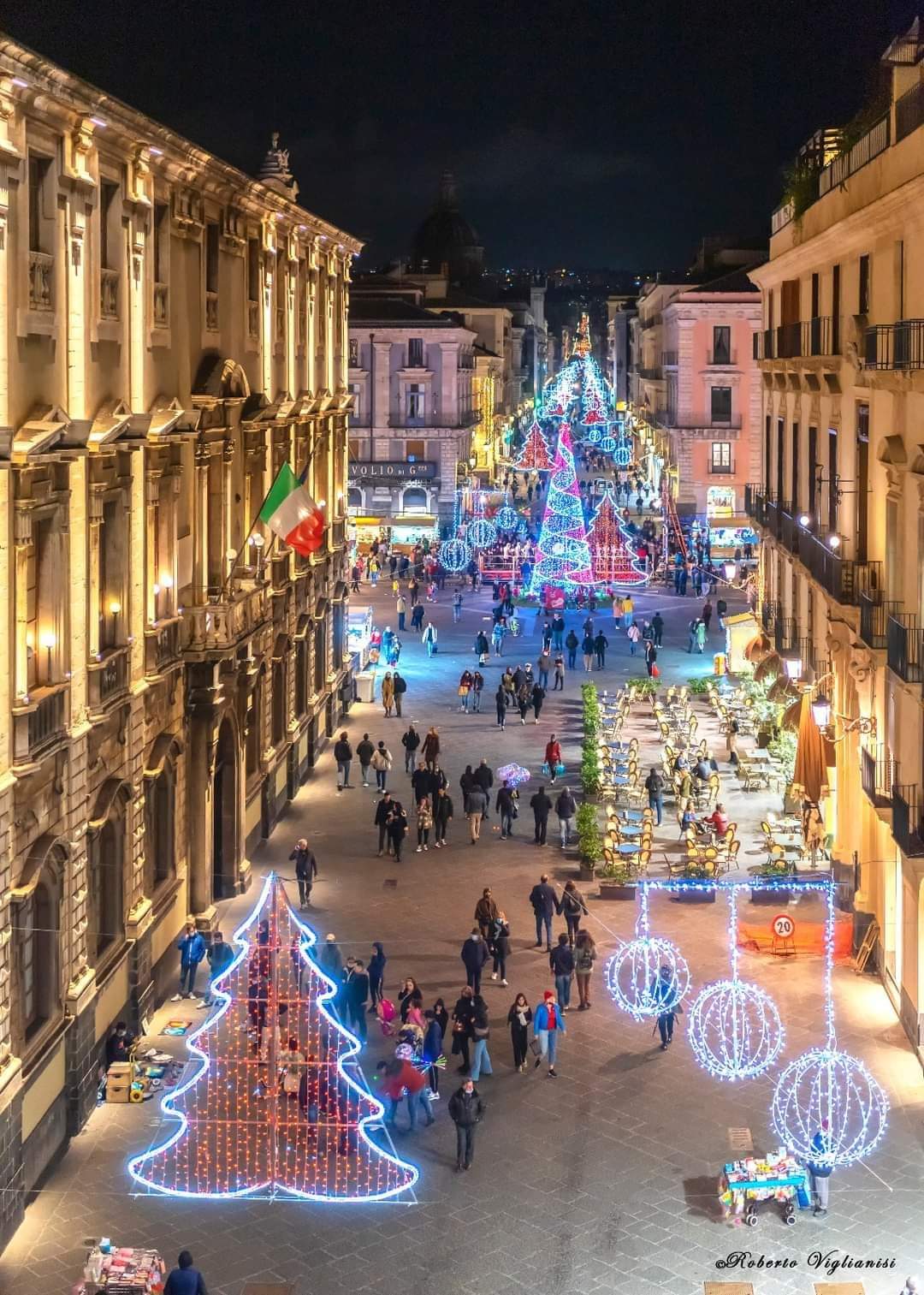
People who've walked it more than once tend to arrive before 9am, when the basalt is still cool and the cafés are pulling their first shots. The bakery Savia, near Villa Bellini, sells arancini with saffron rice and ragù that disappear fast on weekends — go early. The evening passeggiata runs roughly 17:30 to 20:00 and is entirely genuine; join it rather than observe it.
The story behind Via Etnea
Via Etnea exists because of a catastrophe. The earthquake of January 11, 1693 levelled much of Catania, and the reconstruction fell to Giuseppe Lanza, duke of Camastra, whose plan was approved in June 1694. The street was originally called Via Uzeda, after the reigning viceroy, and later Via Stesicorea before taking its current name from the volcano it points toward.
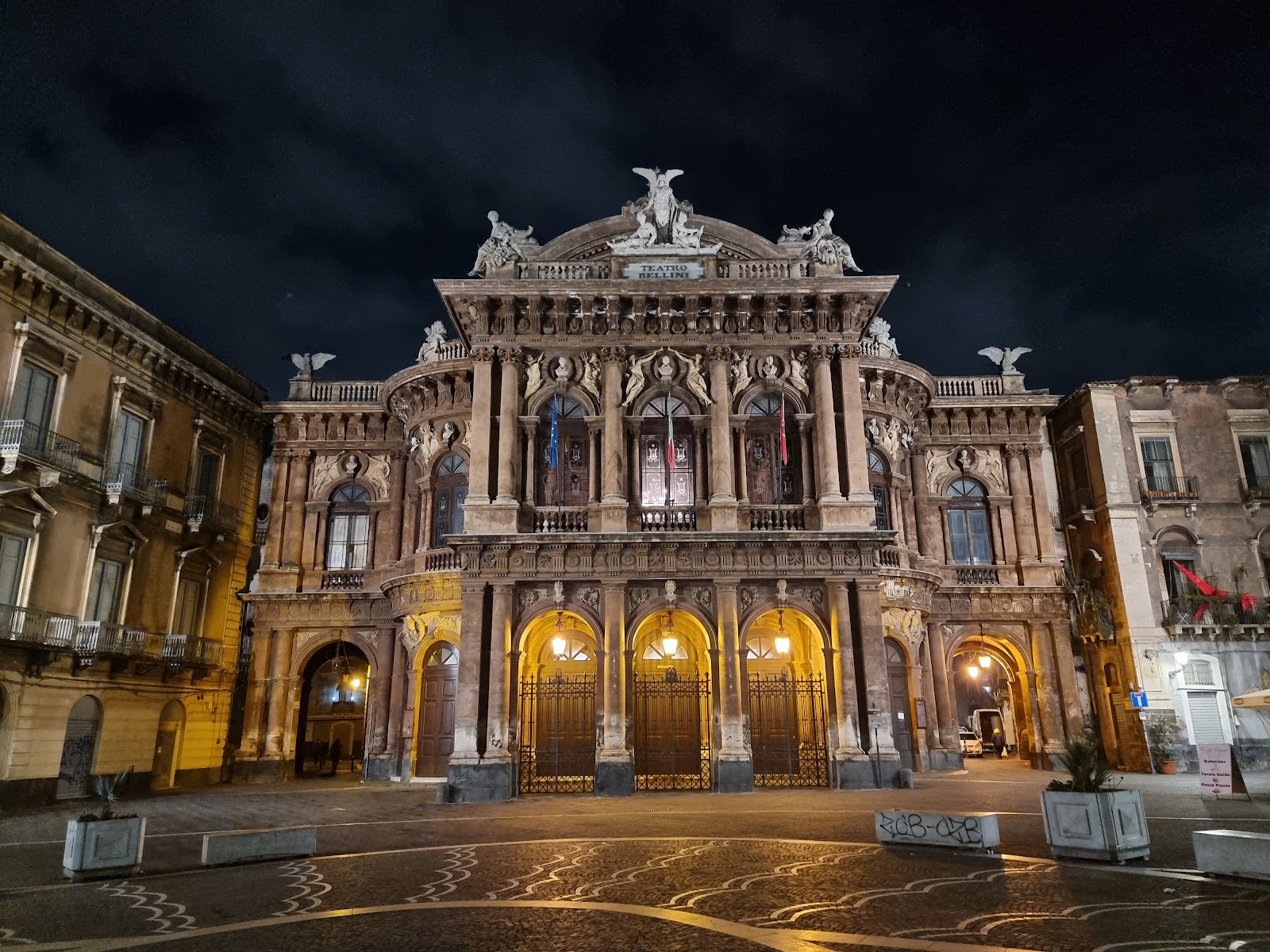
At its founding the street ran about 700 metres. Through the 20th century it was extended north to Piazza Cavour and then to Tondo Gioeni, where a ring road was built in the 1950s. From 1915 to 1934 tram tracks for the Catania–Acireale line ran along it. The Baroque palaces and churches that line it — including Palazzo dell'Università and the Basilica della Collegiata, whose concave facade was completed in 1758 by Stefano Ittar — were built in the dark Etnean lava stone that gives Catanian Baroque its particular character, the grey-black rock contrasted with lighter limestone details.
Good to know
The Alibus from Fontanarossa airport drops you at Stesicoro in about 20 minutes. The pedestrian section runs from Piazza del Duomo to Quattro Canti; north of that, public transport or taxis only. No ticket, no hours — it's a street. Allow at least two hours for the southern stretch.
In July and August the dark lava paving amplifies already intense heat; walk early morning or late afternoon and use Villa Bellini as a midday refuge. In autumn and winter, sudden heavy rain can cause localised flooding and the basalt becomes slippery — shoes with grip matter more than you'd expect.
Where is Via Etnea?
More tickets & tours for Via Etnea
Book directly at the provider
What travellers say about Via Etnea
It's my 3rd time our ship came to this island and this is the first time I saw its beauty... Love the place...
Via Etnea is such a beautiful street to walk and admire the architecture of the buildings around you. Most of the places I wanted to see were close to this road which was amazing. Had a beautiful time in Catania, we even were there when there was a marathon going on.
Just a reminder: if you are hoping to see an active volcano with visible lava, Monte Etna may not meet your expectations depending on current activity levels.
This is the must see!!! Everyone visiting Catania should visit Via Etnea for sure as it's magical, wonderful and beautiful street full of shops, bars, cafés and restaurants. Also you can find here a university, historical monuments and local atmosphere.
Beautiful place to see !
More of Catania
Discover where to stay, what to do and the best deals for your trip.
Explore Catania →More attractions in Catania
All of Catania →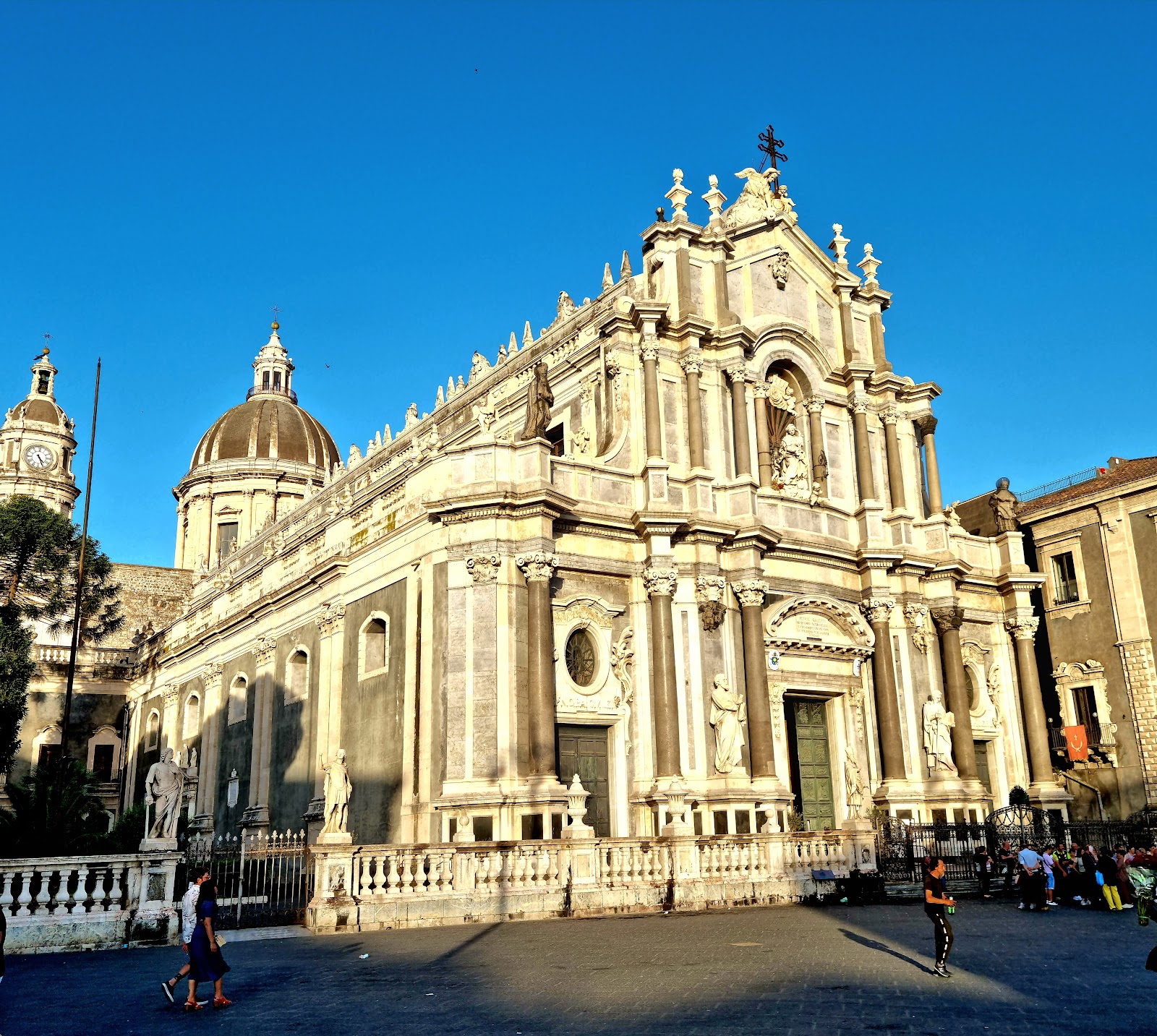
Background adapted from Wikipedia (CC BY-SA) · map data © OpenStreetMap contributors · ratings & place photos via Google · other photos with per-image credit. Ticket links may earn us a commission at no extra cost to you.