
Todai-ji Temple
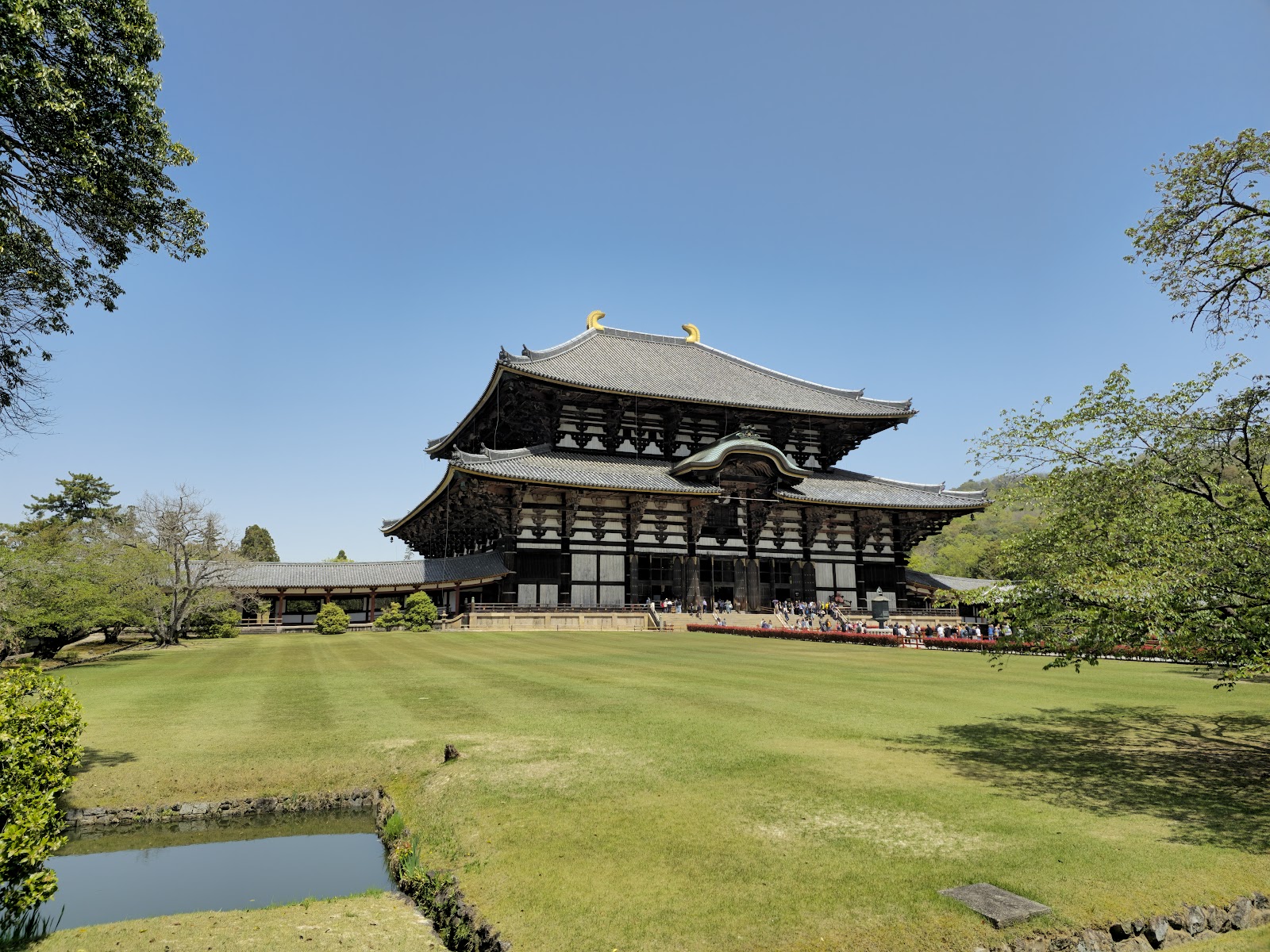
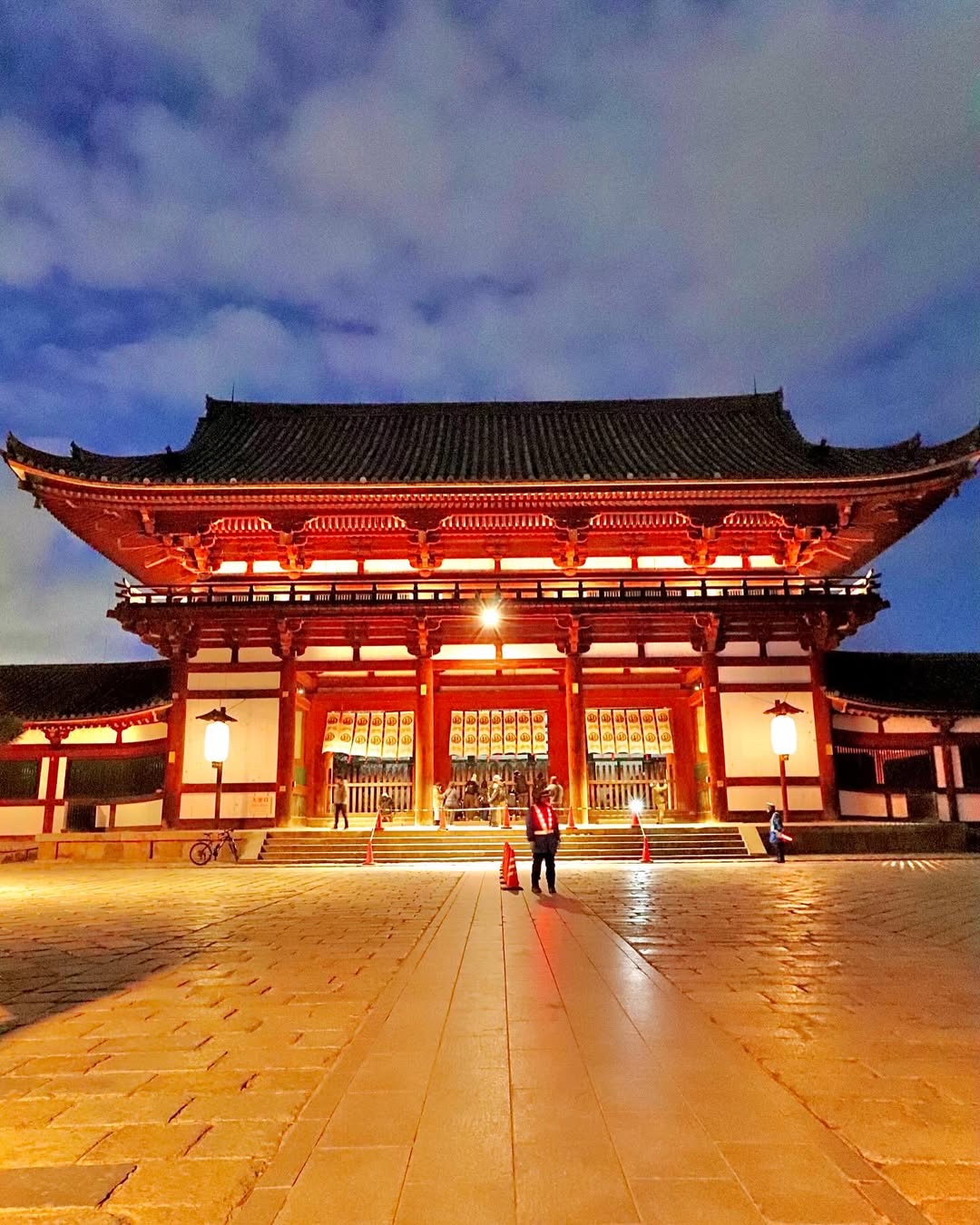
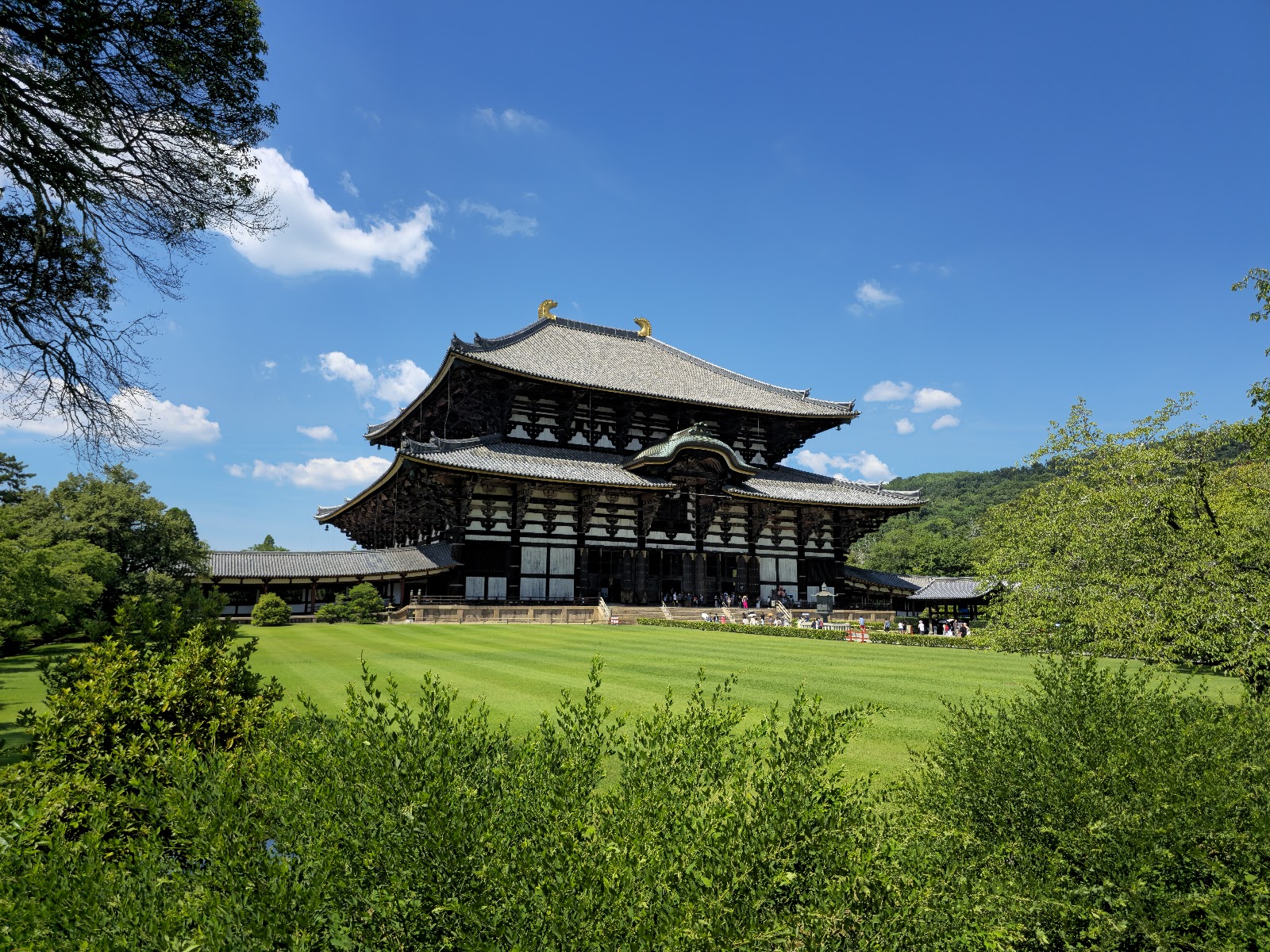
The first thing you notice isn't the building — it's the scale of the gate you pass through to reach it. The Nandaimon, rebuilt during the Kamakura period in a Chinese Song Dynasty style, stands 25 metres high, and inside it two guardian figures carved in 1203 by the sculptors Unkei and Kaikei stare you down from either side. Then the Daibutsuden appears: the largest wooden structure on earth, 57 metres wide, nearly 49 metres tall, and still only a reduced version of the original.
Inside sits the Daibutsu — Rushana Butsu, the cosmic Buddha — 14.7 metres tall, weighing over 250 tons, its golden halo spanning 27 metres. The numbers stop meaning anything after a while. You just stand there.
💛 What travellers fall for
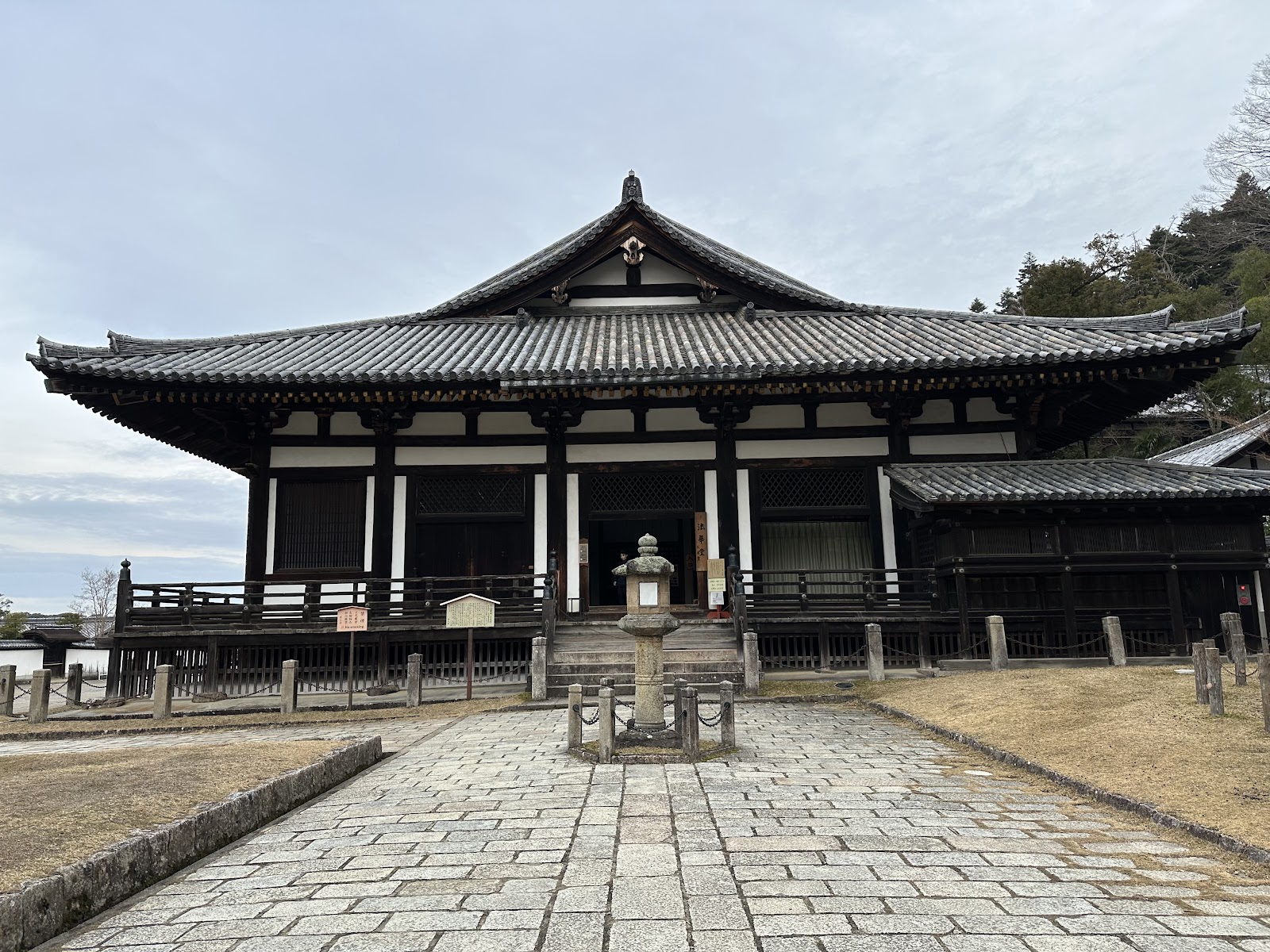
People who come back tend to arrive early, before the tour groups reach the Daibutsuden. They also make time for the Hokke-dō, Todai-ji's oldest surviving structure, where the eight-armed Fukuukensaku Kannon stands in relative quiet. And almost everyone tries to squeeze through the hole in the pillar near the Great Buddha — 37 centimetres wide, reputedly the size of one of the Buddha's nostrils.
The story behind Todai-ji Temple
Todai-ji grew from Kinshō-ji, a temple founded in 728 for Crown Prince Motoi, son of Emperor Shōmu. In 741, Shōmu ordered a national system of provincial monasteries; two years later he proclaimed the construction of a great Vairocana Buddha. The image was completed in 749, and in 752 an eye-opening ceremony drew 10,000 monks and 4,000 dancers, with the Indian priest Bodhisena performing the consecration. The original statue was designed by Kuninaka-no-Kimimaro, an artist of Korean Paekche lineage.
The compound has burned twice — in 1180, when Taira no Shigehira's forces destroyed more than half of it, and again in 1567. The monk Chōgen led the first restoration, reconsecrating the Buddha in 1185. The present Daibutsuden is an Edo-period rebuild, completed under the monk Kōkei, and the structure you see today was last reinforced with steel framing between 1974 and 1980. UNESCO designated the site in December 1998.
Good to know
Todai-ji is in Nara, not Kyoto — about 45 minutes by express train from Kyoto Station or 35 from Osaka Namba. The Daibutsuden opens at 7:30am in summer, 8am otherwise. Spring and autumn draw the biggest crowds; a weekday morning is your best chance at space. Budget two to three hours for the main compound.
Nara's summers are hot and humid; the Daibutsuden's interior offers some relief but the approach is exposed. Spring cherry blossoms and autumn foliage both draw large crowds. March brings the Omizutori water ritual at Nigatsu-dō, held before dawn on the 13th.
Where is Todai-ji Temple?
More tickets & tours for Todai-ji Temple
Book directly at the provider
What travellers say about Todai-ji Temple
Visited Tōdai-ji Temple in Nara and experience was truly remarkable. The temple grounds are majestic and full of history, with the Great Buddha Hall being the highlight. Seeing the enormous bronze Buddha statue was awe-inspiring and left a lasting impression on both adults and children. The atmosphere is peaceful despite the popularity of the site, and the surrounding area with friendly deer roaming freely added a unique charm to the visit. The kids especially loved interacting with the deer, making the day both cultural and fun. Facilities were well maintained, and the pathways made it easy to explore as a family. The blend of spirituality, history, and nature created a memorable experience. Overall, Tōdai-ji is a must-visit landmark in Nara — perfect for families who want to experience Japan’s cultural heritage and enjoy a truly unforgettable day.
When we arrived in Hara I thought I was Templed and Shrined out but of all the temples we visited this was probably the most impressive. It is a huge wooden structure that in itself is incredibly impressive but the huge Buddhas and associated sculptures are extraordinary. Honestly worth a visit especially as you go through the amazing deer park to get there!
The main grounds of Tōdai‑ji offer a wide, open environment that feels both historic and welcoming, and expanding on the experience reveals how much there is to appreciate. Walking through the pathways, you’re surrounded by a mix of traditional architecture, greenery, and the occasional deer wandering freely. The approach to the temple builds anticipation, with each gate and structure adding to the sense of entering a significant cultural site. The grounds are spacious enough that even with many visitors, you never feel overwhelmed. There’s a natural flow that guides you from one area to the next, making it easy to explore without feeling rushed. The combination of nature and temple buildings creates a peaceful atmosphere that encourages you to slow down and take everything in. You notice small details—stone lanterns, wooden textures, and the way the rooftops curve against the sky. The grounds also offer great vantage points for photos, especially when the weather is clear. It’s a place where you can spend time reflecting, observing, or simply enjoying the surroundings. The overall experience feels balanced, meaningful, and memorable, and it sets the perfect tone before entering the Great Buddha Hall.
One of the most impressive cultural and spiritual landmarks in Japan. The scale of Todai-ji is difficult to appreciate until you stand in front of it—the Great Buddha Hall is enormous, and the craftsmanship of the wooden architecture is breathtaking. Walking through the temple grounds feels both peaceful and humbling. Inside, the Great Buddha is truly awe-inspiring. The statue’s size, detail, and presence create a powerful atmosphere that photos can hardly capture. I also enjoyed observing the smaller statues and intricate wooden structures that showcase centuries of history and artistry. Even with many visitors, the temple retains a sense of calm and reverence. If you’re visiting Nara, this is an essential stop and one of the most memorable historical sites in Japan. Allow yourself enough time to explore both the temple and the surrounding park area. A remarkable place where history, spirituality, and architecture come together beautifully. 🇯🇵⛩️🙏
This is a beautiful temple! We explored the temple and Todai-ji museum for 1,200 yen. We went early, around 8:00 AM, and it was not too crowded. But it was very busy when we were leaving. It is very easy to get tickets and it is an enjoyable excursion if you are in Nara. The giant buddha statue is very impressive.
More of Kyoto
Discover where to stay, what to do and the best deals for your trip.
Explore Kyoto →More attractions in Kyoto
All of Kyoto →
Background adapted from Wikipedia (CC BY-SA) · map data © OpenStreetMap contributors · ratings & place photos via Google · other photos with per-image credit. Ticket links may earn us a commission at no extra cost to you.