
Kiyomizu-dera Temple
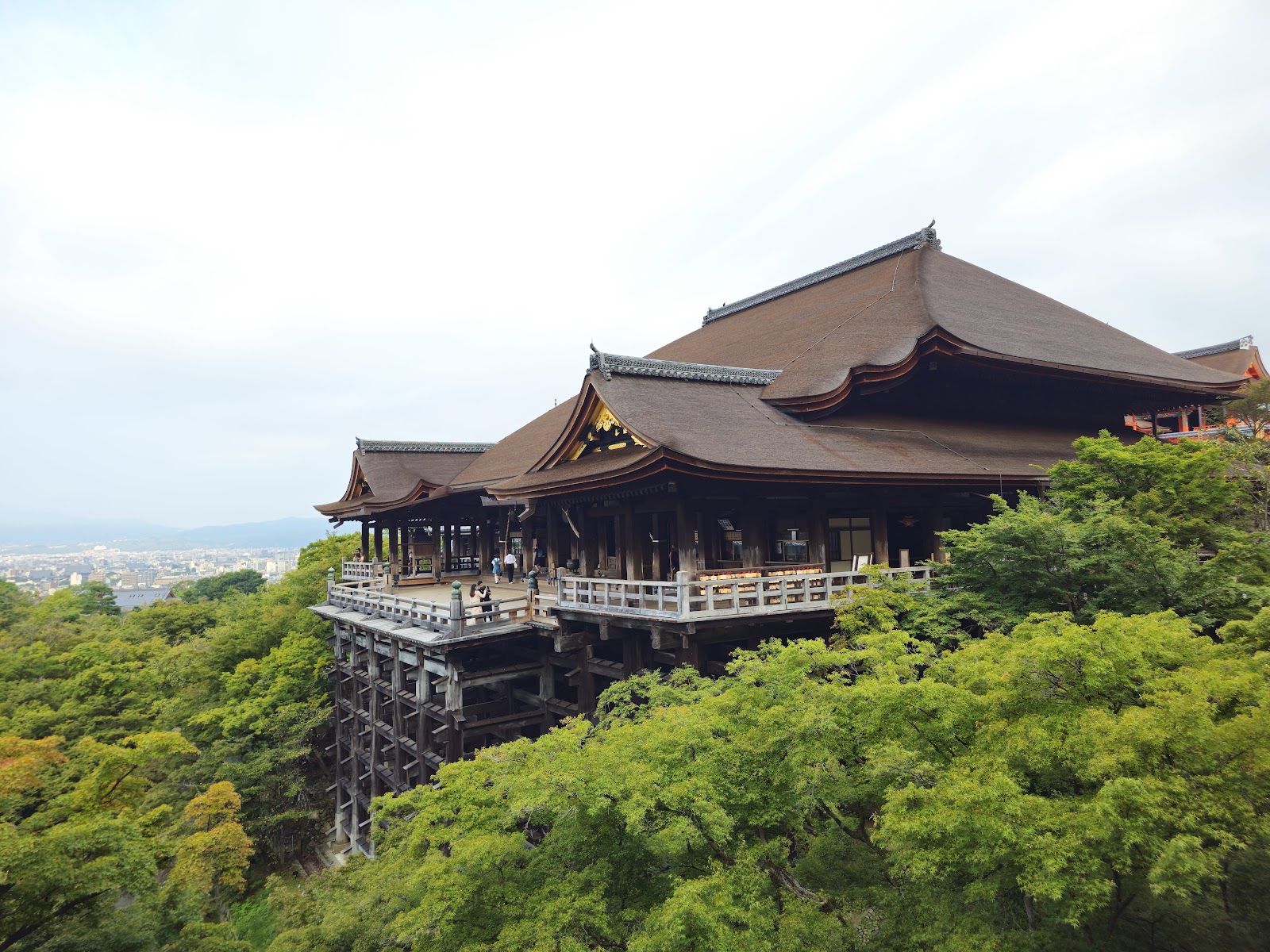
The main hall of Kiyomizu-dera juts out from the forested slope of Otowa-yama on a platform of interlocked hinoki pillars — no nails, just joinery — thirteen metres above the hillside. From that wooden stage, the city of Kyoto spreads out below you, framed by cedar and maple depending on the season. It is a view that has drawn pilgrims, warriors and curious travellers for well over a thousand years.
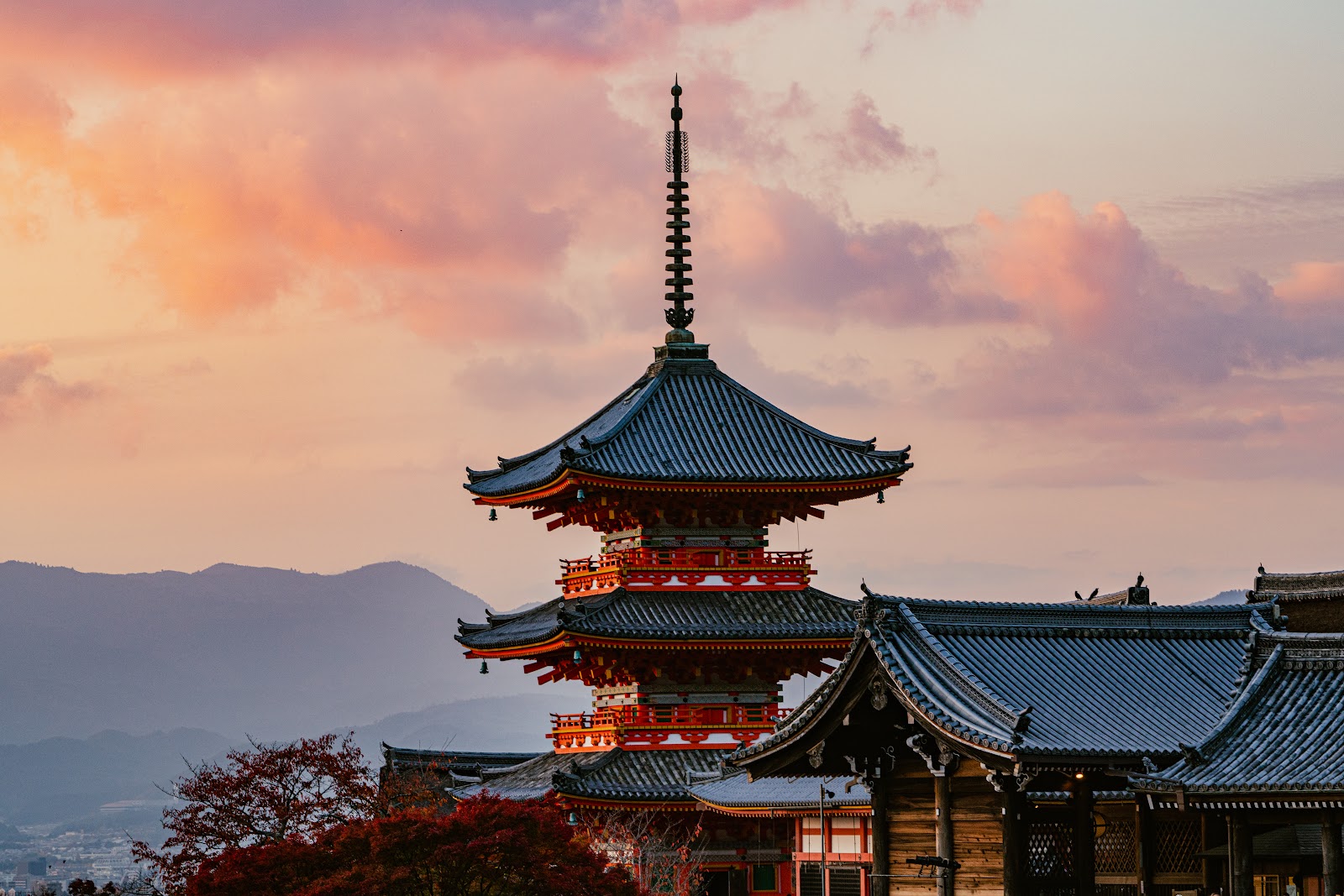
At the base of the hill, the Otowa waterfall splits into three channels. People queue to drink from each one, each stream associated with a different blessing. The temple grounds hold thirty structures across 130,000 square metres, including a three-storied pagoda, guardian-flanked gates and a small shrine where two stones, set eighteen metres apart, are said to test your luck in love.
💛 What travellers fall for
People who return tend to arrive just after the 6 AM opening, when the stage is nearly empty and the light on the valley is still low. They also mention skipping the Jishu Shrine queue and walking instead to the Okunoin Hall — its own small stage, its own unobstructed angle back across the main hall's cypress-bark roof.
The story behind Kiyomizu-dera Temple
The temple's founding is traditionally traced to 778 CE, when a monk named Enchin is said to have discovered a waterfall in the Higashiyama hills and built a small hall beside it. The warrior Sakanoue no Tamuramaro later became its patron, and the site grew under imperial and shogunal support through the Heian and Edo periods.
The structures standing today date largely from 1633, when Tokugawa Iemitsu ordered a full reconstruction after fire destroyed the earlier buildings — a fate the temple had suffered multiple times across its history. Despite its age and its status as a UNESCO World Heritage Site, it remains an active place of worship for the Hosso sect of Buddhism.
Good to know
From JR Kyoto Station, take City Bus 100 or 206 to Gojo-zaka, then walk ten minutes uphill. The temple opens at 6 AM — worth it. During special illumination events, closing extends to 9 PM. Last entry is 6 PM in summer, 5 PM in winter. Wear shoes you can walk in; the approach streets are steep cobblestone.
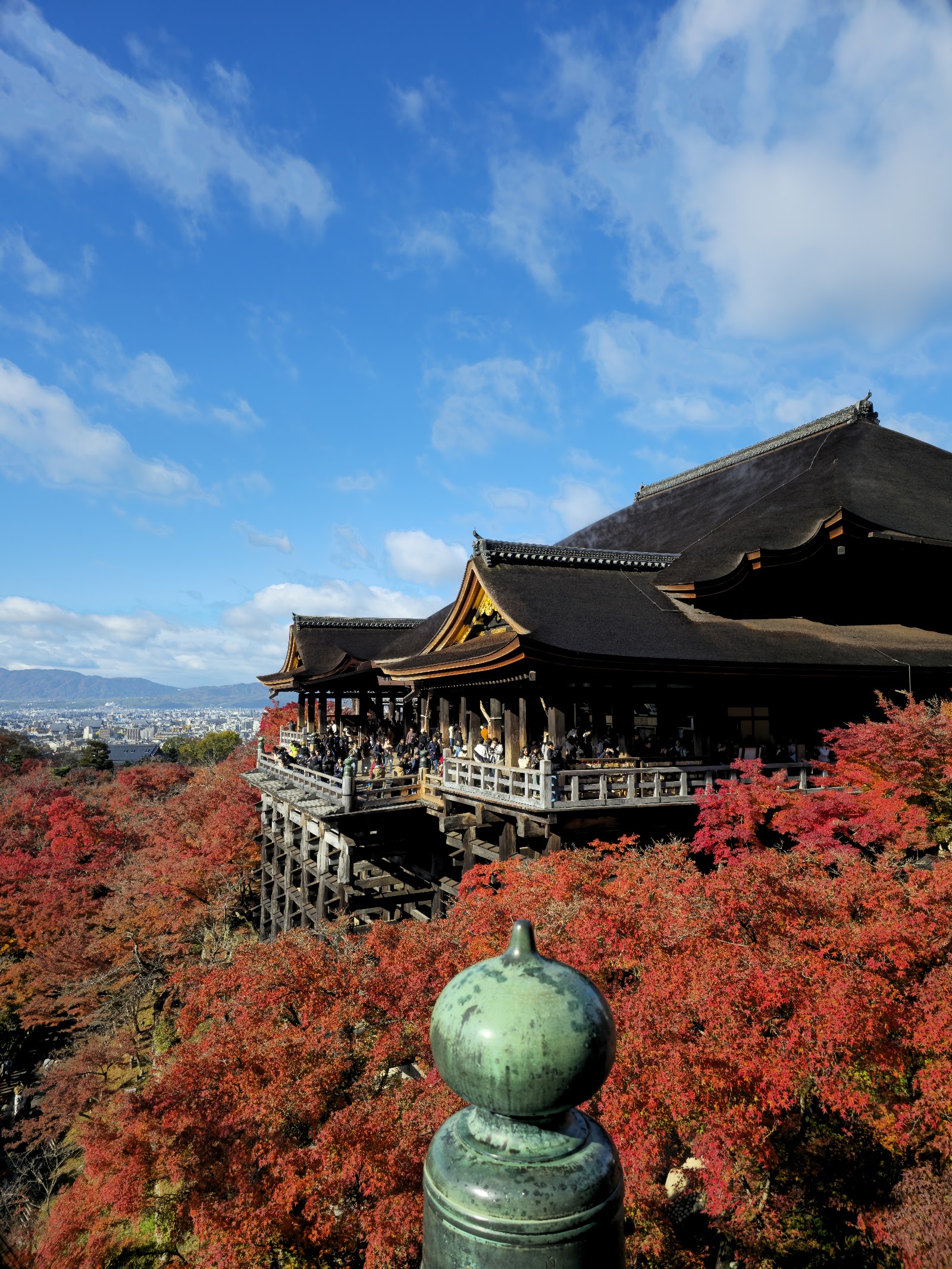
Spring brings cherry blossom along the approach paths and crowds to match; autumn turns the hillside copper and red from mid-November. Summer mornings are humid but bearable at opening time. Winter visits, especially after light snow, leave the cypress-bark rooflines dusted white against bare branches.
Where is Kiyomizu-dera Temple?
More tickets & tours for Kiyomizu-dera Temple
Book directly at the provider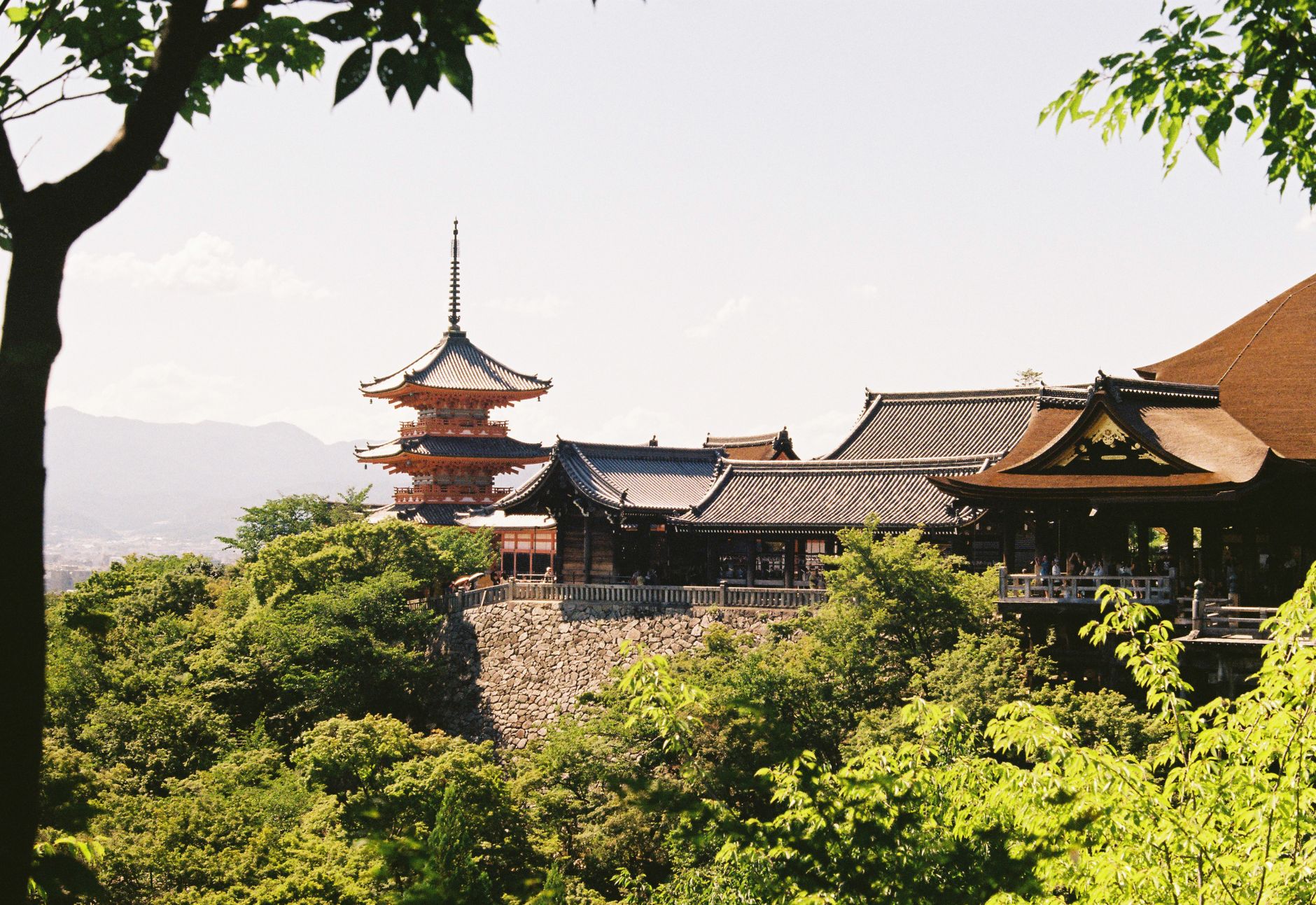
What travellers say about Kiyomizu-dera Temple
Kiyomizu-dera is one of the most visually striking temples in Kyoto, set against a mountain backdrop with dense tree coverage surrounding the hillside. The elevated viewing area offers wide panoramic views across Kyoto and becomes especially impressive when seen through the surrounding trees. The area can become heavily crowded during peak hours, but the scale of the temple and scenery still make the visit worthwhile. Walking through the grounds feels immersive, with wooden structures, stone paths, and layered views opening up throughout the complex. Despite the popularity, the site remains very well maintained and visitors should remain respectful, as it is still an active religious location. Taking time to slowly explore the grounds rather than rushing through for photos makes the experience much more rewarding. Overall, one of Kyoto’s most memorable cultural landmarks and a place that fully lives up to its reputation.
One of the worlds most iconic UNESCO heritage sites in Kyoto. Wonderful architecture on hill top. Wonderful lord Buddha meditation 🧘 idol make you feel powerful and powerful. Access: Kyoto city buses are easily accessible. 207 is best . It take about 30 min to reach at Kyomizu Michi stop. From there, about 1.5 km you have to walk to reach the temple. Parking lot is also available if you have car 🚗 or bus 🚌. But for that you need to consult from previous as this place is very busy and crowded. Lots of shops are surrounded there. You can buy some souvenirs or gift 🎁 according to your choice. Have a good experience.
Visiting Kiyomizu-dera Temple was both beautiful and meaningful. The temple offers some amazing photo spots, especially with the elevated wooden terrace and views over Kyoto. Walking around with my family, every corner felt like a perfect picture. One of the most interesting parts was the famous “three streams” of water (Otowa Waterfall). Each stream represents a different wish—health, success, and love—which makes the experience more symbolic and personal. It’s simple, but surprisingly meaningful when you’re there. The atmosphere is lively yet still spiritual, and the walk up to the temple is full of small shops and local charm. Tip: Try to visit early or later in the day for fewer crowds and better photos. A must-visit in Kyoto—beautiful views, cultural depth, and memorable moments.
Visiting Kiyomizu-dera was one of the most unforgettable experiences of my trip to Kyoto. The temple is absolutely breathtaking, blending history, culture, and natural beauty in a way that photos simply cannot capture. Standing on the famous wooden stage and looking out over the city and surrounding hills was a magical moment. The entire area around the temple is just as charming, with beautiful traditional streets, shops, and tea houses leading up to the entrance. I especially loved the peaceful atmosphere despite the number of visitors. Drinking from the Otowa Waterfall and learning about its traditions made the visit even more meaningful. Kiyomizu-dera is more than just a sightseeing spot—it’s a place where you can truly feel the spirit and history of Kyoto. An absolute must-visit and easily one of the highlights of my journey in Japan.
We arrived by bicycle as we were on a bike tour. I did notice not a lot of car parking available. We arrived at around 7:30am and it was a great time to visit. There was already a number of visitors both locals and tourists but it still felt very relaxed. The architecture of the buildings both the shrine and temple were astonishing. I loved admiring the small details and the care thats been taken to maintain this area over so many centuries. Walking through the entire complex was a highlight of my Kyoto trip. Views over Kyoto from the mountain side was also very good.
More of Kyoto
Discover where to stay, what to do and the best deals for your trip.
Explore Kyoto →More attractions in Kyoto
All of Kyoto →
Background adapted from Wikipedia (CC BY-SA) · map data © OpenStreetMap contributors · ratings & place photos via Google · other photos with per-image credit. Ticket links may earn us a commission at no extra cost to you.