
Terme Achilliane
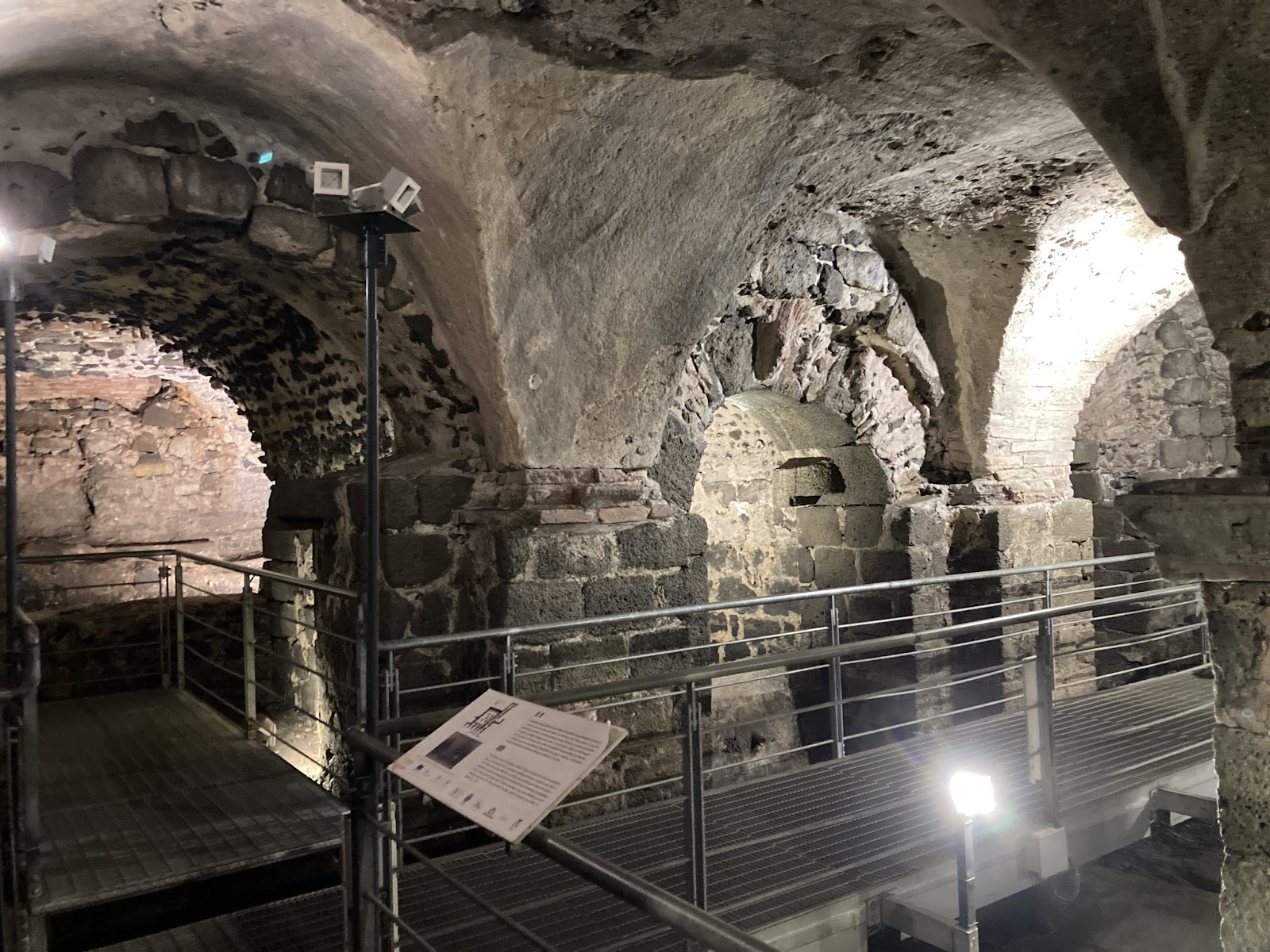
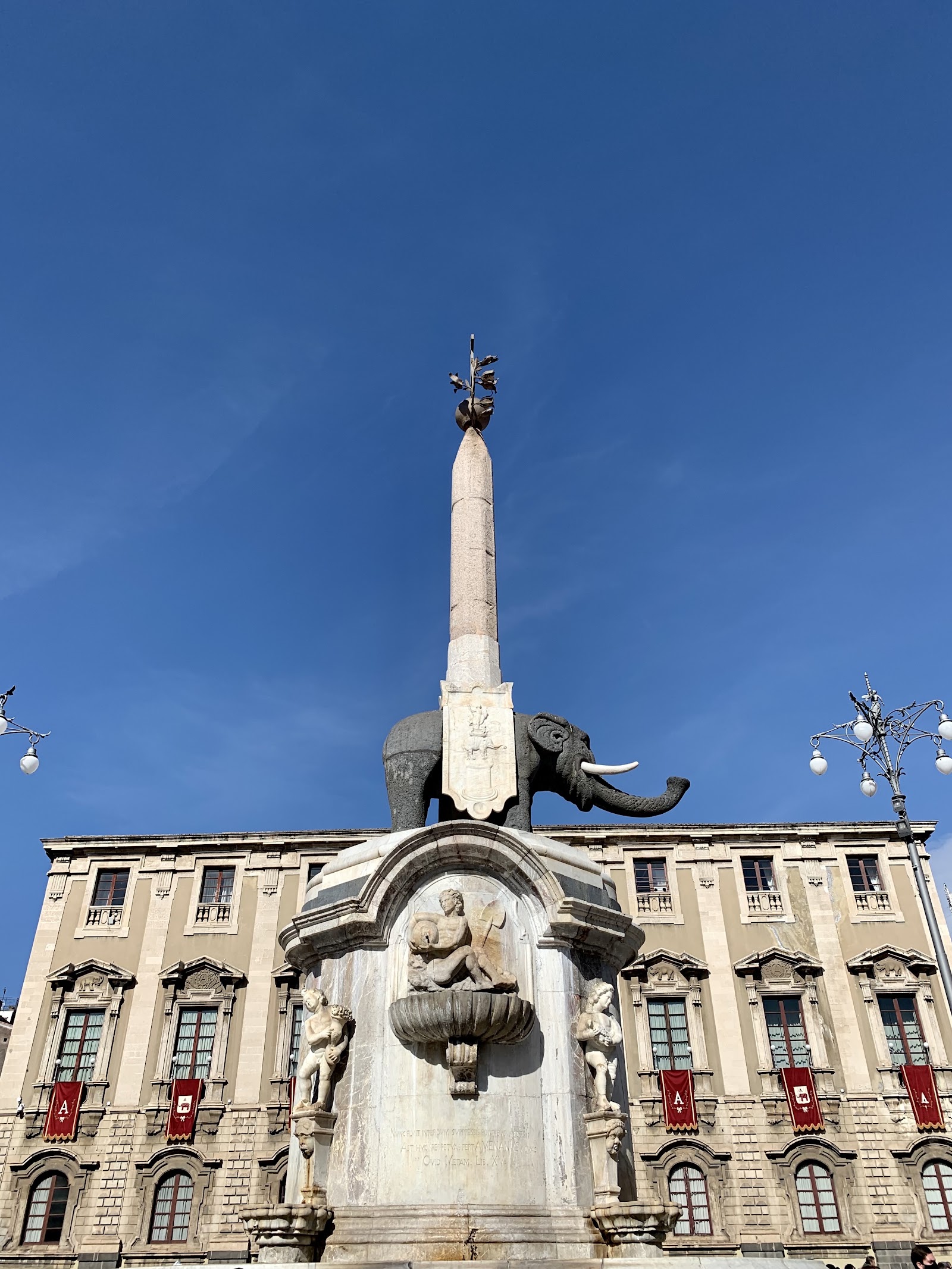
Somewhere to the right of the cathedral facade, between souvenir stalls selling lava-stone keychains, a ramp drops you underground and into the fourth century. The Terme Achilliane sit beneath the foundations of Catania's Piazza Duomo — a cross-vaulted hall, 11 metres wide, marble-lined basins, and ceiling stuccos of vine tendrils and cupids that earned the complex its other name, the Bagno di Bacco.
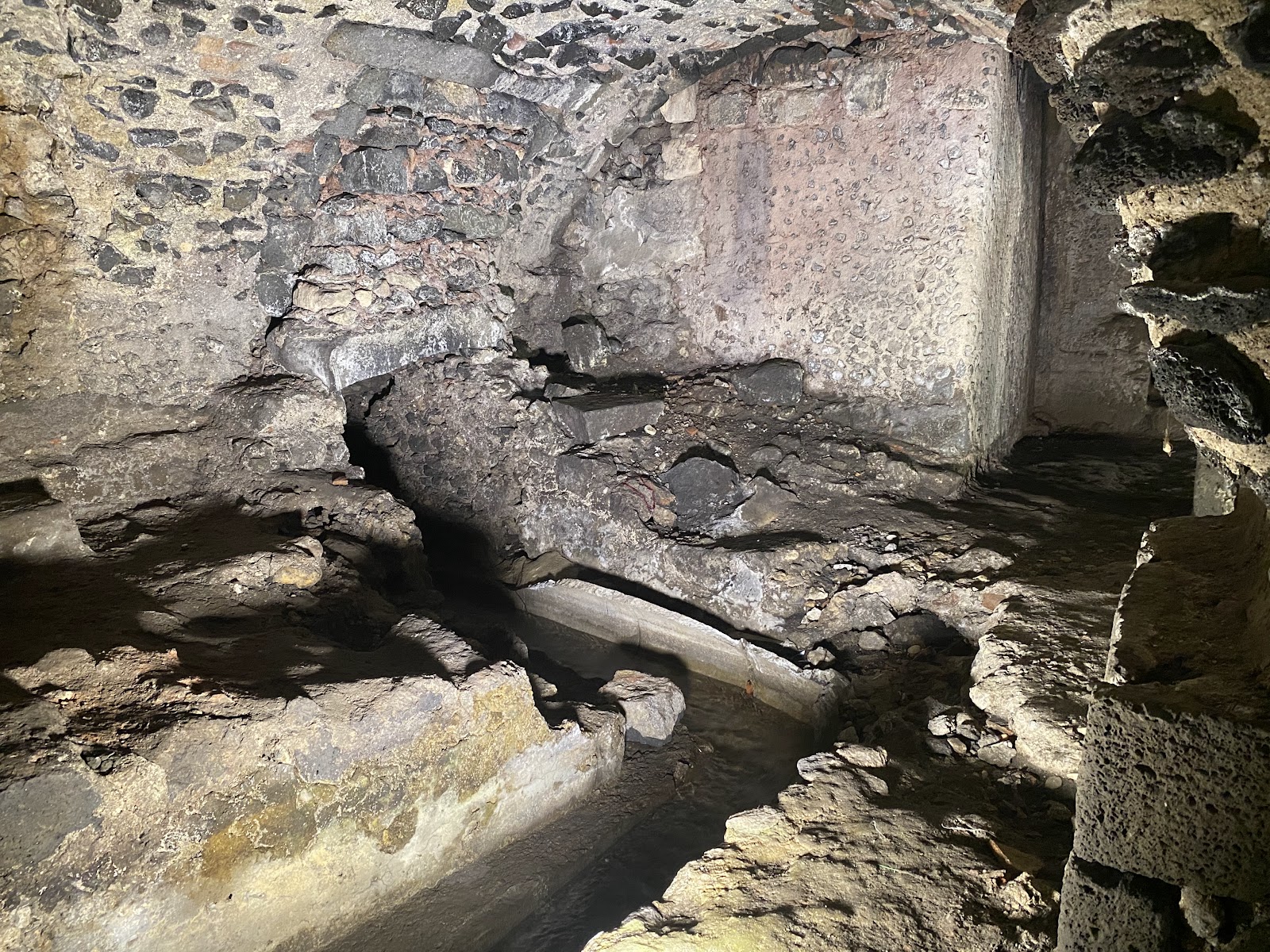
The baths were swallowed by the earthquake of 1693 and only recovered in the eighteenth century, when Ignazio Paternò Castello, Prince of Biscari, dug them out from the accumulated rubble. What he found — and what you find now — is a fragment of a far larger Roman complex that once stretched from here toward Via Garibaldi, fed not by a hot spring but by the underground Amenano river flowing silently beneath your feet.
💛 What travellers fall for
People who've been down twice tend to mention two things: the temperature, which stays cool regardless of the August heat above, and the moment a staff member from the Diocesan Museum unlocks the gate and leads you in — it has the feeling of being shown something private rather than sold a ticket.
The story behind Terme Achilliane
The baths date to the late imperial period, most likely the fourth century CE, though the founding remains debated. The name comes from a six-fragment marble inscription in Lunense marble — now held at the Museo Civico Castello Ursino — dated to the first half of the fifth century. Reused capitals associated with the reign of Constantine I have been found in the adjacent cathedral, suggesting the complex was already being cannibalized for building material even before the city moved on.
Two earthquakes — 1169 and then the catastrophic tremor of January 1693 — buried the structure under metres of debris. The visiting artist Jean Houel documented the central hall and its stucco decoration in gouaches now in the Hermitage in St. Petersburg. The architect Sebastiano Ittar later redrew the plan, giving scholars a clearer sense of a complex that, even now, is only partially excavated.
Good to know
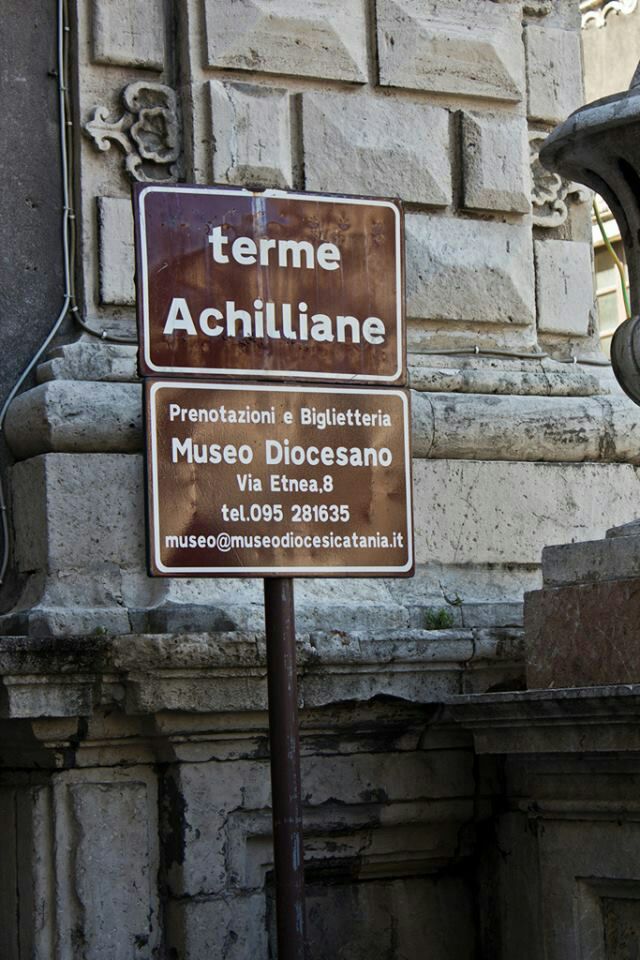
Tickets are bought at the Museo Diocesano, metres south of the cathedral. Entry is €5, or €10 combined with the museum. Visits are by request, closed Sundays. Allow 20–30 minutes. Bus lines 538, 556, and the BRT routes stop at Piazza Duomo; the Dusmet Duomo stop is a two-minute walk.
Where is Terme Achilliane?
More tickets & tours for Terme Achilliane
Book directly at the provider
What travellers say about Terme Achilliane
Little roman bath complex, the entrance to the place is included in the tickets to Basilica of Saint Agatha. There are a couple of choices when it comes to the combo tickets. One option is to visit either Basilica + achillian baths + diocese museum and the other is to add also other important churches dedicated to Saint Agatha. I recommend to buy the the second option. As the place is little and the corridors are narrow I think that this is not easy place to visit during high season. There are educational boards along the corridors. I believe also that it is the great place to visit during the long scorching Italian summer day. It's nice to stay put for a little while and listen to the flow of the water and just relax. There are no toilets here, but they are in diocese museum.
I second what was said : I comes with the cathedral ticket so fair price as its included. Wont take you much more than 15min as its not big BUT it is very well restored/conserved and you will project yourself in what it could have been in the past ! The flow of water helps a lot. Was nearly alone visiting it so having the place for myself helped enjoy it , maybe different if crowded tbh. Wont feel you wasted 15min dont worry
Small and fast, really cool that they are right under the square. The hours are random so if it's open just go. Entrance outside to the right of the church doors. We went in december and got a treat of age-tested but fascinating life sized sculptures in a immersive nativity scene. The carpenter's head fell off, and the ducks were in an advanced state of moult, but it deepened my reflection on the passage of time while taking the time to witness these ancient baths.
We took the combi ticket, where we could visit 7 sites. The thermes where also included in this ticket. Was nice to visit, but I wouldn't buy a separate ticket for it. Thermes are really small and also not a lot to see inside.
Really interesting place with rich history and many layers to it. I recommend doing the Catania subterranean tour as it includes this place but with detailed history so you can easily spend about 20 minuets enjoying it rather than running through thick the low score reviews do. Yes it’s falling apart but if you actually look you’ll be able to see the history
More of Catania
Discover where to stay, what to do and the best deals for your trip.
Explore Catania →More attractions in Catania
All of Catania →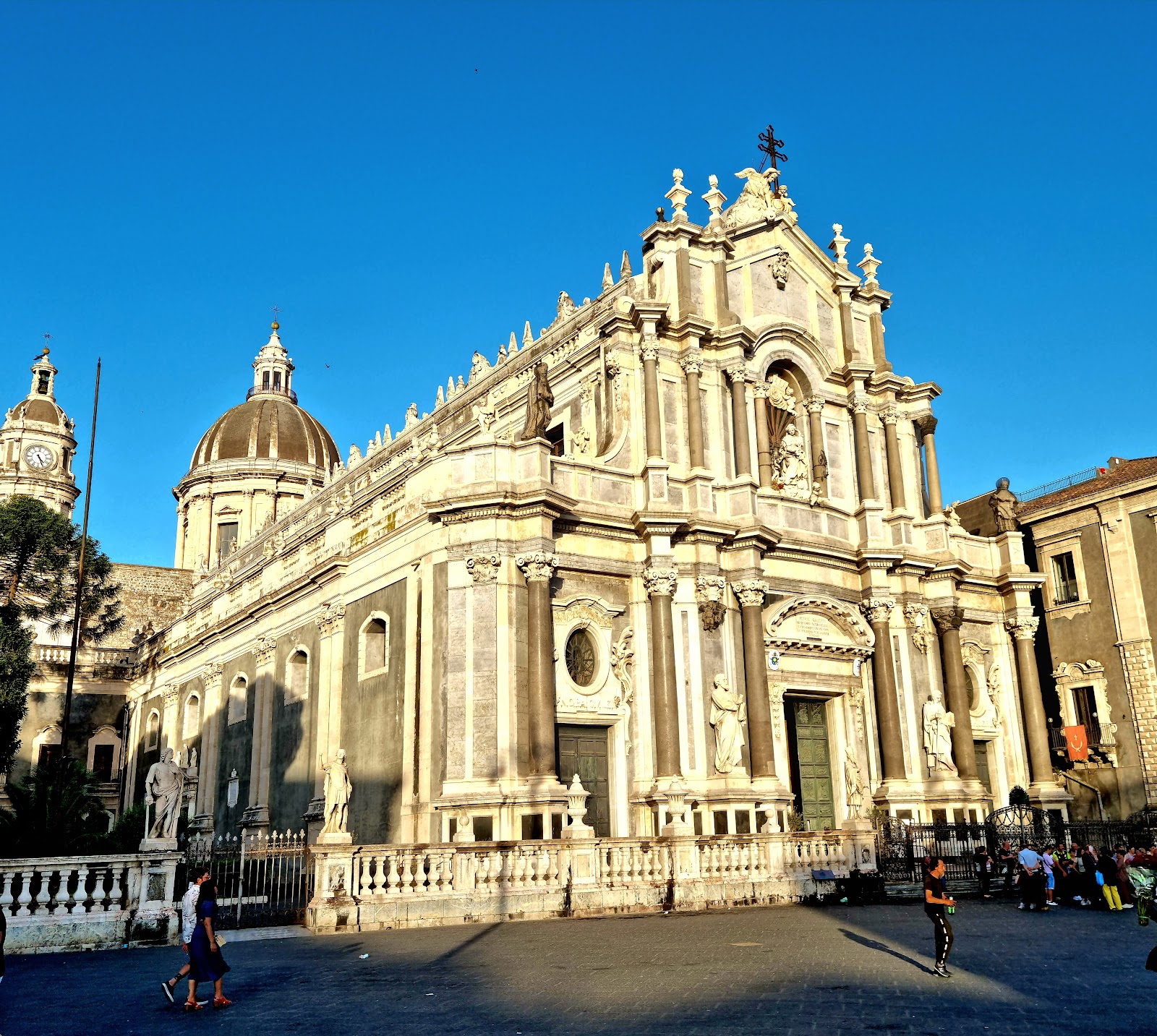
Background adapted from Wikipedia (CC BY-SA) · map data © OpenStreetMap contributors · ratings & place photos via Google · other photos with per-image credit. Ticket links may earn us a commission at no extra cost to you.