
Temple of Jupiter
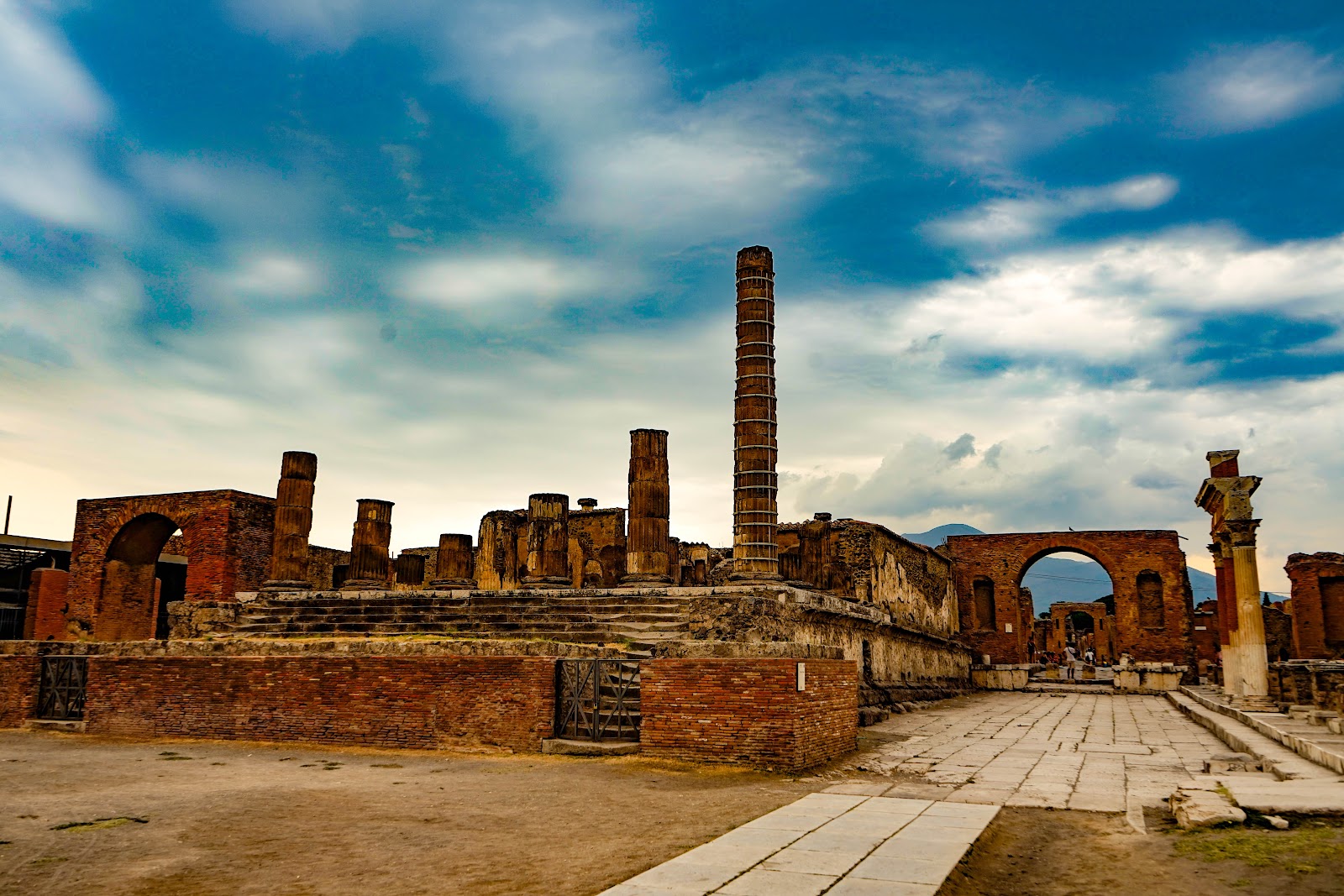
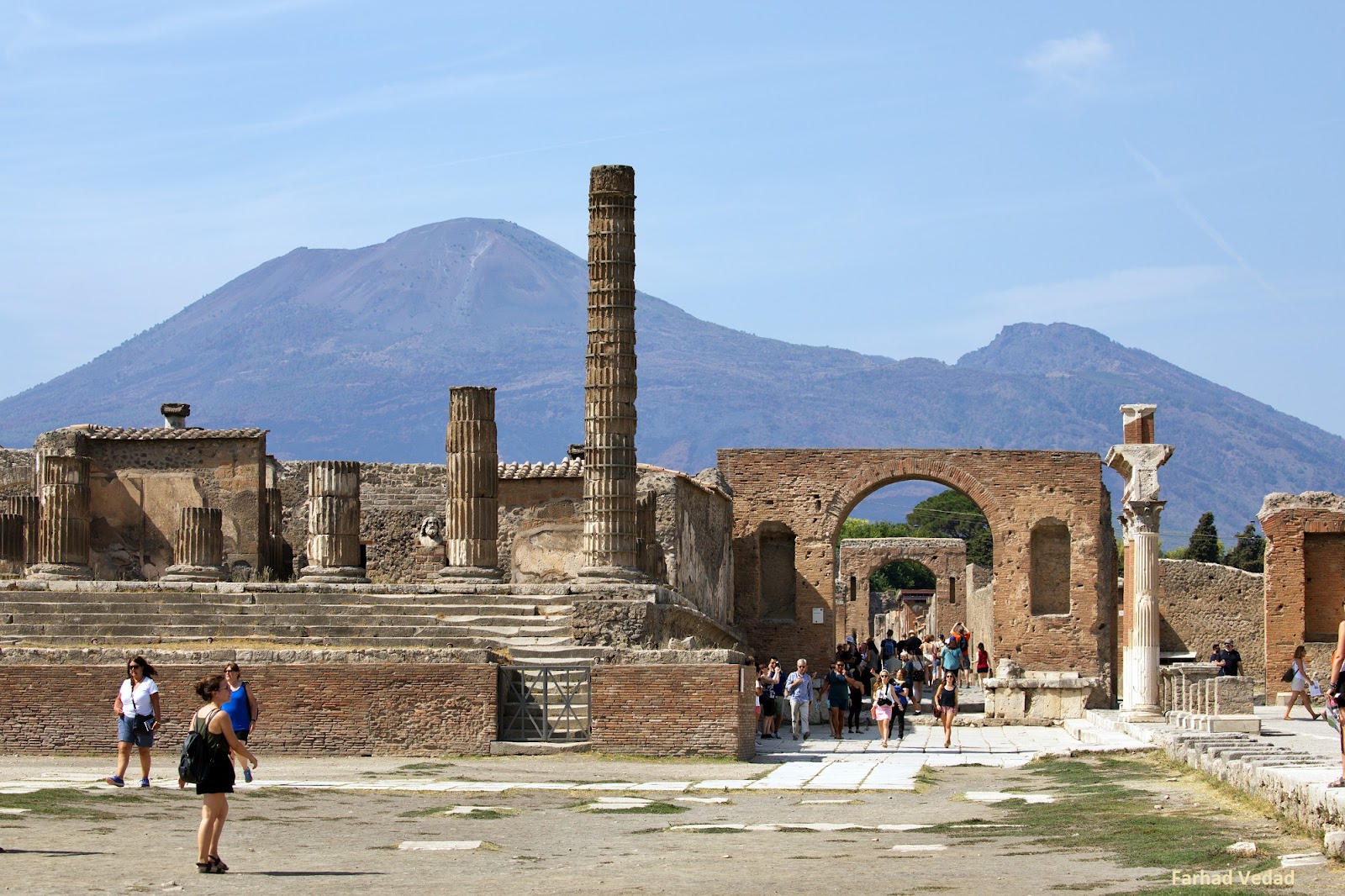
At the northern end of the Forum, the Temple of Jupiter stops you with its sheer verticality. The podium alone stands three metres off the ground, and the six column stumps that remain — originally twelve metres tall — give you an immediate sense of what the colonnade would have done to anyone walking up from the market below. This was, by design, the highest point in civic Pompeii.
The altar sat out in front, in full view of the Forum, so the city's public religious life played out here as spectacle. Below the main hall, a chamber held the treasury and sacrificial offerings — the temple was the city's spiritual and financial centre in one building.
💛 What travellers fall for
People who come back tend to pause on the podium steps and look south down the full length of the Forum rather than up at the columns. The alignment is deliberate — the whole civic space was oriented to frame this temple — and standing here makes the urban logic of ancient Pompeii suddenly legible in a way no floor plan quite manages.
The story behind Temple of Jupiter
The Samnites built the temple in the second half of the 2nd century BC, dedicating it to Jupiter. Construction happened in two stages, with an expansion toward the end of that same century enlarging the structure onto its Italic podium — roughly 37 metres long and 17 metres wide, with steps running the full width of the facade.
When Rome made Pompeii a colony in 80 BC, the temple was rededicated to the Capitoline Triad — Jupiter, Juno, and Minerva — following the Roman convention of placing a Capitolium at the civic centre of every colony. An earthquake in 62 AD left it badly damaged, and it was still under restoration when Vesuvius erupted in 79 AD. A marble inscription in the cella names one Spurius Turranius Proculus Gellianus among those who contributed to post-colonial work on the building.
Good to know
The temple is one of the first major structures you reach from the Forum entrance, so mornings are quieter here before tour groups arrive. Book timed tickets well in advance for April–October; slots go two to four weeks out. Bags over 30×30×15 cm must be left at the cloakroom. Since November 2024, tickets are nominative — bring ID.
Summer visits mean direct sun on stone with little shade — the open Forum and raised podium offer no canopy. Spring (April–May) and autumn are considerably more comfortable, with temperatures in the mid-teens to low twenties Celsius. July and August can push past 35°C, and the white travertine reflects heat back at you.
Where is Temple of Jupiter?
More tickets & tours for Temple of Jupiter
Book directly at the provider
What travellers say about Temple of Jupiter
One of the most important landmarks in Pompeii, the Temple of Jupiter stood at the northern end of the Forum and was dedicated to Jupiter, the king of the Roman gods. Built long before the eruption of Mount Vesuvius in AD 79, it served as a major religious and political centre for the city. Even in its ruined state, the remaining columns and elevated position provide impressive views across the Forum towards Vesuvius. A must-see site that highlights the grandeur and importance of ancient Pompeii.
The Temple of Jupiter, or Tempio di Giove, is a striking architectural landmark in Pompeii, commanding attention with its majestic presence and historical significance. Dedicated to the king of the gods, this grand temple showcases magnificent Doric columns and beautifully preserved remnants of its intricate facade, offering a glimpse into the religious fervor of the ancient Pompeians. The temple's elevated position provides breathtaking views of the surrounding area, enhancing its aura of reverence and spirituality. As you explore this sacred site, you can almost feel the echoes of prayers and offerings that once filled the air, making it a poignant reminder of the deep cultural and religious roots that shaped Pompeii's identity. A visit to the Temple of Jupiter is an inspiring journey into the heart of ancient worship and divine majesty.
The Forum of Pompeii was the central public space in the ancient city of Pompeii. It had a temple dedicated to Jupiter and was filled with shops and market stalls where people traded and conducted business. Excavations at the site have uncovered artifacts that give us a glimpse into the daily life of the ancient Romans.
Love the history of this place. So much to see and just not enough time to see it all.
Right at the end of the forum. Cool to see the foundations of the temple that would have dominated the square.
More of Pompeii
Discover where to stay, what to do and the best deals for your trip.
Explore Pompeii →More attractions in Pompeii
All of Pompeii →

Background adapted from Wikipedia (CC BY-SA) · map data © OpenStreetMap contributors · ratings & place photos via Google · other photos with per-image credit. Ticket links may earn us a commission at no extra cost to you.