
Temple of Apollo
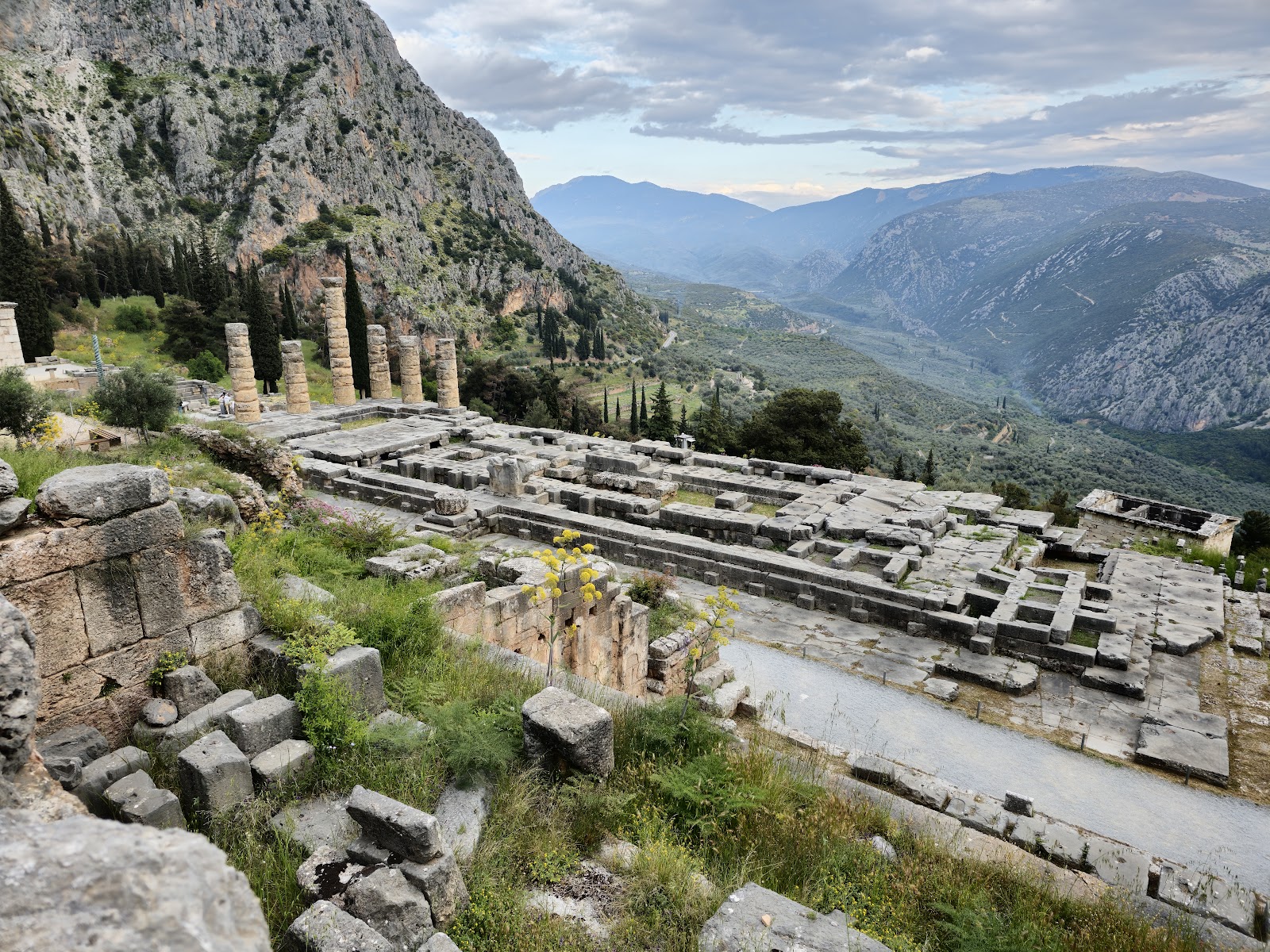
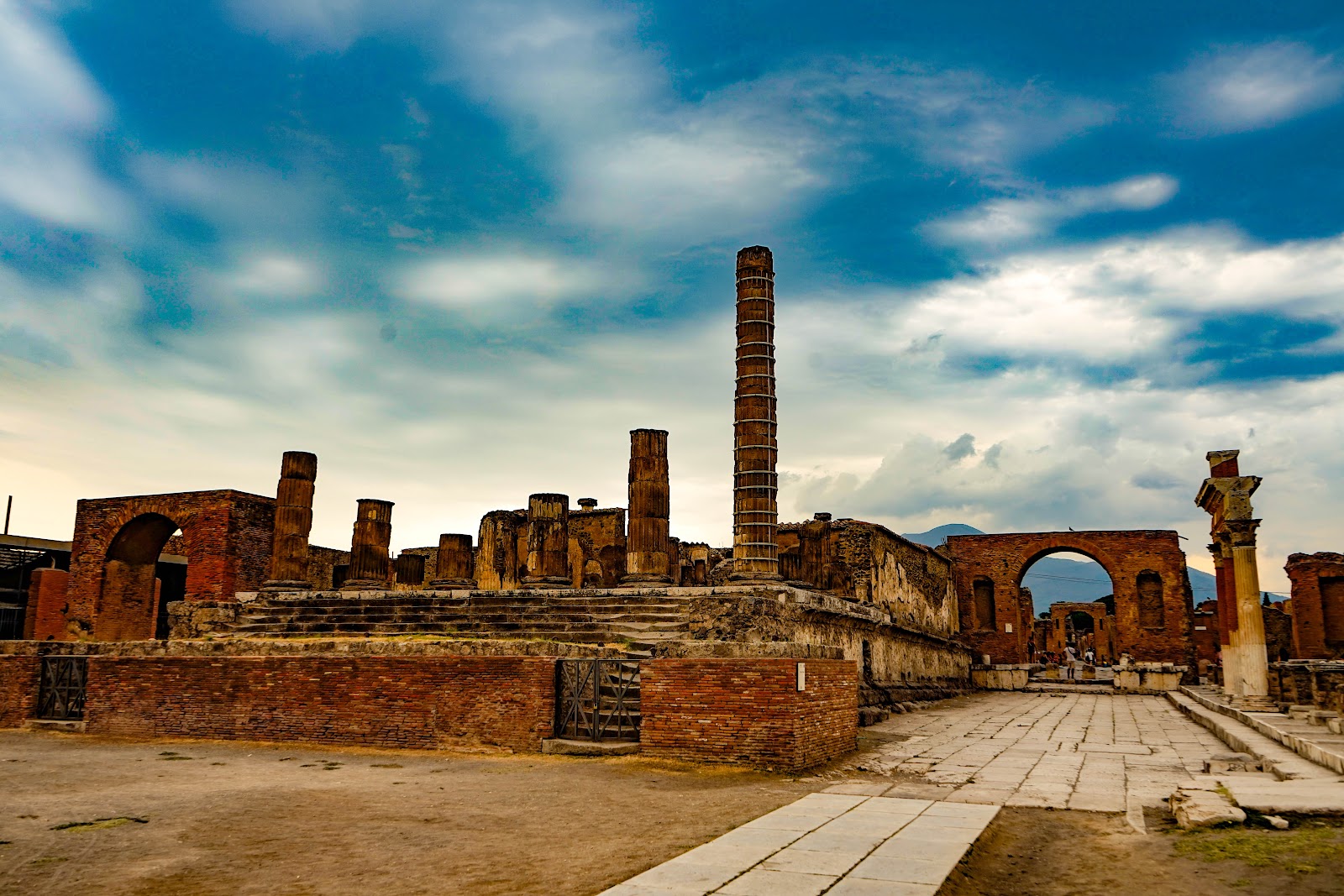
The first thing you notice is the floor. Inside the Temple of Apollo's precinct, diamond-shaped stones of different colors are laid so precisely that they read as three-dimensional cubes — an optical trick that has been working on visitors for two thousand years. The temple itself rises on a high podium at the western edge of the Forum, its Corinthian columns still intact enough to give you a clear sense of scale against the open sky.
This is the oldest sacred site in Pompeii, predating the city's Roman period entirely. When Vesuvius buried it in 79 CE, the sanctuary was still mid-repair from a major earthquake seventeen years earlier.
💛 What travellers fall for
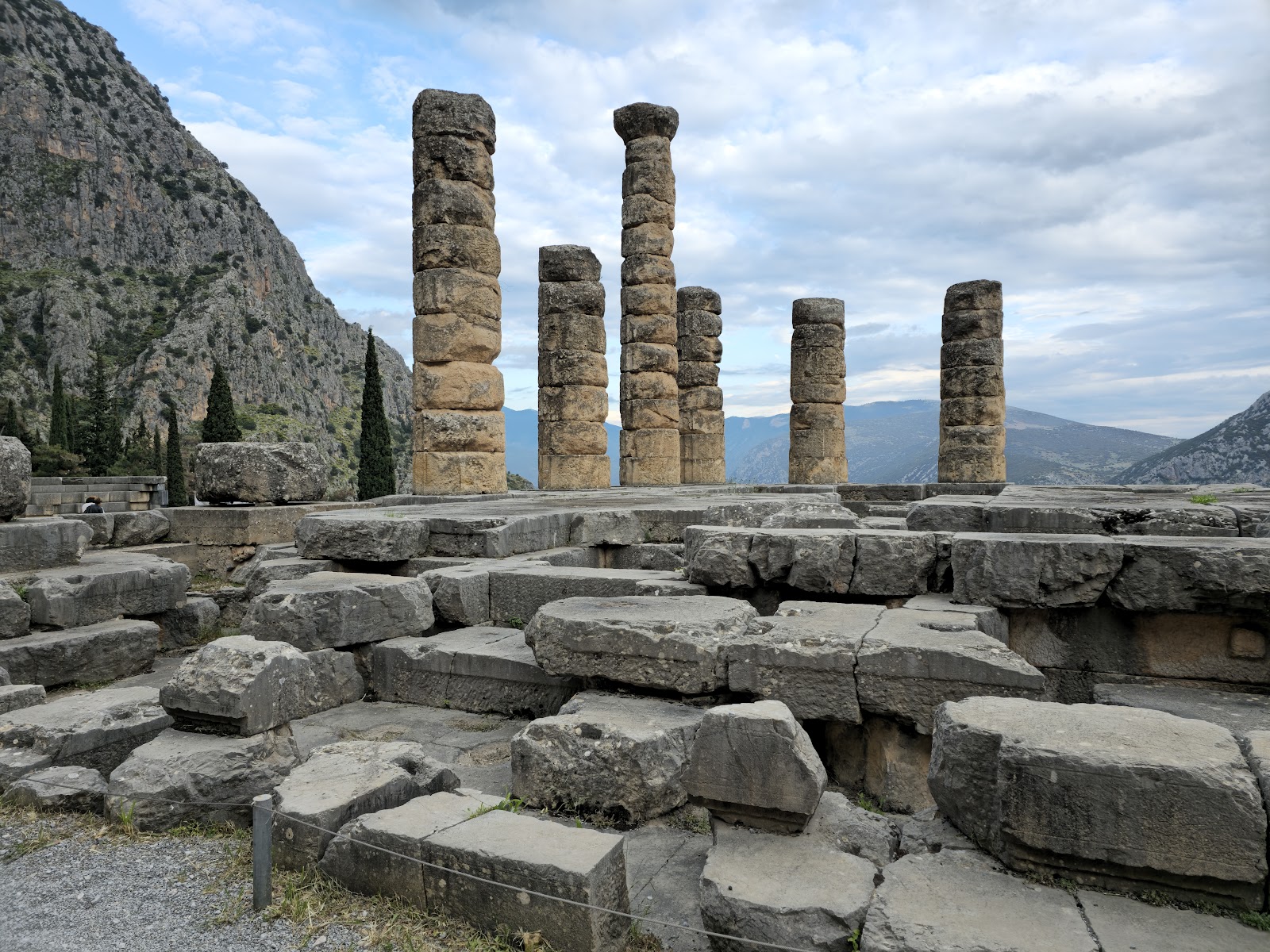
People who come back to this corner of the Forum tend to slow down at the marble sacrificial altar — a single monolithic block inscribed with the names of the duumviri who dedicated it, one of the best-preserved original marble pieces on the whole site. The bronze Apollo in his archer's stance is a replica; the original is in Naples, which makes the comparison worth making if you visit both.
The story behind Temple of Apollo
Apollo's presence in Pompeii goes back to the 6th century BCE, when this site held an open-air altar and little else. Through the Samnite period it grew into a proper sanctuary, and the layout you see today — 48 Ionic columns forming a portico around the central temple, the sundial commissioned by duumviri Lucius Sepunius Sandilianus and Marcus Erennius Epidianus, the Oscan inscription left by quaestor Oppius Campanus — dates largely from a 2nd-century BCE rebuild.
The 62 CE earthquake damaged the complex badly, and reconstruction was still underway when Vesuvius erupted in 79 CE. Excavation began in February 1817, though early archaeologists initially misread the dedication entirely, calling it first the Temple of Venus, then the Temple of Mercury.
Good to know
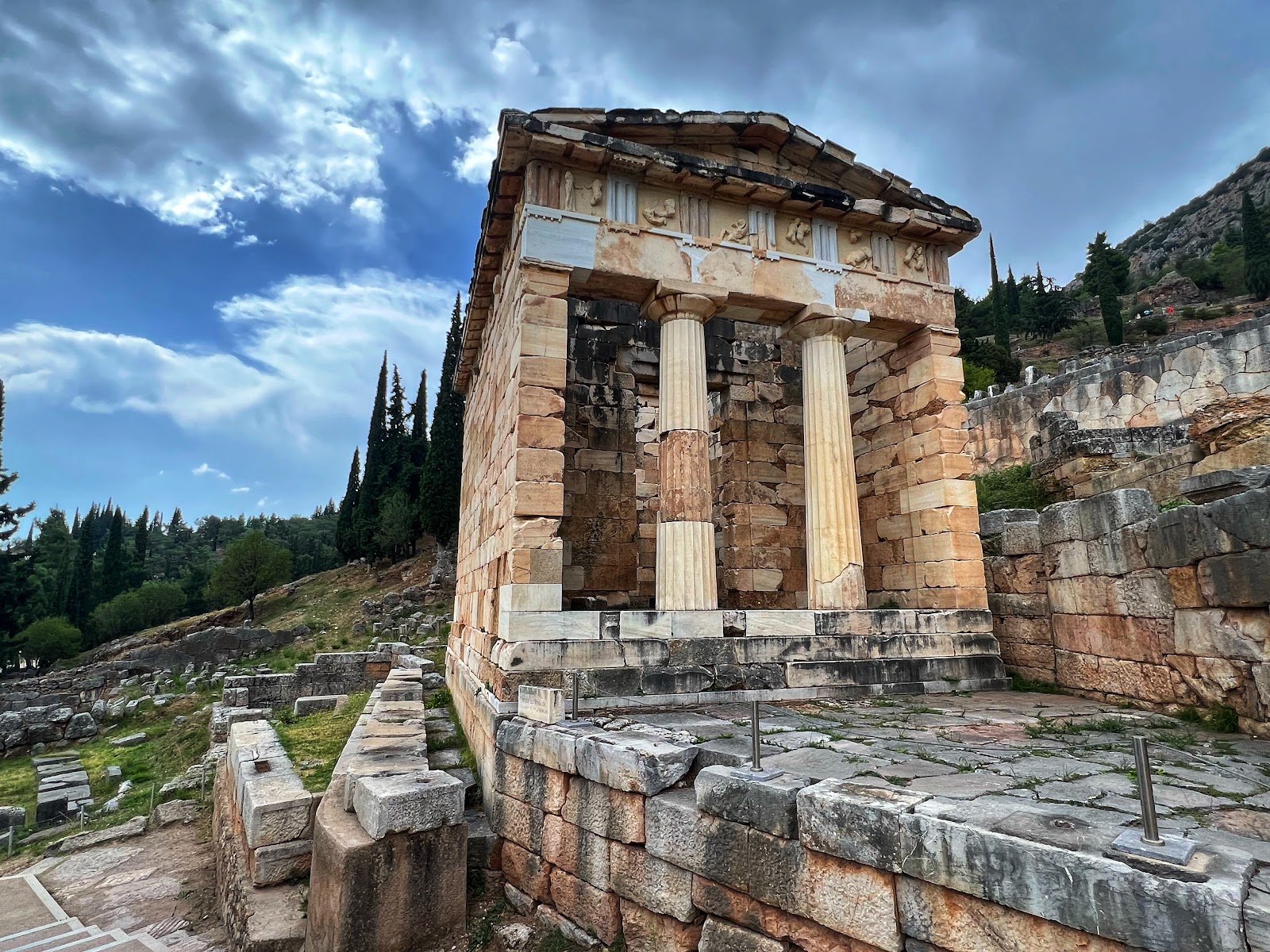
Enter via the Forum, where the temple precinct opens directly off the western colonnade. Tickets (€18 full price) sell out; book ahead and arrive early. The site closes 25 December, 1 January and 1 May. Allow 10–15 minutes here, then move through the adjacent Forum.
The precinct is entirely open to the sky with almost no natural shade, which matters enormously in July and August when temperatures regularly reach 30–32°C (86–90°F). April, May, September and October give you comfortable warmth without the midday weight of high summer; November brings the region's heaviest rainfall in persistent bursts.
Where is Temple of Apollo?
More tickets & tours for Temple of Apollo
Book directly at the provider
What travellers say about Temple of Apollo
An absolutely amazing experience! Even with the rain, you could see everything, even a glimpse or two of the fantastic veiw. The history is so rich, and the museum explains it all in a way that simply adds to the beauty. To anyone willing to go, don't simply look at the structures, but look out to the scenery beyond. It goes on for forever!! It was a wonderful experience. I will be going back someday.
We left Athens and spent the whole of the rest of the day at this amazing archaeological treasure with breathtaking scenery. There is no doubt that Delphi is an essential destination for anyone visiting Greece, offering a profound combination of historical significance and stunning architectural ruins. Situated on the dramatic slopes of Mount Parnassus, the site holds immense cultural value as the ancient omphalos (the navel of the world) and the home of the legendary Oracle of Apollo. The archaeological park is exceptionally well-preserved. Walking along the Sacred Way leads directly to the monumental ruins of the Temple of Apollo, where the foundations and standing columns provide a clear sense of the structure's original grandeur. Higher up the hillside, the 4th-century BC Ancient Theatre offers a brilliant look at classical acoustics and engineering, while the remarkably intact Ancient Stadium at the very top highlights the athletic history of the Pythian Games. A short walk down the main road leads to the Sanctuary of Athena Pronaea, home to the iconic circular Tholos, which remains an architectural masterpiece of the ancient world.
The Temple of Apollo is an incredible historical site and definitely worth visiting. Walking through the ancient ruins while overlooking the sea makes the experience unforgettable. The atmosphere is peaceful, and it's amazing to imagine the history that took place here thousands of years ago. The temple is well preserved, making it easy to appreciate its impressive architecture and significance. Whether you're interested in history, photography, or simply enjoying beautiful views, this is a must-visit destination. I highly recommend stopping here if you're in the area.
Very Beautiful. Go with a guide to get the full experience. Outside temple Site wasn't very busy but the museum was crowded. Giftshop and restaurant on site. Hat, water and sunscreen are a must.
The Temple to Apollo was an amazing archaeological landmark. It was dedicated to the Pythian Apollo who guided the oracle at Delphi. It is actually well preserved given the ravages of time that swept over Delphi. As always, you should do your own homework prior to visiting any ancient site to understand it and its significance.
More of Pompeii
Discover where to stay, what to do and the best deals for your trip.
Explore Pompeii →More attractions in Pompeii
All of Pompeii →

Background adapted from Wikipedia (CC BY-SA) · map data © OpenStreetMap contributors · ratings & place photos via Google · other photos with per-image credit. Ticket links may earn us a commission at no extra cost to you.