
Stagnone di Marsala (Lagoon)
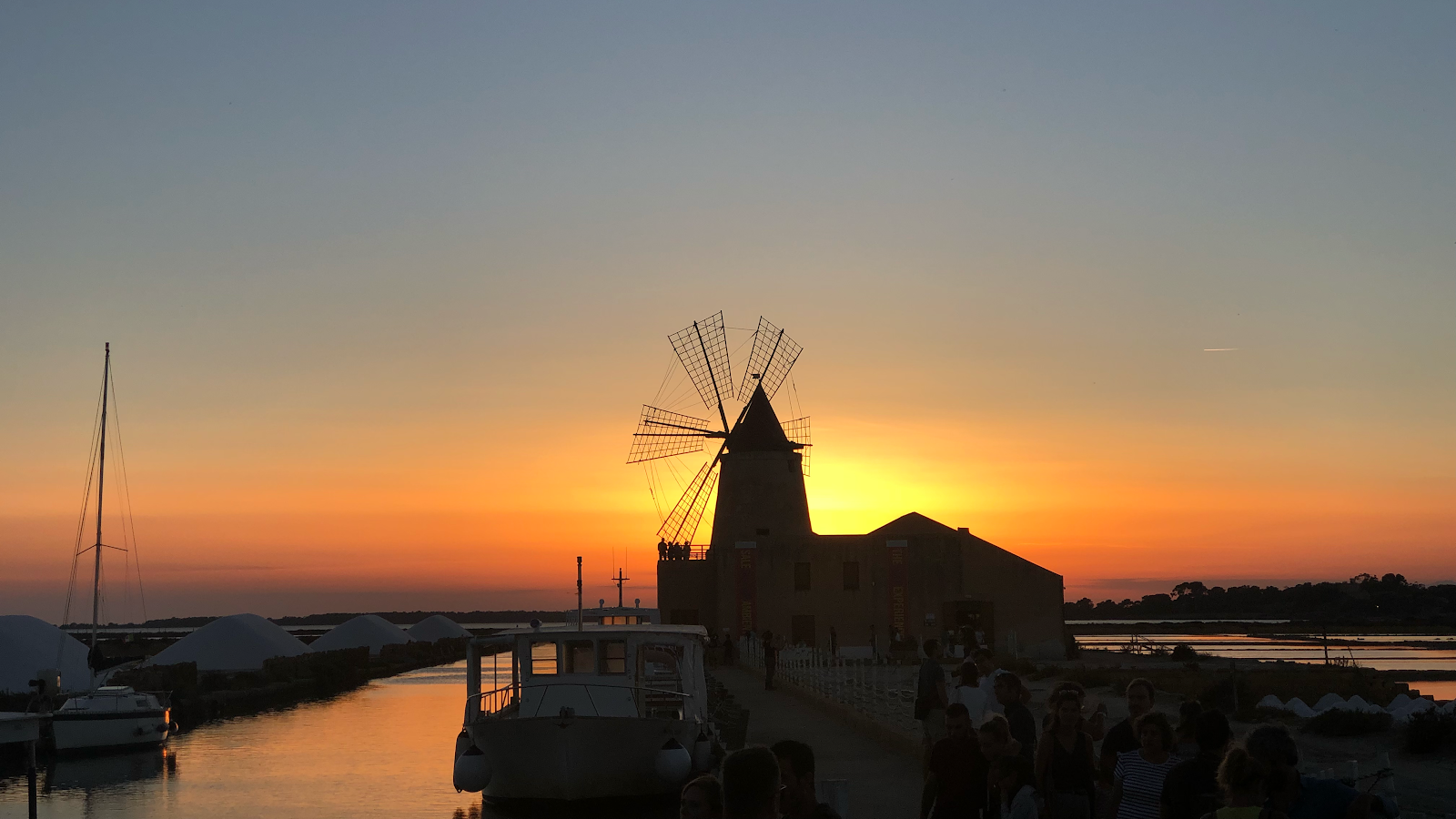
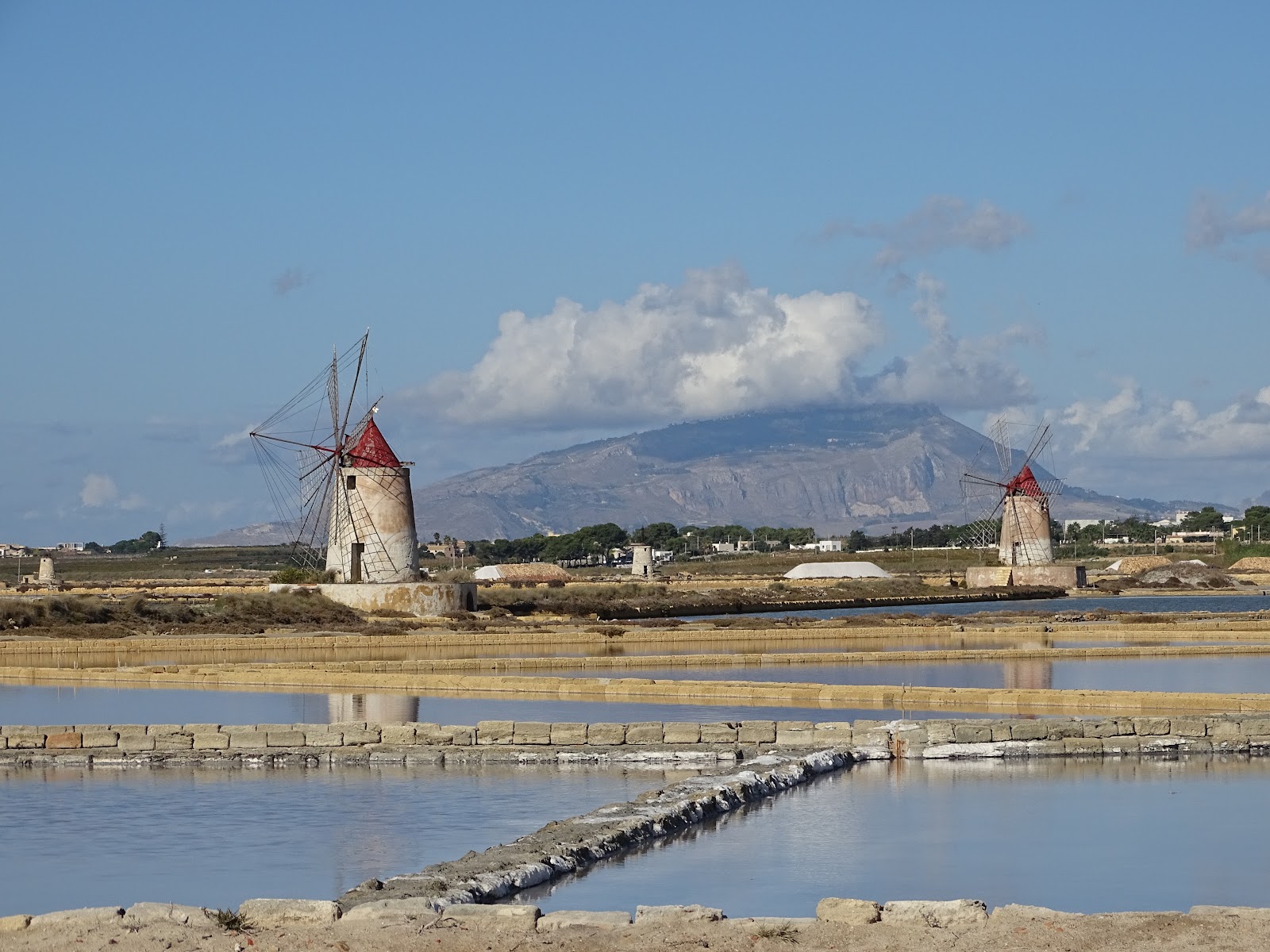
The water here is almost absurdly shallow — boats crossing to Mozia draw only sixty centimetres — and in summer it runs so warm it barely feels like the sea. What you're looking at across the Stagnone is Sicily's largest lagoon, a protected stretch of coast where four islands sit in water that turns pink and amber at the edges where the salt crystallises. Flamingos pick through the shallows. The six-bladed Ettore Infersa mill still turns, grinding salt on stone as it has since the sixteenth century.
This is a working landscape as much as a natural one. The salt pans between Trapani and Marsala have been harvested since the Phoenicians, and the geometry of the evaporation pools — white, rust, rose, depending on salinity and algae — reads like something designed rather than grown.
💛 What travellers fall for
People who come back tend to time a return around the Ettore Infersa mill's twice-weekly sunset operation in July and August — the mechanism cranks up, the guide explains Paolo Stampa's wooden gear system, and the light on the salt pans behind you does the rest. The sunset boat tour, which includes a glass of Marsala wine, is worth the €15–20 for the low-water perspective alone.
The story behind Stagnone di Marsala (Lagoon)
Phoenician traders founded Mozia on the island of San Pantaleo in the late eighth century BC, building it into one of the ancient Mediterranean's most significant commercial outposts. The salt pans they worked are still in use. Much later, in the sixteenth century, the windmills went up along the shore — the Ettore Infersa mill among them — and the salt-working infrastructure that defines the lagoon's silhouette today took its recognisable shape.
The Nature Reserve was established in 1984, bringing formal protection to a landscape already layered with Phoenician walls, Roman traces, and centuries of salt-worker knowledge. The Salt Museum, housed in a sixteenth-century salt worker's dwelling midway along the coast road, holds that industrial memory in a building that was itself part of the operation.
Good to know
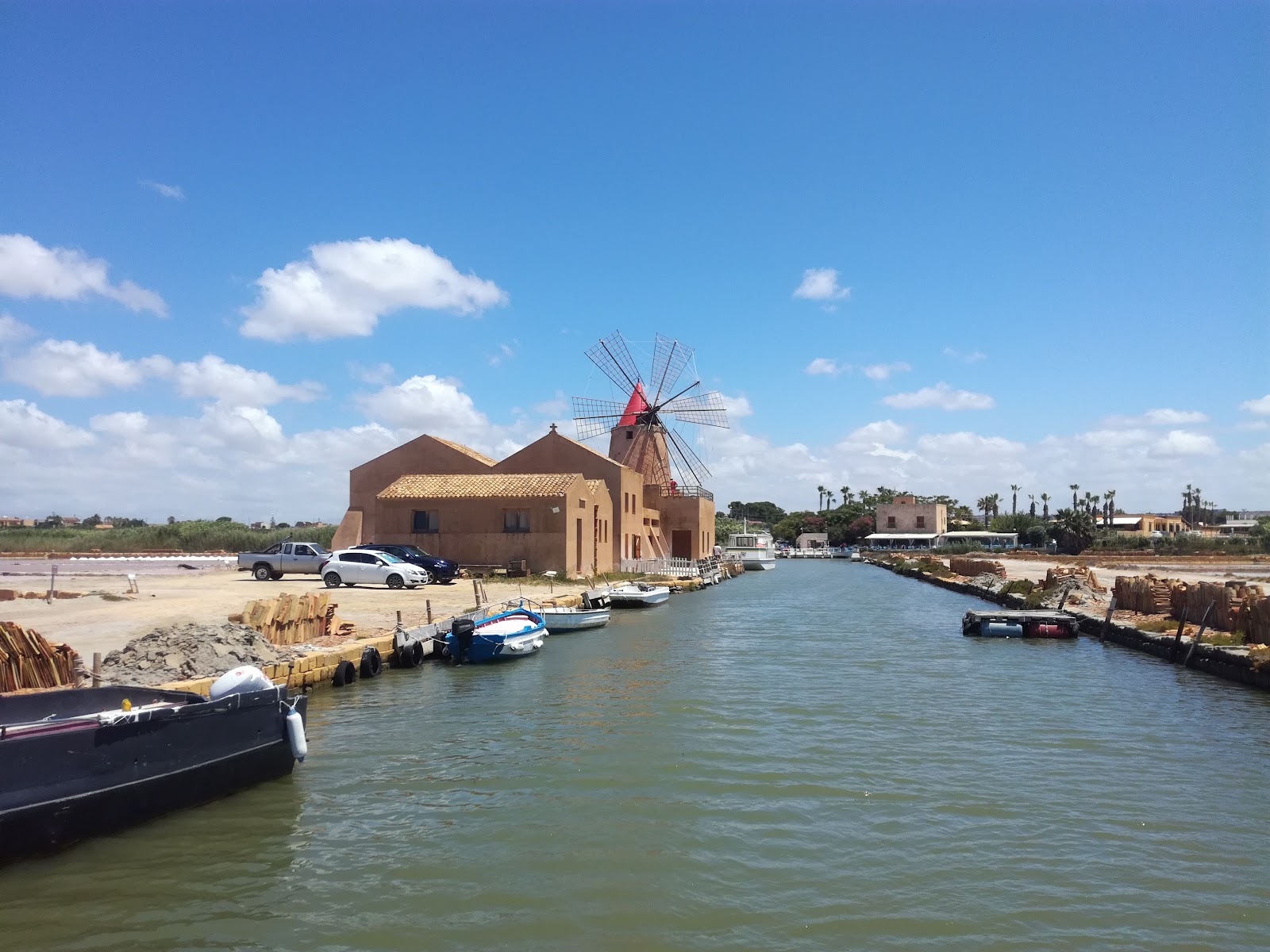
Drive the SP21 coastal road and follow signs for Saline Ettore e Infersa or the Imbarcadero Storico per Mozia. The ferry to Mozia is around €5 return; budget a separate €9 for island entry. Kitesurfers and windsurfers should aim for April–May or September–October for consistent wind without peak-summer crowds.
Summer brings reliable wind from late morning — often 15–20 knots by afternoon — and temperatures pushing 35°C; the lagoon water stays hot throughout. Spring (April–May) and early autumn (September–October) offer milder air, stronger and more consistent winds for water sports, and the best birdwatching conditions. Winter is mild but the Mistral can be disruptive.
Where is Stagnone di Marsala (Lagoon)?
More tickets & tours for Stagnone di Marsala (Lagoon)
Book directly at the provider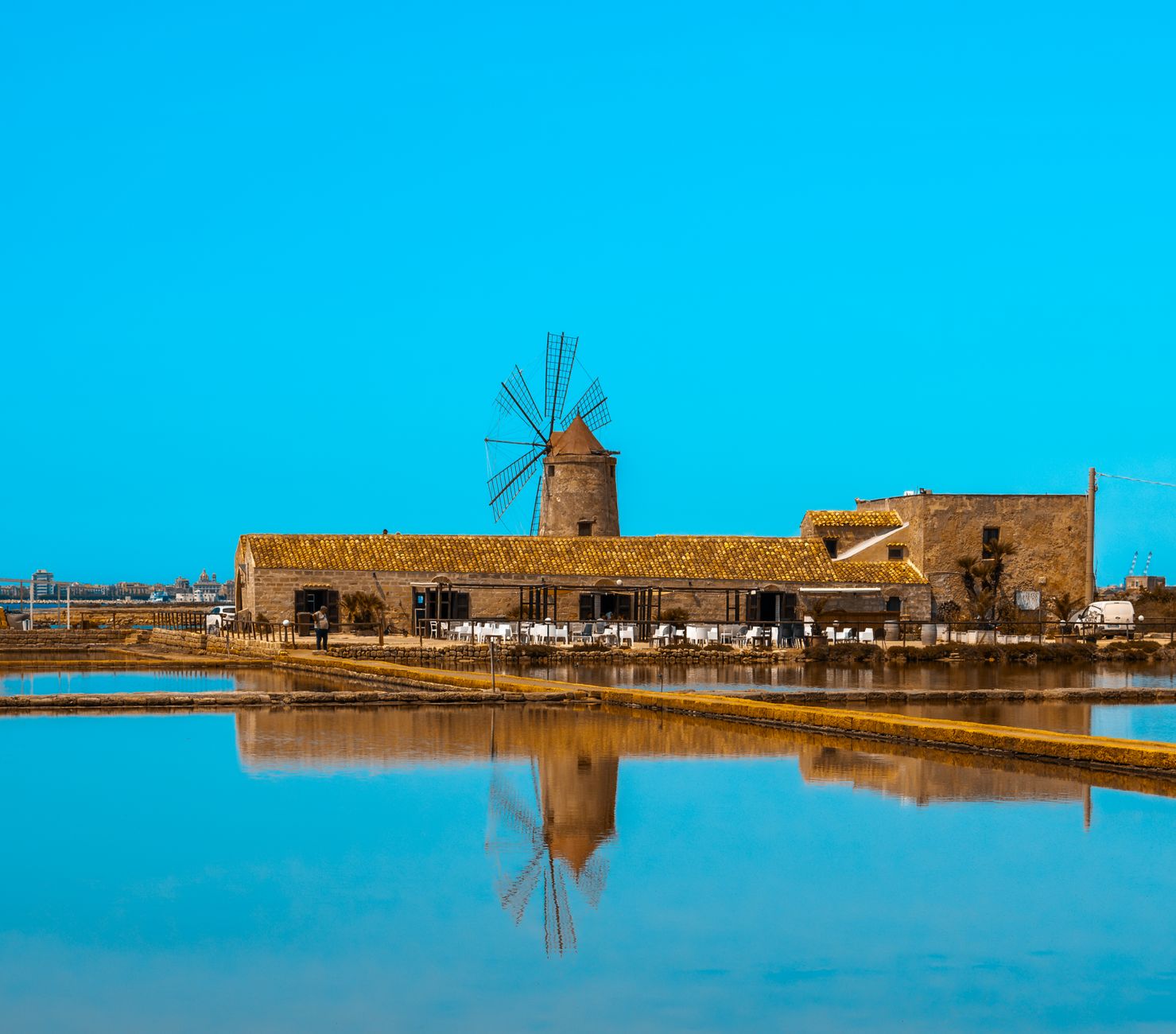
What travellers say about Stagnone di Marsala (Lagoon)
Paradise! Free beaches, no overflow of parasols and sunbeds, good seaside restaurants and bars. Close to airport, motorway and the cities of Marsala and Trapani. A haven for kiting and boating!
Amazing at sunset
Beautiful and quiet.
Super friendly people, we had a very pleasant day. They're much friendlier here than at a more famous place a little further away. 👍👍👍 The food at the restaurant is also superb!
A charming place, full of history and culture. A must-see.
More of Marsala
Discover where to stay, what to do and the best deals for your trip.
Explore Marsala →More attractions in Marsala
All of Marsala →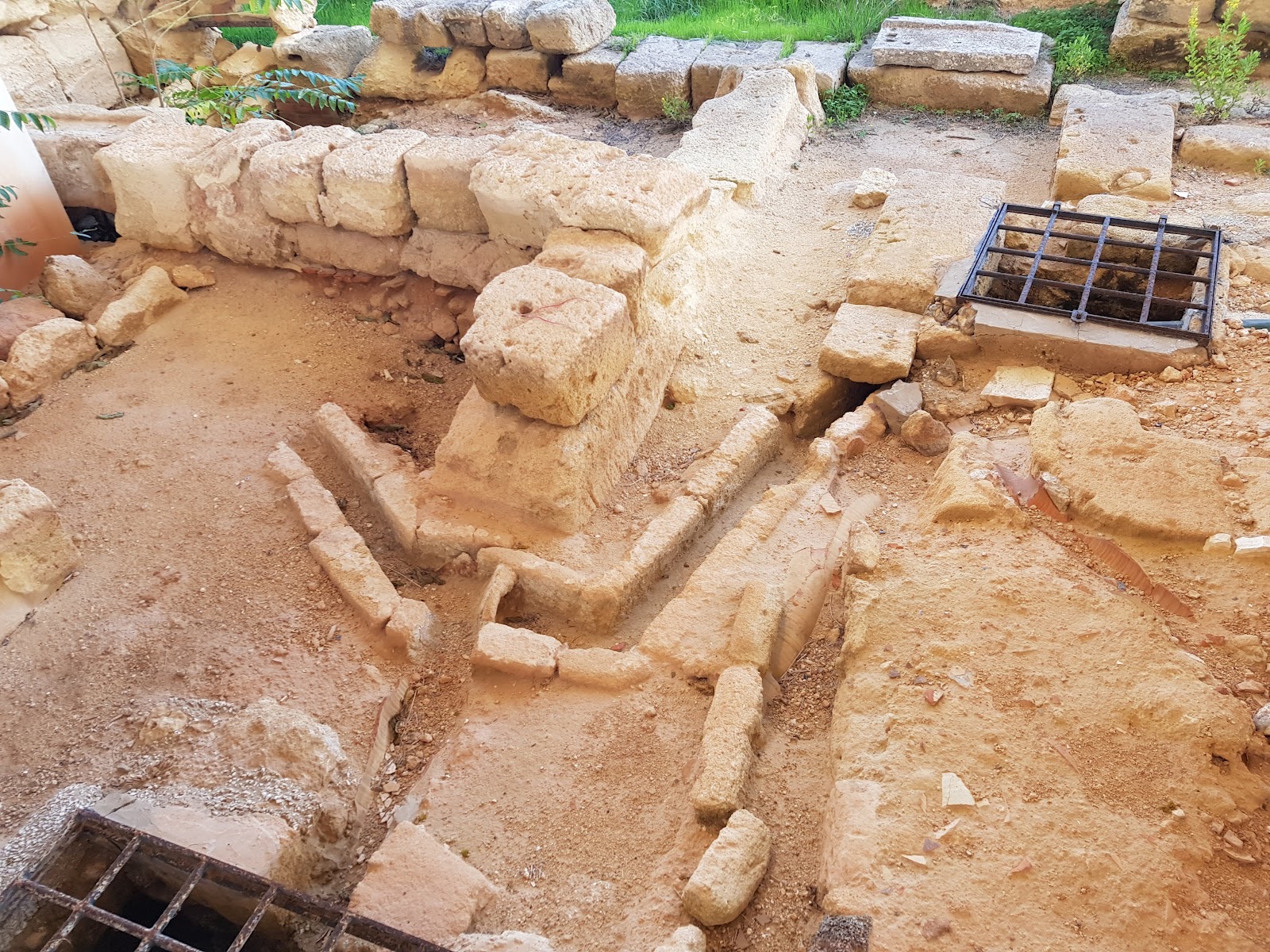

Background adapted from Wikipedia (CC BY-SA) · map data © OpenStreetMap contributors · ratings & place photos via Google · other photos with per-image credit. Ticket links may earn us a commission at no extra cost to you.