
Stabian Baths
The oldest detail here is a sundial inscription in Oscan, the pre-Latin language of Campania, recording that a local magistrate paid for the first bath building around 125 BC out of collected fines. That's the Stabian Baths in miniature: civic, practical, paid for by someone who bent the rules.
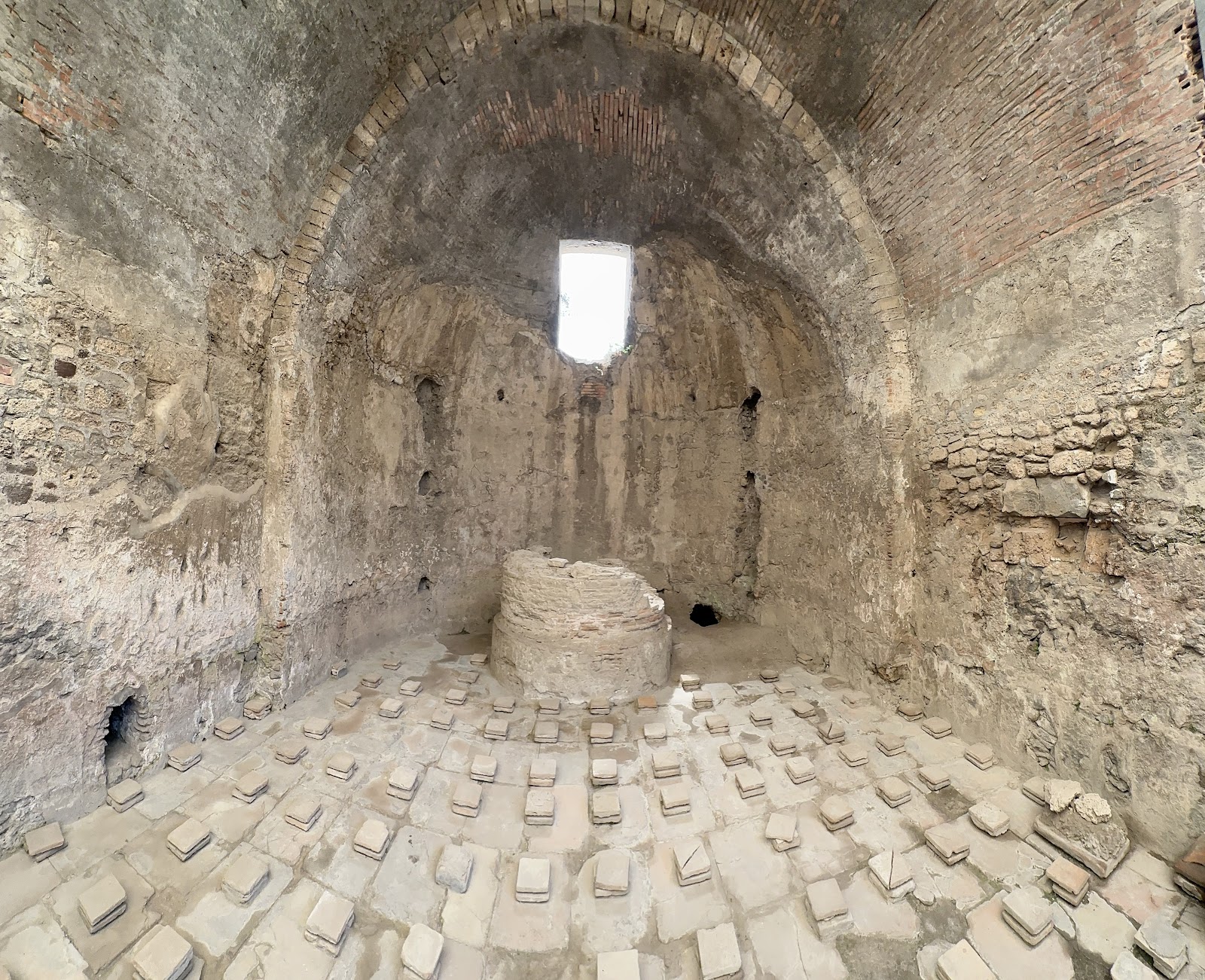
At over 3,500 square metres, this is the largest and oldest surviving Roman bath complex in Pompeii. The hypocaust system beneath the warm and hot rooms — hollow floors and wall channels that circulated heat from a furnace — is the earliest intact example known from the Roman world. The eruption of AD 79 caught the baths mid-repair, which is part of why so much survived.
💛 What travellers fall for
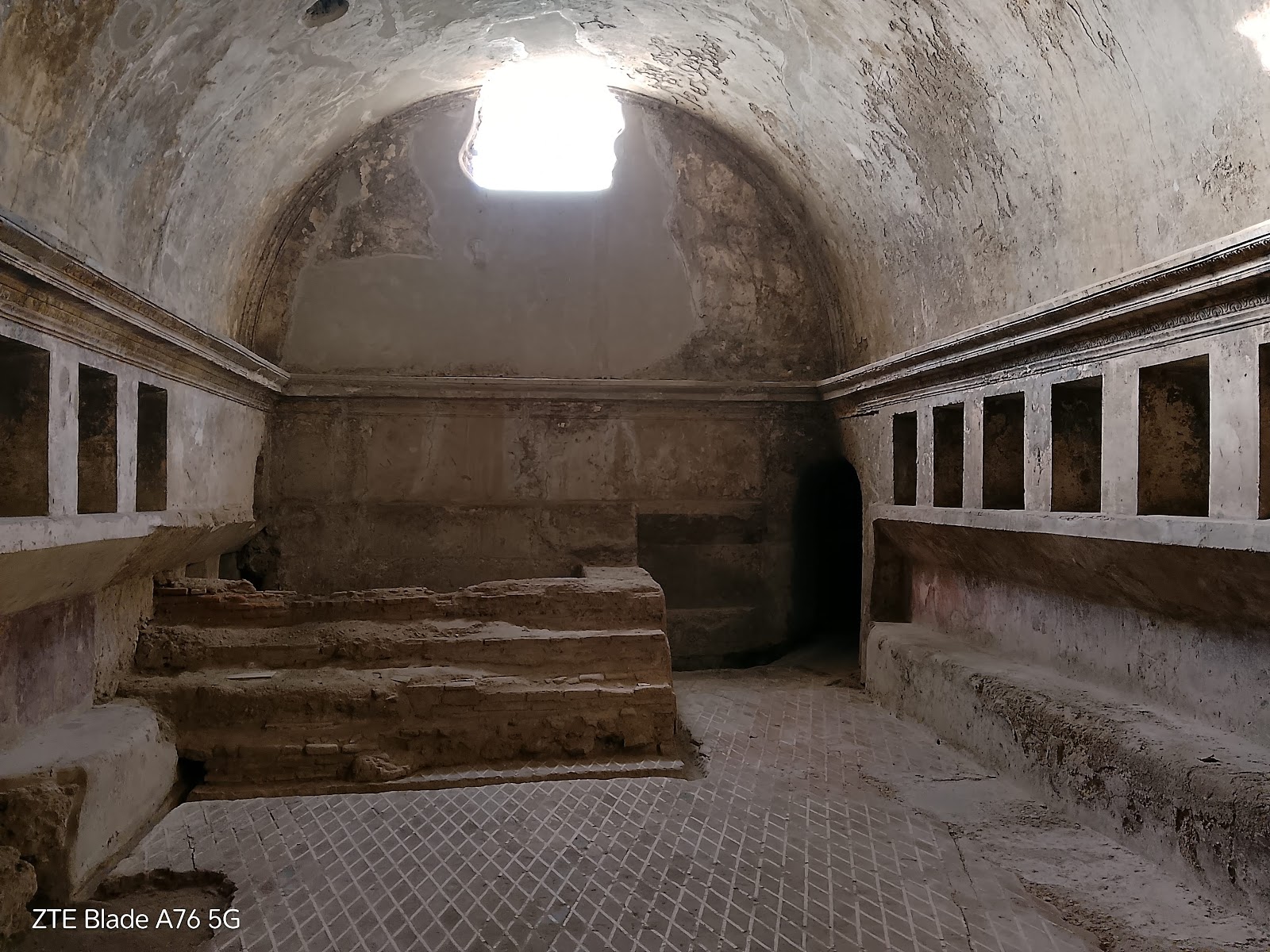
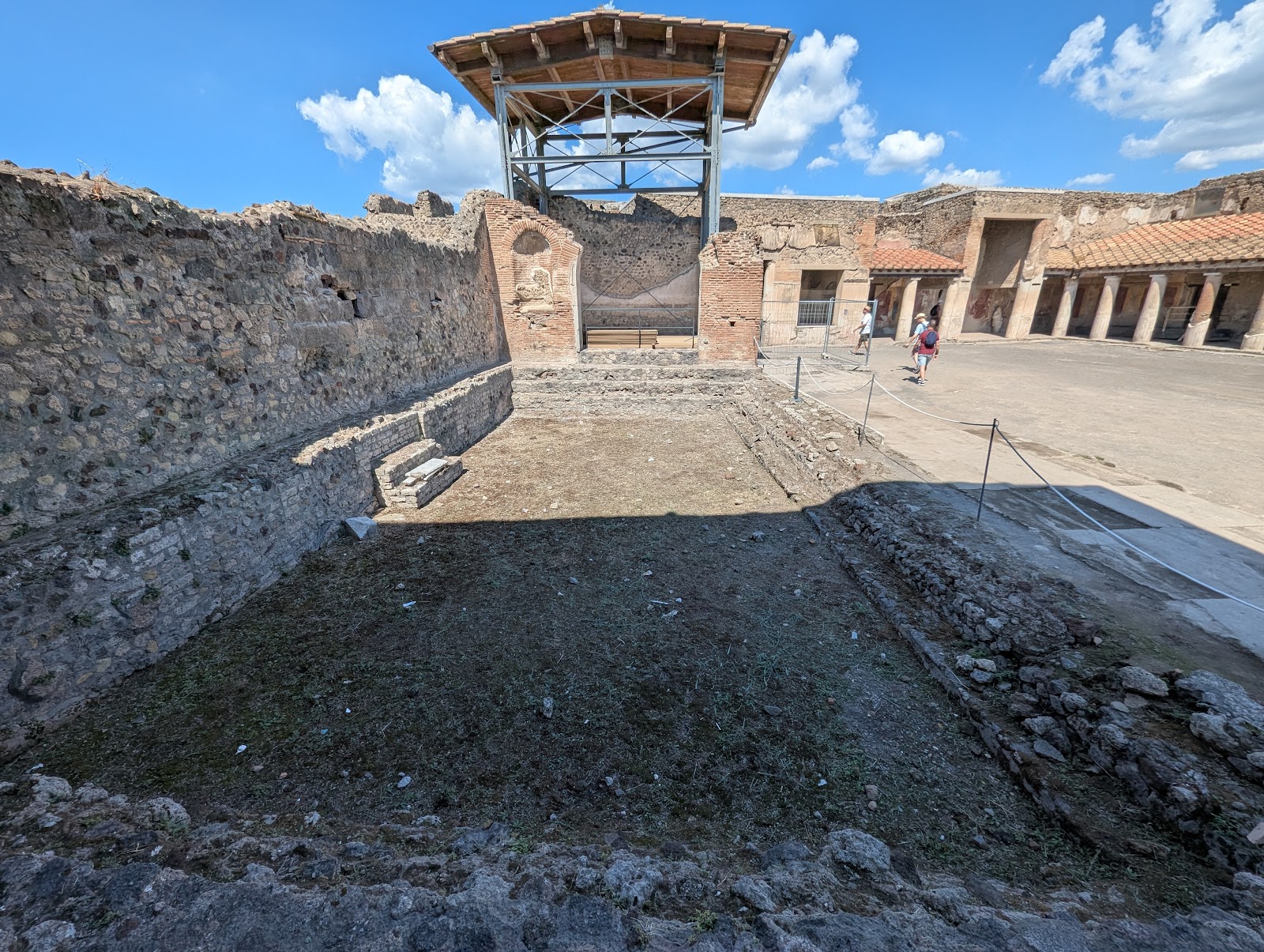
People who've been before tend to linger in the men's apodyterium, where the stucco relief niches for clothing and the painted ceiling survive in unusual detail. The palaestra courtyard, with its Doric colonnades and deep swimming pool, reads differently once you know two laconica — dry sweat rooms — were only discovered beneath it in 2021 and 2023.
The story behind Stabian Baths
The complex began around 125 BC, funded by civic fines under a local magistrate — a fact preserved in an Oscan-language sundial inscription found on site. When Pompeii became a Roman colony in 80 BC, the duoviri Caius Uulius and Publius Aninius extended and formalised the baths, an act also recorded in inscription.
The earthquake of AD 62 caused serious damage, prompting a substantial rebuild that brought the baths closer to the form visible today. Running water from the public aqueduct arrived around the turn of the first century AD, replacing an earlier system of a well and a rooftop reservoir. When Vesuvius erupted in AD 79, the baths were still undergoing repair — construction tools and materials were found inside.
Good to know
The Stabian Baths sit inside the Pompeii Archaeological Park at the junction of Via dell'Abbondanza and Via Stabiana. Park tickets (€18 full price) are sold through Vivaticket and are now nominative — you'll need every visitor's full name at booking. Morning slots sell out weeks ahead in peak season; the first Sunday of the month is free but crowded.
Where is Stabian Baths?
More tickets & tours for Stabian Baths
Book directly at the provider
What travellers say about Stabian Baths
The town's oldest baths complex opens onto Via dell'Abbondanza at the corner of Via Stabiana not far from the Forum and probably dates from the 2nd century B.C..The establishment covers a total surface area of over 3,500 square metres and is divided into two adjacent sections respectively reserved for men and women and includes a courtyard which was used as a gymnasium.Three sides of the courtyard have colonnades with stuccoed tuff-stone pillars, while the fourth side borders onto a large swimming-pool one and a half metres deep. Separated from the gymnasium by a low wall, the latter could be reached from two side-rooms where the bathers would probably get changed for the bathing rite. After the earthquake of 62 A.D. the swimming-pool area was embellished with elegant coloured stucco decorations which enclose a number of panels depicting mythological figures and athletes.Only a few bathing chambers were annexed to the gymnasium to the north. The other rooms were later turned into a large lavatory situated at the rear of the apartment belonging to the manager of the baths. The bathing establishment proper occupies the longer side of the Peristyle. A door in the right-hand corner of the colonnade leads to the men's section. The first room on the left is a chamber for cold baths (Frigidarium), which is round in shape with four corner niches and a pool in the centre. The water used to feed the pool flowed from another niche in the north-facing wall. The fact that this room came before the one where the bathers undressed may suggest that it was actually used as a laconicum, i.e. a steam room in which the air was heated by means of bronze braziers. From the entrance hall the bather entered the changing room (Apodyterium), which is plastered in white except for a red band running all round the lower half of the walls; the vault has stucco decorations in various colours. The next room is the Tepidarium, in which warm baths were taken. It was heated by hot air which circulated under the floor (between small terra-cotta pillars called Suspensurae) and - as can be seen in the areas where work was in progress at the time of the eruption - through cavities in the walls themselves.The room that follows is the Calidarium where the tub on the right-hand side was used for hot baths. Above the bath we can see three niches which contained statues while the marble basin situated along the apsidal wall contained cold water which the bathers used to cool off while in that intensely heated room. The fires for heating both the water and the air needed for the two sections of the bathing complex were situated behind the Calidarium wall. Walking along the gymnasium colonnade, we reach the entrance door to the women's section. Here the rooms follow one another in the same sequence as in the men's section, but as there is no Frigidarium, the bathers would pass directly from the changing room into the Tepidarium and from there to the Calidarium which contained a number of bronze tubs for individual baths.
The stabian baths are worth a visit, expansive public bathing complex with hot, medium, and cold plunges. Examples of the ancient plumbing system used to heat the water was fascinating.
The Terme Stabiane, or Stabian Baths, are among the oldest and most impressive baths in Pompeii, showcasing the importance of public bathing in ancient Roman culture. This expansive complex features distinct areas for hot, warm, and cold baths, complete with beautifully preserved frescoes and intricate mosaics that enhance its charm. The layout reflects the sophistication of Roman engineering, with well-thought-out spaces for relaxation and socialization. As you explore the various chambers, you can imagine the vibrant atmosphere of social interaction and wellness that once filled these halls. A visit to the Terme Stabiane offers a fascinating insight into daily life in Pompeii, celebrating the blend of leisure, hygiene, and community in this remarkable ancient city.
The Stabian Baths are the oldest thermal complex in Pompeii, dating back to the 2nd century BC – basically the city’s first spa and social hub. Here, everyone from slaves to senators could enjoy hot and cold baths, saunas, and gossip. The preserved underfloor heating (hypocaust system) shows they took comfort seriously – or at least seriously sweaty. Much like today, it wasn’t just about hygiene – it was about flexing in the caldarium before flexing on Instagram.
A part of the ruins that was a really well kept. A bath house that had separated rooms dedicated for each gender, male and female. It is curious to see that they had implemented a lot of decor and and artworks for the place.
More of Pompeii
Discover where to stay, what to do and the best deals for your trip.
Explore Pompeii →More attractions in Pompeii
All of Pompeii →

Background adapted from Wikipedia (CC BY-SA) · map data © OpenStreetMap contributors · ratings & place photos via Google · other photos with per-image credit. Ticket links may earn us a commission at no extra cost to you.